Hiring the right people has always been tough for small businesses. You're competing with bigger companies for talent, drowning in CVs, and spending hours on tasks that don't actually help you find better candidates. That's where ai driven recruitment comes in, and it's not just for the big players anymore. The technology has become accessible, affordable, and genuinely useful for businesses like yours. Let's look at how you can actually use it without the usual tech industry waffle.
What AI Driven Recruitment Actually Means
Here's the thing: ai driven recruitment isn't about replacing your judgement or turning hiring into a robot operation. It's about automating the bits that waste your time so you can focus on what matters, like actually talking to candidates and making smart decisions.
At its core, we're talking about using AI tools to handle repetitive tasks like screening CVs, scheduling interviews, and even conducting initial assessments. Recent developments in AI-powered hiring show how these technologies enable HR professionals to focus on strategic talent management rather than admin work.
The Real Benefits for Small Businesses
- Time savings: Cut CV screening from hours to minutes
- Consistency: Every candidate gets evaluated against the same criteria
- Wider reach: Process more applications without hiring extra staff
- Better matches: Find candidates who actually fit your requirements
- Reduced bias: When configured properly, AI can help create fairer shortlists
The catch? You need to implement it properly. Just like any process workflow improvement, throwing AI at a broken hiring process won't fix it.
Practical Applications You Can Implement Now
Let's get specific. Here's how small businesses are actually using ai driven recruitment in 2026, with tools that won't break the bank.
Resume Screening and Candidate Matching
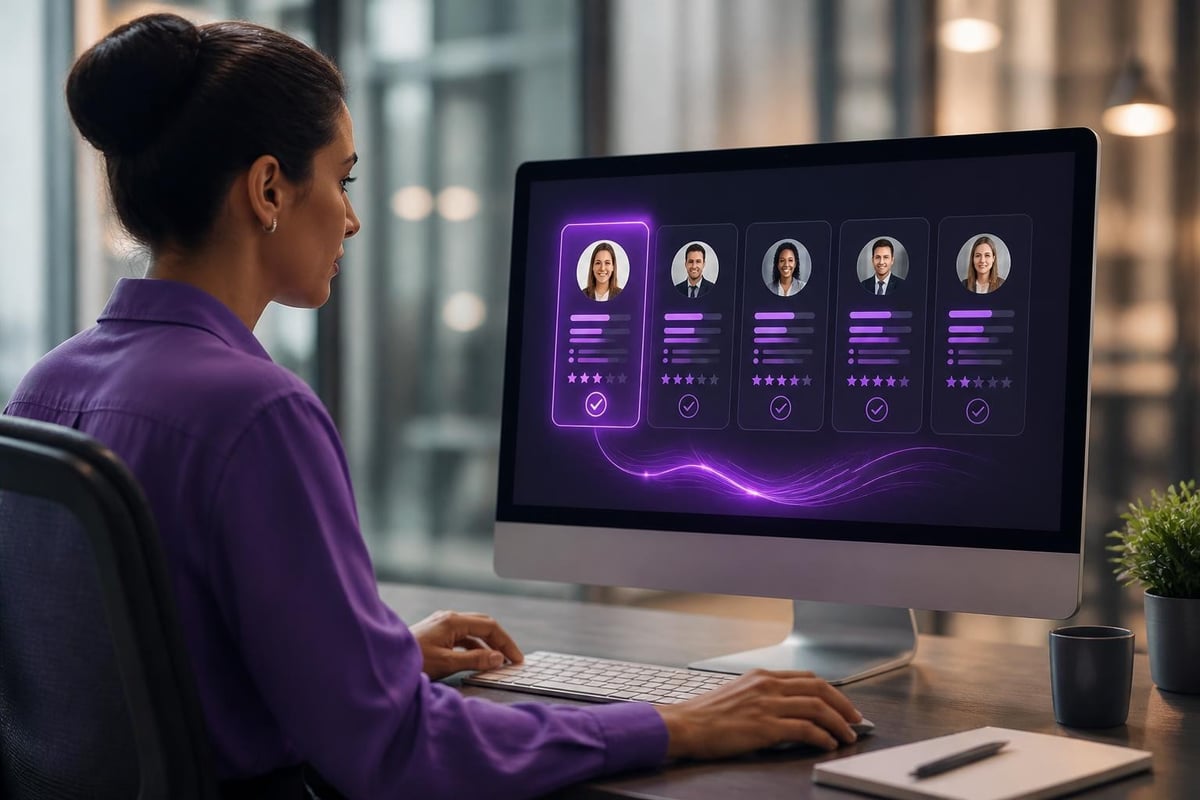
This is where most businesses start, and for good reason. AI tools can read through hundreds of CVs in seconds, pulling out relevant experience, skills, and qualifications. Some platforms even match candidates to your job description and rank them by fit.
Tools like HireVue, Fetcher, and SeekOut have made resume screening AI accessible for smaller teams. You upload your job requirements, and the system highlights candidates who match. No more manually reading every single application.
Interview Scheduling and Coordination
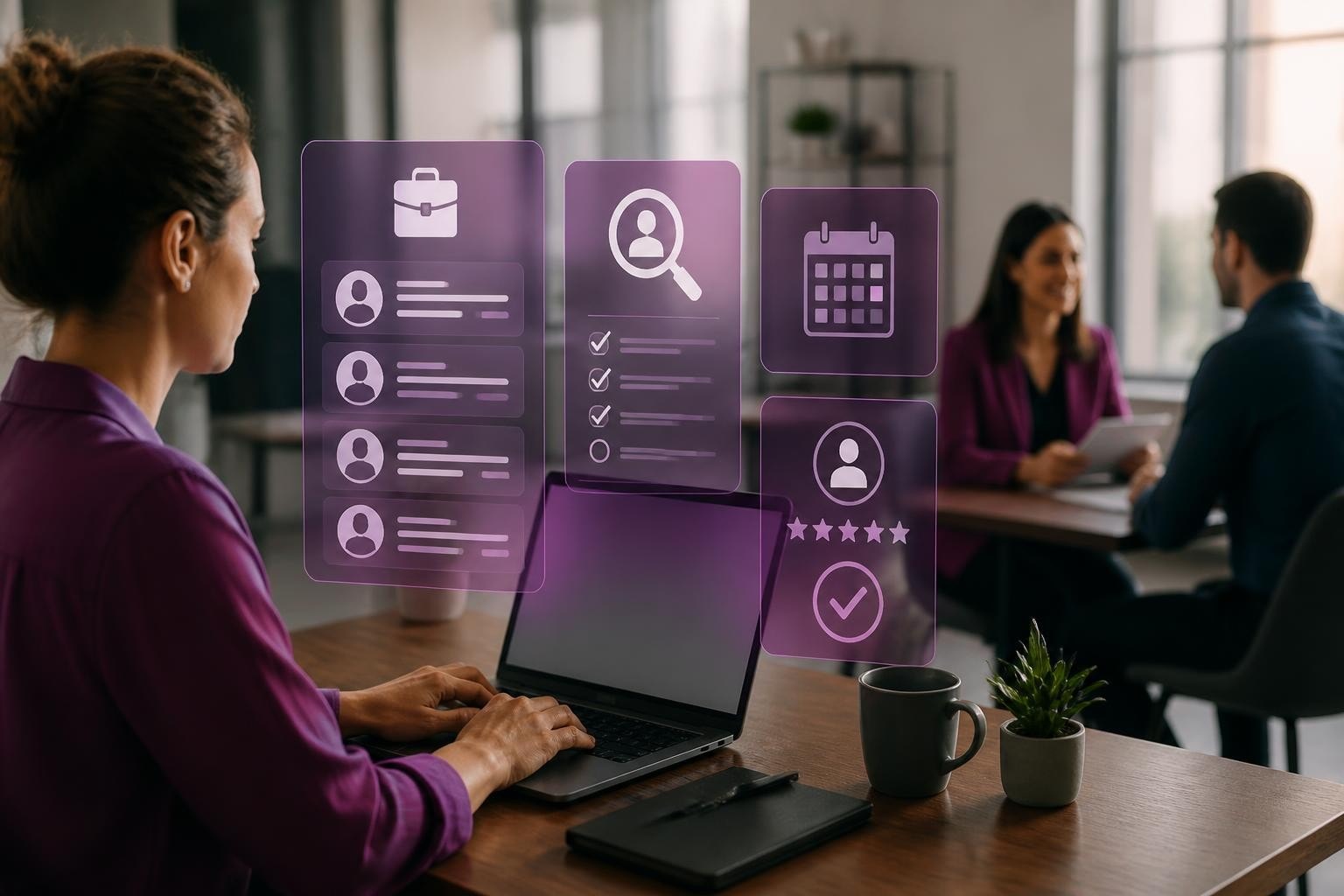
If you've ever played email tennis trying to find a time that works for everyone, you'll appreciate this. AI scheduling assistants can handle the back-and-forth automatically, checking everyone's calendars and booking slots without human intervention.
| Task | Traditional Method | With AI |
|---|---|---|
| Scheduling one interview | 5-8 emails, 15-20 minutes | Automated, 2 minutes |
| Rescheduling | Start from scratch | Auto-reschedule with alternatives |
| Calendar conflicts | Manual checking | Instant conflict detection |
| Candidate communication | Manual emails | Automated updates |
Initial Screening Interviews
Here's where things get interesting, and also controversial. Some companies use AI to conduct first-round video interviews, asking standard questions and evaluating responses. Candidates are increasingly pushing back on AI interviews, so if you go this route, be transparent about it.
A better approach? Use AI to assist with screening calls, not replace them entirely. Tools can transcribe interviews, highlight key points, and even flag when candidates mention specific skills or experience you're looking for.
Implementation Steps That Actually Work
Right, let's talk about how you'd actually set this up. No point reading about ai driven recruitment if you can't implement it.
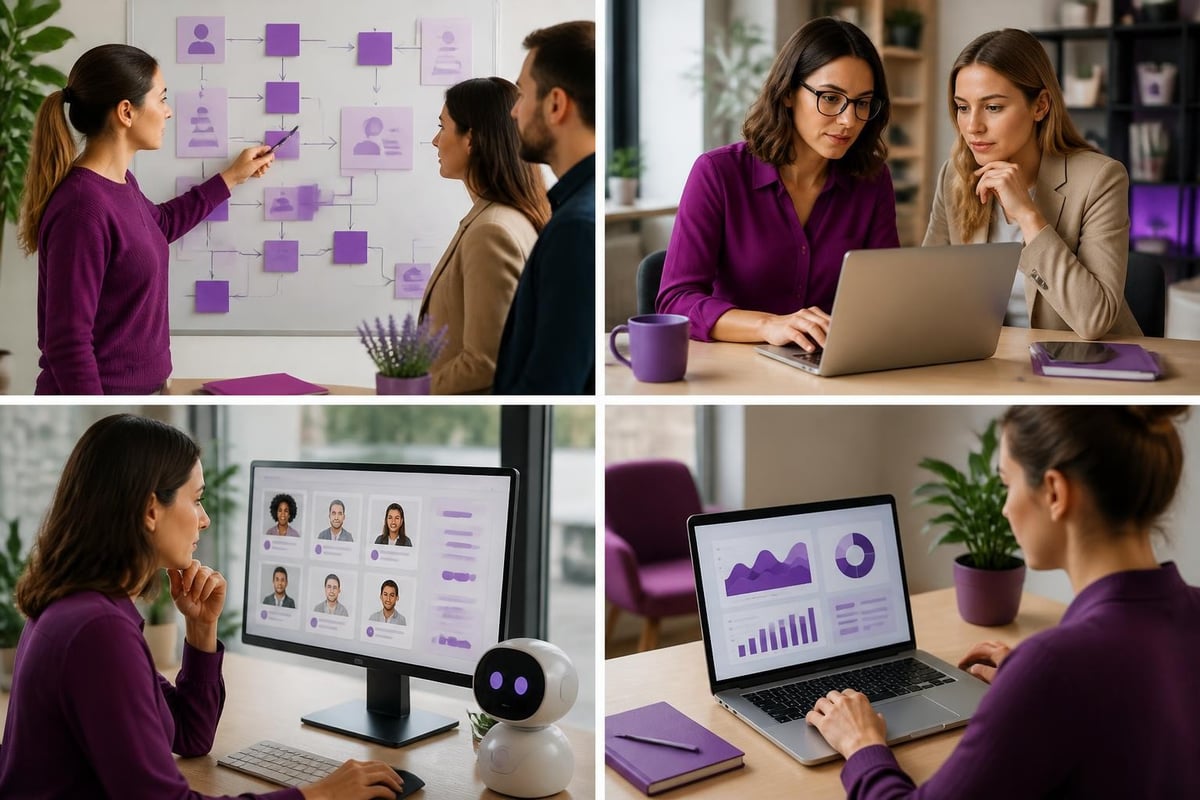
Step 1: Map Your Current Hiring Process
Write down every step, from posting a job to making an offer. Where do you spend the most time? Where do bottlenecks happen? That's where AI will have the biggest impact.
Step 2: Choose One Problem to Solve First
Don't try to automate everything at once. Pick the biggest time-waster. For most small businesses, that's CV screening.
Step 3: Select the Right Tool
Look for platforms designed for small businesses, not enterprise giants. Check they integrate with your existing systems (your job board, email, calendar). Most offer free trials, so test before committing.
Step 4: Set Clear Criteria
AI is only as good as the instructions you give it. Define exactly what makes a good candidate for your roles. Be specific about must-have skills versus nice-to-haves.
Step 5: Test and Refine
Run your AI system alongside your normal process for the first few hires. Compare results. Adjust your criteria based on what you learn.
Avoiding the Common Pitfalls
Let's be honest: ai driven recruitment can go wrong if you're not careful. Here's what to watch out for.
Bias in AI Systems
Research on biases in AI-driven recruitment shows that AI can amplify existing biases if not properly configured. If your historical hiring data shows bias, the AI will learn from that. Solution? Regularly audit your AI's decisions and adjust your criteria to ensure fairness.
Over-Reliance on Technology
AI should support your decisions, not make them for you. You still need human judgement, especially for final hiring decisions. Think of AI as a really efficient assistant, not a replacement for your expertise.
Poor Candidate Experience
Many businesses aren't prepared for AI's impact on recruitment, particularly how candidates perceive it. Be transparent about using AI. Let candidates know they'll interact with automated systems, and always provide a human contact option.
Real-World Success Stories
A recruitment agency we worked with was spending 60% of their time on CV screening. They implemented ai driven recruitment tools focused on initial candidate filtering. Within three months, they'd cut screening time by 75% and increased their placement rate by 40% because recruiters could spend more time on candidate relationships.
A small professional services firm struggled to fill technical roles. Using AI-powered candidate sourcing, they expanded their reach beyond traditional job boards, finding passive candidates who weren't actively job hunting. Their time-to-hire dropped from 45 days to 22 days.
What Success Actually Looks Like
| Metric | Before AI | After AI Implementation |
|---|---|---|
| Time spent on CV screening (per role) | 8-12 hours | 1-2 hours |
| Candidate response rate | 15-20% | 30-40% |
| Quality of shortlist | Variable | Consistently high |
| Time to first interview | 2-3 weeks | 3-5 days |
Integration with Your Existing Systems
Here's something people often overlook: your ai driven recruitment tools need to work with what you've already got. If you're using Outlook for email, Google Calendar for scheduling, and LinkedIn for sourcing, your AI tools should connect with all of them.
Most modern workflow applications offer integration options through APIs or native connections. This matters because disconnected tools create more work, not less.

Building Long-Term Capability
The goal isn't just to implement AI and leave it running. You want to build capability within your business. Train your team on how the tools work, why certain decisions get made, and how to improve the system over time.
This is similar to other AI entrepreneurship initiatives, where the real value comes from understanding and continuously improving your AI systems, not just switching them on.
Looking Forward
AI driven recruitment in 2026 is practical, accessible, and genuinely useful for small businesses. The technology has matured beyond the hype stage. You're not guinea-pigging experimental tools anymore; you're using proven systems that deliver measurable results.
The businesses thriving with AI aren't necessarily the most tech-savvy. They're the ones who've identified their biggest hiring headaches and applied the right tools to solve them. They've kept humans at the centre of their hiring process while letting AI handle the grunt work.
Start small, measure everything, and scale what works. That's how you make ai driven recruitment actually deliver value for your business.
AI driven recruitment doesn't have to be complicated or expensive to transform your hiring process. The key is knowing which tools to use, how to implement them properly, and where human judgement still matters most. If you're ready to cut your hiring time in half and find better candidates faster, AI 4 Small Business can help you identify the right AI solutions for your recruitment needs and implement them in a way that delivers real results, not just technology for technology's sake.