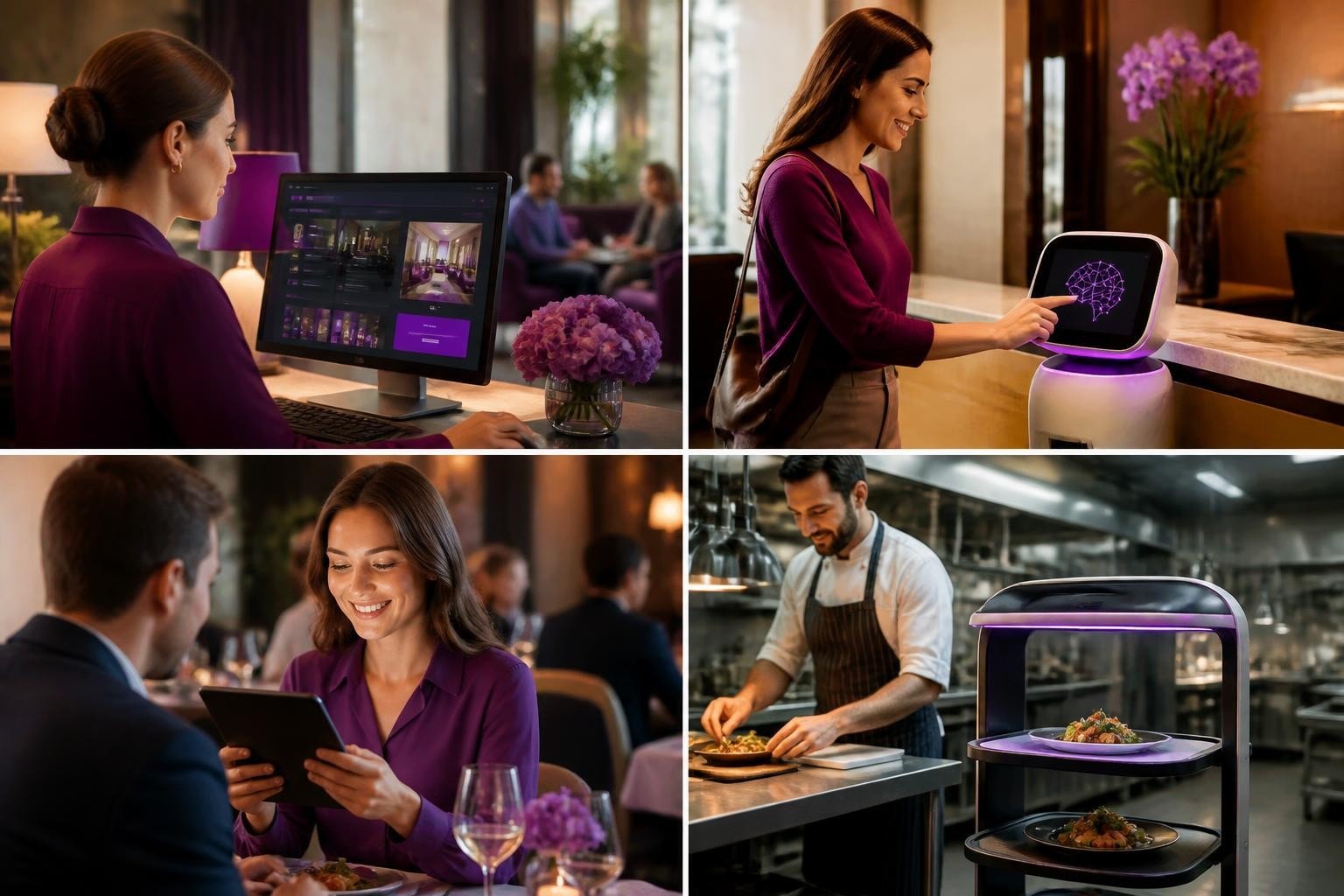
The hospitality sector's always been about personal service, but let's be honest-it's also drowning in admin. Small hotels, B&Bs, restaurants, and cafes are juggling reservations, guest queries, reviews, inventory, and staffing, often with tiny teams. That's where ai hospitality comes in. Not the futuristic robot concierge stuff, but practical AI tools that handle the repetitive tasks so you can focus on what actually matters: creating brilliant experiences for your guests. This isn't about replacing people. It's about giving them back their time.
What AI Hospitality Actually Means for Small Venues
AI hospitality isn't a single thing-it's a set of tools and automations designed to handle specific problems in hotels, restaurants, and tourism businesses. We're talking about chatbots that answer booking questions at 2am, systems that predict busy periods so you can staff accordingly, and tools that personalise guest experiences based on preferences.
For small businesses, the value is immediate. You're not implementing massive enterprise platforms. You're using affordable, ready-made tools that slot into your existing setup. According to Deloitte's analysis of AI-driven innovation in hospitality, the shift is already happening-but smaller venues often see faster returns because they're more agile.
Real Problems AI Hospitality Solves Right Now
Let's get specific. Here's what AI can do today:
- Automate booking confirmations and updates so guests get instant responses
- Handle common queries (check-in times, amenities, directions) via chat
- Analyse reviews to spot recurring complaints or praise
- Predict demand to optimise pricing and staffing
- Generate personalised recommendations for activities, dining, or room upgrades
These aren't theoretical. They're being used by small venues right now, often with tools that cost less than hiring an extra part-timer.
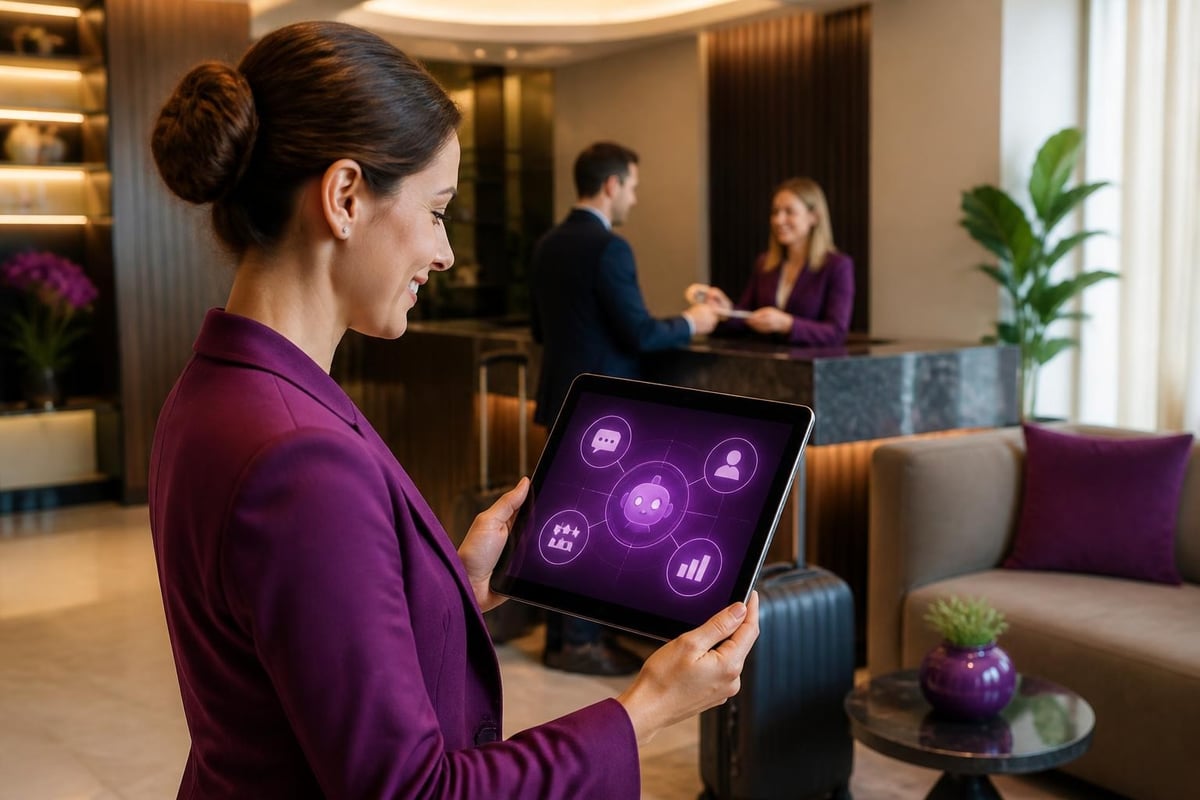
Practical AI Tools for Hospitality Businesses
You don't need a technical background to use ai hospitality tools. Most are designed for busy operators who need something that works out of the box. Here's what different types of venues are actually using.
For Hotels and B&Bs
| Tool Type | What It Does | Typical Benefit |
|---|---|---|
| AI chatbots | Answer guest questions 24/7 via website or WhatsApp | Reduce front desk interruptions by 40-60% |
| Dynamic pricing | Adjust room rates based on demand, events, seasonality | Increase revenue per available room |
| Review sentiment analysis | Scan reviews to flag issues (cleanliness, noise, etc.) | Catch problems faster, improve ratings |
| Personalisation engines | Suggest room upgrades, packages based on guest history | Higher conversion on upsells |
A small boutique hotel in Bath might use a chatbot to handle 80% of pre-arrival questions, freeing up the owner to focus on in-person guest service. The AI Hospitality Alliance's 2024 research highlights how these tools deliver measurable time savings within weeks.
For Restaurants and Cafes
Restaurants face different challenges-table turnover, dietary requirements, peak-time chaos. AI hospitality tools here focus on:
- Reservation systems with smart waitlisting that predict no-shows
- Menu optimisation based on sales data and waste tracking
- Staff scheduling that matches predicted footfall
- Automated dietary and allergen alerts during booking
One independent restaurant cut food waste by 25% using AI-powered inventory forecasting. Another reduced no-shows by sending automated reminders with a personal touch.
If you're already using custom AI agents for workflow automation, the same principles apply in hospitality-identify the bottleneck, build the automation, measure the impact.
How to Start with AI Hospitality (Without Overcomplicating It)
Here's the thing: you don't need to transform your entire operation overnight. Start small, measure results, then expand. That's the approach we recommend across all sectors at AI 4 Small Business.
Step 1: Identify Your Biggest Time Drain
Is it answering the same questions 50 times a week? Manually updating availability across platforms? Chasing reviews?
Pick one problem. Don't try to automate everything at once.
Step 2: Match the Problem to a Tool
Most ai hospitality challenges have off-the-shelf solutions. For example:
- Guest communication → AI chatbot (e.g., integrated with your booking system)
- Review management → Sentiment analysis tool
- Pricing optimisation → Dynamic pricing software
- Staffing → AI-powered rota tool
You're not building custom software. You're plugging in proven tools.
Step 3: Test, Refine, Scale
Run the tool for a month. Track the time saved, guest satisfaction, or revenue impact. If it works, expand. If it doesn't, adjust or switch.
The UNWTO guidance on AI adoption in tourism stresses the importance of measurable pilots-especially for smaller operators where every hour and pound counts.
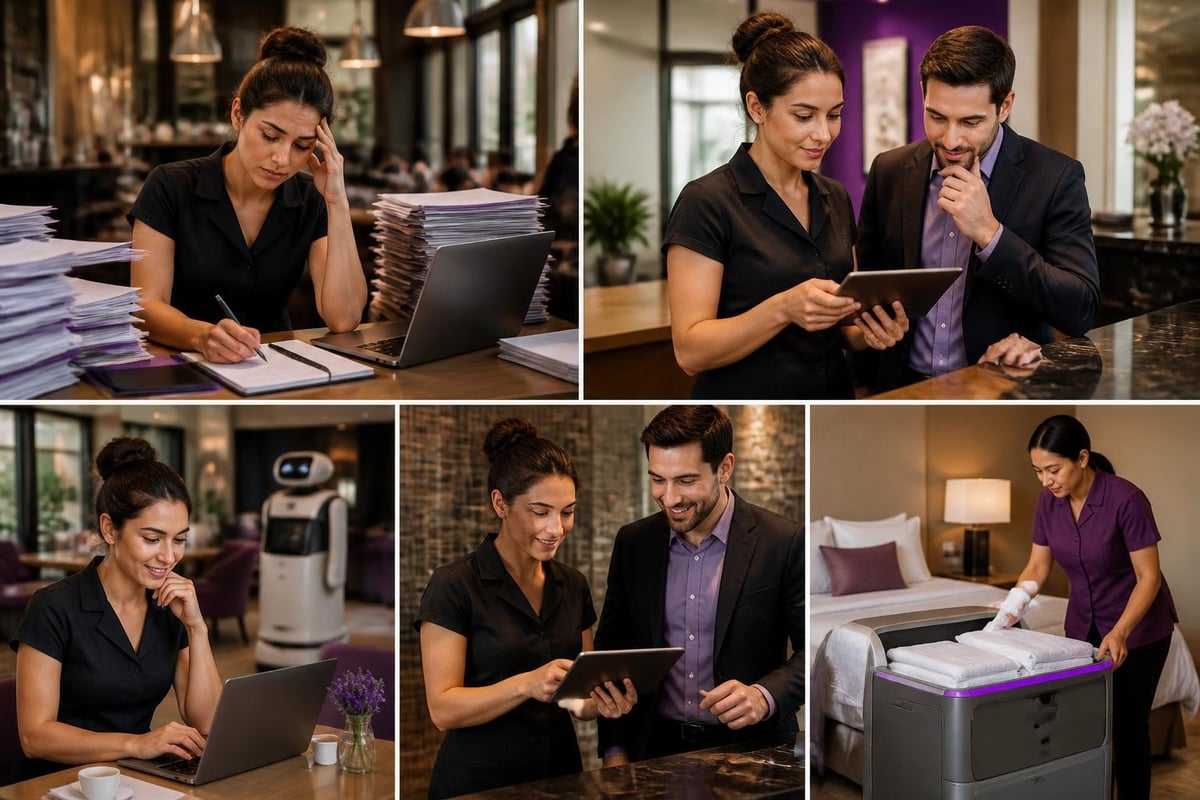
Where AI Hospitality Is Heading in 2026 and Beyond
The tech's moving fast, but the opportunities for small venues are getting clearer. Personalisation's a big one. Tools like MIT's research into AI trip planning show how AI can tailor entire guest journeys-from booking to checkout-based on preferences, past behaviour, and context.
Voice AI is another area. Imagine guests asking Alexa-style assistants in their room for towels, restaurant recommendations, or local tips. The tech exists. It's just becoming affordable for smaller properties.
Emerging AI hospitality trends:
- Voice-activated room controls and concierge services
- Hyper-local recommendations powered by real-time data
- Predictive maintenance (e.g., HVAC or kitchen equipment alerts)
- AI-assisted staff training and onboarding
According to HFS Research's 2025 travel and hospitality ecosystem analysis, the service provider landscape is consolidating around practical, outcome-focused AI-exactly what small businesses need.
Common Pitfalls (and How to Avoid Them)
Not every AI hospitality project works perfectly first time. Here's what trips people up:
| Pitfall | Why It Happens | How to Avoid It |
|---|---|---|
| Over-promising to guests | Chatbot can't handle complex requests | Set clear expectations, always offer human fallback |
| Ignoring staff buy-in | Team sees AI as a threat | Involve staff early, show how it reduces admin, not jobs |
| Choosing tools that don't integrate | End up with data silos | Prioritise tools that connect with existing systems |
| No measurement plan | Can't prove ROI | Track specific metrics (time saved, bookings, ratings) from day one |
If you're exploring intelligent automation tools for other parts of your business, the same discipline applies here. Define success, test rigorously, and don't be afraid to pivot.
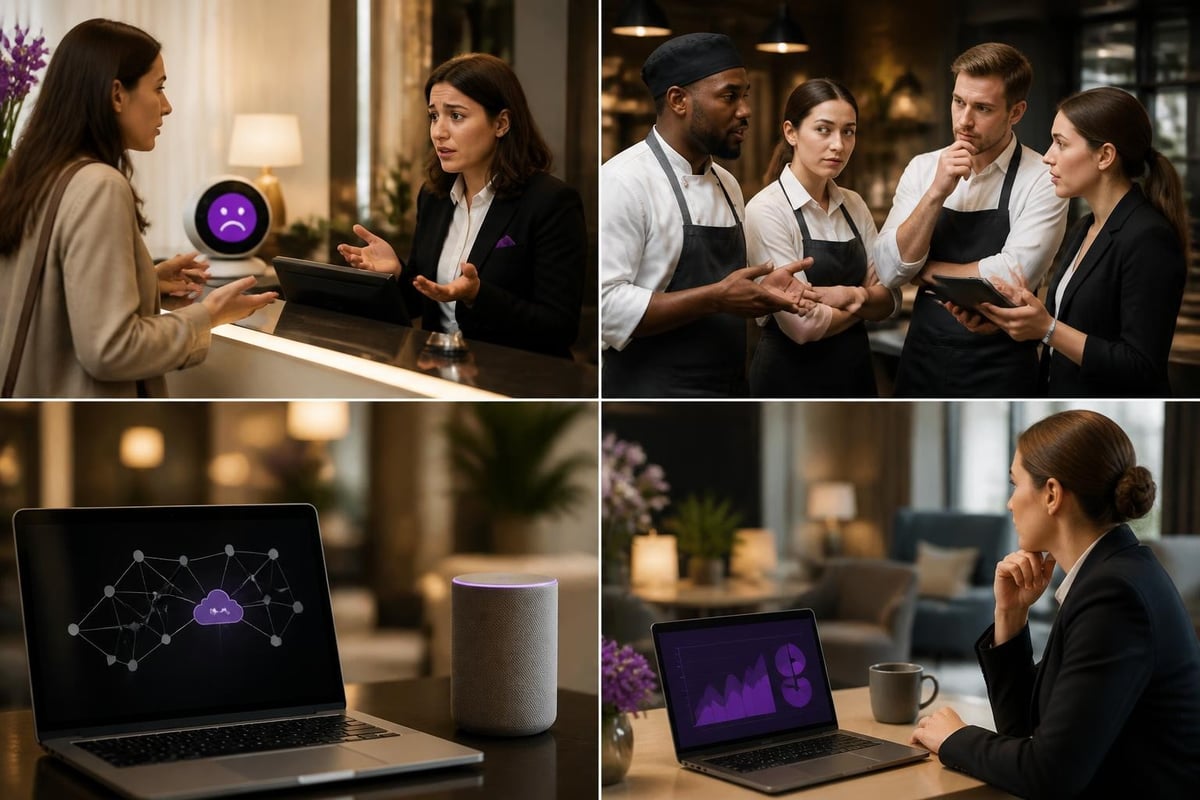
Making AI Hospitality Work for Your Venue
The reality is simple: ai hospitality tools exist, they're affordable, and they work. But only if you choose the right ones for your actual problems. A boutique B&B doesn't need the same setup as a 200-room hotel. A neighbourhood café doesn't need the same tools as a fine-dining restaurant.
Start with what's costing you the most time or money. Build from there. And if you're not sure where to begin, that's where expert guidance makes the difference. At AI 4 Small Business, we help venues across hospitality identify the highest-impact opportunities and implement tools that deliver fast, measurable results-no hype, no wasted budget.
The sector's changing fast, but the fundamentals haven't. Great hospitality is still about people. AI just gives you more time to deliver it.
AI hospitality tools are already transforming how small venues operate-from automating guest communication to optimising pricing and staffing. The key is starting with one high-impact problem, choosing the right tool, and measuring results. If you're ready to explore how AI can save time and improve guest experience in your hospitality business, AI 4 Small Business can help you identify the opportunities, implement the right tools, and deliver measurable impact fast-without the jargon or expensive custom builds.