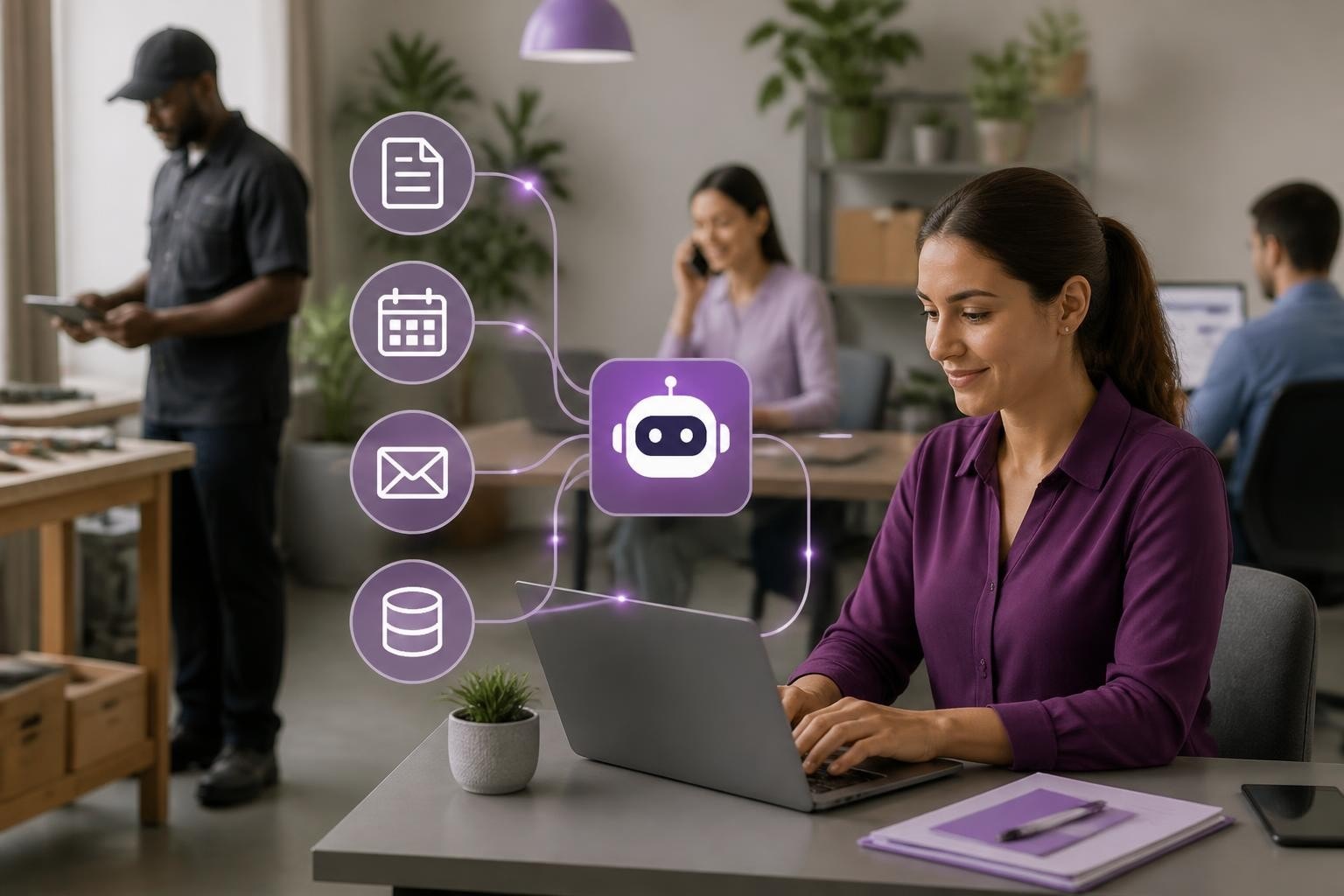
You've probably heard about AI agents that can handle customer queries or automate your admin, but there's another type of agent being developed right now that's just as interesting. Unity AI agents are virtual entities trained in simulated environments to solve complex tasks through trial and error. Whilst they started in gaming and animation, the techniques behind them are increasingly relevant to businesses looking to build smarter automation. Let's explore what these agents actually do and why small business owners should care about this technology.
What Makes Unity AI Agents Different
Unity AI agents aren't the chatbots or workflow automations you might already use. They're digital entities that learn through reinforcement learning inside a Unity simulation. Think of it like teaching a puppy tricks, but in this case, the puppy lives in a computer and learns millions of times faster.
The Unity ML-Agents toolkit provides the framework for training these agents. Here's how it works:
- Environment: A simulated world where the agent operates
- Observations: What the agent can "see" or sense
- Actions: Decisions the agent can make
- Rewards: Feedback telling the agent if it's doing well or poorly
The agent tries different actions, gets rewarded for good ones, and gradually learns the best strategy. It's remarkably similar to how we learn, just compressed into hours instead of years.

Training Real-World Skills in Virtual Spaces
What's brilliant about unity ai agents is that you can train them to handle messy, complicated tasks without risking real-world consequences. A warehouse robot can crash into virtual shelves thousands of times whilst learning optimal navigation. A quality control system can examine millions of virtual products to learn what "defective" looks like.
The Getting Started guide walks through creating your first training environment, and it's more accessible than you'd think. You're essentially building a safe playground where agents can fail repeatedly until they master the skill you need.
Practical Applications Beyond Gaming
| Use Case | What The Agent Learns | Business Value |
|---|---|---|
| Inventory routing | Optimal paths through warehouse layouts | Faster picking, lower labour costs |
| Quality inspection | Visual patterns indicating defects | Consistent quality, reduced waste |
| Resource allocation | Balancing competing demands in real-time | Better utilisation of staff and equipment |
| Process optimisation | Finding efficiency gains in complex workflows | Time savings, cost reduction |
These aren't pie-in-the-sky ideas. Companies are already using simulation-trained agents for real operations. The trick is starting simple and scaling up as you learn.
The Sim-to-Real Challenge (And Opportunity)
Here's where it gets interesting for practical applications. You train your agent in a perfect virtual world, but then it needs to work in your messy real business. This "sim-to-real transfer" is the biggest challenge with unity ai agents.
A recent study on Unity and ROS integration demonstrates how researchers are bridging this gap for robotics. They create detailed virtual twins of real environments, train agents there, then transfer the learned behaviours to physical robots.
For small businesses, this matters because:
- You can test automation ideas without expensive hardware
- Training happens faster and cheaper than real-world trials
- You can simulate edge cases that rarely happen in reality
The Unity Perception toolkit helps generate realistic synthetic data, making your simulations more representative of actual conditions. It's like having a risk-free laboratory for your business processes.
Multi-Agent Systems: When Teamwork Matters
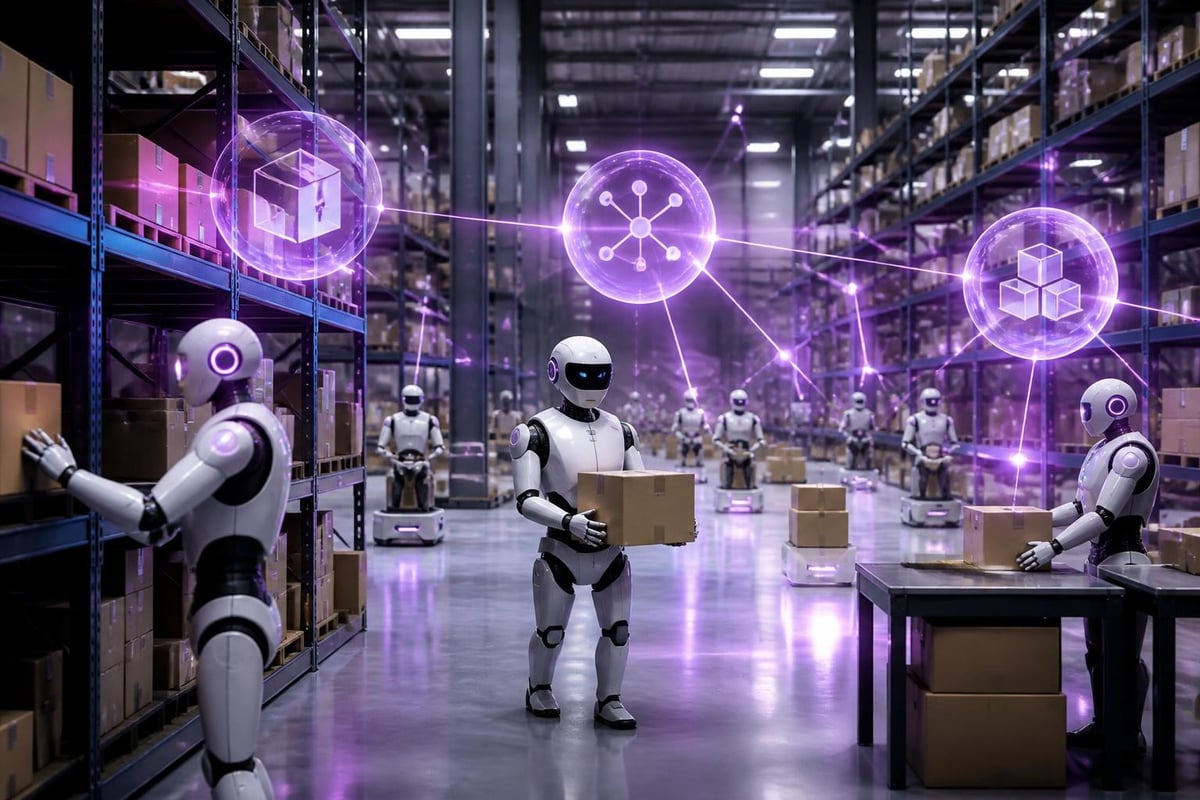
Things get even more powerful when you train multiple unity ai agents to work together. Instead of one agent learning one task, you create a team where each agent specialises but coordinates with others.
Think about your business operations. You probably don't have one person doing everything. You've got specialists who collaborate. Multi-agent reinforcement learning, explored in detail in this comprehensive academic survey, mirrors that reality.
Real-world scenarios for small businesses:
- Retail staff scheduling: Agents representing different departments negotiate coverage whilst respecting constraints
- Supply chain coordination: Procurement, inventory, and logistics agents optimise across the full chain
- Customer journey mapping: Agents representing different touchpoints learn to hand off customers smoothly
The advantage over traditional automation is adaptability. These agents can handle situations they weren't explicitly programmed for because they've learned general problem-solving strategies.
If you're already exploring custom AI agents for small business, understanding multi-agent systems opens up possibilities for more sophisticated automation.
Measuring Success: Benchmarks and Evaluation
You can't improve what you don't measure. The Stanford AI Index Report 2024 discusses how the AI community evaluates agent performance, and these principles apply whether you're training a game character or a business process agent.
Key Metrics for Business Applications
- Task completion rate: Does the agent actually solve the problem?
- Efficiency: How quickly and cheaply does it complete tasks?
- Generalisation: Can it handle variations it hasn't seen before?
- Safety: Does it avoid catastrophic failures or breaking constraints?
For small businesses, the last point is crucial. You need agents that fail gracefully, not ones that'll accidentally delete your customer database when they encounter an edge case.
Building Versus Buying: What Makes Sense
Here's the practical bit. Should you actually train your own unity ai agents? For most small businesses, probably not from scratch. The technical expertise required is substantial.
But understanding how they work helps you:
- Evaluate vendors offering AI-powered automation
- Recognise when simulation-based training makes sense for your use case
- Ask the right questions when someone pitches you an "AI solution"
Agencies like Vieerx specialise in building custom AI agents for businesses, handling the technical complexity whilst you focus on defining what you need the agent to do. The key is knowing what's possible so you can articulate your requirements clearly.
When you're getting started with AI, focus on the business outcome first. Unity AI agents are a means to an end, not the end itself. Start with clearly defined, repetitive tasks where automation would save meaningful time or money.
Sectors Where Unity AI Agents Add Value
Different industries are finding creative uses for simulation-trained agents:
Professional services can use agents to optimise scheduling and resource allocation across projects. An agent learns which staff combinations work best for different client types and project scopes.
Retail and eCommerce benefit from inventory agents that predict demand patterns and optimise stock levels. They learn from seasonal variations, promotional impacts, and supplier reliability over time.
Trades and construction can simulate project workflows to identify bottlenecks before they happen on site. Agents learn the dependencies between tasks and suggest optimal sequencing.
Recruitment firms might train agents to match candidates with roles, learning from successful placements which factors matter most. It's more nuanced than keyword matching because the agent discovers correlations you might miss.
The common thread is complexity. Unity ai agents shine when there are too many variables for simple rules-based automation but the task is still well-defined enough to simulate.
The Learning Never Stops
One advantage of reinforcement learning approaches is that agents can continue learning after initial training. As your business processes evolve, the agent adapts. It's closer to employing someone who grows with the role than installing static software.
This ongoing adaptation matters because your business isn't static. Market conditions change, customer preferences shift, and your operations evolve. Traditional automation often becomes technical debt, requiring expensive updates to keep pace.
For businesses exploring AI and machine learning solutions, this adaptability is a key differentiator. You're not locked into yesterday's optimisation when tomorrow's challenges arrive.
Starting Your Agent Journey
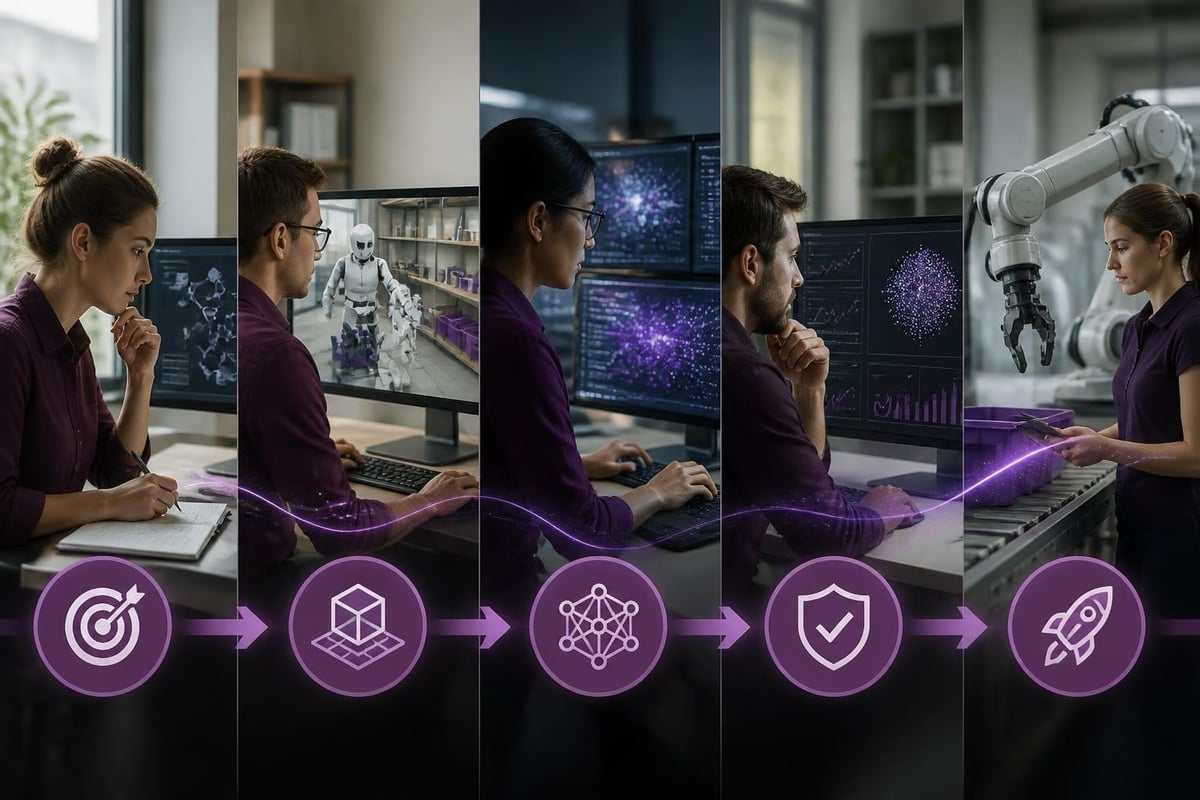
If unity ai agents sound relevant to your business, here's a sensible approach:
- Identify a specific, bounded problem where automation would save meaningful time
- Map out the decision-making process currently used by humans
- Consider whether simulation makes sense versus other AI approaches
- Consult with specialists who've actually implemented these systems
- Start with a pilot project that proves value before scaling
Don't try to boil the ocean. The businesses getting real value from AI start small, learn fast, and scale what works. Whether you're in retail, trades, or professional services, there's probably a task where simulation-trained agents could add value.
The technology behind unity ai agents is maturing rapidly, and the barrier to entry is dropping. What required a research team five years ago can now be tackled by specialists who understand both the tech and your business context.
Unity AI agents represent a practical approach to automating complex, adaptive tasks that traditional programming struggles with. They're not right for every problem, but when simulation makes sense, they can deliver automation that learns and improves over time. If you're curious whether this technology could streamline your operations, AI 4 Small Business helps you identify the right AI tools and build automations that deliver measurable impact. We'll cut through the hype, assess what actually makes sense for your business, and implement solutions that save time and support growth.