
Hiring the right people can make or break a small business. You're already juggling a dozen tasks, and now you need to sift through hundreds of CVs, schedule interviews, and somehow pick the perfect candidate. Sound familiar? This is where ai based recruiting comes in, and no, it's not just for massive corporations with HR departments the size of a small army. Small businesses are using AI to find better candidates faster, cut through admin, and actually enjoy the hiring process again.
What AI Based Recruiting Actually Means for Your Business
Let's strip away the buzzwords. AI based recruiting uses smart software to handle the repetitive, time-consuming bits of hiring so you can focus on the human stuff-like actually talking to candidates and deciding who fits your team.
Think about your current process. You post a job, get flooded with applications, spend hours reading CVs that all look the same, try to remember who said what in which interview, and eventually make a gut-feel decision. It's exhausting.
Recent research shows that AI transforms hiring across multiple stages, from defining roles to sorting candidates and making selections. The technology handles pattern recognition, data processing, and initial screening-tasks that computers do brilliantly and humans find mind-numbing.
The Tools That Make It Happen
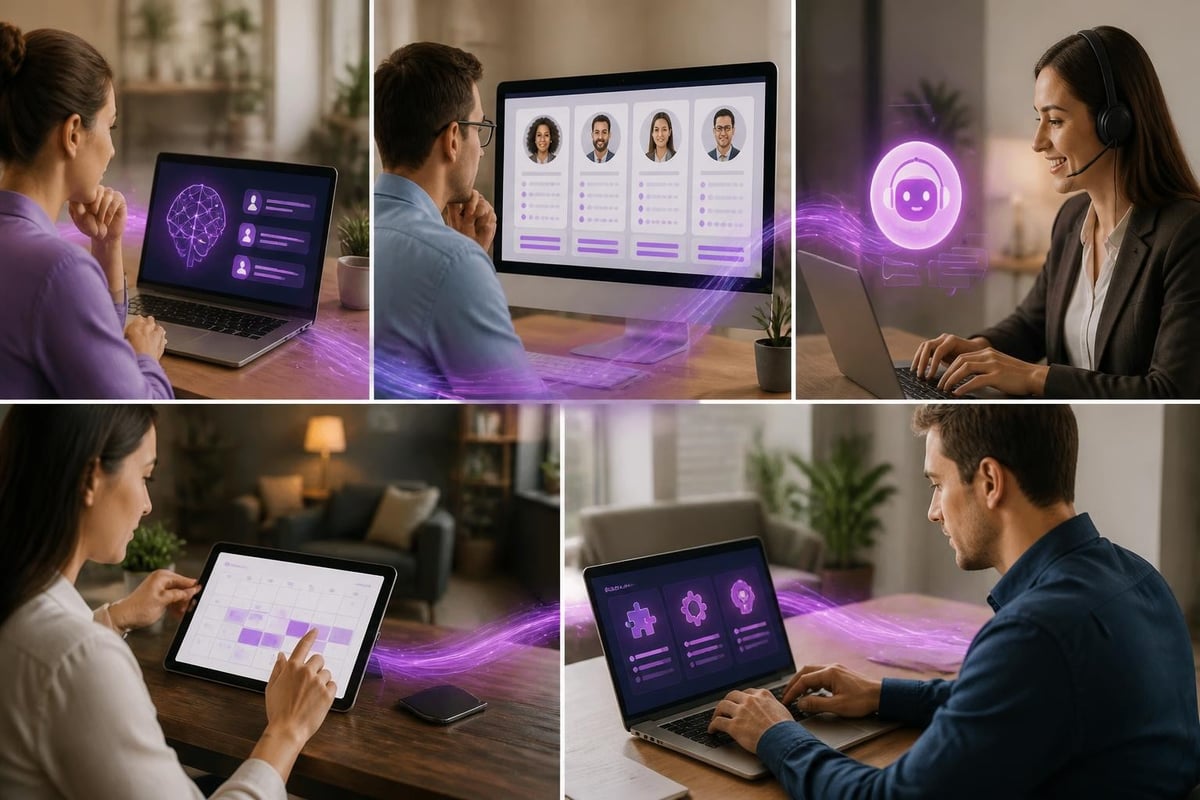
Here's what ai based recruiting looks like in practice:
- CV screening software that reads applications and ranks candidates based on skills, experience, and keywords you specify
- Chatbots that answer candidate questions 24/7, saving you from playing email tennis
- Interview schedulers that sync calendars, send reminders, and handle all the back-and-forth
- Assessment platforms that test skills objectively before you invest time in interviews
- Predictive analytics that highlight which candidates are most likely to succeed in the role
You don't need all of these. Start with one pain point-probably CV screening if you're drowning in applications-and build from there.
How Small Businesses Are Actually Using This
A recruitment agency we worked with was spending 15 hours a week just screening CVs for their clients. They implemented a simple AI screening tool that cut this to 3 hours. That's 12 hours back every single week-time they now spend building client relationships and actually placing candidates.
A retail business struggling to hire seasonal staff used an AI chatbot to handle initial enquiries. Candidates got instant responses about shift patterns, pay, and expectations. The owner went from spending evenings answering WhatsApp messages to reviewing only pre-qualified applicants.
The adoption patterns among German companies reveal interesting insights: businesses aren't just chasing efficiency gains. They're using AI to reduce bias, improve candidate experience, and make more data-informed decisions. It's about working smarter, not just faster.
Setting Up Your First AI Recruiting Process
Step 1: Identify Your Biggest Time Drain
Where do you lose the most hours? Screening CVs? Scheduling interviews? Answering the same questions repeatedly? Pick one.
Step 2: Choose a Simple Tool
Don't overthink this. Look for tools that integrate with what you already use (your email, calendar, job boards). Many offer free trials. Test before committing.
Step 3: Define Your Criteria
AI needs direction. What skills are non-negotiable? What experience matters? What red flags should it watch for? Be specific. "Good communication skills" is vague. "Experience handling customer complaints" is actionable.
Step 4: Test and Tweak
Run your first few candidates through manually as well as through AI. Compare results. Adjust settings. AI based recruiting improves as it learns what you actually want.
Step 5: Keep the Human Touch
AI handles the admin. You handle the final decisions. Always interview promising candidates yourself. Tools can't assess culture fit or spot potential the way you can.
| Task | Traditional Approach | With AI | Time Saved |
|---|---|---|---|
| CV screening (100 applications) | 10 hours | 1.5 hours | 8.5 hours |
| Interview scheduling (10 candidates) | 3 hours | 0.5 hours | 2.5 hours |
| Initial candidate questions | 5 hours/week | 0.5 hours/week | 4.5 hours |
| Skills assessment | 4 hours | 1 hour | 3 hours |

The Challenges You'll Actually Face
Let's be honest. This isn't all sunshine and instant results. Understanding how AI literacy affects adoption matters because you or your team need to interpret what the AI tells you. A dashboard showing "candidate fit score: 87%" means nothing if you don't understand how that number was calculated.
Common hurdles include:
- Learning curves with new software (usually shorter than you think)
- Getting buy-in from team members who prefer the old way
- Initial setup time before you see benefits
- Ensuring the AI doesn't accidentally filter out great candidates who just write CVs differently
The ethical challenges in AI recruitment are real, particularly around bias. If your AI learns from historical hiring data where you unconsciously favoured certain backgrounds, it'll replicate that bias. Combat this by regularly reviewing who gets through and who doesn't, and adjusting your criteria accordingly.
Making AI Work for Your Sector
Different industries have different needs. A construction firm hiring tradespeople needs to verify qualifications and tickets. An eCommerce business scaling for peak season needs to process volume quickly. A professional services firm wants cultural fit and soft skills.
Similar to how AI transforms work across sectors, recruitment AI adapts to your context. Configure tools to prioritize what matters to your business. Don't just use default settings.
For trades and construction, integrate verification checks for certifications. For retail and hospitality, focus on availability matching and shift preferences. For professional services, weight soft skills assessments more heavily.
The Data You'll Actually Get
AI based recruiting isn't just about saving time. It gives you insights you've never had before:
- Time-to-hire metrics showing where bottlenecks occur
- Source effectiveness revealing which job boards bring quality candidates
- Drop-off rates highlighting where candidates lose interest
- Success patterns identifying traits common in your best hires
One professional services firm discovered their best performers all had side projects or volunteering experience-something they'd never consciously noticed. They adjusted screening to flag these activities, improving hire quality measurably.
The environmental and sustainability metrics matter too. Digital processes reduce paper waste, cut travel for initial screenings, and lower your carbon footprint. Not the main reason to adopt AI, but a nice bonus.
Integrating AI with Your Existing Workflow
You probably already use job boards, email, and a calendar. Good news: most AI recruiting tools plug straight into these. Think of it as building practical AI workflows rather than replacing everything you do.
Integration checklist:
- Job boards - Can the AI pull applications automatically?
- Email - Does it sync with your inbox for candidate communication?
- Calendar - Can it book interviews without manual input?
- Your ATS or CRM - Will data flow between systems?
- Communication tools - Can candidates reach you through their preferred channels?
The goal isn't fancy tech. It's reducing the number of times you copy-paste information or toggle between screens.

What Success Actually Looks Like
Forget the case studies showing 500% improvements. For most small businesses, success with ai based recruiting means:
- Spending 5-10 hours less per week on admin
- Getting through applications the same day they arrive
- Actually meeting every promising candidate instead of missing good people
- Making offers faster than competitors
- Hiring people who stay longer because the fit was better assessed
A recruitment firm we worked with tracks what they call "quality of shortlist"-the percentage of interviewed candidates they'd actually hire. Before AI: 30%. After six months with AI based recruiting: 65%. Same time investment, double the quality.
Just like effective AI driven recruitment strategies, the wins come from consistent application rather than one-off magic fixes. Use the tools regularly, refine your approach, and measure what matters to your business.
Moving Forward Without Overthinking It
Start small. Pick one tool. Solve one problem. You don't need a complete recruitment transformation by next week. You need hiring to be less painful and more effective than it is today.
The businesses getting real value from AI based recruiting aren't the ones with the fanciest tech stack. They're the ones who identified their biggest frustration, found a practical solution, and actually implemented it. That could be as simple as a chatbot answering basic candidate questions or an AI screening the first round of CVs.
Testing beats theorizing every time. Most tools offer free trials. Spend a week running your current process alongside an AI tool. Compare the results. Let the data guide your decision, not the marketing claims.
AI based recruiting transforms hiring from a dreaded chore into an efficient, data-informed process that helps you build better teams faster. The technology handles the admin whilst you focus on the conversations and decisions that actually matter. If you're ready to implement practical AI solutions that deliver measurable results without the complexity or cost of custom development, AI 4 Small Business can help you identify the right tools, build the workflows, and get your recruitment process working smarter within weeks, not months.