
If you're running a small business in 2026, you've probably heard the term "ai powered assistant" thrown around more times than you can count. But here's the thing-most of what you've heard is either overblown hype or too technical to be useful. What you actually need is a straight answer: can an ai powered assistant genuinely make your working day easier, save you money, and help you grow? The short answer is yes, but only if you approach it the right way. Let's cut through the noise and look at what these tools actually do, how to pick one that fits your business, and the practical steps to get started without wasting time or budget.
What Actually Is an AI Powered Assistant?
An ai powered assistant is basically software that uses artificial intelligence to handle tasks you'd normally do yourself or delegate to a team member. Think of it as a digital team member that can answer customer questions, book appointments, sort through emails, update your CRM, or even draft responses to common enquiries.
The key difference from older chatbots or automation tools? These assistants actually learn and adapt. They understand context, can handle unexpected questions, and improve over time. Embedding conversational agents in organizational ecosystems shows how businesses are integrating these tools into daily operations with measurable results.
What Can They Actually Do?
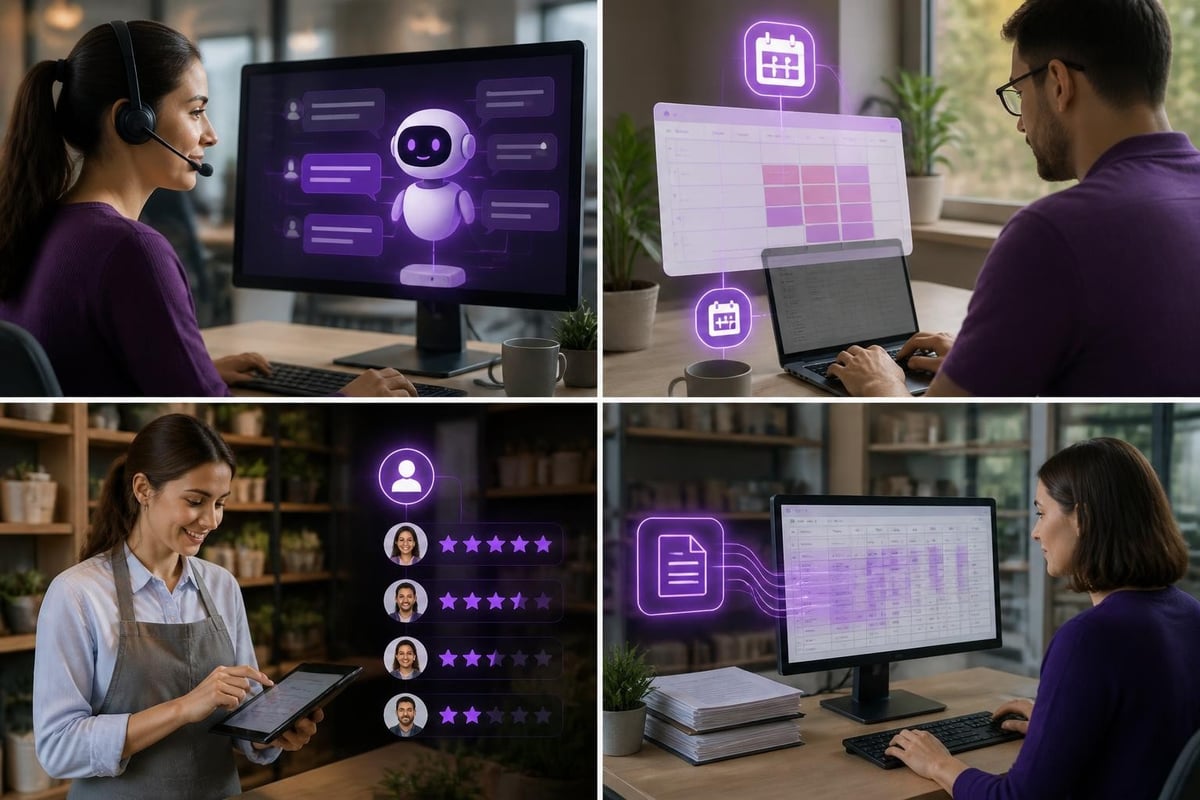
Here's where it gets practical. Depending on your sector and needs, an ai powered assistant might:
- Answer customer enquiries 24/7 via your website, email, or messaging apps
- Schedule appointments and send automated reminders
- Qualify leads by asking relevant questions before they reach your sales team
- Process orders and update inventory systems
- Generate reports from your business data
- Draft emails, quotes, or proposals based on templates and previous examples
For a recruitment agency, that might mean screening CVs and scheduling interviews. For a tradesperson, it could handle booking queries whilst you're on-site. The point is to identify what's eating up your time and see if an assistant can take it off your plate.
Choosing the Right AI Powered Assistant for Your Business
Not all ai powered assistant tools are created equal, and what works brilliantly for an eCommerce store might be useless for a construction firm. Here's how to narrow it down without getting overwhelmed.
| Factor | What to Look For | Why It Matters |
|---|---|---|
| Integration | Works with your existing tools (CRM, email, calendar) | No point having an assistant that doesn't talk to your systems |
| Customisation | Can be trained on your specific business language and processes | Generic responses don't cut it for most small businesses |
| Ease of Setup | Clear onboarding, doesn't require a developer | You need results fast, not a six-month IT project |
| Scalability | Grows with you as your needs change | What works for five enquiries a day needs to handle fifty |
| Cost | Transparent pricing that fits your budget | Hidden fees and enterprise pricing are deal-breakers |
Start by listing your three most time-consuming admin tasks. Then look for tools designed to handle those specific jobs. Setting up an AI chatbot walks through the practical steps for customer-facing assistants, which is often the best starting point.
The Ethics and Risk Side You Can't Ignore
Before you rush in, there's a responsible way to do this. The ethics of advanced AI assistants highlights important considerations around privacy, trust, and transparency that small businesses need to think about.
Key questions to ask:
- Where is customer data stored, and who has access?
- Can the assistant accidentally share sensitive information?
- Are customers told they're talking to AI, not a human?
- What happens if the assistant gives wrong information?
These aren't dealbreakers-they're just things you need to plan for. Clear policies, regular testing, and human oversight are non-negotiable. The NIST AI Risk Management Framework offers practical guidance on managing these risks, even for small operations.
Getting Started: A Practical Implementation Plan
Right, enough theory. Here's how you actually get an ai powered assistant working in your business without it turning into a nightmare project.
Step 1: Pick One Problem to Solve
Don't try to automate everything at once. Choose one specific pain point. For most small businesses, that's either customer enquiries, appointment booking, or initial lead qualification.
Step 2: Map Your Current Process
Write down exactly how you handle this task now. Every step, every decision point. This becomes your blueprint for training the assistant.
Step 3: Choose Your Tool and Set Boundaries
Based on your requirements, select a platform. More importantly, define what the assistant can't do. Maybe it handles FAQs but escalates pricing questions to a human. Clear boundaries prevent disasters.
Step 4: Train and Test Properly
Feed it real examples from your business. Test it with awkward questions. Get your team to try breaking it. Research on human-AI collaboration patterns shows that understanding how humans and assistants work together is crucial for success.

Step 5: Monitor and Improve
Set up simple tracking. How many enquiries did it handle? How many needed human intervention? What questions stumped it? Use this data to refine and improve. Practical evaluation plans for AI systems provides frameworks for measuring assistant performance.
Real-World Applications Across Different Sectors
Let's get specific about what this looks like in practice, because "AI can help your business" is useless without examples.
Retail shops can use an ai powered assistant to answer stock enquiries, track orders, and handle returns queries outside opening hours. One independent retailer saw a 40% reduction in phone interruptions during busy periods.
Professional services (accountants, solicitors, consultants) can automate appointment scheduling and initial client screening, freeing up hours for billable work. The assistant collects key information before the first meeting, making consultations more productive.
Trades businesses (plumbers, electricians, builders) benefit from 24/7 booking systems that capture jobs whilst competitors are unavailable. The assistant can ask diagnostic questions, provide rough time estimates, and schedule site visits.
Recruitment agencies can screen candidates, schedule interviews, and send personalised follow-ups automatically. AI-based recruiting explores how these tools are transforming hiring processes for smaller firms.
eCommerce businesses use assistants for product recommendations, order tracking, and abandoned cart recovery. The AI learns customer preferences and can upsell relevant products naturally.
Common Pitfalls and How to Avoid Them
Here's where businesses typically go wrong, and how you can dodge these mistakes:
- Expecting perfection immediately - AI assistants need training and refinement. Plan for 2-4 weeks of tweaking before they're running smoothly.
- Not involving your team - The people who currently do these tasks know the edge cases and tricky scenarios. Get their input early.
- Ignoring customer feedback - If customers complain the assistant is frustrating, listen. Sometimes a simple rephrasing of questions makes all the difference.
- Setting it and forgetting it - Regular reviews keep performance high. Monthly check-ins on accuracy and customer satisfaction are essential.
The research on organizational deployment of conversational agents shows that successful implementations always involve ongoing governance and adjustment.
Building Long-Term Capability, Not Dependency
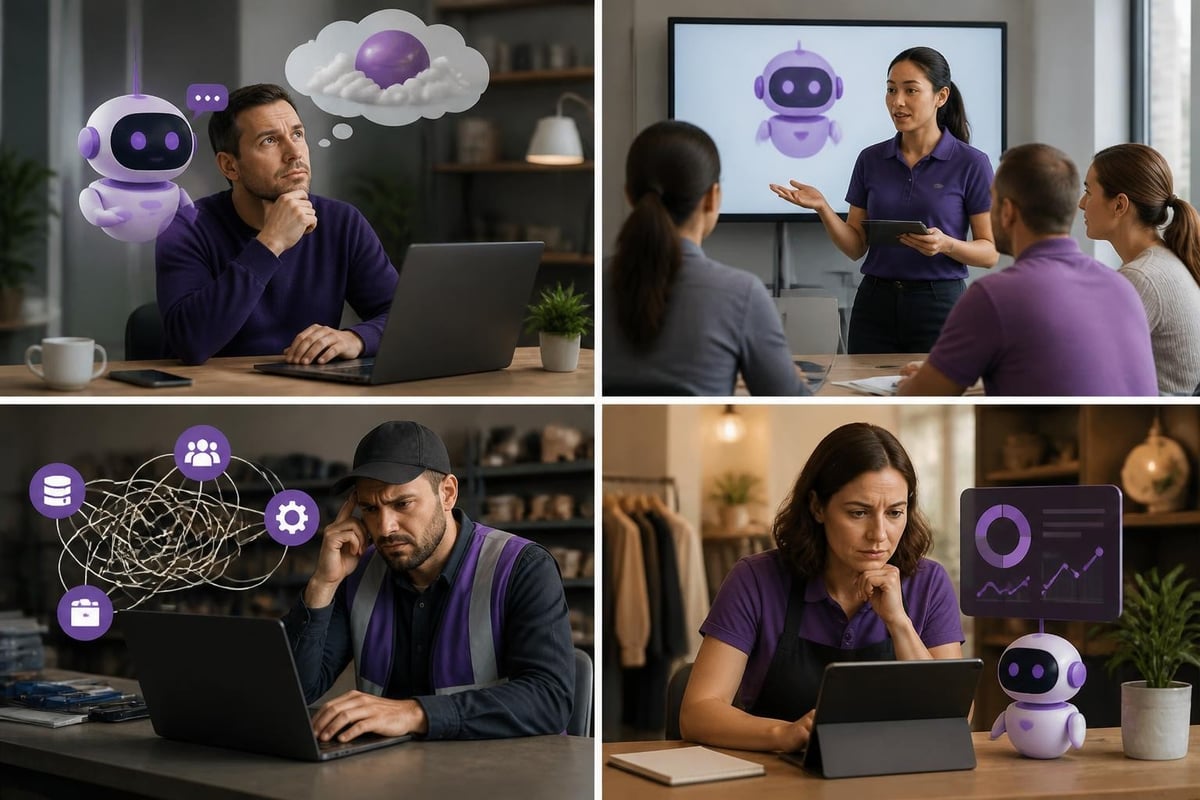
Here's something important: the goal isn't to become reliant on AI you don't understand. It's to build capability within your business that gives you a competitive edge.
That means:
- Training your team to work alongside the assistant, not just hand everything over
- Understanding the basics of how it works, even if you're not technical
- Maintaining human oversight on important decisions and sensitive situations
- Reviewing performance data to continuously improve
Custom AI agents for small businesses can be tailored specifically to your processes, creating tools that actually fit your workflow rather than forcing you to adapt to generic software.
The impact of AI assistants on professional work demonstrates how these tools are changing work patterns across industries-but the most successful implementations keep humans firmly in control.
Making It Work for Your Budget
Cost is always a factor for small businesses. The good news? An ai powered assistant doesn't need to break the bank.
Entry-level chatbot platforms start from around £20-50 per month. Mid-tier solutions with more customisation run £100-300 monthly. Custom-built assistants for specific workflows might be £1,000-3,000 upfront, then lower monthly fees.
Calculate your current cost of handling these tasks manually (staff time, missed opportunities from out-of-hours enquiries, mistakes from rushed work). Most small businesses find even basic automation pays for itself within 2-3 months.
Process automation breaks down the ROI calculation and helps you figure out where automation makes financial sense for your specific situation.
An ai powered assistant isn't magic, and it won't solve every problem in your business overnight. But if you choose the right tool, implement it thoughtfully, and monitor performance properly, it can genuinely transform how you work-freeing up hours each week for tasks that actually need your expertise. At AI 4 Small Business, we specialise in helping small businesses navigate these decisions without the hype or complexity. We'll identify what's actually worth automating in your business, select tools that fit your budget and needs, and get you up and running fast with solutions that deliver measurable results from day one.