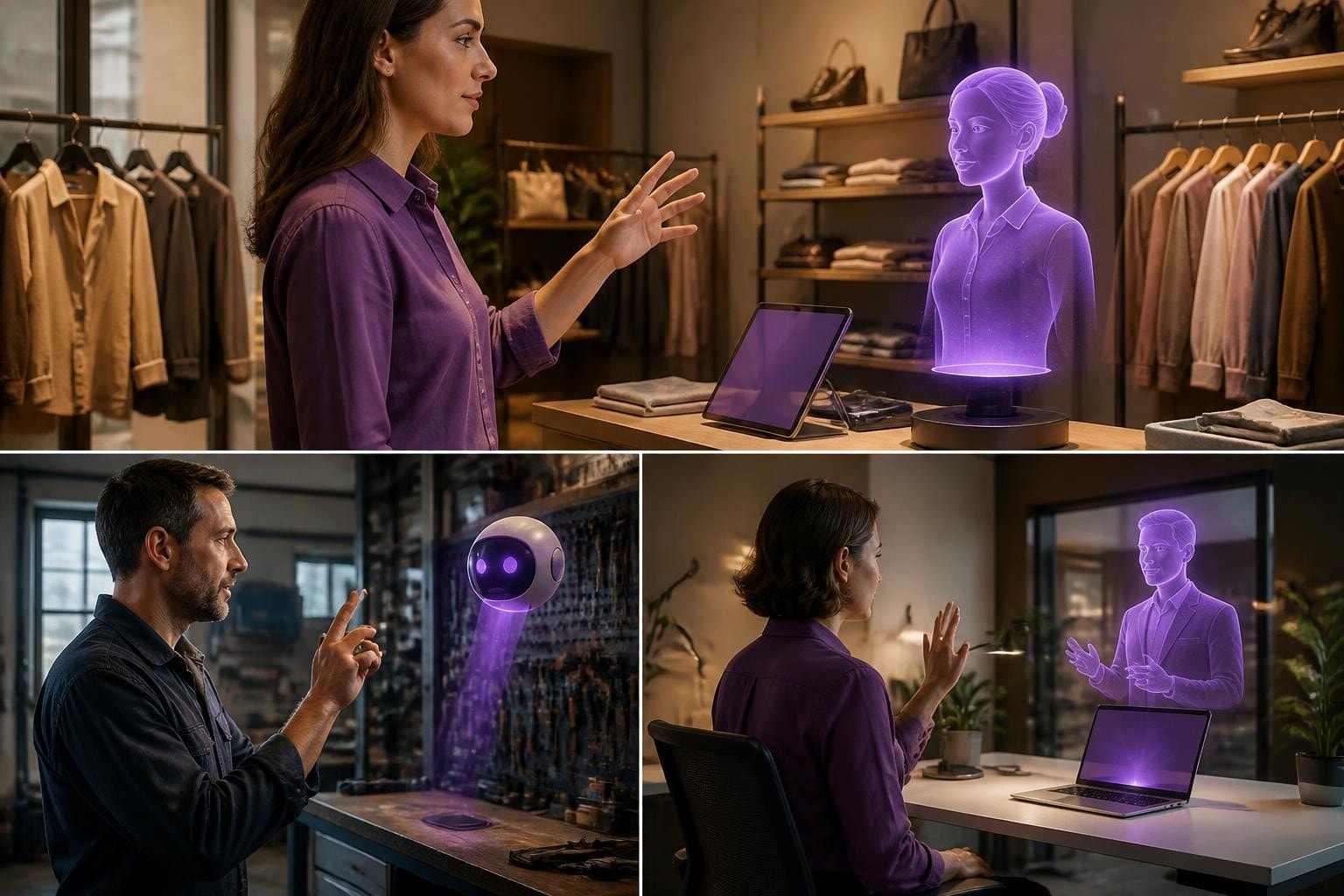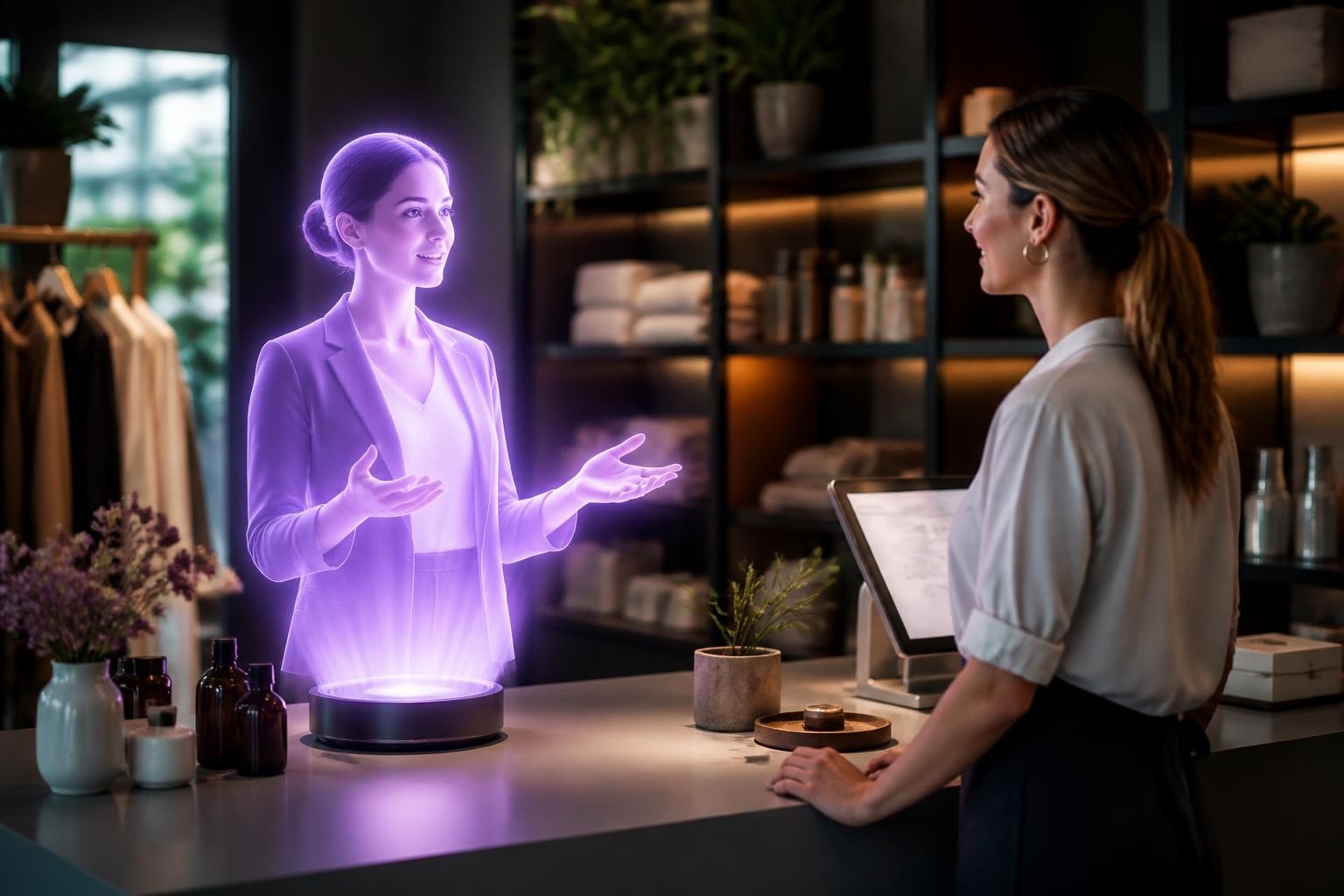
We've all seen those sci-fi films where someone talks to a life-sized hologram floating in mid-air, right? Well, that future's getting closer than you might think. The hologram ai assistant isn't just movie magic anymore-it's becoming a genuine technology that researchers and businesses are actively developing. For small businesses, understanding what's actually possible (versus what's still pure fiction) is crucial before you start planning your very own R2-D2. Let's cut through the hype and look at where this tech actually stands in 2026, and whether it'll genuinely help your business or just drain your budget.
What Actually Is a Hologram AI Assistant?
A hologram ai assistant combines two distinct technologies: holographic projection and artificial intelligence. Think of it as taking the voice assistants we already use-like Siri or Alexa-and giving them a visible, three-dimensional form that appears to exist in physical space.
The AI bit handles the brains: understanding your questions, processing information, learning from interactions, and providing intelligent responses. The holographic element provides the visual presence, creating a projected image you can see from multiple angles without special glasses.
The Tech Behind the Magic
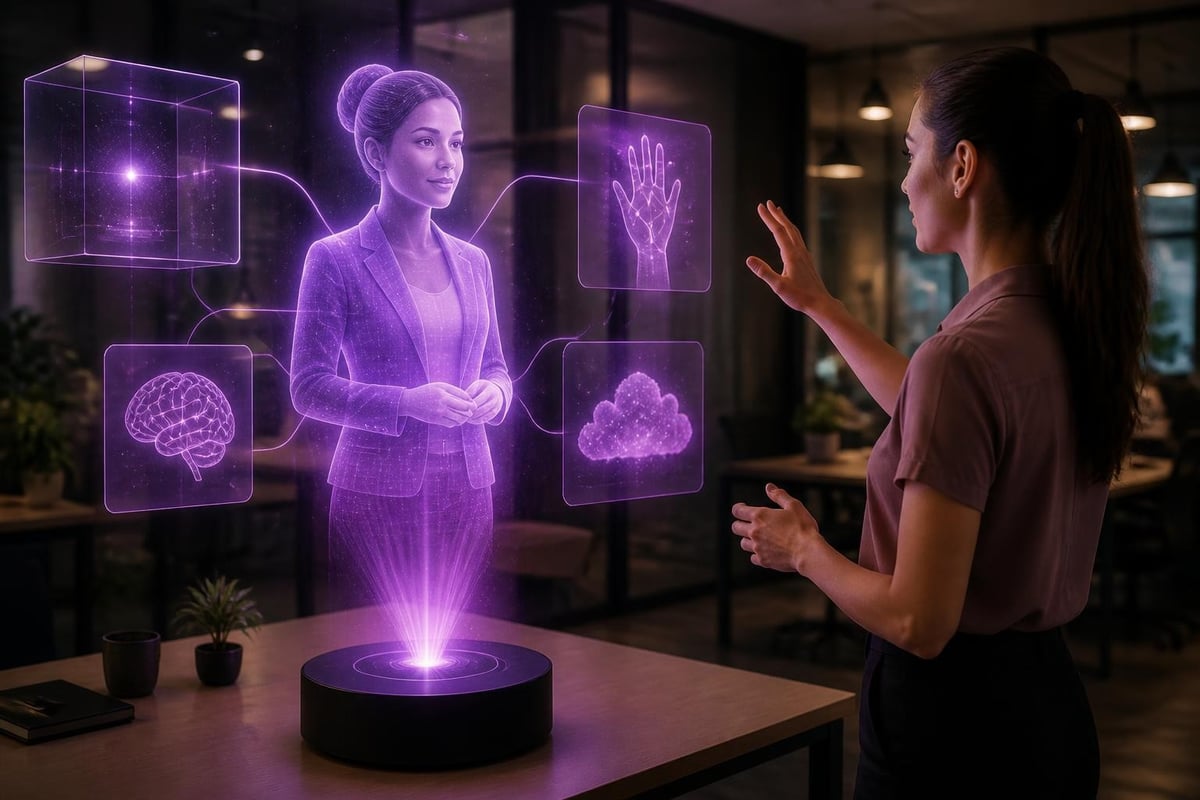
Here's what makes a hologram ai assistant tick:
- Volumetric displays that project light into 3D space
- Natural language processing to understand and respond to speech
- Computer vision to track users and respond to gestures
- Real-time rendering to animate the holographic avatar
- Cloud connectivity for processing power and data access
Right now, most prototypes use techniques like deep learning approaches to computational holography to generate realistic, interactive holograms. The challenge? Making it affordable and practical enough for everyday business use.
Current State: What's Real vs What's Vaporware
Let's be brutally honest-full Tony Stark-style holographic assistants aren't sitting on shelves at your local tech shop. But that doesn't mean nothing's happening.
| Technology Stage | What Exists Today | Business Availability |
|---|---|---|
| Research prototypes | University labs, tech demos | Not available |
| Limited commercial | Trade shows, high-end retail | Very expensive |
| Practical alternatives | AR glasses, tablet-based | Available now |
Research like the HIVA holographic intellectual voice assistant shows working prototypes that combine audiovisual holographic avatars with voice AI. Meanwhile, datasets like HoloAssist are helping researchers build assistants that can actually perceive and guide real-world tasks-not just chat.
The gap between lab and shop floor remains significant. For small businesses, the question isn't whether hologram ai assistant technology is cool (it absolutely is), but whether it solves actual problems better than simpler alternatives.
Practical Applications That Make Business Sense
Forget the flashy demos-where could this tech genuinely add value?
Customer-Facing Uses
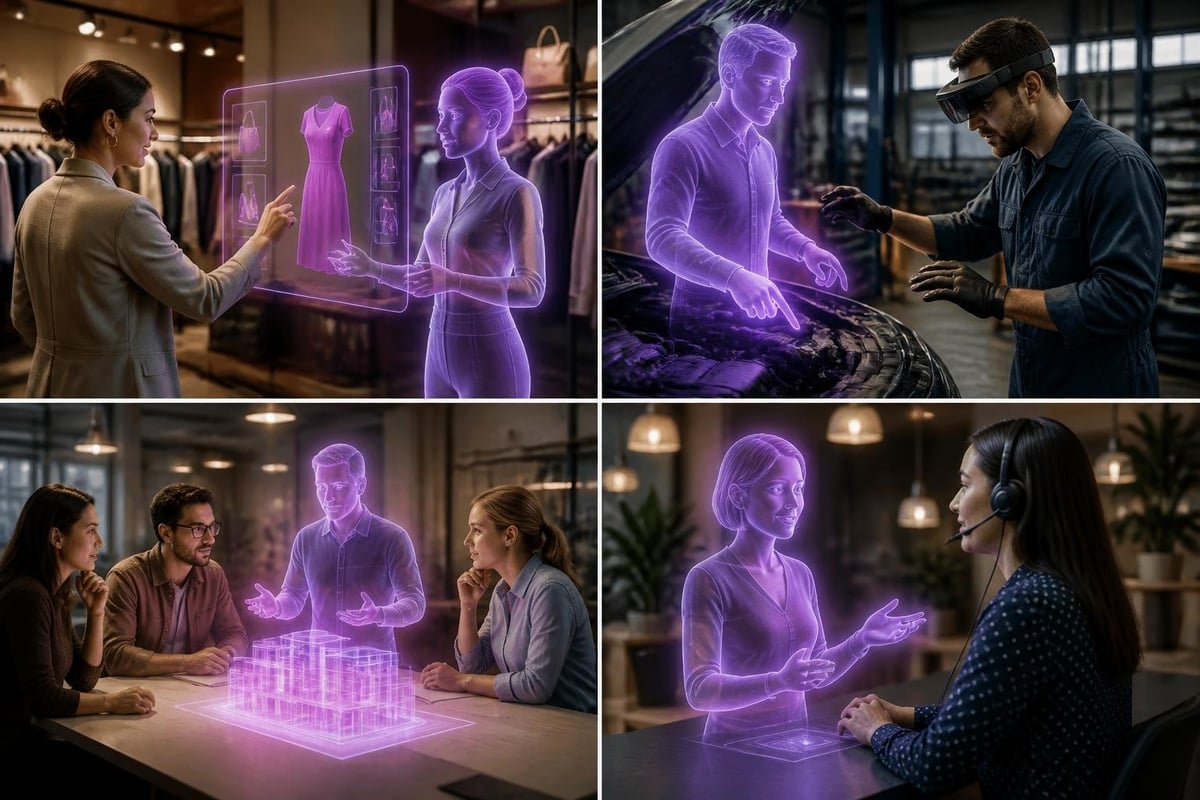
Retail and showrooms could benefit enormously. Imagine a holographic assistant in a furniture shop that shows how different sofas would look in various room settings, responds to questions about materials, and even remembers returning customers' preferences.
Reception and wayfinding in professional services firms or larger trade businesses could use holographic guides to direct visitors, answer basic queries, and free up human staff for more complex tasks.
Internal Business Operations
Here's where it gets interesting for custom AI agents:
- Training and onboarding where new employees learn procedures from an interactive holographic instructor
- Design reviews where teams examine 3D models together with an AI that suggests improvements
- Remote collaboration where distant colleagues appear as holograms in your workspace
The key question: does the holographic element actually improve the outcome, or would a screen-based solution work just as well for a fraction of the cost?
The Bridge Technology: What You Can Use Today
While true hologram ai assistant tech matures, there's a smart middle ground that delivers similar benefits without bleeding-edge costs.
AR-Based Solutions
Augmented reality on tablets or AR glasses provides many holographic benefits today. You get:
- Visual overlays on real-world environments
- Interactive AI guidance for complex tasks
- Gesture and voice control for hands-free operation
- Affordable hardware using existing devices
For trades businesses, AR-assisted AI can overlay wiring diagrams on walls or guide plumbing installations step-by-step. That's practical AI implementation you can deploy this year, not in five years.
AI-Powered Avatars
Screen-based AI avatars offer similar psychological benefits to holograms-a human-like presence that feels more engaging than text boxes. They're perfect for:
- E-commerce customer service where an avatar guides shoppers
- Website assistance that feels more personal than chatbots
- Training modules with consistent, patient instructors
Even tools like CMeIn demonstrate how AI-generated imagery creates realistic, personalized visuals that enhance digital experiences-a stepping stone toward more immersive holographic interfaces.
Trust, Privacy, and the Human Element
Before you rush to implement any AI assistant-holographic or otherwise-consider the broader implications. The ethical and societal risks of advanced AI assistants include privacy concerns, data security, and the potential for manipulation.
For small businesses, this means:
Data protection: What information does your AI assistant collect, store, and transmit? Your customers and employees need clear answers.
Transparency: Can people easily tell they're interacting with AI rather than a human? Deception damages trust permanently.
Human oversight: AI should augment your team, not replace human judgment on important decisions.
The Stanford HAI AI Index Report 2024 highlights growing public concern about AI governance-something every business needs to take seriously as they adopt more sophisticated AI tools.
Making the Decision: Is This Right for Your Business?
Here's the framework we use when small businesses ask about emerging AI tech:
| Question | Why It Matters |
|---|---|
| What problem does it solve? | Technology should fix specific pain points, not be cool for cool's sake |
| What's the simpler alternative? | Often a less exotic solution delivers 80% of the benefit at 20% of the cost |
| What's the implementation timeline? | If you need results in months, not years, choose proven tech |
| Can we scale it? | Pilot projects are fine, but can you roll this out across locations? |
For most small businesses in 2026, the honest answer is that hologram ai assistant technology remains too expensive and immature for practical deployment. But that doesn't mean you should ignore AI entirely.
Instead, focus on AI-powered assistant technologies that work today: chatbots, voice assistants, automated workflows, and intelligent automation tools that solve real problems without requiring a research lab.

Preparing for the Holographic Future
Even if you're not buying holographic hardware tomorrow, you can prepare your business for immersive AI:
Build your data foundations. Whether your future AI appears on a screen or floats in mid-air, it needs clean, organized data to be useful. Start creating your AI strategy now with the tools available today.
Develop AI literacy across your team. Understanding how AI works, what it can and can't do, and how to work alongside it will matter regardless of the interface.
Start with proven solutions. Process automation and workflow optimization deliver measurable returns today, building the foundation for more advanced AI implementation tomorrow.
Think about use cases, not technology. Don't ask "how can we use holograms?" Ask "where do our customers or team struggle with current tools?" The right solution might be holographic eventually, but it's probably something simpler right now.
The businesses that'll benefit most from hologram ai assistant technology when it arrives are those already successfully using today's AI tools. You can't leap from zero AI adoption to cutting-edge holograms-there's a learning curve, both technical and cultural.
The Realistic Timeline
When should small businesses actually expect to use hologram ai assistant technology?
2026-2027: High-end demonstrations and niche applications in luxury retail or flagship locations. Costs remain prohibitive for most small businesses.
2028-2030: Early commercial products emerge for specific industries. Think automotive showrooms, high-end estate agents, or specialist medical practices rather than general small business use.
2031+: Costs drop enough for broader small business adoption, assuming the technology proves genuinely useful versus AR alternatives.
That's not pessimism-it's realistic planning. The businesses succeeding in 2031 won't be those waiting for perfect technology. They'll be the ones who've spent the previous five years mastering AI fundamentals, understanding their processes, and building a culture of continuous improvement.
Holographic AI assistants represent an exciting glimpse of where business technology might head, but smart small businesses focus on what works today rather than what might work tomorrow. The principles remain the same: identify genuine business problems, choose tools that solve them cost-effectively, and build your team's capability to work alongside AI. If you're ready to implement practical AI solutions that deliver results now-not in five years-AI 4 Small Business can help you cut through the hype and build automations that actually move the needle for your business.