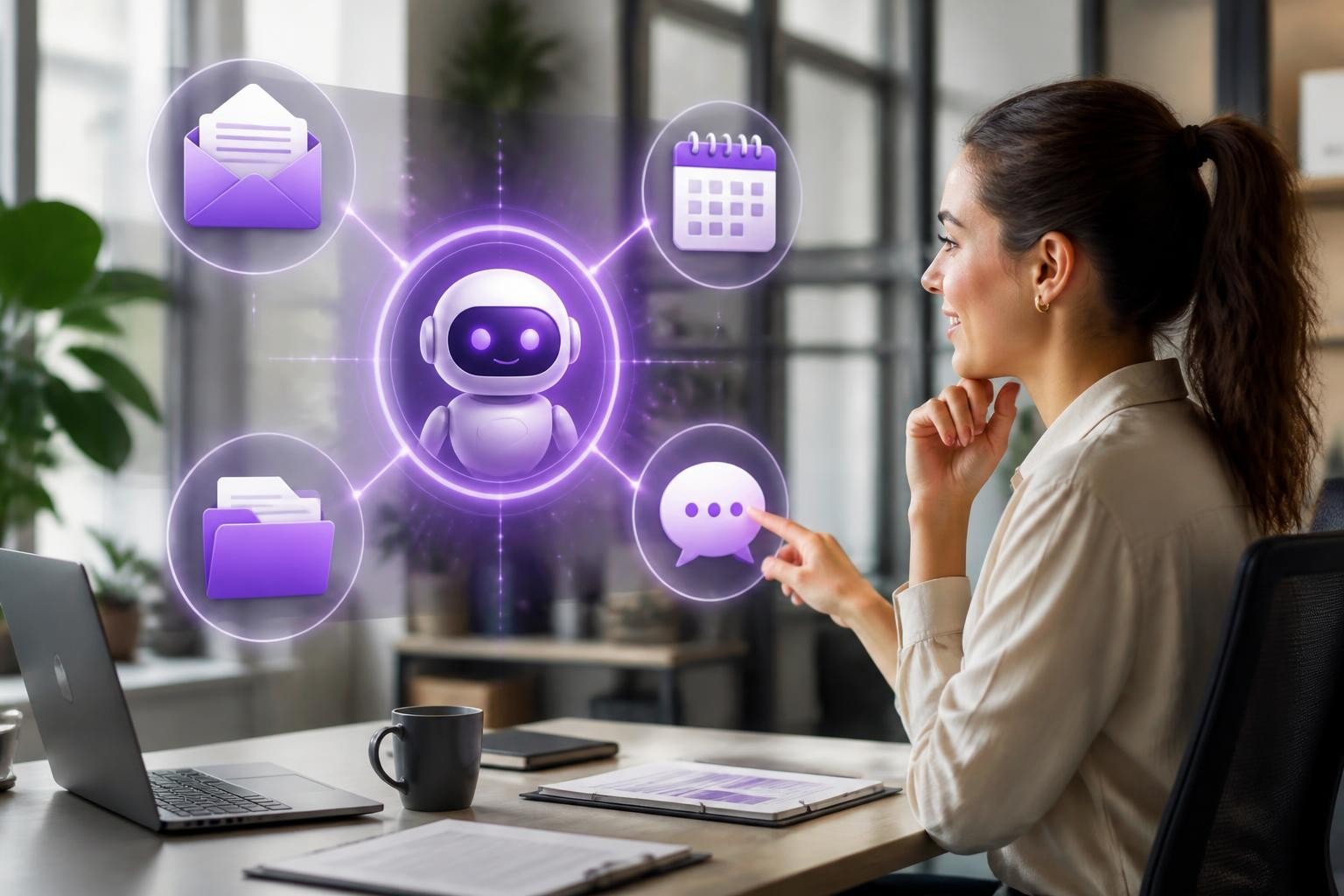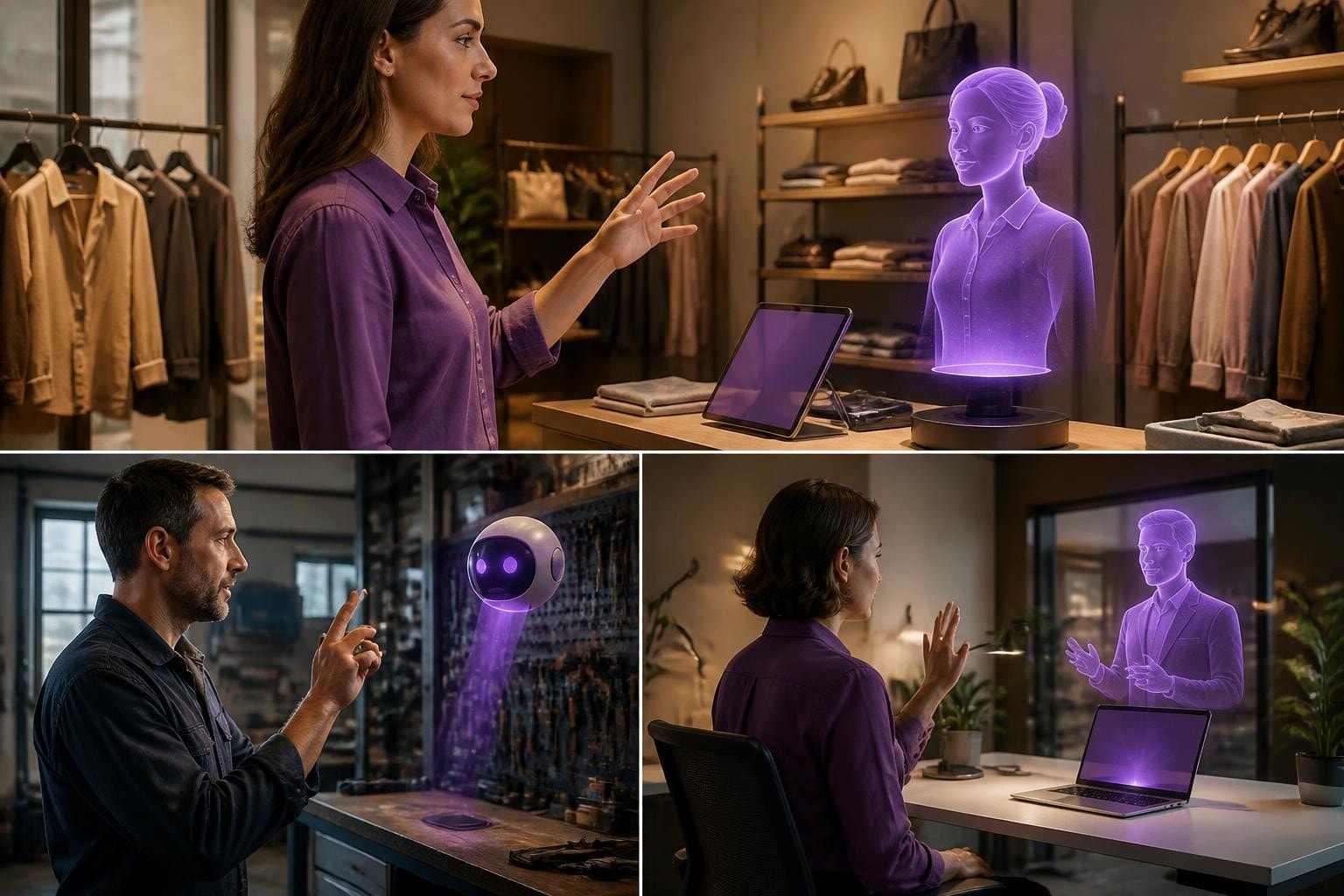
We're all familiar with voice assistants like Siri and Alexa, but there's something new emerging that's particularly useful for small businesses: the motion ai personal assistant. These systems understand physical gestures, body movements and spatial context to help you work more efficiently. Imagine managing your warehouse inventory with a wave of your hand whilst your arms are full, or controlling your workshop equipment through simple head movements when you're mid-task. For small businesses in trades, retail and professional services, this isn't science fiction-it's becoming a practical tool that solves real problems.
What Makes a Motion AI Personal Assistant Different
A motion ai personal assistant goes beyond voice commands by recognising hand gestures, head movements, eye gaze and even full-body actions. Research from CMU's Augmented Perception Lab on persistent assistants shows how multimodal systems combining gaze, gesture and haptics create more intuitive interactions than voice alone.
Think about situations where voice control isn't ideal:
- Noisy environments – construction sites, busy kitchens, retail floors during peak hours
- Hands occupied – plumbers carrying pipes, electricians on ladders, warehouse staff moving stock
- Privacy concerns – professional services meetings where speaking to a device would be disruptive
- Precision tasks – pointing at specific items, indicating measurements, selecting from visual menus
The real power comes from combining motion with other inputs. You might point at a product whilst saying "add three to order", or nod your head to confirm an action without interrupting your conversation with a customer.
Practical Applications Across Small Business Sectors
Retail and Customer Service
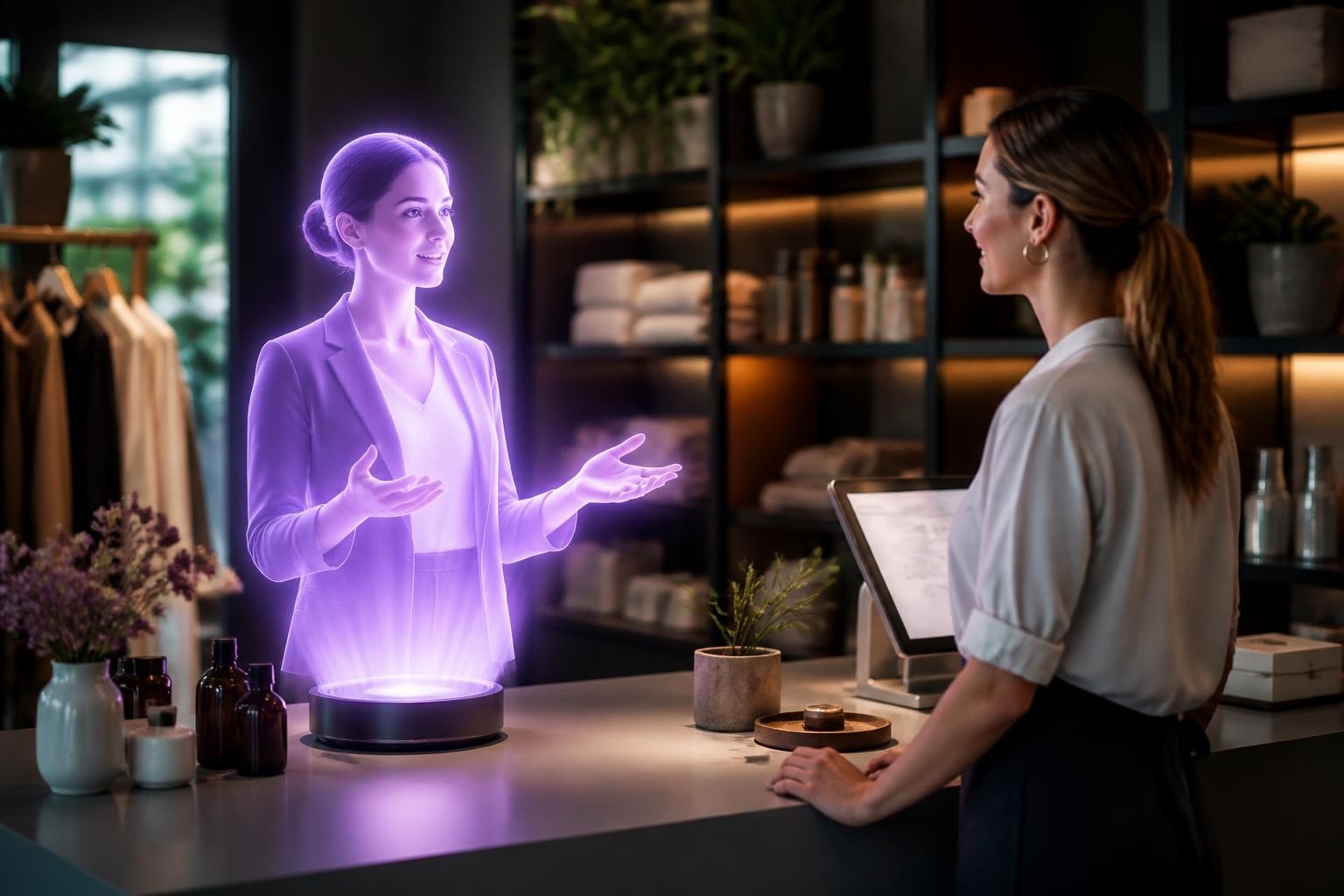
For retail businesses, a motion ai personal assistant can completely change how staff interact with systems during customer interactions. Your team can check stock levels with a glance at a product whilst staying engaged with the customer, or adjust pricing on digital displays with subtle hand gestures.
One practical setup involves using AI-powered workflows that recognise when staff point at specific products to pull up inventory data on their tablet or AR glasses. No fumbling with devices-just natural movements that keep the customer experience flowing.
Trades and Construction
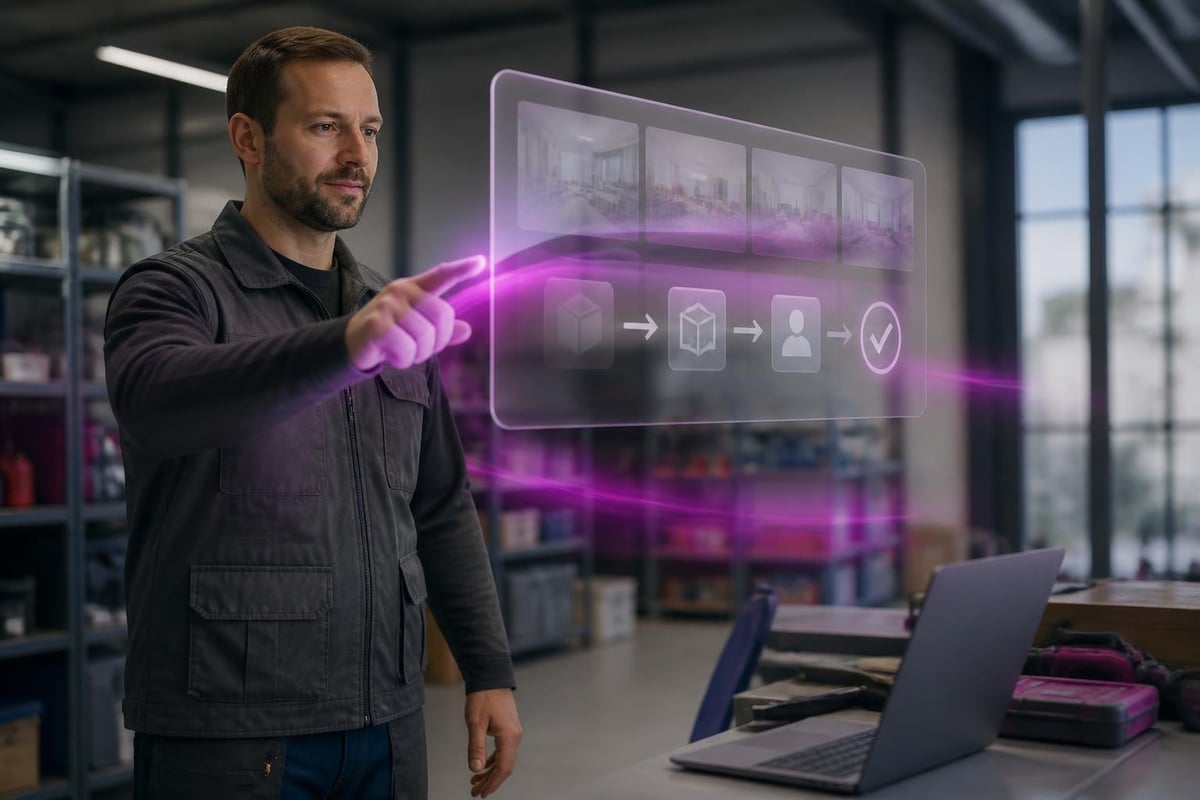
Electricians, plumbers and builders often have their hands full-literally. A motion-based system lets you control documentation, access plans, or log completed tasks through head movements or simple gestures. Recent work on proactive assistants for procedural tasks demonstrates how egocentric, motion-aware systems can guide workers through complex jobs step-by-step.
| Trade Sector | Motion Control Use | Business Impact |
|---|---|---|
| Plumbing | Head nod to mark task complete, point to log part usage | 15-20 min saved per job on admin |
| Electrical | Gesture to pull up circuit diagrams hands-free | Safer working, fewer interruptions |
| Construction | Point at area to capture measurements automatically | Faster quotes, reduced errors |
Professional Services and Recruitment
Even office-based businesses benefit from motion technology. During video calls, subtle gestures can control presentation slides or share specific documents without breaking eye contact with clients. For recruitment firms managing multiple candidate profiles, pointing at a screen section whilst reviewing CVs can trigger relevant background checks or reference requests.
The AAAI research on MotionGPT shows how treating motion as language tokens enables more natural interactions-your assistant understands the context of your movements, not just isolated gestures.
Building Your Motion-Enabled Workflow
Setting up a motion ai personal assistant doesn't require massive investment or technical expertise. Here's how small businesses can start:
- Identify high-value scenarios – Where are your team's hands occupied? When would voice control be disruptive or impractical?
- Choose appropriate sensors – Webcams, depth cameras or wearable sensors depending on your environment and budget
- Start with simple gestures – Three to five distinct movements (point, wave, nod, thumbs up, stop) cover most needs
- Connect to existing systems – Link gestures to your CRM, inventory management or project tracking tools
- Train and refine – Give staff time to adapt and adjust sensitivity based on real usage
The key is focusing on practical AI implementation that solves specific bottlenecks. You don't need to replace everything-just augment your current processes where motion control adds genuine value.
Privacy and Technical Considerations
One advantage of motion-based systems over always-listening voice assistants is privacy. Research from CMU's PrISM project demonstrates how multimodal sensors can recognise activity and context whilst preserving privacy-particularly important for professional services handling sensitive client information.
Technical requirements are surprisingly modest:
- Standard webcam or smartphone camera for basic gesture recognition
- Cloud processing or local edge computing depending on privacy needs
- Integration APIs to connect with your existing business tools
- Training datasets of 50-100 gesture examples per user for personalisation
Most small businesses can run effective motion AI on existing hardware. The latest gesture recognition models work reliably with standard cameras, making entry costs lower than you'd expect.
Combining Motion with Voice and Traditional Inputs
The smartest approach isn't replacing everything with gestures-it's creating a flexible system that uses the right input for each situation. Your warehouse staff might use motion control when carrying boxes, voice commands when walking between aisles, and traditional keyboard input for detailed data entry back at their desk.
This multimodal approach, explored in IEEE research on AI-driven personal assistants, means your team always has the most efficient interaction method available. The motion ai personal assistant adapts to them, not the other way round.
Integration with Existing Business Tools
Modern motion systems connect to the platforms you already use:
- CRM systems – Update customer records, log interactions, retrieve contact details
- Inventory management – Check stock, trigger reorders, mark items for quality control
- Project tracking – Update task status, log hours, flag issues for follow-up
- Communication tools – Control presentations, share screens, annotate documents in real-time
The focus should be on intelligent automation that reduces friction, not adding complexity. If a gesture saves your team 30 seconds ten times per day, that's 25 hours annually per person-time better spent on customers and growth.
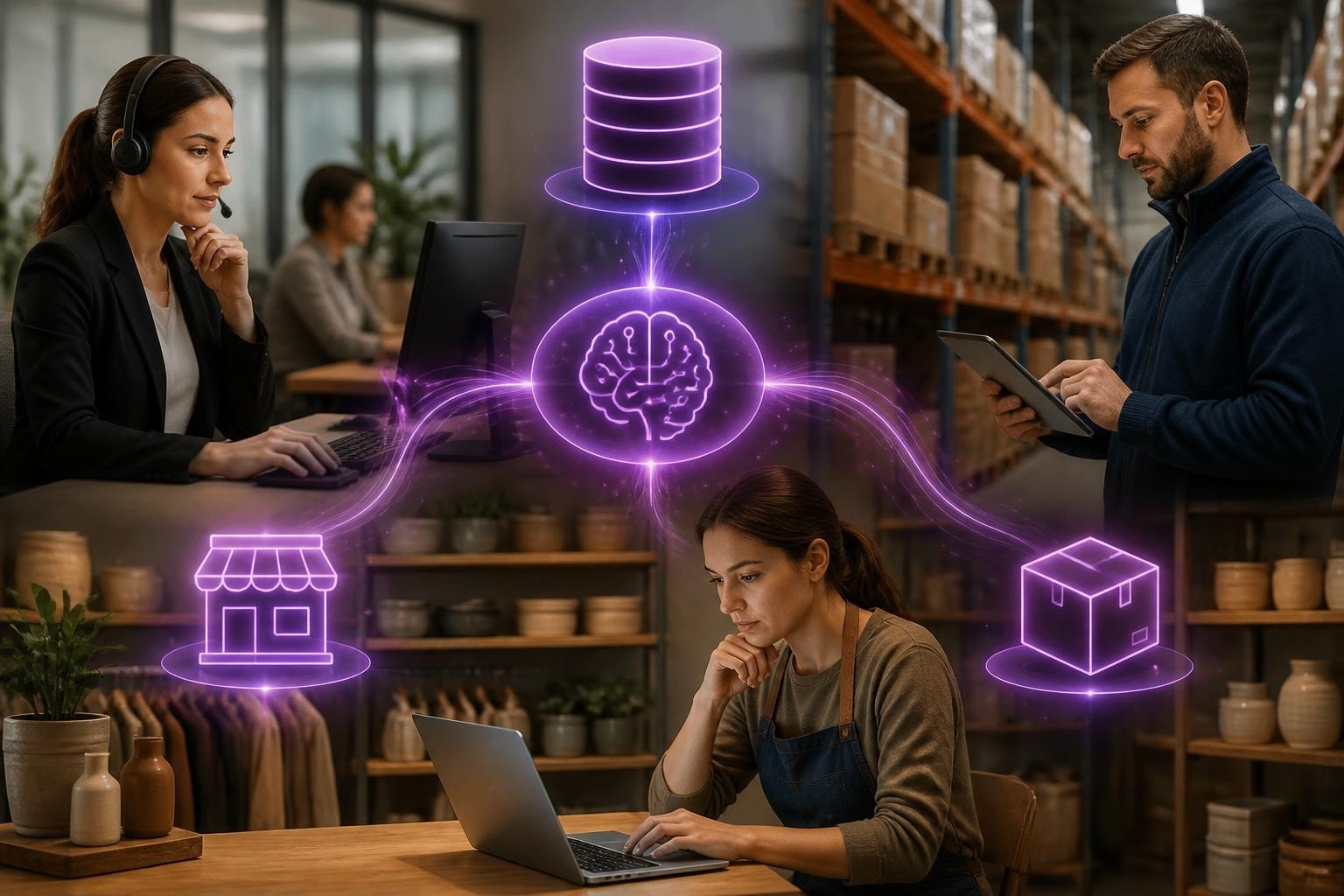
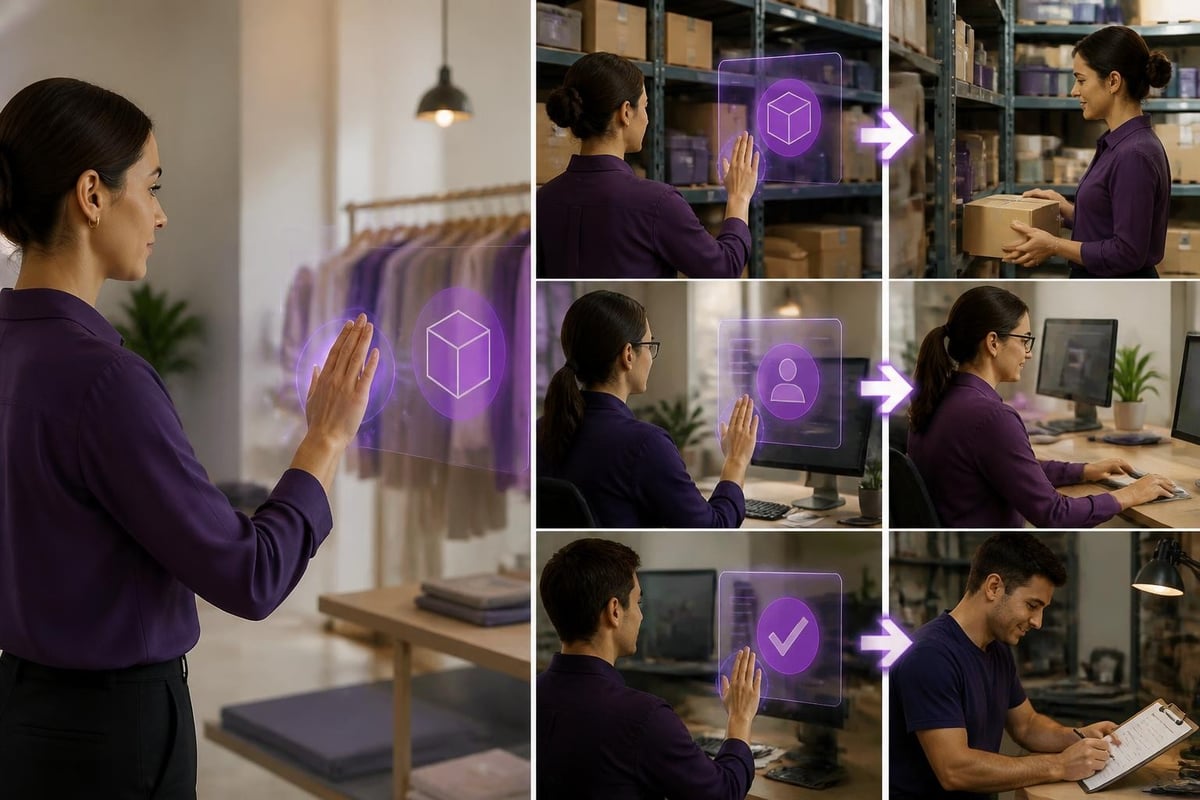
How gesture-based commands flow from physical movements through AI processing to trigger actions in CRM, inventory and project management platforms
What's Coming Next
The technology continues advancing rapidly. Grounded gesture generation research shows how systems will soon understand spatial context-pointing "over there" will mean different things in different rooms or when facing different directions. For businesses with multiple locations or complex physical layouts, this spatial awareness opens new possibilities.
By 2027, we'll likely see motion ai personal assistant capabilities built into standard business software packages. Early adopters who understand the fundamentals now will be positioned to extract maximum value as the technology matures and costs drop further.
The question isn't whether motion-based AI will become standard in small business operations, but which businesses will gain competitive advantage by implementing it first. Those who start experimenting with practical applications today-focusing on real bottlenecks rather than flashy demonstrations-will build the expertise and workflows that matter.
Motion AI isn't about replacing your team with robots-it's about removing friction from their daily tasks so they can focus on what humans do best. Whether you're in retail, trades or professional services, understanding how to layer gesture control, voice commands and traditional inputs creates more efficient operations. AI 4 Small Business helps you identify where motion technology delivers genuine ROI, select the right tools for your sector, and build automations that your team will actually use. No expensive custom development, no complexity-just practical solutions that make your business run better.