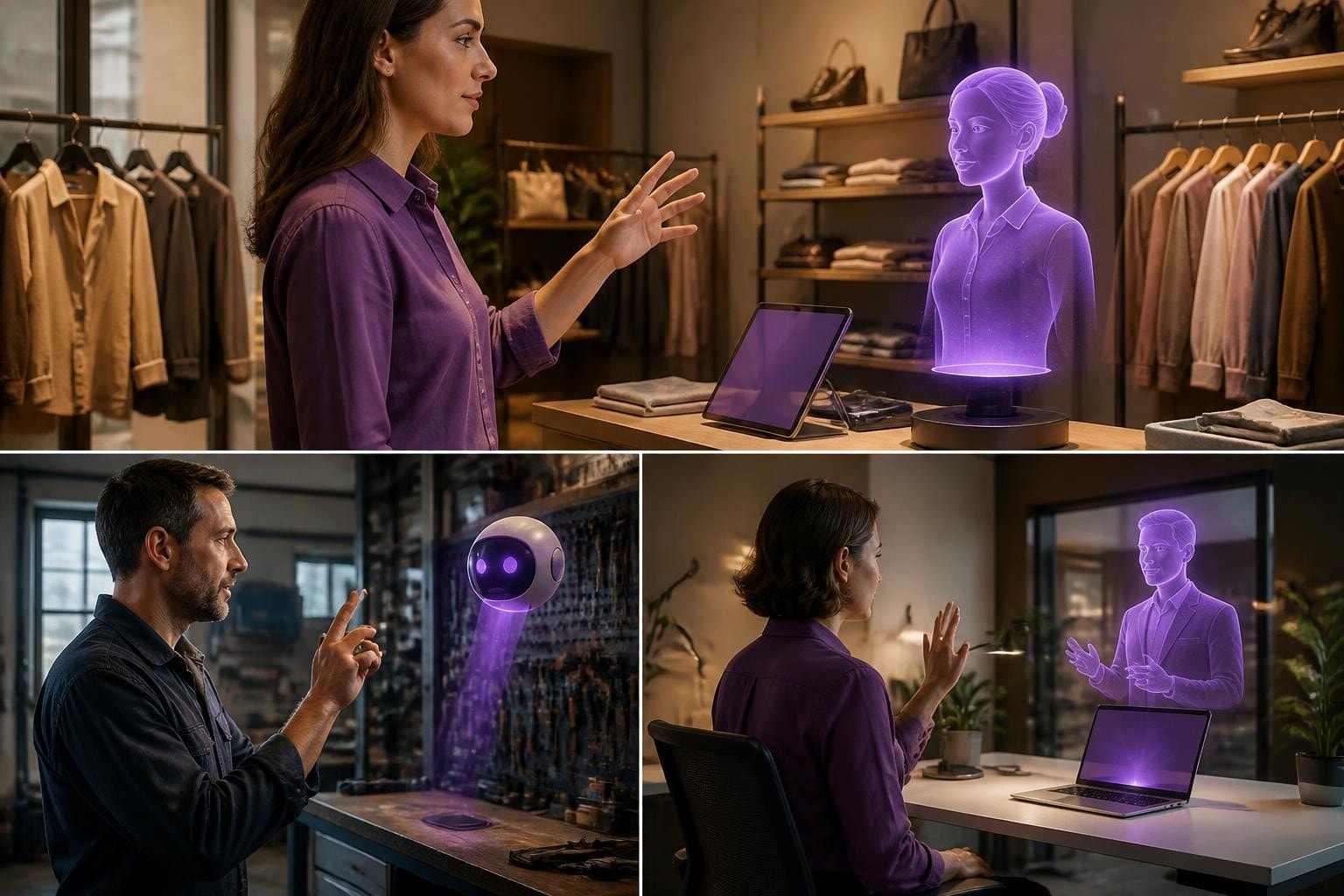
Running a small business means wearing multiple hats, and let's be honest, it's exhausting. Between managing customers, handling admin, and actually doing the work you're good at, there's barely time to breathe. That's where an ai workplace assistant comes in. We're not talking about some futuristic robot or expensive enterprise software-we're talking about practical AI tools that handle the boring, repetitive stuff so you can focus on growing your business. In 2026, these assistants are more accessible and useful than ever, especially for small businesses that need to work smarter, not harder.
What an AI Workplace Assistant Actually Does
Here's the thing: an ai workplace assistant isn't one specific tool. It's more like a category of AI applications that automate workplace tasks. Think email management, scheduling, document processing, customer enquiries, data entry, and more.
The beauty of these systems is they learn from your business patterns. Over time, they get better at understanding what you need and when you need it. For a recruitment agency, that might mean automatically screening CVs and scheduling first-round interviews. For a trade business, it could be managing job bookings and sending quotes to clients.
Key functions most workplace assistants handle:
- Email sorting, prioritisation, and draft responses
- Calendar management and meeting coordination
- Document creation, formatting, and filing
- Customer service enquiries and basic support
- Data extraction from invoices, receipts, and forms
- Task reminders and workflow management
Research shows that digital productivity assistants significantly improve worker efficiency when properly implemented, particularly in knowledge-intensive roles. The trick is choosing the right assistant for your specific business needs.

Choosing the Right AI Assistant for Your Business
Not every business needs the same type of assistant. A retail shop has different priorities than a professional services firm. Let's break it down by sector.
Retail and eCommerce
Your ai workplace assistant should handle inventory queries, order tracking, and customer service. Tools like Tidio or Zendesk AI can manage chat enquiries whilst you're serving customers in-store or fulfilling orders.
What to prioritise:
- Customer service automation (FAQs, order status)
- Inventory alerts and reordering suggestions
- Returns processing and refund management
Trades and Construction
For electricians, plumbers, or builders, the assistant needs to manage bookings, send quotes, and track job progress. Integration with your existing booking system is crucial.
| Business Type | Top Priority | Secondary Function | Tool Example |
|---|---|---|---|
| Electrician | Job scheduling | Quote generation | Custom AI agent |
| Plumber | Emergency call routing | Invoice creation | Twilio + AI |
| Builder | Project tracking | Supplier coordination | Monday.com AI |
Professional Services
Accountants, solicitors, and consultants need document handling and client communication. An ai workplace assistant here might draft routine emails, summarise meeting notes, or pull data from client files.
The Marco framework for business document workflows demonstrates how AI can effectively manage complex document collections, which is particularly useful for knowledge-based businesses.
Implementation: Getting Started Without the Headache
You don't need a massive budget or technical expertise to start using an ai workplace assistant. Here's the practical approach:
- Identify your biggest time-drains - What tasks eat up hours but don't require your expertise?
- Start with one process - Don't try to automate everything at once
- Choose a no-code tool or get expert help - Platforms like Zapier or Make.com work for simple automations; custom AI agents handle more complex needs
- Test with real scenarios - Run parallel systems initially to build confidence
- Gather feedback and refine - Your team's input is crucial for adoption
The reality is that worker acceptance matters enormously. Studies on staff perceptions of workplace AI show that transparency and user involvement during implementation dramatically improve outcomes.
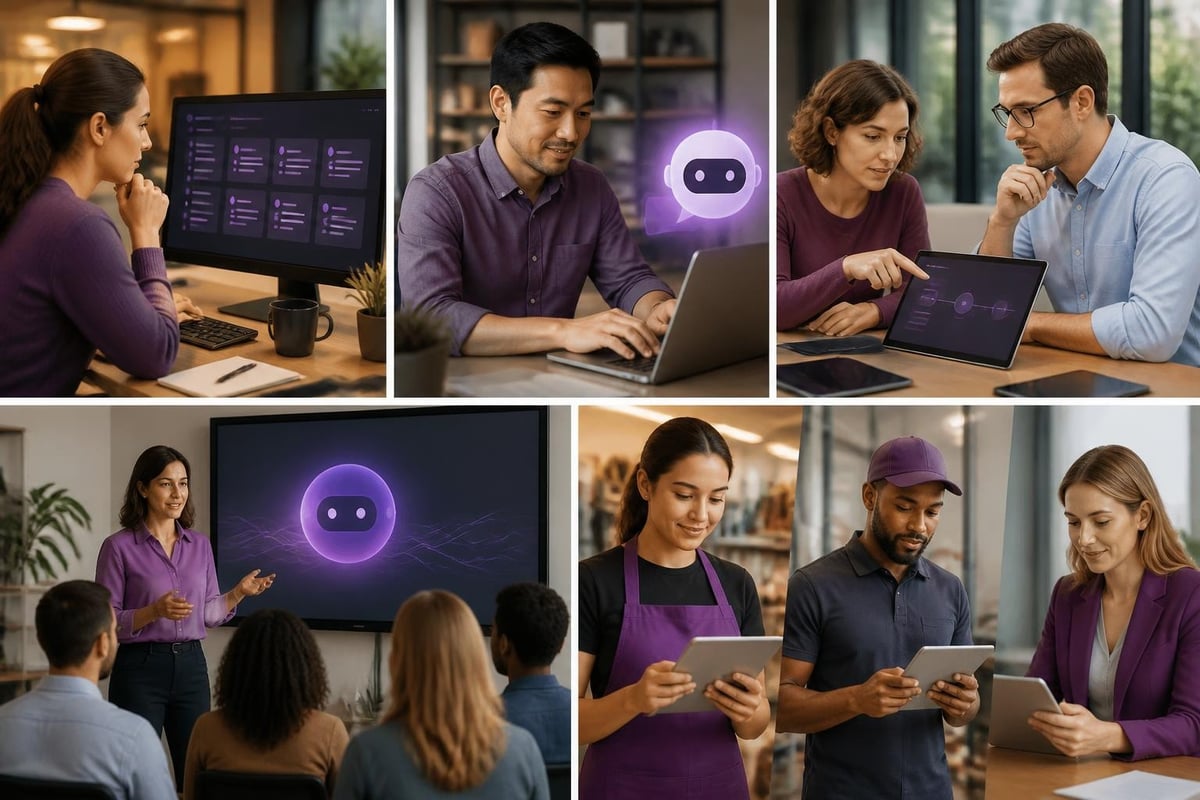
Real-World Applications Across Different Sectors
Let's talk specifics. Here's how businesses are actually using these tools in 2026:
Hospitality sector: A boutique hotel uses an ai workplace assistant to manage booking enquiries via email and WhatsApp, automatically checking availability and sending confirmation details. Staff only step in for complex requests or special arrangements.
Recruitment firms: CV screening takes hours when done manually. An AI assistant can review applications against job criteria, flag top candidates, and even schedule initial phone screens. The recruiter focuses on actual interviews and client relationships.
eCommerce operations: Order confirmations, shipping updates, and basic product questions all handled automatically. The assistant escalates only when a human touch is needed-like complaints or custom orders.
Understanding how intelligent automation tools integrate with your existing systems is essential for seamless operations.
Measuring Impact and ROI
Here's what actually matters: does your ai workplace assistant save time and money?
Track these metrics:
- Hours saved per week on specific tasks
- Response time to customer enquiries
- Error reduction in data entry or scheduling
- Staff satisfaction (are they less stressed?)
- Revenue impact (can you take on more work?)
Most small businesses see measurable benefits within 4-8 weeks. That might be 10 hours saved weekly on admin, faster customer responses, or simply having capacity to grow without hiring immediately.
The Brookings analysis of generative AI and workforce implications highlights that businesses combining AI tools with proper training see the strongest productivity gains.
Common Pitfalls and How to Avoid Them
Let's be honest about what can go wrong:
Over-automation too quickly - Don't hand everything to AI on day one. Start small, build confidence, expand gradually.
Ignoring data privacy - Especially crucial for professional services. Make sure your assistant handles client data properly and complies with UK GDPR requirements.
No human oversight - AI makes mistakes. Always have review processes, particularly for customer-facing communications.
Forgetting about your team - Concerns around worker power and algorithmic management are real. Involve staff early, explain how the assistant helps them, and address fears honestly.
The best implementation approach? Think of your ai workplace assistant as a team member who handles the tedious bits whilst your human team focuses on what actually needs creativity, empathy, and expertise.
Building vs. Buying: What Works for Small Business
You've got two main routes: off-the-shelf tools or custom-built solutions.
Off-the-shelf pros:
- Quick setup (often same-day)
- Lower upfront cost
- Regular updates included
- Support communities
Off-the-shelf cons:
- Limited customisation
- Monthly subscriptions add up
- Might not fit your exact workflow
- Data locked in their platform
Custom-built pros:
- Tailored to your exact processes
- Integrates with your existing systems
- You own the solution
- Scales with your business
Custom-built cons:
- Higher initial investment
- Takes longer to deploy
- Requires expert development
For most small businesses, starting with ready-made tools makes sense. As you grow and your needs become more specific, custom AI development delivers better long-term value.

Looking Ahead: What's Next for Workplace AI
The ai workplace assistant landscape in 2026 is evolving rapidly. We're seeing better language understanding, improved multi-tasking capabilities, and deeper integration across business tools.
Voice-based assistants are becoming more practical for hands-on businesses. Imagine a builder updating job progress or logging materials simply by speaking whilst on-site. That's already happening.
The key trend? AI that works within your existing ecosystem rather than forcing you to change how you operate. Whether you're exploring AI-powered marketing automation or process automation more broadly, the focus is on practical implementation that delivers measurable results.
Your ai workplace assistant should feel like hiring a really efficient, tireless team member who never takes holidays and never complains about repetitive tasks. That's the benchmark for 2026.
An ai workplace assistant isn't about replacing your team-it's about giving them capacity to do better work by removing the boring, repetitive tasks that drain energy and time. Whether you're running a trade business, retail shop, or professional service, the right AI tools can deliver tangible time savings within weeks. If you're ready to explore what's possible for your specific business, AI 4 Small Business can help you identify the right approach, implement practical solutions, and deliver measurable impact without the jargon or complexity.