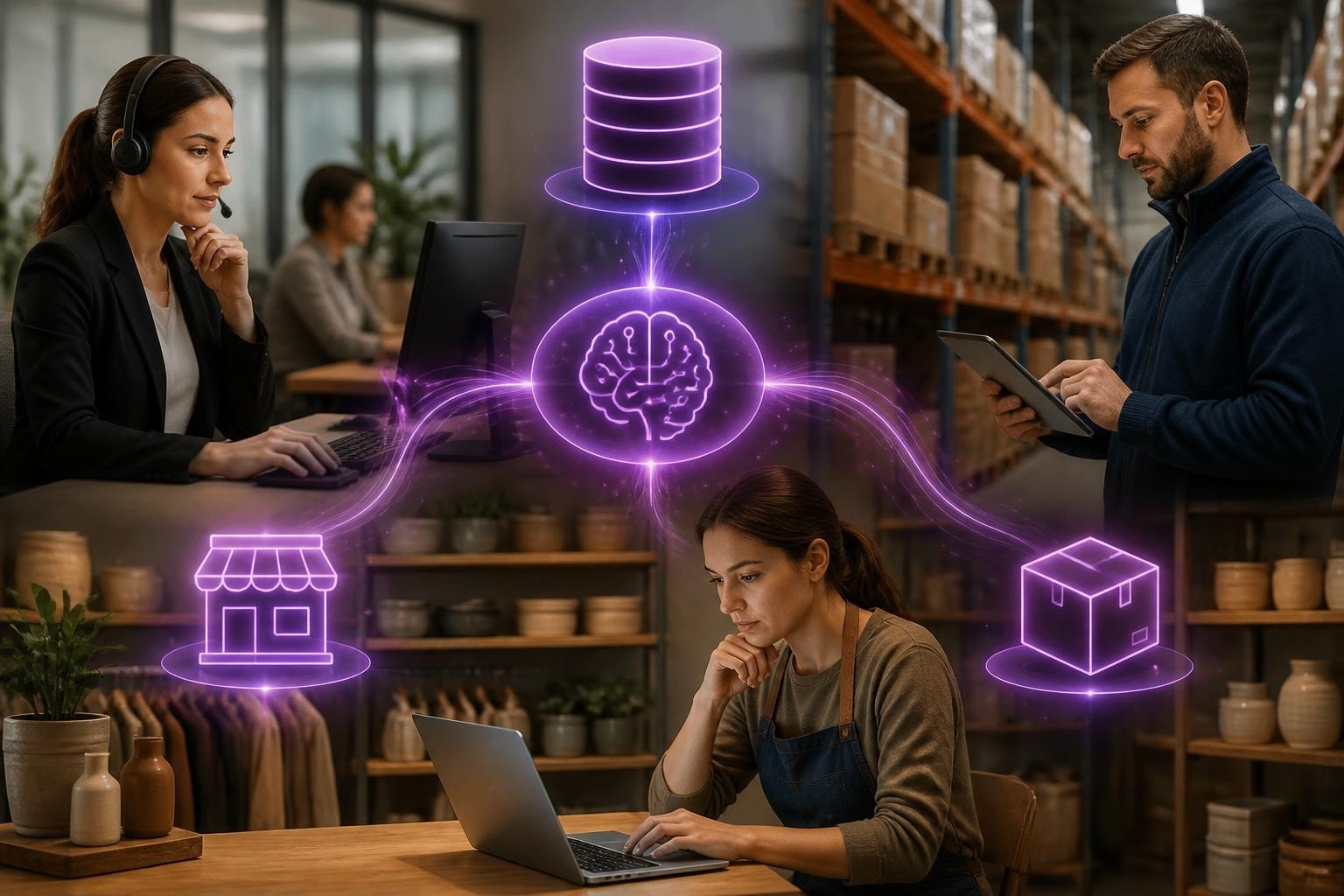
You've probably noticed something interesting about your business software lately. Features that used to require third-party add-ons or complex integrations now just... work. That's built in ai doing its thing. Whether it's your accounting package suggesting invoice categories or your CRM predicting which leads need attention, AI is increasingly becoming part of the fabric of the tools you already use. For small businesses, this shift is actually brilliant news because it means less setup, lower costs, and quicker results.
What Actually Is Built In AI?
Built in ai refers to artificial intelligence capabilities that are embedded directly into applications, devices, or systems rather than bolted on afterwards. Think of it like having satnav built into your car versus sticking a TomTom on the dashboard. The functionality is native, integrated, and designed to work seamlessly with everything else.
SAP's explanation of embedded AI highlights how enterprise software is leading this charge, but the same principles apply to small business tools. When AI is built in from the ground up, it understands the context of what you're doing and can offer help at exactly the right moment.
Why This Matters More Than Standalone AI Tools
Here's the thing about standalone AI tools: they're brilliant when you need them, but they create extra steps in your workflow. You've got to export data, copy information across, or switch between platforms.
Built in ai eliminates these friction points:
- No data shuffling: The AI already has access to your information
- Contextual suggestions: It understands what you're working on right now
- Fewer subscriptions: One tool does multiple jobs
- Lower learning curve: The AI features work like the rest of the interface
According to TechRadar's coverage of AI PCs, over half of devices shipped in 2026 now include AI capabilities at the hardware level. This means the shift towards built in ai isn't just happening in software.

Real-World Applications for Small Businesses
Let's get practical. Where are you actually seeing built in ai make a difference in 2026?
Customer Communication Tools
Your email platform probably now suggests responses based on the content of incoming messages. Your chat widget can handle common questions without you lifting a finger. These aren't separate chatbot services you've had to configure-they're just there, learning from how you communicate.
For retail businesses, this means customer queries get answered faster. For trades, it means you're not losing quotes because you didn't reply quick enough. AI powered assistants are becoming standard features rather than premium add-ons.
Financial Management
| Traditional Approach | Built In AI Approach |
|---|---|
| Manually categorise transactions | Automatic categorisation based on patterns |
| Chase late invoices on a spreadsheet | Predictive reminders before payments are overdue |
| Month-end reconciliation takes hours | Real-time anomaly detection and instant alerts |
| Budget forecasting requires separate tools | Integrated cash flow predictions within your accounting software |
The accounting software you're already using likely has built in ai features that can spot unusual spending patterns, predict cash flow issues before they happen, and automate reconciliation tasks that used to eat up hours each month.
Inventory and Operations
If you're in eCommerce or retail, built in ai is transforming stock management. Your system now learns seasonal patterns, suggests reorder points, and can even predict which products will trend based on browsing behaviour.
- Demand forecasting: The system analyses historical sales and external factors
- Automated reordering: Stock levels trigger purchases before you run out
- Price optimisation: Dynamic pricing based on demand and competitor activity
- Waste reduction: Better predictions mean less overstock
Construction and trades businesses are seeing similar benefits with materials management and job scheduling becoming smarter without requiring separate custom AI development.
The Technical Side (Without the Headache)
You don't need to understand the technical architecture to benefit from built in ai, but it helps to know what's happening behind the scenes. Research published in ArXiv highlighting embedded AI as a systems problem explains how modern implementations handle processing efficiently.
The clever bit? Much of this AI now runs locally on your devices rather than constantly sending data to the cloud. That means faster responses, better privacy, and lower running costs.

Security and Governance Considerations
When AI is built into your business tools, you need to think about data access and security differently. The NIST guidance on AI cybersecurity provides a framework for understanding these risks.
Key questions to ask your software providers:
- Where does the AI processing happen? (On-device, cloud, or hybrid?)
- What data is the AI trained on?
- Can you control which features have AI enabled?
- How are AI decisions logged and audited?
For professional services handling sensitive client data, these aren't academic questions. Understanding the governance side of built in ai helps you stay compliant whilst still benefiting from automation.
Making Built In AI Work for Your Business
The beauty of built in ai is that you're probably already using it without realising. But you can be more intentional about maximising its value.
Start with an audit of your current tools:
Check which platforms you subscribe to and dig into their recent updates. Most software companies have added AI features in the past year but haven't made a big song and dance about it. Look in settings menus, feature releases, and help documentation.
Enable features gradually:
You don't have to switch everything on at once. Pick one process that's currently time-consuming and see if built in ai can help. Maybe it's email triage, maybe it's data entry. Test, measure, adjust.
Train your team:
Built in ai only delivers value if people know it's there and trust it. Spend time showing your team how these features work and, crucially, when to override them. Intelligent automation tools should augment human judgement, not replace it entirely.

What's Coming Next
The trajectory is clear: built in ai will become as standard as spell-check is today. By 2027, you'll struggle to find business software that doesn't have some form of AI assistance baked in.
For small businesses, this democratisation of AI is genuinely exciting. You get access to capabilities that were previously only available to enterprises with massive IT budgets, but through the tools you already use and understand.
The challenge isn't technical anymore. It's strategic. Which processes should you automate first? How do you maintain the human touch whilst leveraging AI efficiency? Where should you invest time in understanding these capabilities versus just letting them run in the background?
These are business decisions, not IT projects. And that's exactly how it should be. When AI implementation becomes about outcomes rather than infrastructure, small businesses can compete on a much more level playing field.
The businesses thriving in 2026 aren't necessarily the ones with the fanciest AI setups. They're the ones that have embedded AI thinking into how they operate daily, using built in ai features to free up time for the work that actually grows their business.
Built in ai is transforming how small businesses operate by making powerful automation accessible through everyday tools. The shift from complex integrations to native features means you can focus on results rather than technical setup. If you're ready to identify which AI capabilities can deliver the biggest impact in your business, AI 4 Small Business helps you cut through the noise and implement practical solutions that actually work. We'll show you what's already available in your existing tools and where targeted automation can save hours every week.