The landscape of commerce has shifted dramatically, and artificial intelligence isn't just for tech giants anymore. Small business owners across the UK are discovering that ai in businesses can level the playing field, giving them tools that were once exclusive to corporations with massive budgets. You don't need a computer science degree or a six-figure investment to start benefiting from AI. What you need is a clear understanding of what's actually possible and how to implement it without getting overwhelmed by technical jargon.
Understanding What AI Actually Does for Small Businesses
Let's strip away the complexity. When we talk about ai in businesses, we're really discussing tools that handle repetitive tasks, spot patterns you might miss, and help you make smarter decisions faster.
Think about your typical Tuesday morning. You're probably:
- Responding to the same customer questions you answered last week
- Updating spreadsheets with sales data
- Scheduling social media posts
- Chasing invoice payments
- Trying to work out which products are selling and which aren't
These aren't just time-consuming tasks. They're also predictable, which makes them perfect candidates for automation. According to recent reports on AI adoption among US businesses, more companies are recognizing this potential, and the trend is mirroring across the pond.
The Reality Check: What AI Can't Do
Before we dive into applications, let's be honest about limitations. AI won't understand the unique relationship you have with your longest-standing client. It can't replace the gut instinct that comes from years in your industry. What it can do is free up your time so you can focus on those irreplaceable human elements whilst it handles the predictable stuff.

Practical Applications That Actually Matter
The diverse applications of AI in business operations might seem endless, but let's focus on what works for smaller operations.
Customer Service Without the Headache
Chatbots have evolved beyond those frustrating "I don't understand" responses. Modern AI-powered chat tools can:
- Answer 80% of common questions instantly
- Collect customer information before handing over to you
- Work weekends and evenings (when you shouldn't have to)
- Learn from each interaction to improve responses
One bakery owner I know set up a simple chatbot to handle opening hours, allergen queries, and custom cake requests. She now spends 15 minutes each morning reviewing overnight enquiries instead of 90 minutes answering the same questions individually.
Marketing That Doesn't Drain Your Budget
| Traditional Approach | AI-Enhanced Approach | Time Saved |
|---|---|---|
| Manual email sorting | Automated segmentation | 5 hours/week |
| Guessing posting times | AI-optimized scheduling | 3 hours/week |
| Generic messaging | Personalized content | 4 hours/week |
| Random ad targeting | Predictive audience matching | 6 hours/week |
The growing use of AI tools by small businesses shows that marketing automation delivers the biggest immediate impact. You're not creating more work; you're letting AI handle the data analysis whilst you craft the creative message.
Getting Started Without Getting Stuck
Here's where many small business owners freeze: the implementation phase. You've read about ai in businesses transforming operations, but where do you actually begin?
Start stupidly small. Pick one repetitive task that annoys you daily.
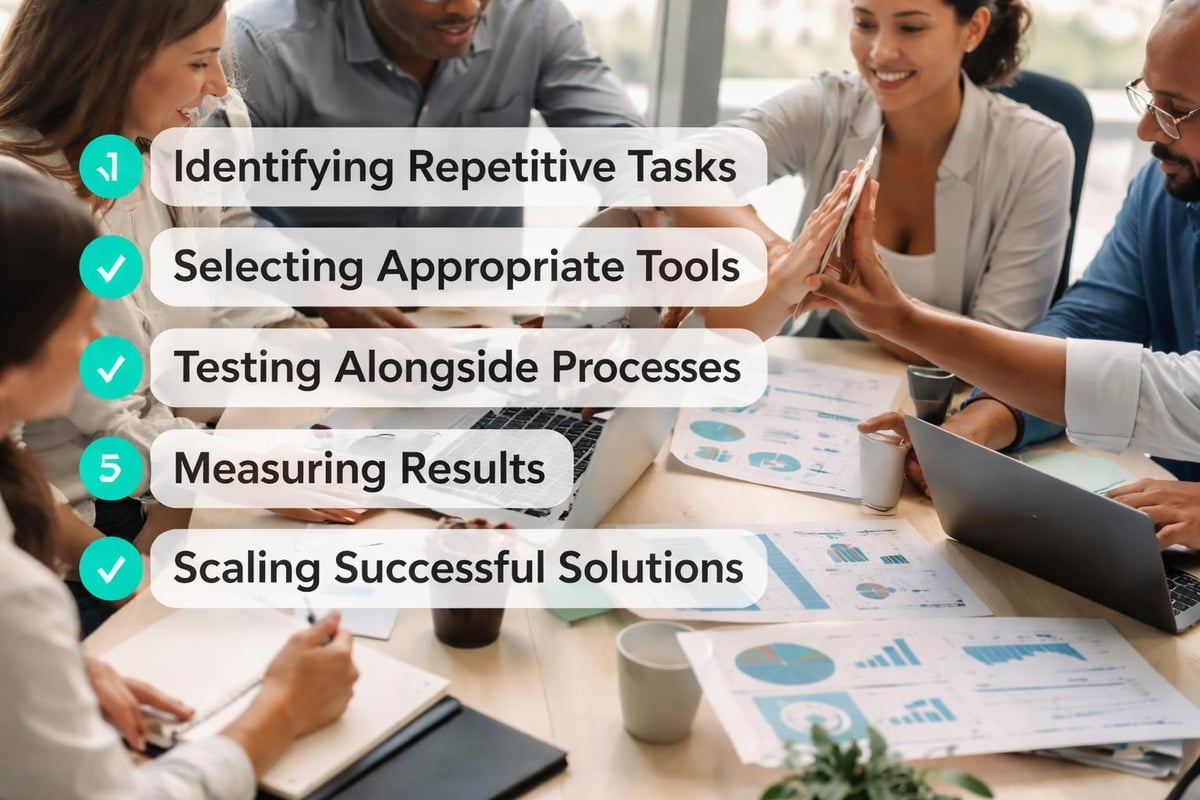
For our AI case studies, we've found the most successful implementations follow this pattern:
- Week 1: Identify the task and find one tool to test
- Week 2: Run it alongside your current process
- Week 3: Compare results and refine
- Week 4: Commit or abandon based on actual results
The Tools You Can Actually Afford
Forget the complicated platforms. Focus on accessible options that don't require a technical team. Many small businesses find success with chatbot builders, automated booking systems, and inventory prediction tools that cost less than £50 monthly.
The key is avoiding what we call "AI dependency." You want tools that enhance your capabilities, not systems you can't operate without. If you're curious about this balance, our thoughts on avoiding AI dependency explain this philosophy in detail.
Common Mistakes and How to Dodge Them
Mistake #1: Trying to automate everything at once.
You'll overwhelm yourself and your team. One accountant tried to implement AI for bookkeeping, customer service, and marketing simultaneously. Three months later, nothing worked properly because he couldn't focus on getting any single system right.
Mistake #2: Choosing tools based on features rather than problems.
Those feature lists are impressive, but do you actually need 47 different capabilities? Probably not. Select based on the specific problem you're solving today, not hypothetical needs for next year.
Mistake #3: Ignoring your team.
If your staff don't understand why you're implementing AI, they'll resist it. Frame ai in businesses as "this handles the boring stuff so you can do more interesting work," not "this might replace you."
Measuring What Matters
How do you know if AI is actually helping? Track these simple metrics:
- Time spent on specific tasks (before and after)
- Customer response times
- Error rates in repetitive processes
- Revenue per hour of work
Don't overcomplicate measurement. If you're spending less time on admin and more time growing your business, it's working.
Sector-Specific Opportunities
Your industry matters when implementing AI. What works brilliantly for a retail shop might be useless for a consulting firm.
Retail and E-commerce
Inventory management becomes genuinely clever. AI can predict which products will sell based on weather, local events, and historical patterns. Our e-commerce AI use case demonstrates how one small retailer reduced overstock by 35% in six months.
Service-Based Businesses
Scheduling optimization makes a massive difference. AI can arrange appointments to minimize travel time, maximize billable hours, and even predict cancellations before they happen.
Hospitality and Food Service
Demand forecasting reduces waste significantly. One café owner used simple AI tools to predict busy periods, cutting food waste by 40% whilst ensuring they never ran out of popular items during rushes.

The Cost Reality
Let's talk numbers because that's what actually matters. Implementing ai in businesses for small operations doesn't mean spending thousands monthly.
| Solution Type | Typical Monthly Cost | Setup Complexity | ROI Timeline |
|---|---|---|---|
| Chatbot | £20-£80 | Low | 1-2 months |
| Email automation | £15-£60 | Low | 2-3 months |
| Scheduling AI | £25-£100 | Medium | 1 month |
| Inventory prediction | £40-£150 | Medium | 3-4 months |
Many tools offer free tiers that work perfectly fine for businesses handling under 1,000 customer interactions monthly. Start there. Upgrade when you're certain the value justifies the cost.
For a detailed breakdown, our guide on understanding AI costs explores pricing structures across different solution types.
Building Your AI Strategy (Without the Corporate Waffle)
Strategy sounds intimidating, but it's just answering three questions:
-
What's wasting my time right now? List everything you do repeatedly that doesn't require your specific expertise.
-
What's one thing I could automate this month? Pick the easiest, most annoying task from that list.
-
How will I know if it's working? Define one clear metric to track.
That's it. That's your strategy. You can refine as you learn, but you need to start somewhere practical. The various applications of AI across business functions provide inspiration, but your implementation should match your actual needs, not theoretical possibilities.
Getting Help When You Need It
You don't have to figure this out alone. Whether it's choosing the right tools or implementing them properly, specialized support exists. Booking a consultation with experts who understand small business constraints can save months of trial and error.
The goal isn't to become an AI expert. It's to use AI as the tool it is, enhancing what you already do well whilst eliminating what drains your energy.
AI in businesses isn't about replacing the human touch that makes your small business special. It's about reclaiming your time from repetitive tasks so you can focus on growth, creativity, and customer relationships. If you're ready to explore practical, affordable AI solutions tailored to your specific business needs, AI 4 Small Business specializes in implementations that enhance your capabilities without creating dependency. We deliver sector-specific automation tools quickly, focusing on cost-effective solutions that actually work for small operations like yours.