Let's talk money. If you're running a small business and thinking about AI, you've probably wondered what it'll actually cost. The good news? The price of AI has dropped massively over the past few years, and there's now something for every budget. The not-so-good news? There's still a lot of confusion about what you're actually paying for and whether you'll see a return. Let's break down the real costs and what they mean for your business.
The AI Pricing Spectrum: From Free to Full Investment
Here's the thing - when people ask about the price of AI, they're usually asking the wrong question. It's a bit like asking "how much does marketing cost?" The answer depends entirely on what you're trying to achieve.
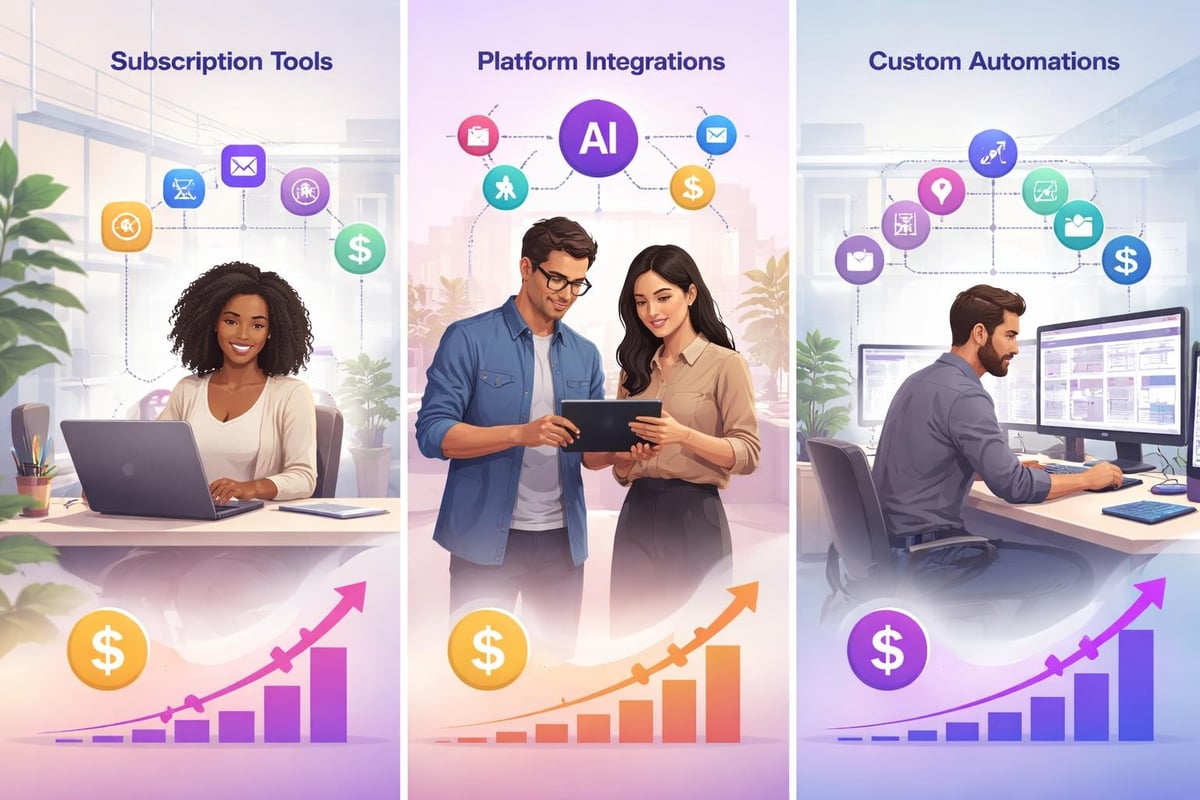
Off-the-shelf AI tools are the bargain option. Think ChatGPT Plus at £20 per month, or AI writing assistants like Jasper starting around £40 monthly. These tools require zero technical knowledge and you can start using them today.
AI-powered business platforms sit in the middle ground. Tools like customer service chatbots, email marketing with AI segmentation, or inventory prediction software typically run between £50 and £500 monthly depending on your business size.
Custom AI solutions are where things get more expensive - but also more tailored. A comprehensive cost breakdown shows these projects can range from £5,000 to £50,000+ for small businesses, depending on complexity.
What You're Actually Paying For
The price of AI isn't just about the software. Let's look at what actually goes into the total cost:
| Cost Component | Budget Option | Mid-Range | Premium |
|---|---|---|---|
| Software/Tools | £0-£100/month | £100-£500/month | £1,000+/month |
| Setup & Integration | DIY (free) | £500-£2,000 | £5,000-£20,000 |
| Training & Onboarding | Self-taught | 1-2 days | Ongoing support |
| Data Preparation | Manual | Semi-automated | Fully automated |
| Ongoing Maintenance | As needed | Monthly reviews | Managed service |
Most small businesses don't need the premium option. What they need is the right solution for their specific problem. That's why understanding your AI implementation needs matters more than picking the most expensive tool.
Real-World Pricing Examples
Let's get specific. Here's what different sectors are actually spending:
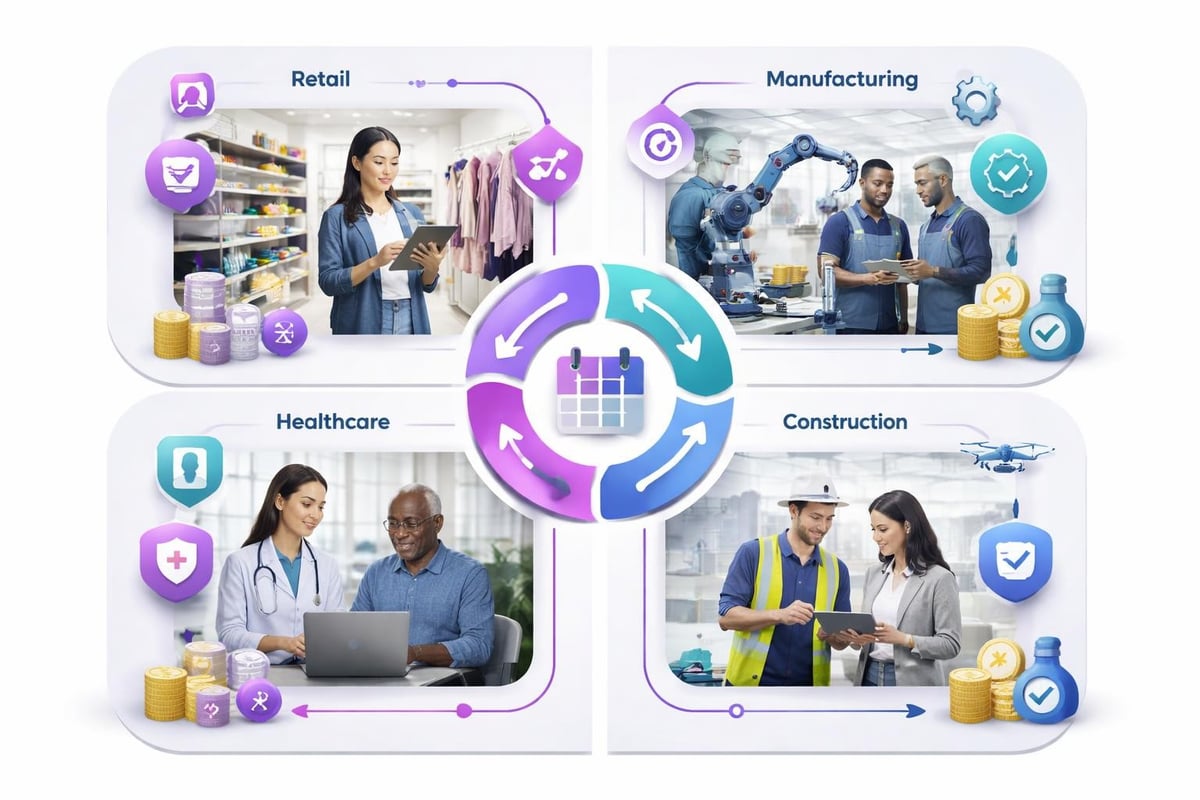
Retail and eCommerce businesses often start with AI chatbots (£50-£200 monthly) and inventory forecasting tools (£100-£400 monthly). An eCommerce AI implementation might cost £3,000-£8,000 for custom product recommendation systems.
Trades and construction companies typically invest in AI scheduling assistants (£30-£150 monthly) and automated quote generation (£2,000-£5,000 one-off setup). The ROI comes from reducing admin time and winning more jobs faster.
Professional services - think accountants, solicitors, recruiters - often spend more on document processing and client management AI. Budget £200-£800 monthly for established platforms, or £5,000-£15,000 for custom workflow automation.
According to recent budget analysis for 2026, small businesses are increasingly choosing hybrid approaches: using affordable SaaS tools for 80% of their needs, then investing in targeted custom solutions for their unique competitive advantages.
The Hidden Costs Nobody Mentions
Here's what catches people out. The price of AI includes more than just the subscription fee:
- Time investment - Even simple tools need someone to learn and manage them
- Process changes - Your team needs to adapt how they work
- Data cleaning - AI only works with decent data, which takes effort
- Failed experiments - Not every tool will work for your business
But here's the flip side: businesses that successfully implement AI typically see time savings worth 10-30 hours per week. That's £300-£900 saved weekly at average hourly rates, which quickly justifies the investment.

Making Smart Investment Decisions
The smartest approach? Start small and scale what works. Here's a practical framework:
- Identify your biggest time drain - where's the manual work that's killing productivity?
- Test cheap solutions first - try £20-50/month tools before committing to expensive projects
- Measure the impact - track actual time saved, not just perceived benefits
- Scale gradually - once something works, invest more in that area
Key factors influencing AI costs include the complexity of your processes, the quality of your existing data, and how much customization you need. Don't let anyone convince you that you need a fully custom solution when a £50/month platform would do the job.
When to Invest More vs. Stay Lean
Invest more when:
- You've tested cheaper options and hit their limits
- The problem directly impacts revenue or client satisfaction
- Manual processes are costing you significant money or opportunities
- You need competitive differentiation
Stay lean when:
- You're just starting to explore AI
- Your processes aren't well-defined yet
- You're not sure which problems to tackle first
- Your team isn't ready for major changes
The truth is, according to economic analysis, many AI investments haven't delivered expected returns because businesses jumped in without clear implementation plans. The price of AI matters less than having a solid strategy.
Sector-Specific Investment Strategies
Different industries see different returns on AI spending. Here's what works:
Hospitality businesses get massive value from AI booking assistants and review management (£100-£300 monthly typically). The ROI comes from never missing a booking and responding to customers 24/7.
Recruitment firms benefit most from AI candidate screening and matching (£200-£600 monthly for platforms, or £8,000-£15,000 for custom systems). Time saved on initial CV screening alone justifies the investment.
Healthcare and professional services need to consider compliance costs too. Healthcare AI implementation costs include additional security and regulatory requirements that small practices must factor in.
The comprehensive AI development cost guide suggests that planning and scoping represents 15-20% of total project costs - but skipping this phase often leads to expensive failures.
Building Capability Without Breaking the Bank
Here's the approach that works for most small businesses. Focus on automation using AI for repetitive tasks first. These deliver quick wins that fund bigger projects later.
Start with these low-cost, high-impact areas:
- Email drafting and responses (£20-£100/month)
- Meeting transcription and summaries (£10-£40/month)
- Social media content creation (£30-£150/month)
- Basic customer inquiry routing (£50-£200/month)
Once you've saved 10+ hours weekly with these tools, reinvest those savings into more sophisticated solutions. This self-funding approach means the price of AI becomes self-justifying through demonstrated returns.
The reality is that AI tools for work have become so affordable that the barrier isn't cost anymore - it's knowing which ones solve your actual problems. That's where having a clear implementation strategy beats just buying the latest shiny tool.
Understanding the price of AI means looking beyond monthly subscriptions to the total investment and expected returns. Most small businesses can start seeing real benefits with modest budgets - the key is choosing solutions that match your specific challenges. If you're ready to explore AI implementation without the guesswork or expensive mistakes, AI 4 Small Business helps you identify the right tools, build practical automations, and deliver measurable results fast. We focus on what works for your business, not what's trendy.