Running a small business means wearing multiple hats simultaneously. You're managing customer enquiries whilst processing invoices, updating inventory, and somehow finding time to plan next week's social media posts. What if you could hand off the repetitive tasks to a tireless assistant who never sleeps? That's precisely what automation using AI offers to small business owners in 2026, and it's more accessible than you might think.
What Automation Using AI Actually Means for Your Business
Let's clear up the jargon straight away. Automation using AI isn't about building robots or hiring a team of data scientists. It's simply about teaching software to handle tasks that follow predictable patterns, but with a clever twist: the software learns and adapts as it goes.
Think about how you currently handle customer emails. You probably spot patterns, right? Certain questions come up repeatedly. Specific issues need routing to particular team members. Robotic process automation combined with AI can recognise these patterns and respond accordingly, freeing you to focus on the genuinely complex stuff.
The key difference between old-school automation and AI-powered automation:
- Traditional automation follows rigid rules you programme in advance
- AI automation learns from examples and improves over time
- Traditional systems break when something unexpected happens
- AI systems adapt and handle variations intelligently
Real-World Applications You Can Implement Tomorrow
Here's where it gets exciting. You don't need a massive budget or technical expertise to start. Small businesses across the UK are already using affordable tools to transform their operations.
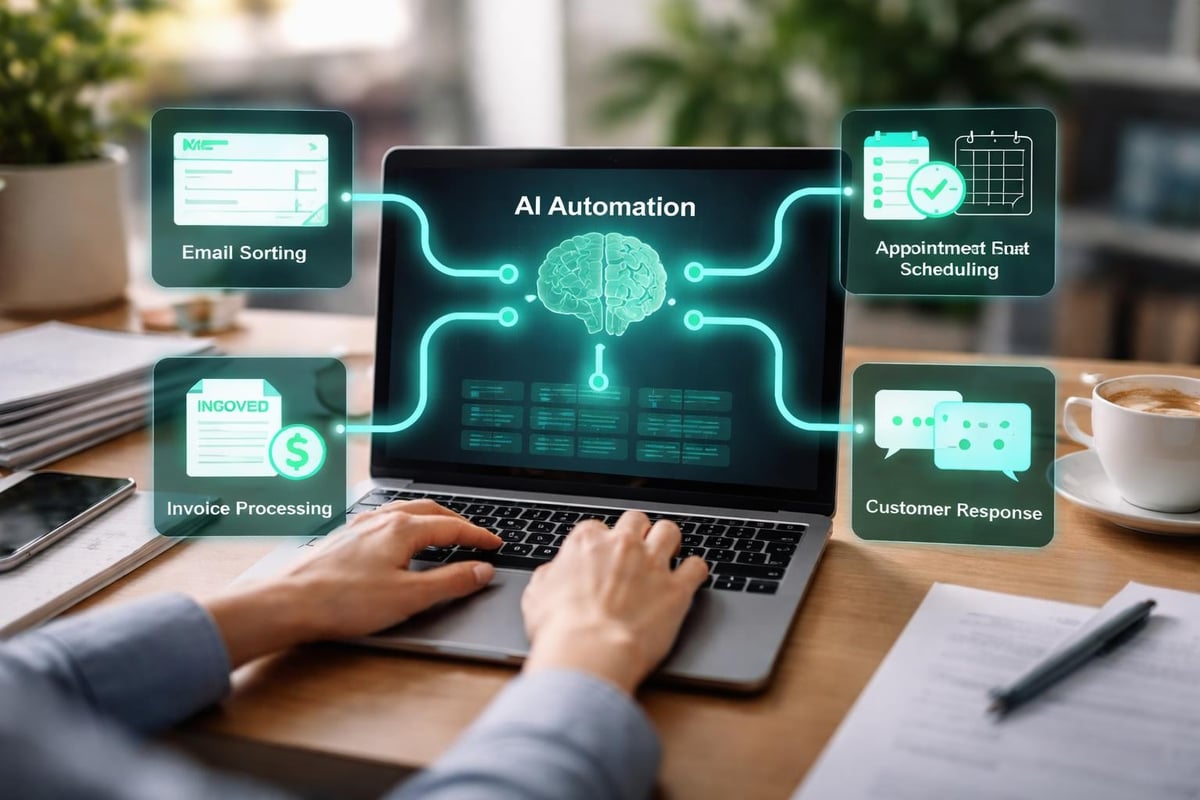
Consider Sarah, who runs a boutique bakery in Manchester. She was spending two hours daily responding to Instagram messages about opening times, dietary requirements, and custom cake enquiries. Now, an AI chatbot handles 80% of these questions instantly, whilst flagging the complex custom orders for her personal attention.
Or take David's plumbing business in Bristol. His AI assistant now:
- Schedules appointments based on location and urgency
- Sends automatic reminders to reduce no-shows
- Generates quotes from photos customers send
- Follows up with feedback requests after each job
Neither Sarah nor David can code. They're simply using low-code AI platforms designed specifically for people like them.
The Financial Sense of AI Automation
Let's talk money, because that's what matters. Research shows that automating corporate expense processing using generative AI can reduce processing time by up to 70% whilst slashing error rates. That's not just large corporations benefiting, either.
| Task | Manual Time | AI-Automated Time | Monthly Savings |
|---|---|---|---|
| Invoice processing (50/month) | 10 hours | 2 hours | 8 hours |
| Email responses (200/month) | 15 hours | 3 hours | 12 hours |
| Appointment scheduling | 5 hours | 30 minutes | 4.5 hours |
| Total | 30 hours | 5.5 hours | 24.5 hours |
That's more than three full working days reclaimed every month. What could you do with an extra three days? Focus on growing your business, perhaps? Spend time developing new products? Actually take a proper weekend off?
The costs of AI implementation have plummeted. Many automation using AI tools now operate on subscription models costing less than hiring part-time help, yet they work 24/7 without holidays or sick days.
Getting Started Without the Technical Headaches
The biggest myth about automation using AI is that it requires technical expertise. Absolute rubbish. Modern AI tools are designed for business owners, not programmers.
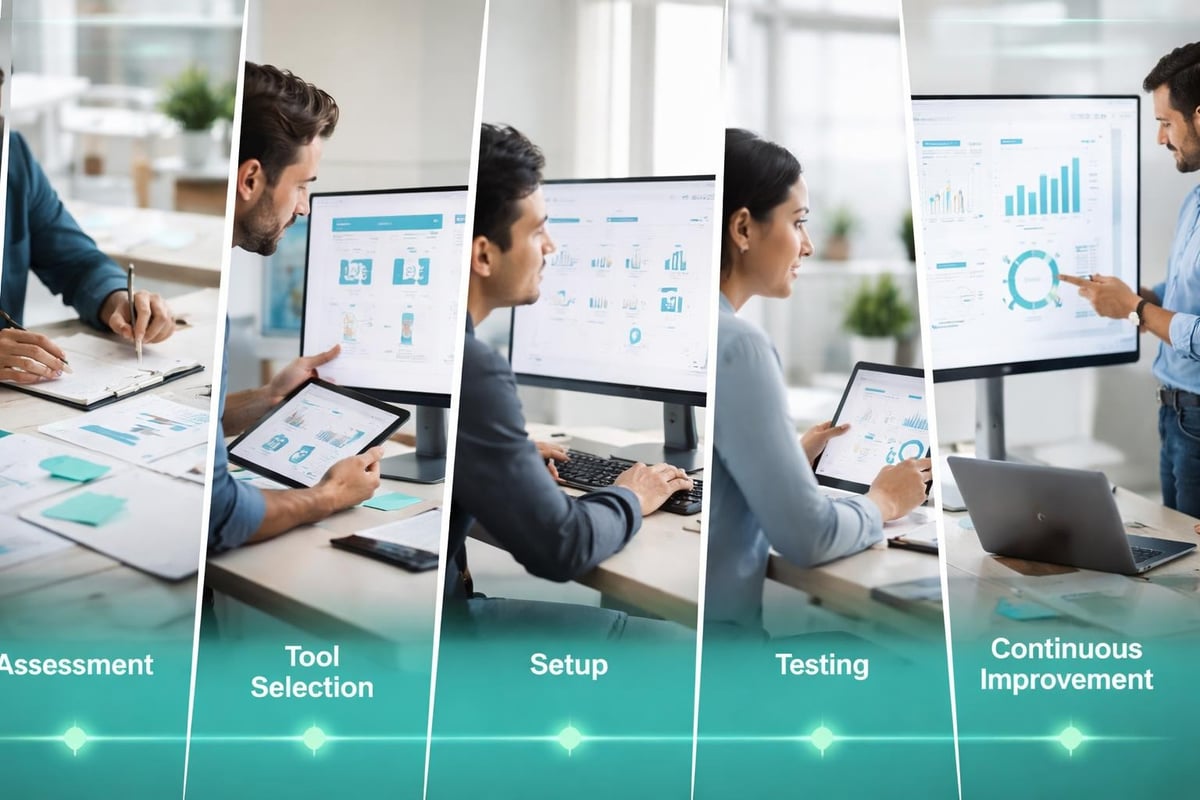
Your first steps should be:
- Identify your most repetitive tasks: What do you do daily that follows the same pattern?
- Start with one simple automation: Don't try to transform everything overnight
- Choose user-friendly platforms: Look for tools with visual interfaces, not coding requirements
- Test thoroughly before going live: Run your automation alongside manual processes initially
Many small businesses find success starting with customer service automation. Generative artificial intelligence has become remarkably good at understanding context and generating appropriate responses. Your AI assistant can handle frequently asked questions whilst learning your brand voice and preferred responses.
Common Concerns (And Why They're Overblown)
"Will it make mistakes?" Yes, occasionally. So do humans. The difference? AI mistakes are consistent and fixable. You adjust the system once, and it corrects that error forever.
"What about the personal touch?" Here's the thing: automation using AI handles the routine stuff, giving you MORE time for genuine personal interactions. Your customers get faster responses to simple queries AND more of your personal attention for complex needs.
"Is my business too small?" If you're spending time on repetitive tasks, you're not too small. Research on AI-enhanced business process automation demonstrates scalability across organisations of all sizes.
Practical Tools Worth Exploring
You won't find recommendations for complicated enterprise platforms here. Instead, consider these categories of tools that small businesses actually use successfully:
Email and Communication Management
Smart inbox assistants categorise messages, draft responses, and flag urgent items. They learn from how you typically respond and suggest appropriate replies.
Scheduling and Calendar Optimisation
AI schedulers find optimal meeting times, handle booking requests, and even reschedule automatically when conflicts arise. No more endless email tennis trying to find a time that works.
Document Processing
Upload invoices, receipts, or forms, and AI extracts the relevant information, populates your accounting system, and files everything correctly. The same technology improving automated business intelligence works brilliantly for everyday paperwork.
Social Media Management
Generate post ideas, schedule content, respond to common comments, and analyse what's working. Your AI assistant maintains your online presence whilst you run your business.
Looking at real-world case studies demonstrates just how transformative these tools can be when implemented thoughtfully.
Building Your Automation Strategy
Success with automation using AI isn't about technology. It's about strategy. Which tasks actually benefit from automation? Where does human judgement remain essential?
Create a simple priority matrix:
| Task Type | Automate? | Why? |
|---|---|---|
| High volume, low complexity | Yes | Maximum time savings, minimal risk |
| High volume, medium complexity | Partially | AI handles initial processing, human reviews |
| Low volume, high complexity | No | Better suited for human expertise |
| Strategic decisions | Never | Requires business insight and judgement |
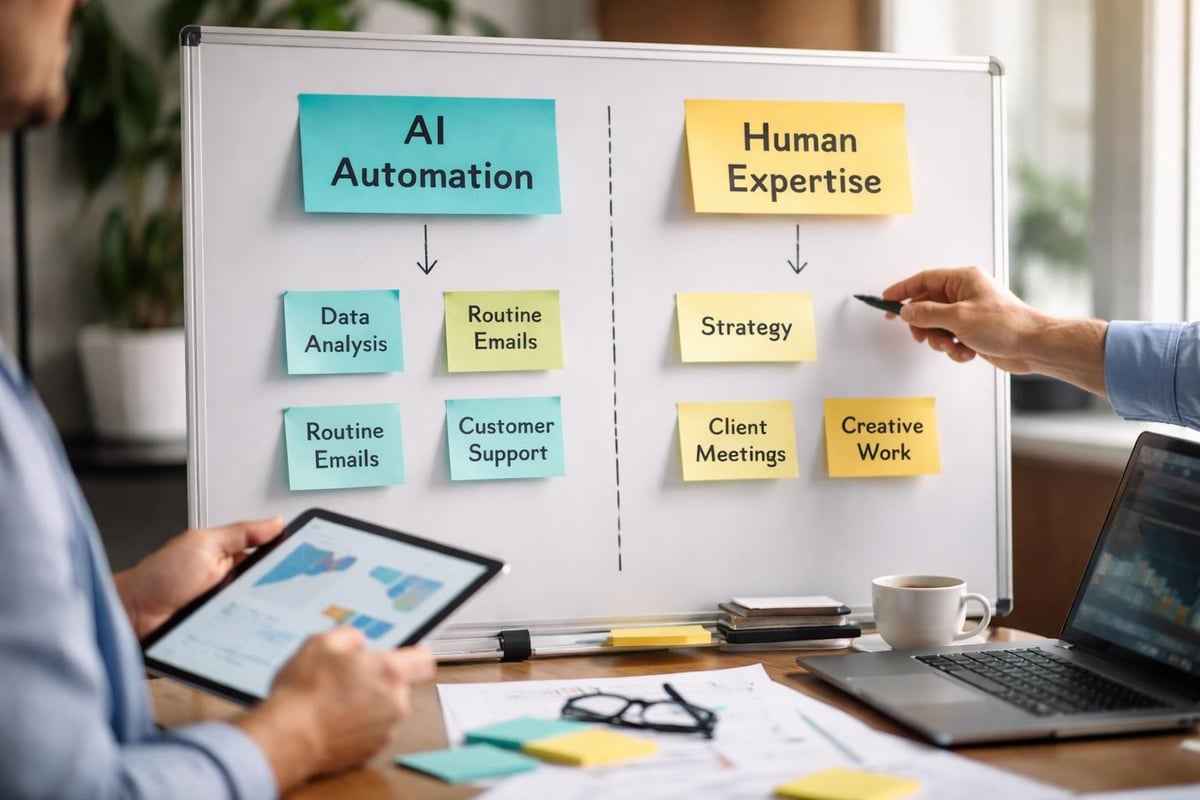
Remember, AI as a tool works best when it complements your skills rather than replacing your judgement. You remain in control, setting boundaries and reviewing outputs.
The beauty of modern automation using AI lies in its flexibility. Start small, measure results, and expand gradually. Unlike traditional software implementations requiring months of planning, you can test most AI tools within days and see immediate benefits.
For small businesses specifically, understanding the benefits of using AI within your particular industry context helps identify the highest-impact opportunities. A retailer's automation priorities differ dramatically from a service provider's needs.
Automation using AI has shifted from futuristic fantasy to practical reality for small businesses. You don't need technical expertise or enormous budgets to reclaim dozens of hours monthly whilst improving accuracy and customer satisfaction. If you're ready to explore how intelligent automation could transform your specific business challenges, AI 4 Small Business specialises in practical, sector-specific implementations that deliver results quickly without creating dependency. Their tailored approach ensures you get exactly the automation you need, implemented in ways that actually work for how you operate.