
You've probably heard the buzz around artificial intelligence, but if you're running a small business, you might think it's only for tech giants with massive budgets and teams of developers. That's where ai as a service changes the game completely. Instead of building AI systems from scratch, you can access ready-made AI capabilities through cloud platforms, paying only for what you use. It's like renting powerful tools rather than buying an entire factory, and it's making AI accessible to businesses of every size.
What AI as a Service Actually Means for Your Business
Think of ai as a service the same way you think about your accounting software or email platform. You don't host servers in your office or employ developers to maintain them. You simply log in, use the tools, and pay a subscription. AI as a Service works exactly the same way, giving you access to machine learning models, natural language processing, computer vision, and other AI capabilities through cloud providers.
The beauty of this model is simplicity. You're not hiring data scientists or investing in expensive hardware. Instead, you're plugging into existing AI infrastructure that's maintained, updated, and improved by the provider. For a recruitment agency, that might mean using AI-powered candidate screening. For a retail shop, it could be inventory forecasting or personalised product recommendations.
The Real Cost Advantages
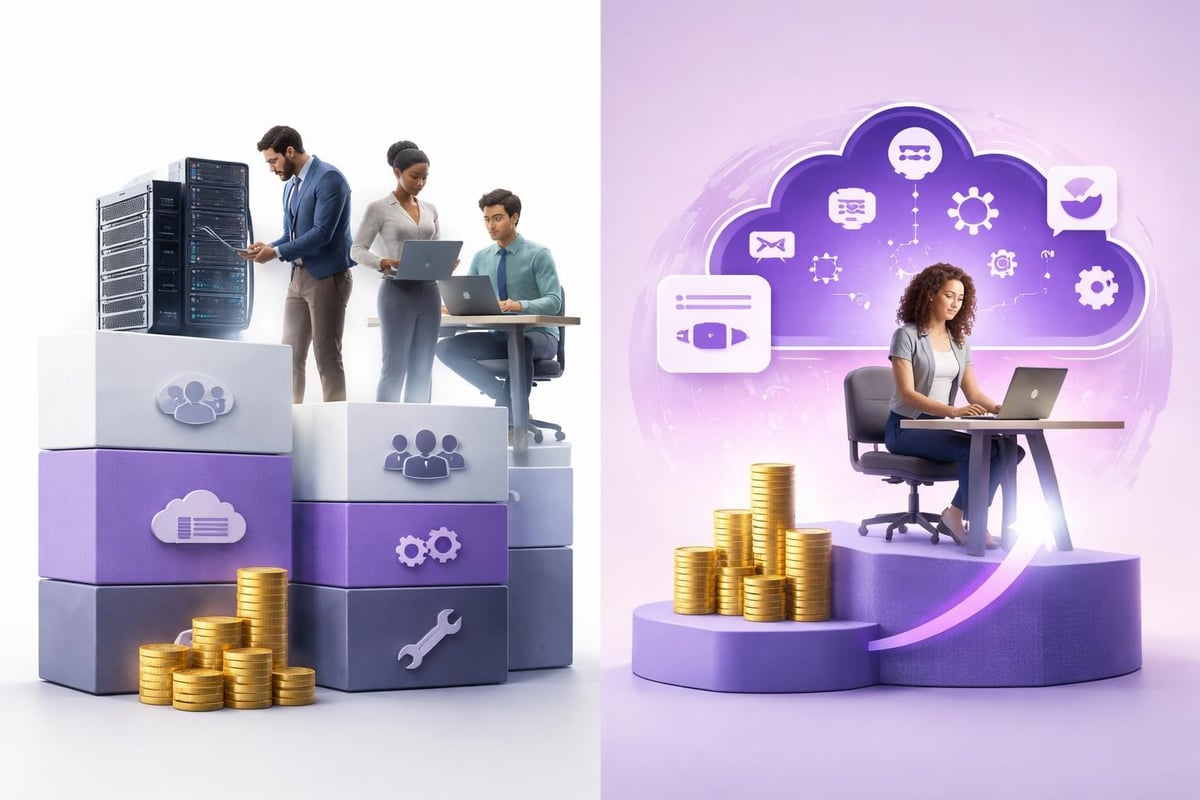
Let's talk numbers, because that's what matters. Building your own AI system could easily cost tens of thousands of pounds upfront, plus ongoing maintenance costs. With ai as a service, you're looking at monthly subscriptions that might range from £50 to a few hundred pounds, depending on usage.
Key cost benefits include:
- No infrastructure investment or server maintenance
- Pay-as-you-go pricing that scales with your business
- No need to hire specialised AI talent
- Immediate access to cutting-edge technology
- Regular updates and improvements included
This pricing model means you can start small, test what works, and scale up when you see results. A construction firm might begin with AI-powered document analysis for contracts, then expand to project scheduling and resource allocation as they see the benefits. There's no massive commitment, just practical steps forward.
Practical Applications Across Different Sectors
The real question isn't whether ai as a service can help your business, but which applications will deliver the quickest wins. Every sector has repetitive, time-consuming tasks that AI can handle brilliantly.
Retail and eCommerce
Online shops are using AI to analyse customer behaviour, predict which products will sell, and personalise shopping experiences. Our eCommerce AI case study shows how one business automated product descriptions and customer service responses, saving 15 hours weekly.
Chatbots handle common customer queries 24/7, whilst recommendation engines suggest products based on browsing history. Inventory management systems predict stock needs, reducing both overstocking and stockouts.
Professional Services
Accountants, solicitors, and consultants are drowning in paperwork. AI-powered document processing can extract information from invoices, contracts, and forms in seconds rather than hours. Understanding how AI tools fit into professional workflows makes adoption much smoother.
| Task | Traditional Time | With AIaaS | Weekly Saving |
|---|---|---|---|
| Invoice processing | 5 hours | 30 minutes | 4.5 hours |
| Client email sorting | 3 hours | 20 minutes | 2.7 hours |
| Document review | 8 hours | 2 hours | 6 hours |
| Appointment scheduling | 2 hours | Automated | 2 hours |
Trades and Construction
You might think AI isn't relevant for plumbers or electricians, but think again. Quote generation, job scheduling, supplier management, and customer follow-ups all involve repetitive admin that ai as a service platforms can automate.
One heating engineer we worked with now uses AI to analyse service histories and predict when boilers are likely to need maintenance, allowing proactive customer contact that boosts both service revenue and customer satisfaction. The system runs in the background, flagging opportunities without any manual analysis.
How to Start Using AI as a Service
Getting started doesn't require a computer science degree. The best approach is identifying one specific problem that costs you time or money, then finding an AIaaS solution designed for that exact challenge.
Follow this simple process:
- Identify your biggest time drain - What task takes hours but doesn't require creative thinking?
- Research available solutions - Types of AI as a Service include chatbots, analytics, automation, and more
- Start with a trial - Most platforms offer free trials or low-cost starter plans
- Measure the impact - Track time saved and quality of results
- Expand gradually - Add more AI tools as you prove value
Many small businesses make the mistake of trying to implement AI everywhere at once. Start narrow, prove the concept, then expand. A cafe might begin with AI-powered staff scheduling, see the benefits, then add inventory forecasting and social media content creation.

Choosing the Right AI as a Service Provider
Not all AIaaS platforms are created equal, and the wrong choice can waste time and money. The benefits of AI as a Service are only realised when you pick tools that actually fit your workflow.
What to Look For
Ease of use matters more than fancy features. If your team can't use it without extensive training, it won't deliver value. Look for platforms with intuitive interfaces and clear documentation.
Integration capabilities determine whether the AI tool works with your existing systems. Can it connect to your CRM, accounting software, or booking system? Isolated tools create more work, not less.
Support and guidance separate good providers from great ones. When you hit a snag, can you get help quickly? Does the provider offer implementation support? AI implementation challenges are easier to overcome with expert guidance.
Common Pitfalls to Avoid
Don't chase features you don't need. A restaurant doesn't need advanced predictive analytics when they actually need better table booking management. Focus on solving real problems, not collecting impressive-sounding capabilities.
Watch out for providers who lock you into long contracts before you've proven value. The whole point of ai as a service is flexibility, so maintain it. Also be wary of platforms that require extensive customisation - that defeats the purpose of using a ready-made service.
Making AI Work Within Your Business
The technology is only half the battle. Getting your team to actually use AI tools requires proper introduction and training. People resist change, especially when they worry about job security or feel overwhelmed by new technology.
Be transparent about why you're introducing AI and how it benefits everyone. When staff see that AI handles boring admin tasks and frees them for more interesting work, resistance usually melts away. A recruitment consultant would much rather spend time building client relationships than manually screening hundreds of CVs.
Building Long-Term Capability
The goal isn't just implementing AI tools but building understanding within your business. When your team knows what AI can and can't do, they spot opportunities for improvement. They start thinking differently about processes and efficiency.
Key success factors include:
- Clear communication about AI's role
- Hands-on training with real examples
- Regular reviews of what's working
- Encouraging team suggestions for automation
- Celebrating time savings and wins
Businesses successfully using AI don't treat it as a one-time project but as an ongoing journey. They continuously refine their approach, add new tools, and improve existing implementations based on real results.

The Future Is Already Here
AI as a service isn't futuristic technology - it's available right now, and thousands of small businesses are already benefiting. The competitive advantage goes to businesses that start experimenting today, not those waiting for the 'perfect' moment.
Whether you're running a shop, a trade business, or professional services, there's an AIaaS solution designed for your specific challenges. The key is starting with one clear problem, choosing the right tool, and measuring real-world impact. That's how you build AI capability without creating dependency.
The landscape of AI platforms continues evolving rapidly, with new tools launching constantly and existing ones improving. This means the opportunity window is widening, not closing. Small businesses can now access the same technology that was exclusive to corporations just a few years ago.
AI as a service removes the technical barriers that once kept powerful automation out of reach for small businesses, but knowing where to start and which tools deliver real results still requires expertise. That's where AI 4 Small Business comes in - we help you identify high-impact opportunities, select the right AIaaS solutions, and implement them in ways that deliver measurable time and cost savings fast. No jargon, no expensive custom development, just practical AI that works within your business from day one.