The landscape of businesses that use AI has shifted dramatically over the past few years. What once seemed like technology reserved for tech giants is now accessible to corner shops, independent accountants, and local tradespeople. In 2026, you'll find AI-powered tools helping small businesses respond to customer enquiries, manage their books, and even predict when equipment needs maintenance. The question isn't whether your competitors are exploring these technologies-it's how quickly you can identify which tools make sense for your operation.
Who's Actually Using AI Right Now
According to industry adoption research, businesses that use AI span virtually every sector imaginable. Information services and professional consultancies lead the pack, but you'll find AI working quietly in restaurants, plumbing businesses, and independent shops.
Retail and Hospitality
Small retailers are using AI-powered inventory systems that predict which products will sell based on weather forecasts, local events, and past purchasing patterns. One independent clothing boutique in Manchester implemented a simple chatbot that handles size enquiries and returns policies, freeing up staff to focus on in-store customers.
Coffee shops and restaurants are leveraging AI scheduling tools that analyse foot traffic patterns to optimize staff rotas, whilst bakeries use demand forecasting to reduce waste.
Common applications include:
- Customer service chatbots that answer FAQs 24/7
- Inventory forecasting to prevent overstocking
- Dynamic pricing based on demand patterns
- Personalized marketing emails that actually convert

Service-Based Businesses Leading the Charge
According to recent reports on AI adoption across sectors, professional services have been quick to embrace practical AI applications. Accountants, solicitors, and consultants are finding genuine value in automation.
Professional Services Examples
| Business Type | AI Application | Time Saved |
|---|---|---|
| Accountants | Automated expense categorization | 8-12 hours/week |
| Marketing Agencies | Content generation assistants | 15-20 hours/week |
| Recruitment Firms | CV screening and matching | 10-15 hours/week |
| Legal Practices | Document review and drafting | 12-18 hours/week |
An independent accounting firm in Leeds implemented AI-powered bookkeeping software that automatically categorizes expenses and flags unusual transactions. The owner reports spending 60% less time on routine data entry, allowing her to take on three additional clients without hiring new staff.
Understanding AI tools for small business starts with identifying these repetitive tasks that drain your time without adding value.
Trades and Construction Finding Their Footing
Whilst some industries have been slower to adopt AI, trades and construction businesses are discovering practical applications. Plumbers, electricians, and builders might not think of themselves as tech-forward, but many are already using AI without realising it.
Smart scheduling tools use AI to:
- Route technicians efficiently between jobs
- Predict how long tasks will actually take
- Automatically send appointment reminders
- Prioritize urgent calls versus routine maintenance
A Manchester-based electrical contractor implemented an AI-powered quoting system that analyses photos of jobs, suggests materials needed, and generates accurate estimates. What previously took 45 minutes per quote now takes seven minutes.
Making AI Work Without Technical Knowledge
The businesses that use AI successfully don't employ data scientists or programmers. They're using ready-made tools designed for non-technical users. Getting started with AI implementation doesn't require coding knowledge-just willingness to try new approaches.
Healthcare and Wellness Applications
Small medical practices, dental surgeries, and wellness centres are embracing AI for administrative tasks. Appointment scheduling systems now predict no-shows, suggest optimal appointment times, and automatically send pre-appointment instructions.
A physiotherapy clinic in Birmingham uses AI to:
- Automatically transcribe patient notes during consultations
- Send personalized exercise reminders between sessions
- Identify patients who might benefit from additional treatments
- Handle routine appointment rescheduling via text
The clinic owner emphasizes that the technology complements rather than replaces human interaction. Staff spend less time on paperwork and more time with patients.
Marketing and Customer Communication
Over a million businesses now use ChatGPT for various business purposes, with marketing being among the most common applications. Small businesses that use AI for marketing report significant improvements in consistency and reach.
Practical marketing applications:
- Drafting social media posts tailored to your brand voice
- Generating email newsletter content
- Creating product descriptions for e-commerce
- Responding to customer reviews professionally
- Translating marketing materials for diverse communities
An independent garden centre uses AI to generate seasonal planting guides, care tips, and workshop descriptions. The marketing coordinator spends 30 minutes weekly reviewing and tweaking AI-generated content rather than three hours creating everything from scratch.
Food and Beverage Innovation
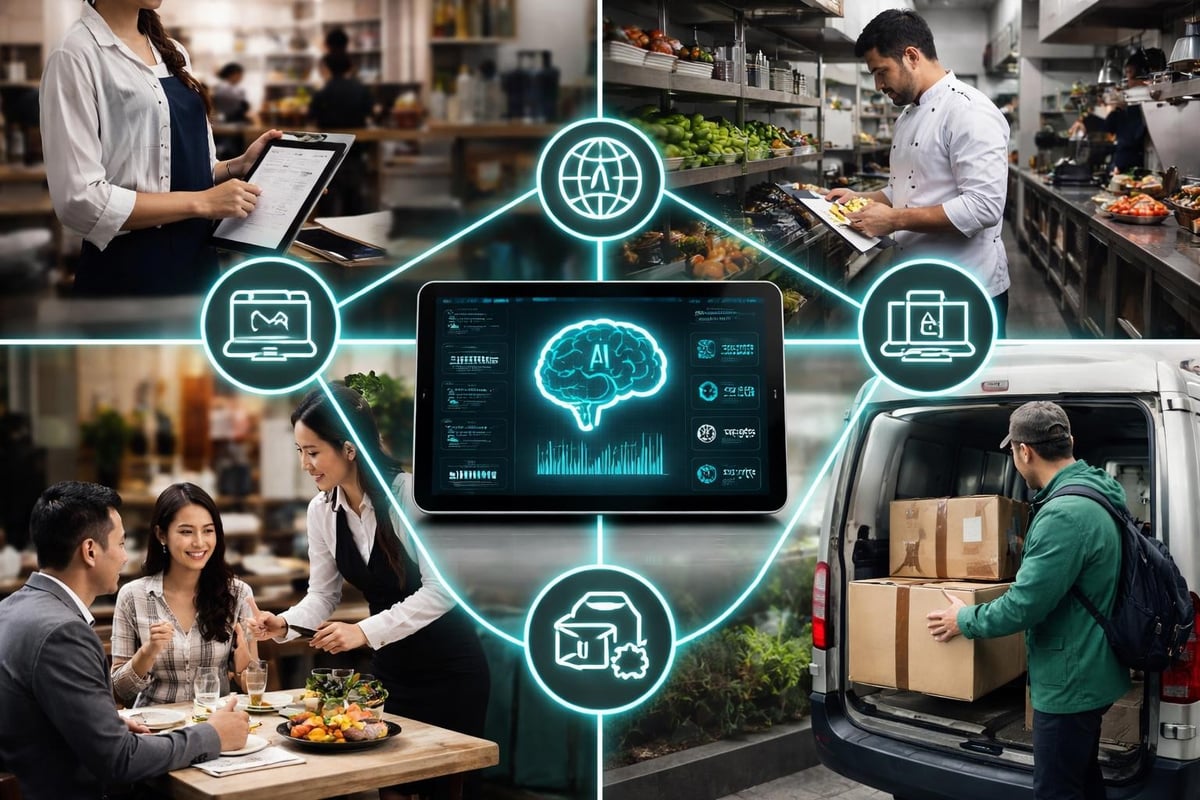
Restaurants and food businesses are finding creative AI applications beyond just chatbots. Menu optimization tools analyse which dishes sell together, helping owners design menus that increase average order values.
A family-run Indian restaurant in Leicester uses AI to:
- Predict ingredient needs based on bookings and historical data
- Optimize delivery routes for their in-house drivers
- Generate responses to online reviews
- Create weekly special announcements for social media
The owner reports 23% reduction in food waste and estimates the AI tools save approximately 12 hours of administrative work weekly.
What Small Businesses Learn From AI Adoption
Businesses that use AI successfully share common characteristics. They start small, focusing on one specific problem rather than attempting wholesale transformation. They choose AI tools designed for their sector rather than generic solutions requiring heavy customization.
| Success Factor | What It Means | Why It Matters |
|---|---|---|
| Start Specific | Address one clear problem | Builds confidence and demonstrates value |
| Measure Results | Track time or money saved | Justifies continued investment |
| Train Staff | Ensure team understands the tools | Prevents resistance and maximizes adoption |
| Stay Flexible | Be willing to adjust or switch tools | Not every solution fits every business |
Understanding practical AI implementation means recognizing that businesses that use AI most effectively treat it as another tool in their kit, not a magic solution to every challenge.
Cost Considerations and ROI
Small business owners often worry that AI tools require massive investment. The reality in 2026 is quite different. Most practical AI applications for small businesses cost between £20 and £200 monthly-roughly equivalent to a couple of hours of skilled labour.
A Manchester-based graphic design studio pays £85 monthly for an AI-powered project management system that automatically tracks time, generates invoices, and predicts project completion dates. The owner calculates she saves approximately nine hours monthly on administrative tasks-equivalent to £450 in billable time.
The real costs of AI for small businesses often include learning time and process adjustment rather than just subscription fees, but most report positive ROI within three months.
Businesses that use AI successfully in 2026 aren't employing teams of developers or making massive technology investments-they're identifying specific operational challenges and applying targeted, affordable solutions. Whether you're managing customer communications, optimizing inventory, or streamlining scheduling, practical AI tools can deliver measurable time savings and cost reductions. AI 4 Small Business specializes in helping small business owners identify and implement sector-specific AI solutions that enhance your capabilities without creating dependency, delivering quick results with tools designed for real-world operations.