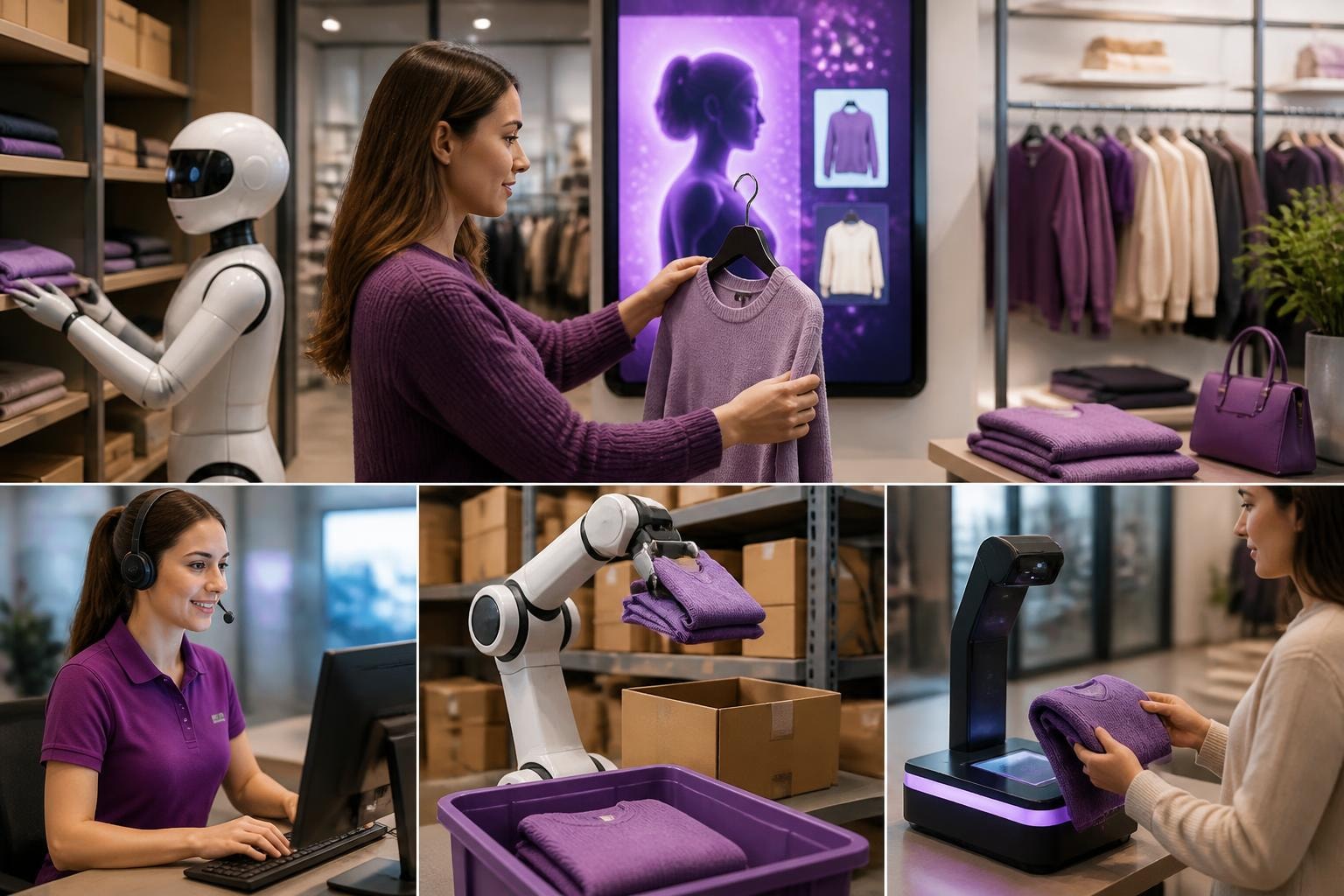
There's a lot of noise around artificial intelligence right now. You've probably heard everything from "AI will replace everyone" to "AI is just fancy autocomplete." The truth sits somewhere more practical and useful. When you strip away the hype and the fear, you're left with a simple reality: ai is a tool. Just like your laptop, your CRM, or your accounting software. It's not magic, it's not sentient, and it's not going to run your business for you. But when you treat it as what it actually is-a powerful tool that can automate repetitive work and surface insights-you can get real, measurable value from it.
What It Actually Means That AI Is a Tool
Let's start with what this means in practice. A hammer doesn't build a house by itself. Excel doesn't create your financial forecast automatically. Similarly, AI doesn't solve problems just by existing in your tech stack. As the Oxford Internet Institute points out, treating AI as an autonomous agent rather than a tool under human control creates unrealistic expectations and ethical complications.
AI requires three things to deliver value:
- A specific problem or process you want to improve
- Someone who understands both the business context and what AI can actually do
- Proper implementation that fits into your existing workflow

When small businesses struggle with AI, it's rarely because the technology doesn't work. It's usually because they've skipped one of these steps. They've bought a tool without a clear use case, or they've tried to force AI into a process that didn't need it.
Real-World Applications for Small Businesses
Here's where understanding that ai is a tool becomes incredibly practical. You wouldn't use a screwdriver to hammer in a nail. You wouldn't use a spreadsheet to edit photos. The same logic applies to AI. Different AI capabilities suit different business problems.
Automating Repetitive Admin Tasks
Consider a recruitment agency spending hours each week screening CVs, responding to initial enquiries, and scheduling interviews. AI-powered workflows can handle these tasks in minutes, not hours. The AI isn't making hiring decisions-it's filtering, organising, and managing the grunt work so humans can focus on actual candidate assessment.
A retail business might use AI to:
- Generate product descriptions from basic specifications
- Categorise customer enquiries and route them appropriately
- Analyse sales patterns to optimise stock levels
- Create personalised email responses based on customer history
Extracting Insights from Your Data
Many small businesses sit on goldmines of data they never properly analyse. Sales records, customer interactions, website behaviour-it's all there, but making sense of it manually takes forever. AI tools can spot patterns, identify trends, and flag anomalies far faster than spreadsheet sorting.
A construction firm we worked with had years of project data but couldn't easily identify which types of jobs were most profitable or which suppliers consistently caused delays. Simple AI analysis revealed patterns that changed how they quoted and planned projects.
| Business Type | Time-Consuming Task | AI Tool Application | Time Saved |
|---|---|---|---|
| Professional Services | Invoice processing & follow-ups | Automated extraction and scheduling | 8-12 hrs/week |
| eCommerce | Product image editing | Batch background removal and resizing | 15-20 hrs/week |
| Trades | Quote preparation | Template generation from specs | 5-7 hrs/week |
| Hospitality | Booking confirmations | Automated personalised responses | 6-10 hrs/week |
Choosing the Right AI Tools
The market's flooded with AI tools right now. TechRadar's comprehensive review covers over 70 different options, which sounds helpful until you realise you need to evaluate them all. This is where thinking "ai is a tool" helps you cut through the noise.
Start with these questions:
- What specific task takes too much time in my business right now?
- Is this task repetitive enough that a pattern exists?
- Do I have the data or inputs the AI would need?
- What would success actually look like?
You don't need the fanciest AI solution. You need the one that solves your specific problem. A chatbot isn't valuable because it's AI-powered-it's valuable if it actually reduces your customer service workload whilst maintaining quality.
Practical Selection Criteria
When implementing AI in your business, look for tools that:
- Integrate with systems you already use (your CRM, email, accounting software)
- Require minimal training to get value from
- Scale with your usage rather than expensive upfront licensing
- Provide clear metrics so you can measure ROI

Common Pitfalls When Treating AI as More Than a Tool
We see businesses make predictable mistakes when they forget that ai is a tool and start treating it as a strategy or solution in itself. Built In argues strongly that overestimating AI's capabilities whilst underestimating the need for human oversight creates expensive problems.
The biggest mistakes we encounter:
- Automating broken processes: AI makes bad processes fail faster and at scale. Fix your process first, then automate it.
- No human oversight: Every AI implementation needs someone checking outputs, especially initially.
- Chasing trends instead of solving problems: Just because competitor X uses AI chatbots doesn't mean you need one.
- Expecting perfection immediately: AI tools improve with use and feedback. They're not plug-and-play perfection.
A professional services firm once told us their AI wasn't working. When we dug in, they'd automated their client onboarding process-which was already confusing and inefficient. The AI faithfully replicated the confusion at digital speed. They needed to redesign the process first.
Building AI Capability, Not Dependency
Here's something that doesn't get talked about enough: the goal isn't just to use AI tools. It's to build AI capability within your business. That means understanding how AI can be used across different functions, training your team to work effectively with these tools, and gradually expanding where and how you apply them.
This approach delivers three benefits:
- You make better tool decisions because you understand what's possible
- Your team adapts faster when new AI capabilities emerge
- You spot new opportunities to apply AI that vendors would never suggest
Think of it like learning Excel. First, you use it for basic lists. Then you discover formulas. Then pivot tables. Eventually, you're building complex models. AI adoption follows a similar path. Many businesses that successfully use AI started small and expanded as they learned.
Starting Your AI Journey
If you're just beginning, here's a sensible approach:
- Identify one painful, repetitive task (not your biggest problem, just an annoying one)
- Research tools specifically designed for that task (not general AI platforms)
- Test with a small pilot before rolling out widely
- Measure actual impact (time saved, errors reduced, revenue increased)
- Learn from what worked and apply it elsewhere

This incremental approach means you're building expertise whilst delivering value. You're not betting the farm on an expensive AI transformation that might not work.
The Human Element Remains Essential
Perhaps the most important thing about remembering that ai is a tool is that it keeps humans central to your business. Purdue University's discussion on AI safety emphasises that understanding AI as a tool-not an autonomous decision-maker-is crucial for both effectiveness and risk management.
Your AI tools handle repetitive tasks, surface insights, and speed up processes. But they don't replace judgement, creativity, customer relationships, or strategic thinking. The businesses getting real value from AI in 2026 are the ones using it to free up their people for higher-value work, not replace them entirely.
A plumber using AI to generate quotes and manage scheduling isn't becoming less skilled-they're spending more time on actual plumbing and customer service. An eCommerce business using AI for retail operations isn't losing the personal touch-they're automating the backend so they can focus on curating products and building community.
Moving Beyond the Hype
The conversation around AI often swings between utopian promises and dystopian warnings. Both miss the point. For small businesses in 2026, the question isn't whether AI will transform everything or destroy jobs. The question is much more practical: which specific tools will help you work more efficiently this quarter?
When you approach AI with that mindset-as a capable tool in your business toolkit rather than a revolutionary force-you make better decisions. You choose tools that solve real problems. You implement them in ways that actually fit your workflow. And you measure results based on business outcomes, not technology adoption.
That's the shift that matters. Not AI for AI's sake, but AI applied thoughtfully to genuine business challenges. The practical AI tools available today can deliver significant value-but only when you treat them as what they are: powerful tools that still require human direction, oversight, and strategic thinking.
The bottom line? AI is a tool, and like any tool, its value depends entirely on how you use it. When you identify the right problems, choose appropriate solutions, and implement them thoughtfully, AI can genuinely transform how your small business operates. If you're ready to explore what AI can actually do for your business-without the hype or complexity-AI 4 Small Business helps you identify time-consuming processes, select the right tools, and build automations that deliver measurable results fast.