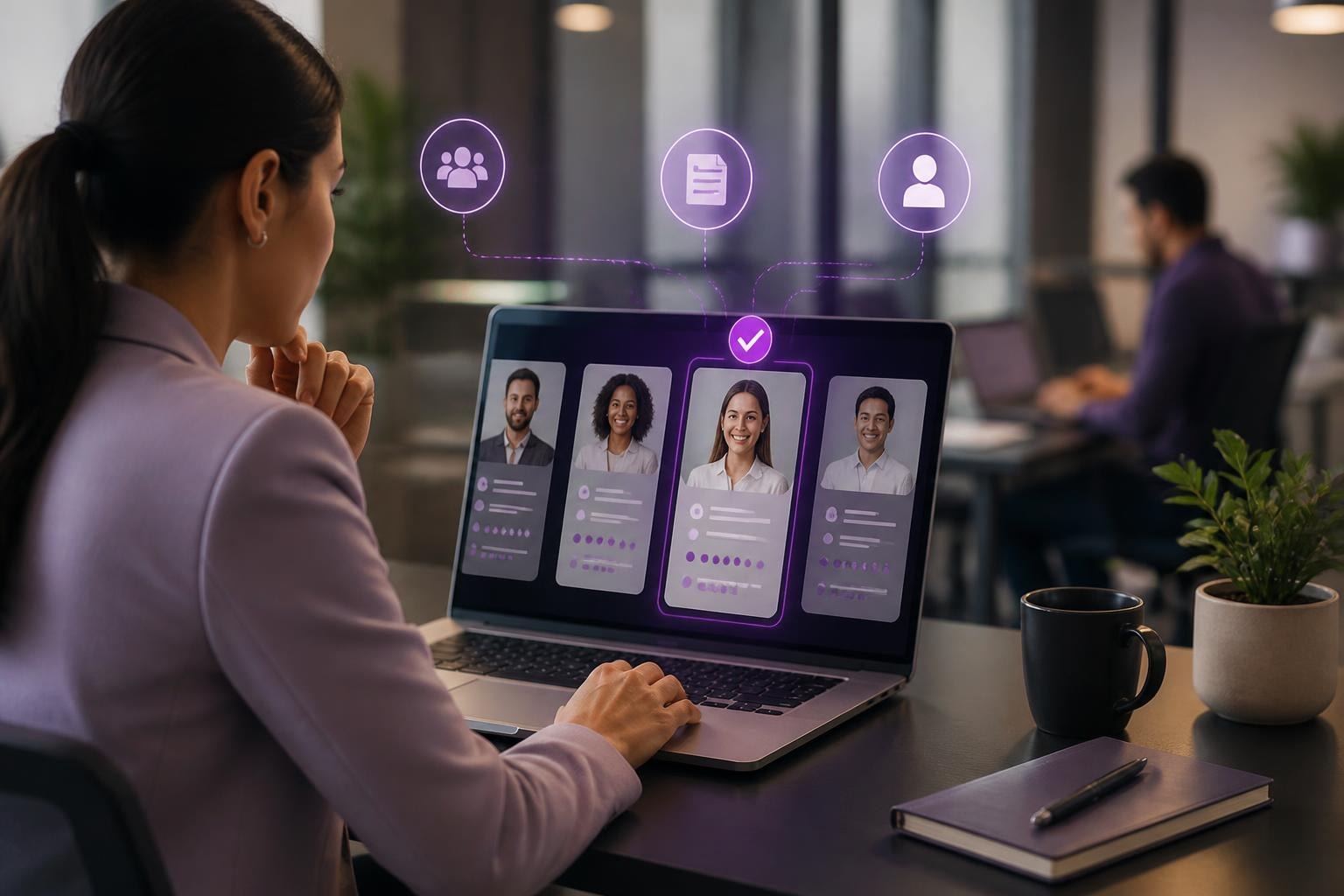
Recruiting's always been a time-sink for small businesses, hasn't it? Sifting through CVs, chasing leads on LinkedIn, and hoping you'll spot the right person before your competitor does. But here's the thing: ai candidate sourcing is changing all that, and it's not just for the big players anymore. Small recruitment agencies, growing businesses, and even solo recruiters are now using AI to find candidates faster, more accurately, and with far less manual grunt work. Let's look at how this actually works in practice, not just in theory.
What AI Candidate Sourcing Actually Means
AI candidate sourcing uses machine learning algorithms to identify, screen, and engage potential candidates automatically. Instead of manually searching job boards and scrolling through hundreds of profiles, the AI does the heavy lifting.
Think of it like this: you feed the system your job requirements, and it scans multiple sources simultaneously, looking for matches based on skills, experience, location, and even career trajectory. The technology behind AI in recruitment has matured significantly, making it accessible and practical for smaller operations.
Here's what modern AI sourcing tools can do:
- Search across multiple platforms (LinkedIn, job boards, databases) at once
- Parse CVs and extract relevant information automatically
- Rank candidates based on fit scores
- Send personalised outreach messages
- Track engagement and response rates
It's not about replacing human judgement. It's about getting to the right candidates quicker so you can spend time on the bits that actually matter, like conversations and interviews.
The Time-Saving Reality
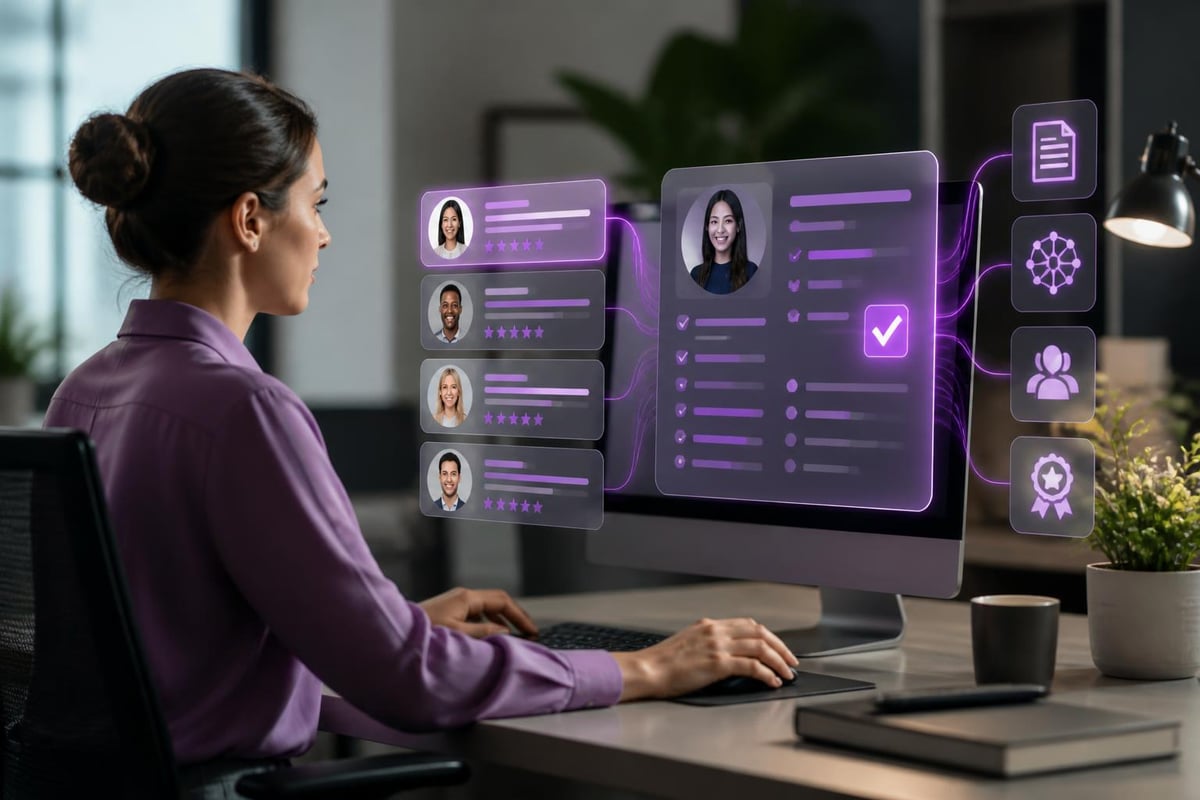
One recruitment agency we worked with was spending about 15 hours per week just on initial candidate searches. After implementing ai candidate sourcing workflows, that dropped to around 3 hours. The AI handled the searching, screening, and initial outreach, whilst the recruiters focused on relationship-building and closing placements.
That's the practical difference. You're not eliminating the human element, you're just removing the repetitive bits that don't need your expertise.
How Small Businesses Can Implement AI Sourcing
Right, let's get into the actual implementation. This isn't rocket science, but it does need a structured approach.
Step 1: Map Your Current Process
Before you automate anything, understand what you're currently doing. Where does most time get wasted? Is it sourcing? Screening? Outreach? Tracking? Implementing AI in business always starts with identifying the bottleneck.
Step 2: Choose the Right Tools
You don't need expensive enterprise platforms. There are practical tools designed for smaller operations:
| Tool Type | What It Does | Best For |
|---|---|---|
| Boolean search AI | Generates complex search strings automatically | Finding passive candidates |
| CV parsing tools | Extracts data from CVs into structured formats | Reducing manual data entry |
| Engagement platforms | Automates personalised outreach sequences | Initial candidate contact |
| ATS integrations | Connects AI sourcing with your existing systems | Streamlining workflows |
The key is starting small. Pick one pain point and solve it first. HR Executive's guide on AI in recruiting emphasises this phased approach for smaller teams.
Step 3: Build Your Candidate Profiles
AI needs good data to work with. Create detailed profiles of what "good" looks like for each role type you recruit for. Include:
- Must-have skills and qualifications
- Nice-to-have attributes
- Deal-breakers
- Culture fit indicators
- Career progression patterns
The more specific you are, the better the AI performs. This isn't about creating unrealistic wish lists, it's about being clear on what actually matters.

Real-World Applications Across Different Sectors
Let's look at how ai candidate sourcing works in practice across different business types.
For recruitment agencies: Automate the initial candidate discovery phase, allowing recruiters to focus on relationship management and client communication. One agency we know reduced their time-to-shortlist by 60% using AI-powered sourcing.
For growing retail businesses: Finding store managers or regional supervisors becomes easier when AI can scan for candidates with specific retail experience, location proximity, and availability patterns. Business process automation AI extends beyond sourcing into onboarding workflows.
For professional services firms: Identifying candidates with niche qualifications (like specific accounting software experience or legal specialisms) becomes faster when AI can cross-reference multiple criteria simultaneously.
For trades businesses: Finding skilled electricians, plumbers, or builders with the right certifications and local availability is simplified through automated credential checking and geographic filtering.
The pattern here? It's about applying the technology to your specific hiring challenges, not implementing it just because it exists.
Common Pitfalls and How to Avoid Them
Let's be honest about where this can go wrong, because it definitely can if you're not careful.
Over-relying on automation: AI should filter and suggest, not make final decisions. Human judgement matters, especially for cultural fit and soft skills.
Poor quality data inputs: Rubbish in, rubbish out. If your job descriptions are vague or your ideal candidate profiles are unclear, the AI will struggle.
Ignoring bias: AI learns from historical data. If your past hiring had biases, the AI might perpetuate them. Regular audits are essential.
Neglecting the candidate experience: Automated doesn't mean impersonal. Personalised outreach still matters. Recruiting Brief's best practices highlight the importance of maintaining human touch.
Not integrating with existing systems: If your AI sourcing tool doesn't talk to your ATS or CRM, you're creating more work, not less.
Measuring What Matters
You'll want to track whether ai candidate sourcing is actually making a difference. Here are the metrics that count:
- Time-to-shortlist: How quickly can you present qualified candidates?
- Quality of hire: Are AI-sourced candidates performing well long-term?
- Cost per hire: Has automation reduced your recruitment costs?
- Response rates: Are candidates engaging with automated outreach?
- Source diversity: Is AI helping you find candidates from varied backgrounds?
| Metric | Before AI | After AI (Typical) | Improvement |
|---|---|---|---|
| Time-to-shortlist | 5-7 days | 1-2 days | 70% faster |
| CVs reviewed per role | 150-200 | 300-400 | 2x coverage |
| Recruiter hours per week | 35-40 | 25-30 | 30% saved |
These aren't guarantees, but they're realistic improvements we've seen with properly implemented systems.

What This Means for Your Business
If you're running a small business or recruitment agency, ai candidate sourcing isn't about keeping up with trends. It's about staying competitive when you're working with limited resources.
The beauty of working with AI in recruitment is that the barriers to entry are lower than ever. You don't need a massive budget or technical team. You need clarity on your processes, willingness to experiment, and a practical approach to implementation.
Start with one role type or one part of your sourcing process. Test it. Measure it. Refine it. Then expand. That's how successful adoption happens for smaller operations, not through massive transformation projects.
The firms winning with AI candidate sourcing in 2026 aren't necessarily the ones with the fanciest technology. They're the ones who've identified their specific bottlenecks and applied targeted solutions that deliver measurable results. That's the approach that actually works.
AI candidate sourcing isn't magic, but when implemented properly, it can genuinely transform how efficiently you find and engage talent. If you're ready to explore how AI can streamline your recruitment processes without the hype or complexity, AI 4 Small Business can help you identify the right tools, build practical workflows, and deliver measurable improvements that actually impact your bottom line.