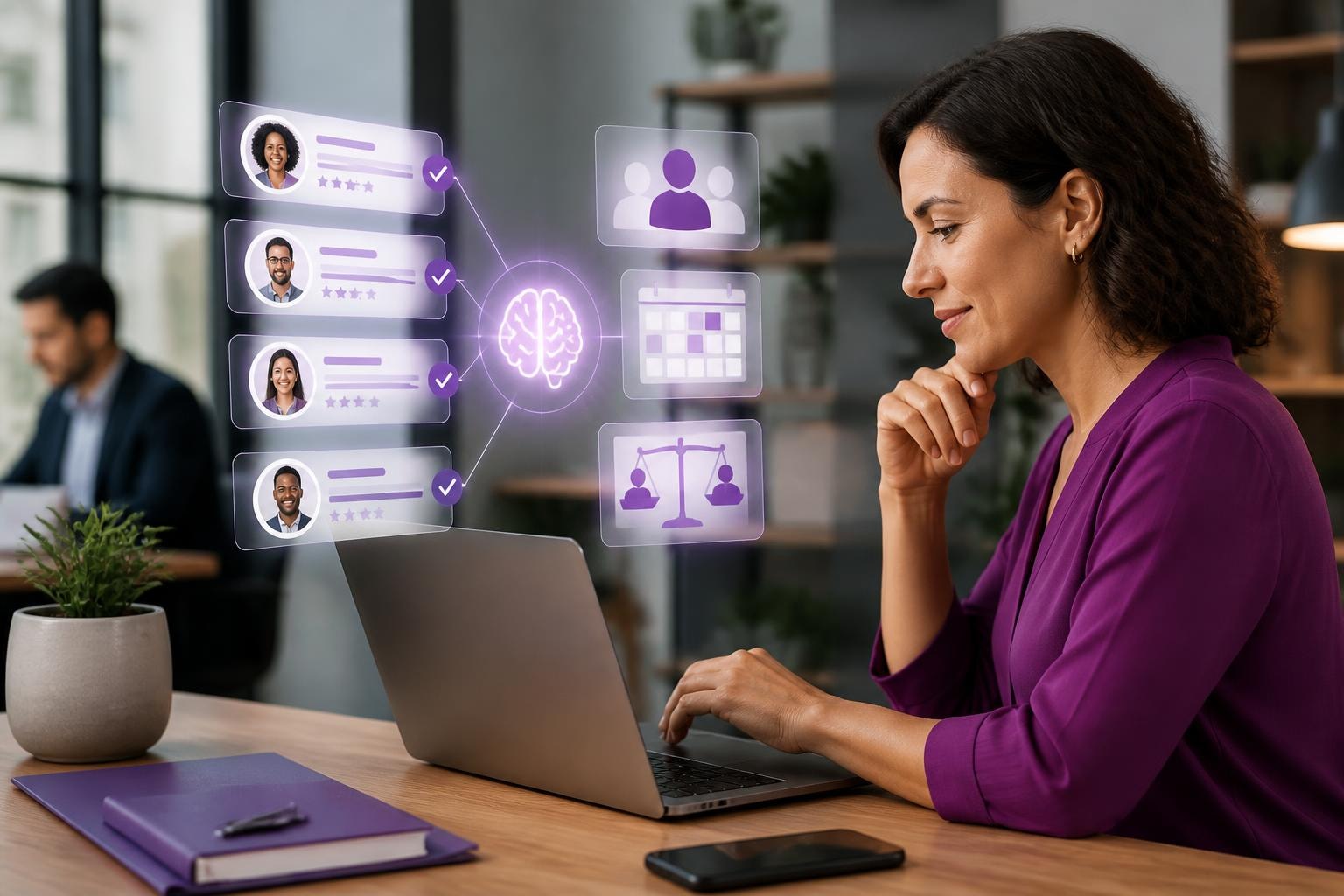
Recruitment eats up time you probably don't have. Sorting through CVs, scheduling interviews, chasing references-it's all necessary, but it's also draining resources that could be spent growing your business. That's where ai in hiring comes in. Not as some fancy corporate tech only big companies can afford, but as practical tools that help small businesses recruit better people, faster, without breaking the bank. Let's look at how you can actually use it.
The Real Problem With Traditional Hiring
Hiring the traditional way is painful. You post a job, get flooded with applications (many completely unsuitable), spend hours reading CVs, then more hours scheduling interviews that candidates sometimes don't even show up for.
Here's what typically happens:
- You receive 100+ applications for a single role
- Only 10-15 are actually qualified
- You spend 5-10 minutes per CV just to work that out
- That's nearly 17 hours of admin before you've even spoken to anyone
Most small businesses don't have dedicated HR teams. You're doing this alongside everything else. AI-driven recruitment tools are changing this by handling the repetitive stuff, so you can focus on the actual decision-making.
How AI in Hiring Actually Works for Small Businesses
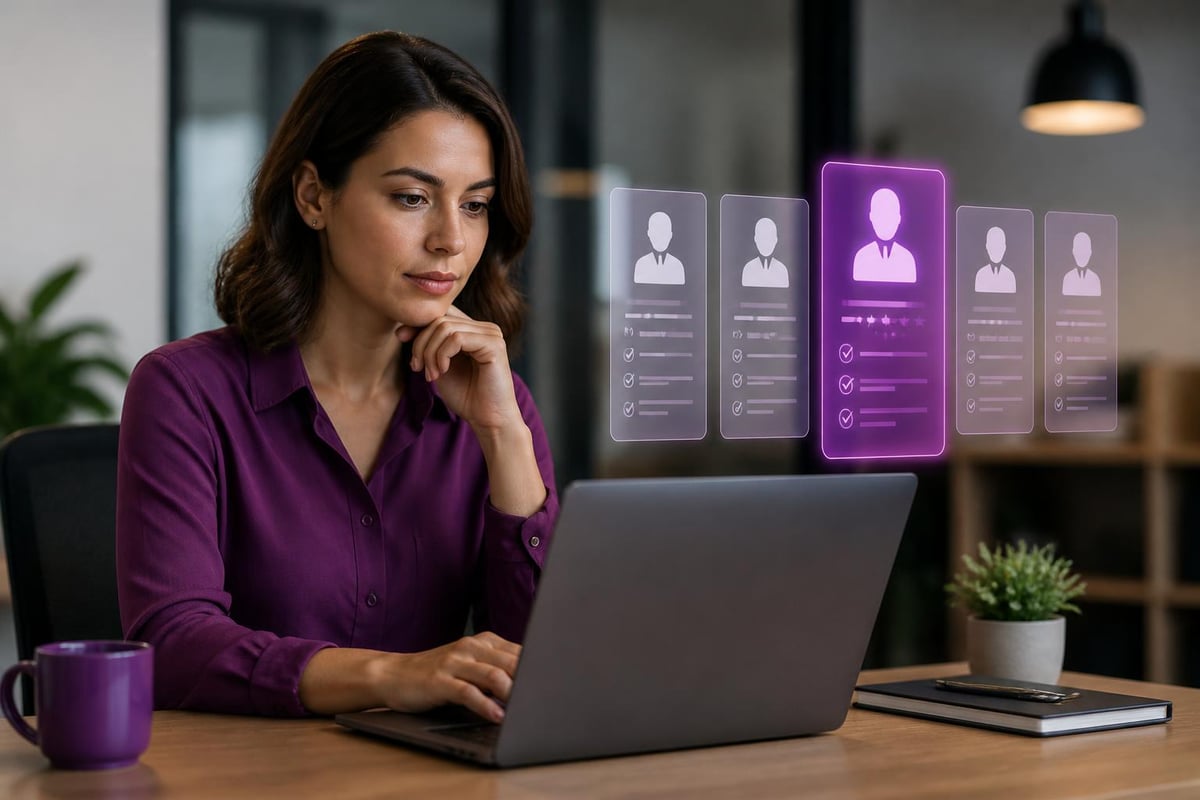
The good news? You don't need a massive budget or technical knowledge to benefit from ai in hiring. Modern tools are built for businesses like yours.
CV Screening and Parsing
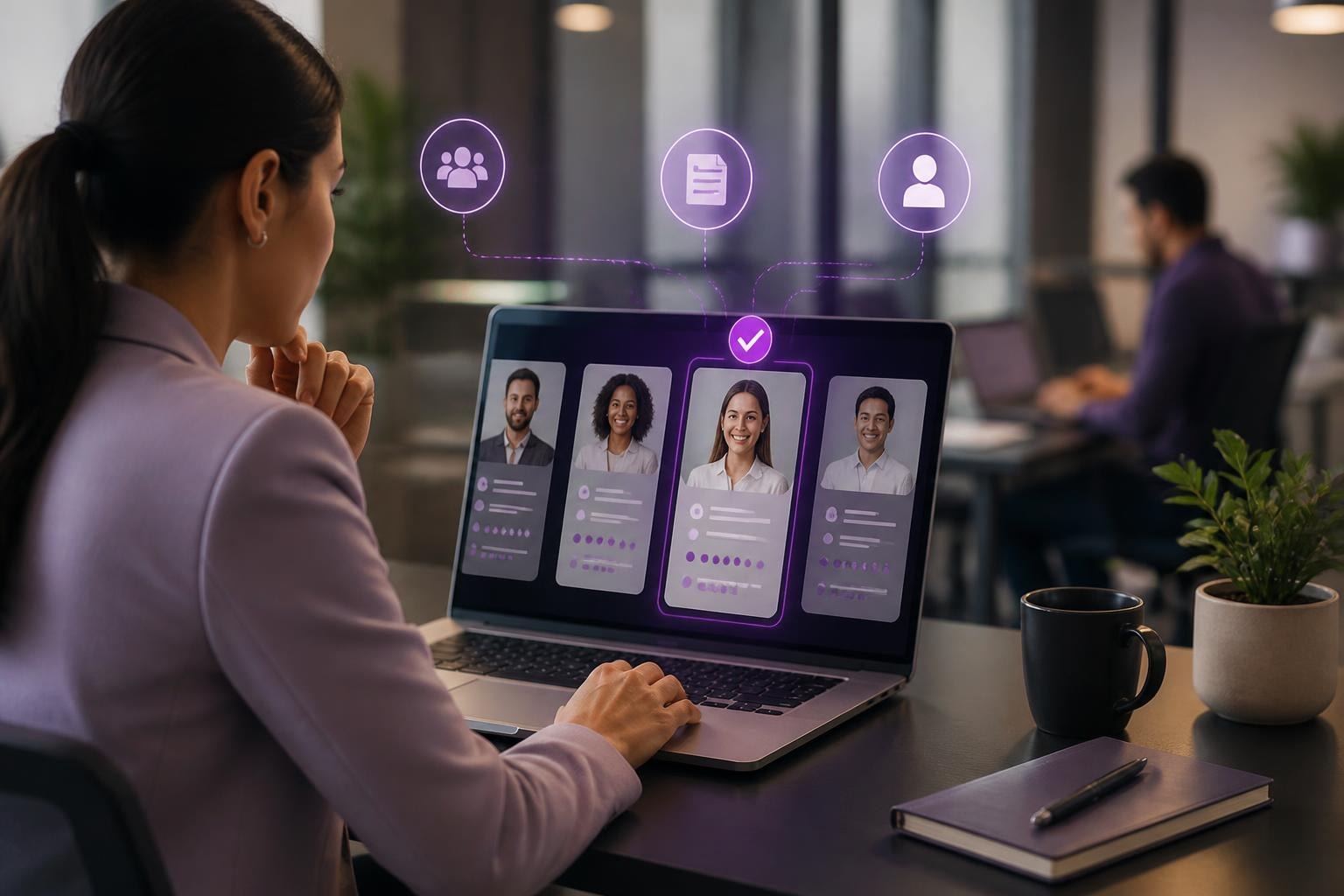
AI reads CVs faster and more consistently than humans. It extracts key information-skills, experience, qualifications-and matches them against your requirements. Tools like Indeed's AI matching or LinkedIn's candidate recommendations do this automatically.
What this means in practice:
- Upload your job spec
- AI ranks candidates by fit
- You review only the top matches
- Hours saved per role
Automated Interview Scheduling
Chasing people for interview times is tedious. AI scheduling tools connect with your calendar and let candidates book slots directly. No more email tennis. Some platforms now include AI-conducted initial interviews, though we'd suggest keeping the human touch for most small business roles.
Candidate Communication
AI chatbots can answer common candidate questions instantly-salary bands, role details, company culture. They can also send updates automatically, keeping candidates engaged without you lifting a finger.
| Traditional Process | AI-Enhanced Process | Time Saved |
|---|---|---|
| Manual CV review | Automated screening | 15+ hours per role |
| Email scheduling | AI calendar booking | 3-5 hours per role |
| Individual updates | Automated messaging | 2-3 hours per role |
Practical Tools You Can Start Using Tomorrow
You don't need custom development. There are affordable, ready-to-use platforms that small businesses are already benefiting from.
Recruitment-specific AI tools:
- Workable – AI-powered applicant tracking with automated screening
- Freshteam – Budget-friendly ATS with smart candidate matching
- Manatal – Visual pipeline with AI recommendations
- Breezy HR – Automation-focused recruiting platform
Many of these integrate with your existing systems and cost less than £100/month. Some offer free tiers for small teams. The use of AI in business is becoming increasingly accessible, particularly for core functions like recruitment.
Where AI in Hiring Delivers the Biggest Impact
Reducing Time-to-Hire
Speed matters. The best candidates are often off the market within days. AI helps you move faster by automating the slow bits. Research from IBM on AI in recruitment shows significant reductions in hiring timelines when automation is applied properly.
Improving Candidate Quality
By consistently applying your criteria, AI reduces the chance of good candidates slipping through because you were tired or rushed. It doesn't get distracted or play favourites.
Cutting Recruitment Costs
Agency fees can hit 20-30% of salary. When you can screen and manage candidates yourself efficiently, you reduce dependency on expensive external help. Business process automation with AI extends beyond hiring-but recruitment is often where businesses see the quickest ROI.

The Pitfalls You Need to Watch For
Let's be honest-ai in hiring isn't perfect. There are genuine concerns you should be aware of.
Bias and Discrimination
AI learns from data. If your historical hiring data contains biases, AI might replicate them. Understanding AI discrimination in recruitment is essential before implementing any automated screening. Always review AI decisions and test for fairness across different candidate groups.
Over-Automation
Hiring is still a human decision. Don't let AI screen out potentially great candidates who don't perfectly match keywords. Use AI to shortlist, not to make final calls.
Data Privacy
You're handling personal information. Make sure any AI tool you use complies with GDPR and UK data protection laws. Candidates have rights over their data-respect them.
| Risk | Mitigation Strategy |
|---|---|
| Algorithmic bias | Regular audits, human oversight, diverse training data |
| Over-filtering | Adjust matching criteria, review borderline cases |
| Privacy issues | Use GDPR-compliant tools, clear candidate consent |
| Loss of personal touch | Reserve AI for admin, keep human contact in interviews |
Getting Started Without Overwhelming Yourself
You don't need to transform your entire recruitment process overnight. Start small and build.
Step-by-step approach:
- Identify your biggest time drain – Is it CV screening? Scheduling? Follow-ups?
- Pick one AI tool that addresses that specific problem
- Run a pilot – Use it for one or two roles
- Measure the impact – Did it save time? Improve quality?
- Expand gradually – Add more automation as you get comfortable
For recruitment specifically, consider exploring AI candidate sourcing strategies that go beyond just posting jobs and waiting.
What's Happening Right Now in 2026

The recruitment landscape is shifting quickly. According to ICIMS research from 2026, candidates are adopting AI tools faster than employers. Job seekers are using AI to tailor CVs, write cover letters, and prepare for interviews.
This creates an interesting challenge. If candidates are using AI but you're not, you might be overwhelmed with well-optimised applications from unsuitable candidates. Using ai in hiring helps level the playing field.
There's also emerging evidence around how AI skills impact job prospects, suggesting that understanding AI is becoming valuable across roles-not just technical positions.
Real-World Example: Small Recruitment Agency
A recruitment agency we worked with was drowning in admin. Three staff members spent 60% of their time on CV screening and candidate updates. They implemented:
- Automated CV parsing to extract and rank candidate data
- AI chatbot for initial candidate queries
- Smart scheduling for interviews
Result? They cut admin time by 40%, placed more candidates, and actually had capacity to take on new clients. The tools cost less than £200/month combined. That's the kind of practical impact we're talking about-not theoretical, not years away, but happening right now.
Making AI in Hiring Work for Your Business
Understanding common AI applications helps you spot opportunities beyond what vendors might suggest. The key is matching the technology to your actual problems, not implementing AI for its own sake.
Think about your recruitment process. Where do hours disappear? What tasks make you groan? That's where AI should go first. The comprehensive guide to AI in hiring from Beatview covers benefits, risks, and responsible adoption in detail if you want to dive deeper.
Remember, you're not trying to replace human judgement. You're trying to get to the point where you're making those judgements faster, with better information, and with less administrative burden.
AI in hiring isn't about replacing recruiters-it's about removing the tedious bits so you can focus on finding the right people. Start with one pain point, use simple tools, and measure the results. If you're ready to explore how AI can transform your recruitment process without the complexity or cost you might expect, AI 4 Small Business can help you identify the right tools, build practical automations, and deliver measurable improvements that actually work for your business.