
Step into 2026, where artificial intelligence is as familiar as your morning coffee. AI is everywhere — yet the concept of common AI still leaves many small business owners scratching their heads.
Why is something so widespread so often misunderstood? This guide peels back the layers, offering real-world insights and practical steps for embracing common AI with confidence. Whether you're just curious or ready to start, you'll come away with clear, actionable answers.
What Is Common AI — and Why Should Small Businesses Care?
At its core, common AI refers to intelligent systems that are widely accessible, adaptable, and already integrated into the tools you probably use every day. Unlike the specialised AI you read about in science journals, common AI powers chatbots, email filters, scheduling tools, and content platforms.
You'll find it in action when:
- A chatbot answers a customer's question on your website at 11pm
- Your email platform suggests the best time to send a campaign
- An analytics tool flags which products are trending before you notice
- A booking system automatically fills your diary and sends reminders
This is mainstream AI — accessible, practical, and available to businesses of any size. According to recent UK AI adoption statistics, a significant and growing percentage of UK businesses have already implemented some form of AI by 2026.
The good news? You don't need a tech team or a huge budget to get started. You just need the right questions — and the right answers.

Common Misconceptions About AI for Small Businesses
Before we get into practical use cases, it's worth clearing up a few of the most persistent myths that stop small business owners from even exploring AI.
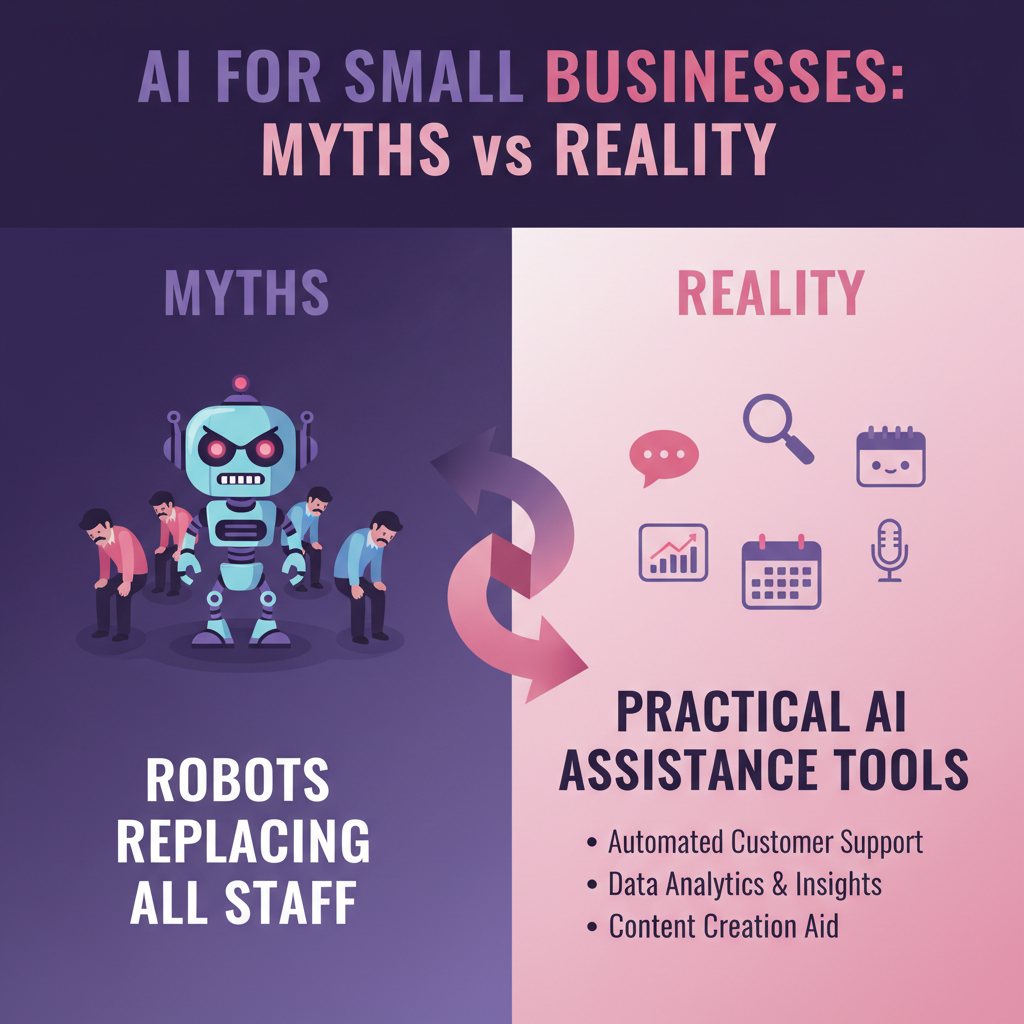
Myth 1: AI Will Replace My Staff
This is by far the most common fear — and it's largely unfounded for small businesses. Common AI tools are designed to assist people, not replace them. They handle repetitive, time-consuming tasks so your team can focus on the work that requires human creativity, judgement, and relationships.
Myth 2: AI Is Only for Big Corporations
Not at all. Many of the best AI tools for small businesses are affordable, subscription-based, and require zero technical knowledge. Tools like ChatGPT, Canva AI, and Zapier are built for everyday business owners — not enterprise IT departments.
Myth 3: AI Is Too Complicated to Set Up
Modern AI tools are increasingly plug-and-play. You don't need to understand how they work under the hood — any more than you need to understand how your car engine works to drive to a client meeting. If you can use a smartphone, you can use most AI tools.
Myth 4: AI Isn't Safe for My Business Data
Data privacy is a legitimate concern, and it's worth checking the data policies of any tool you use. But reputable AI platforms take data security seriously and comply with GDPR. Always read the terms, and stick to well-known providers.
Practical AI Use Cases for Small Businesses
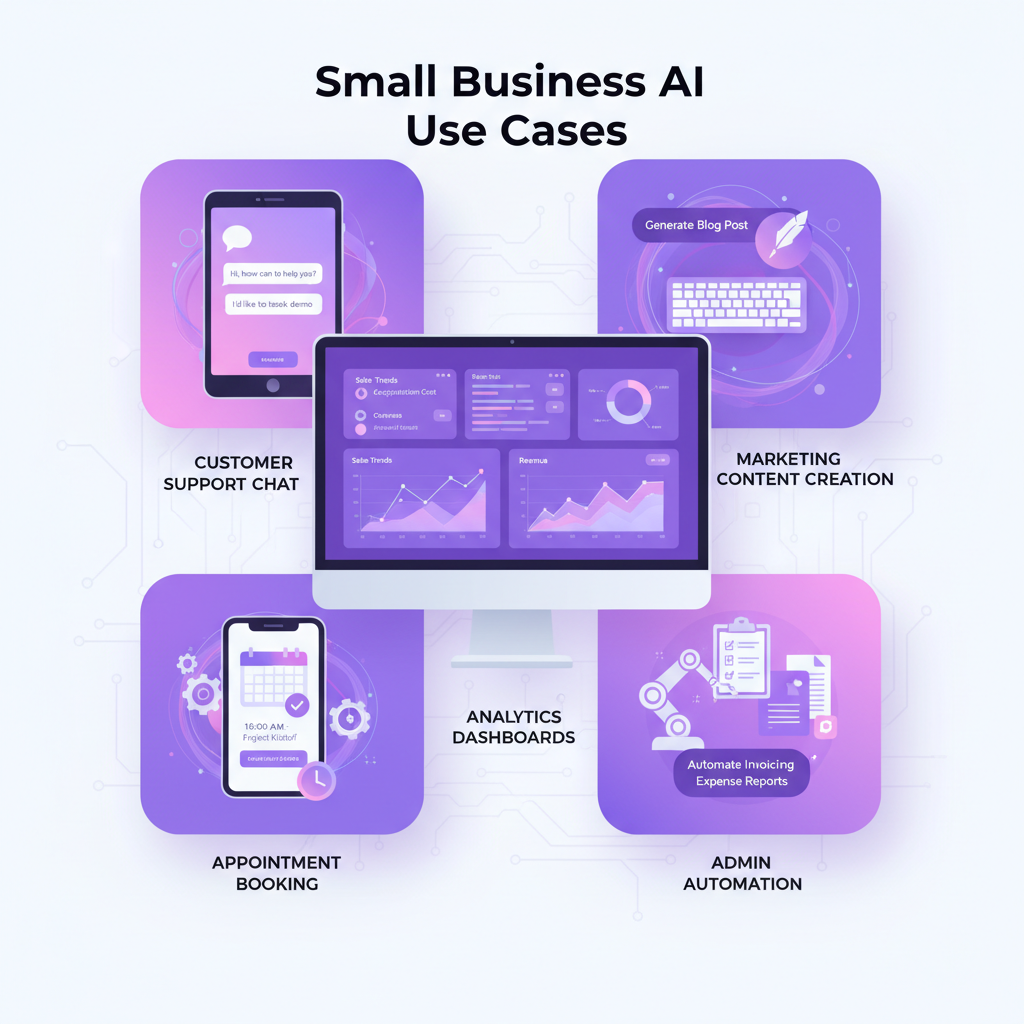
So what can AI actually do for your business right now? Here are some of the most common and immediately useful applications:
1. Customer Service and Chat
AI chatbots can handle FAQs, take enquiries, and qualify leads — 24/7, without you lifting a finger. Tools like Tidio, Intercom, or even a well-configured ChatGPT integration can dramatically reduce the time you spend answering repetitive questions.
2. Marketing Content Creation
Struggling to keep up with social media, blog posts, or email newsletters? AI writing tools can draft, edit, and repurpose content in minutes. You still add the human touch — the local knowledge, the personality — but the heavy lifting is done.
3. Admin and Workflow Automation
Tools like Zapier and Make connect your apps together so that repetitive tasks happen automatically. When someone fills in a contact form, an email goes out, a CRM record is created, and a reminder is added to your calendar — all without you touching it.
4. Analytics and Business Insights
AI-powered analytics tools can tell you which marketing channels are working, which products are popular, and where customers are dropping off — without you needing to build a spreadsheet from scratch.
5. Appointment Booking and Scheduling
AI scheduling tools like Calendly remove the back-and-forth of booking meetings. Customers pick a time that works, and everything else is handled automatically. Want to see how this could work for your business? Book a free discovery call and we'll show you.
6. SEO and Content Optimisation
AI tools can help you identify the right keywords, analyse competitor content, and suggest improvements to your website pages — making it much easier to show up on Google without paying for ads. Learn more about our AI-powered SEO service.
Building AI Readiness in Your Business
Embracing common AI is more than a technology decision — it's a mindset shift. Many businesses are eager to harness AI's potential but aren't sure where to begin. Here's a simple way to think about it:
Step 1: Audit Your Time
Write down the five tasks that eat up the most time in your working week. Chances are, at least three of them could be automated or significantly streamlined with AI. Not sure where to start? Try our free AI Readiness Scorecard — it takes five minutes and shows you exactly where AI could help your business most.
Step 2: Start Small and Specific
Don't try to automate everything at once. Pick one task, find a tool that handles it well, and get comfortable with it. Once you've seen results, you'll have the confidence to expand.
Step 3: Upskill Your Team
You don't need everyone to become an AI expert — but basic familiarity helps. Share useful tools, encourage experimentation, and make it safe to try new approaches. Leadership matters here: if you're enthusiastic about AI, your team will be too.
Step 4: Review and Refine
AI tools evolve quickly. What's available today is significantly more capable than what was available 12 months ago. Schedule a quarterly review of the tools you use and stay curious about what's new.
Mistakes to Avoid When Adopting AI
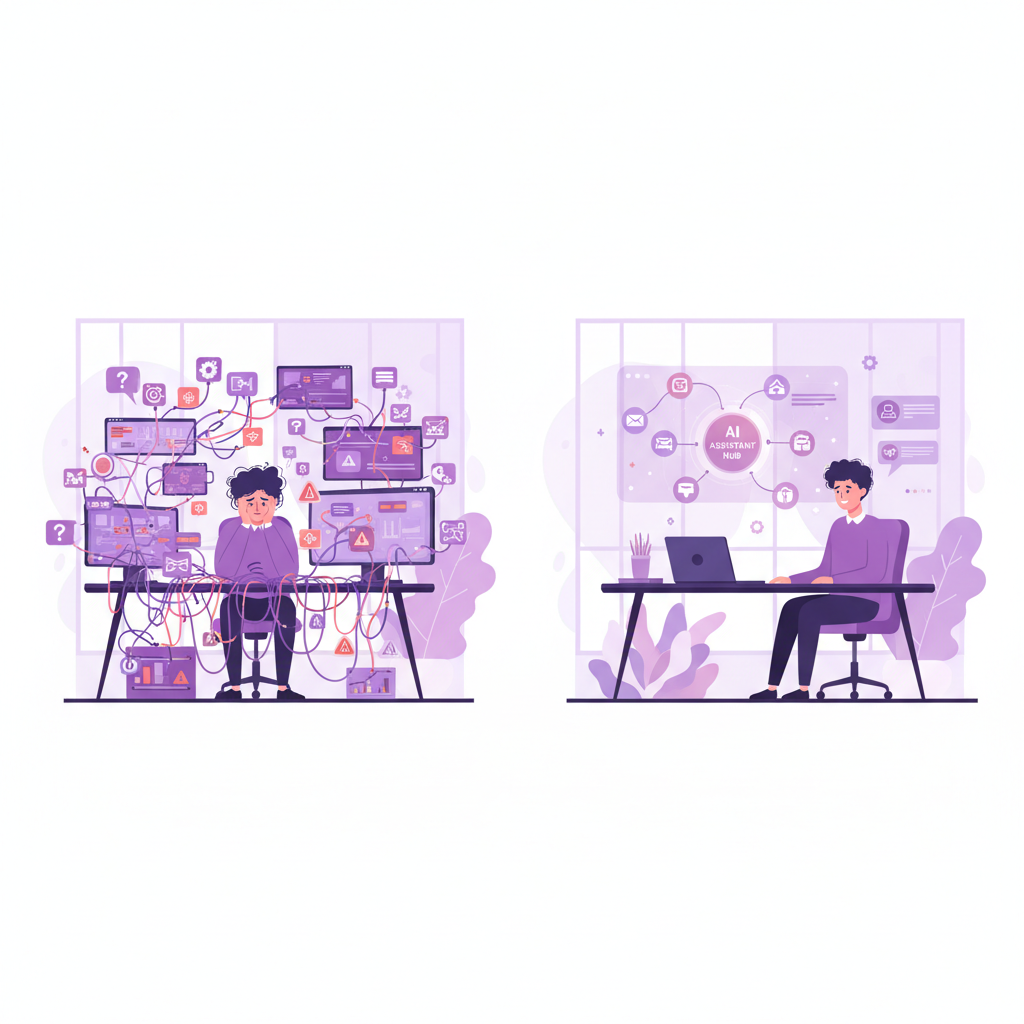
AI adoption doesn't always go smoothly — especially when businesses rush in without a plan. Here are the most common mistakes to avoid:
- Adopting too many tools at once. More tools doesn't mean more productivity. Start with one or two, use them well, and add more when you're ready.
- Ignoring data quality. AI is only as good as the information it works with. If your customer data is messy, your AI outputs will be too.
- Expecting instant results. AI tools often need time to learn your preferences and patterns. Give new tools at least 30 days before judging their value.
- Not reviewing AI outputs. AI can make mistakes. Always have a human review anything going out to customers or making important business decisions.
- Skipping the strategy. Using AI without a clear goal is like buying gym equipment and leaving it in the garage. Know what problem you're solving before you invest.
If you'd like expert guidance on avoiding these pitfalls, explore our AI services for small businesses or read more on the AI Business Blog.
The Regulatory Side: What UK Small Businesses Need to Know
You may have heard about AI regulations — and wondered whether they affect you. The short answer: mostly not yet, but it's worth being aware.
The UK government has established frameworks like the UK National AI Strategy to guide responsible AI adoption. The focus is on building public trust, ensuring data privacy, and making sure innovation doesn't outpace accountability.
For most small businesses, the practical implications are straightforward:
- Be transparent with customers if you're using AI to communicate with them
- Make sure any AI tools you use comply with GDPR and UK data protection laws
- Don't use AI to make decisions that discriminate against customers or employees
- Keep humans in the loop for important decisions
Good practice here isn't just about compliance — it builds trust, and trust builds customers.
Ready to Start Using AI in Your Business?

AI doesn't have to be complicated, expensive, or scary. For most small businesses, the biggest barrier isn't the technology — it's knowing where to start.
Here's what we'd suggest:
- Take the free AI Readiness Scorecard to see where AI could save you time right now
- Browse our AI services to see how we help UK small businesses adopt AI practically
- Read more guides on the AI Business Blog
- Book a free 30-minute discovery call — no pressure, just a useful conversation about your business
Common AI is here, it's practical, and it's already helping businesses like yours save hours every week. The question isn't whether to use it — it's where to start.
Let's figure that out together.