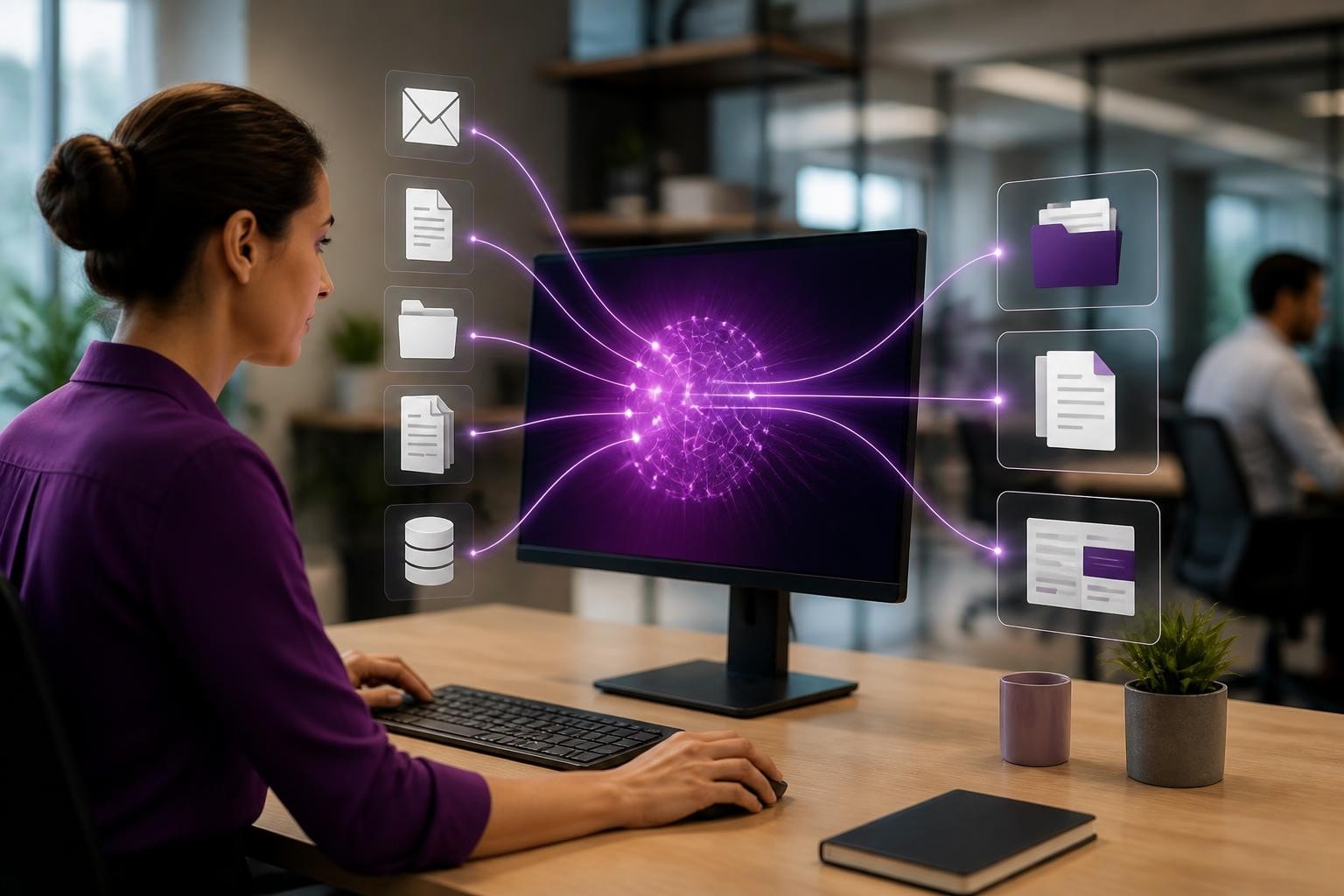
You've probably tried voice typing before and ended up fixing more mistakes than if you'd just typed the thing yourself. We've all been there, yeah? But wispr is doing something a bit different, and it's worth paying attention to if you're running a small business where time is basically your most valuable asset. This isn't about flashy demos or promises. It's about whether voice input can actually become something you'd use every day without wanting to throw your laptop out the window.
What Makes Wispr Different from Your Usual Voice Tech
The thing about wispr is that it's not trying to be everything to everyone. It's a voice-to-text tool that actually learns how you speak, including all those industry-specific terms and weird abbreviations that normal dictation software butchers.
Unlike the basic voice typing you've got built into your phone, wispr uses proper AI models trained on natural speech patterns. It picks up context, understands when you're editing versus creating new content, and doesn't make you speak like a robot.
Here's what sets it apart:
- Learns your vocabulary and industry jargon over time
- Works across different applications without switching modes
- Handles corrections and editing commands naturally
- Doesn't need perfect diction to understand you
According to Wispr AI's Forbes profile, the company's focused on creating neural interfaces that make human-computer interaction genuinely seamless. That's the sort of tech approach that could actually shift how businesses use AI day-to-day.

Real Business Applications That Actually Make Sense
Let's get practical. Where would wispr actually save you time in a small business? Think about all those repetitive admin tasks that eat your day.
Customer Service and Email Responses
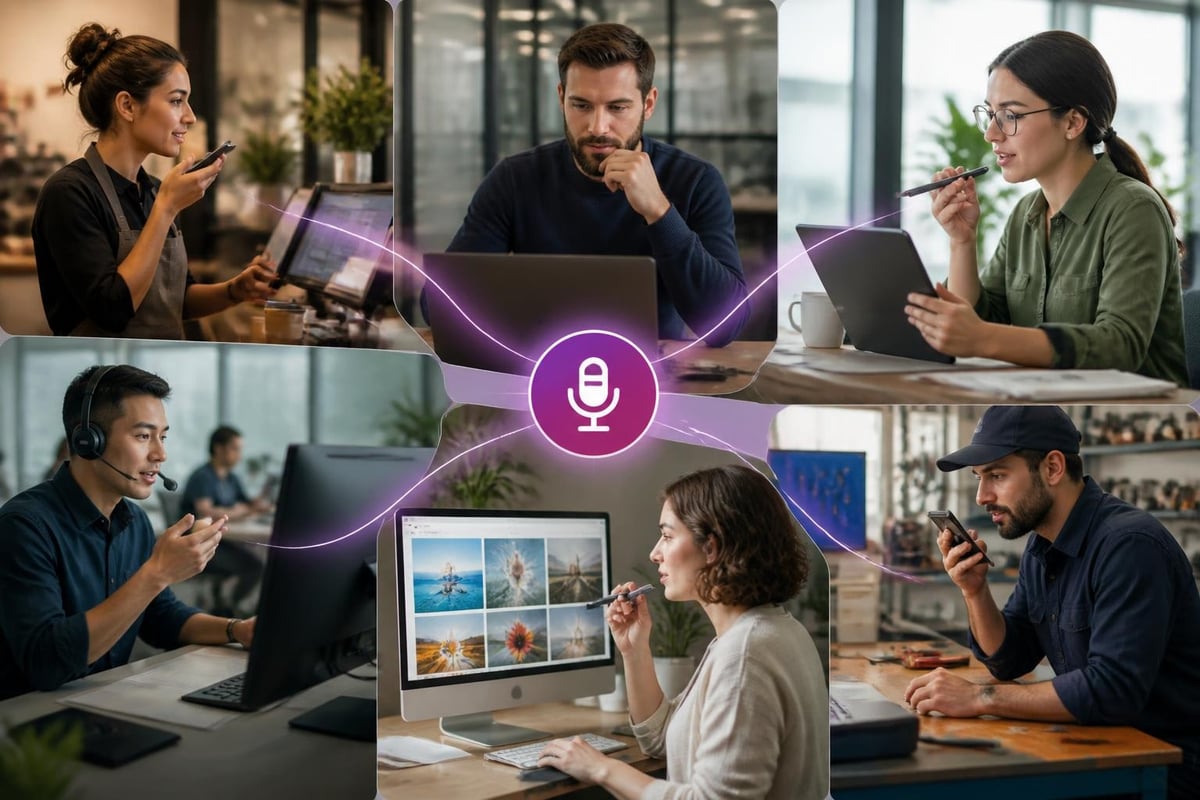
If you're answering similar customer questions repeatedly, speaking your responses is genuinely faster than typing. A tradesperson could respond to quote requests whilst walking between jobs. A retailer could update customers about stock queries during a quiet moment on the shop floor.
The productivity gain isn't massive for one email, but multiply that across 20-30 responses a day and you're looking at real time savings.
Documentation and Record Keeping
Construction businesses, professional services, recruitment agencies-anyone who needs to document visits, assessments or meetings knows how tedious the write-up process is. With wispr, you could literally speak your notes immediately after a site visit or client meeting whilst everything's fresh.
| Business Type | Typical Documentation Task | Time Saved with Voice |
|---|---|---|
| Trades | Site visit reports | 15-20 mins per report |
| Recruitment | Candidate assessments | 10-15 mins per assessment |
| Professional Services | Meeting minutes | 20-30 mins per meeting |
| Retail | Inventory notes | 5-10 mins per session |
Similar to how AI helps recruitment processes, voice tech creates efficiency in tasks that have always been manually intensive.
Content Creation and Marketing
Writing product descriptions, social media posts, blog updates-these all become quicker when you can just talk through them. Most people can speak way faster than they type, and wispr's clever enough to format things properly without you having to dictate punctuation marks like it's 1995.
The Practical Limitations You Should Know About
Right, let's be honest about where this tech isn't perfect yet. No point pretending otherwise.
Noise environments are still tricky. If you're running a busy café or working on a construction site, background noise can mess with accuracy. It's better than it used to be, but it's not magic.
You need decent internet. The AI processing happens in the cloud, so a dodgy connection means delays and errors. That's a problem if you're working from remote locations regularly.
There's a learning curve. Not a massive one, but you do need to adjust how you phrase things initially. It's like learning to work with a new team member-takes a bit of time to get in sync.
The company secured significant funding to develop their neural interface technology, which suggests they're in it for the long haul. But early adoption always comes with some roughness around the edges.
Setting Up Voice Tech in Your Business
If you're thinking about actually implementing wispr or similar voice tools, here's a sensible approach that won't disrupt your whole operation.
Start with one repetitive task. Pick something you do daily that involves typing the same sort of content-customer responses, reports, whatever.
Test it yourself first. Don't roll it out to your team until you've properly used it for at least a week. You'll spot the quirks and figure out workarounds.
Create simple voice templates. For common tasks, develop standard phrases or structures that work well with voice input. This speeds things up massively once you've got them sorted.
Track the actual time saved. Be honest about whether it's genuinely making you faster. If it's not, either adjust how you're using it or bin it and move on.
Train your team properly. If it works for you, show others exactly how you're using it-not just the features, but the actual workflow that makes it worthwhile.
This practical implementation approach mirrors how we help businesses adopt AI tools effectively-starting small, proving value, then scaling what works.
Integration with Your Current Systems
The wispr tech needs to play nicely with whatever software you're already using. There's no point having brilliant voice input if it doesn't work with your CRM, your project management tool, or your email system.
Most modern voice tools work as system-wide applications, meaning they function across different programs. That's crucial because you're not going to switch between typing and voice depending on which window you've got open.
Key integration points to check:
- Does it work with your email client?
- Can it handle your CRM or customer database?
- Will it function in your documentation software?
- Does it integrate with messaging platforms you use?
For small businesses, especially those in retail operations or professional services, seamless integration determines whether a tool becomes essential or gets abandoned after a week.

Cost Versus Value for Small Businesses
Let's talk money. Is wispr worth it compared to just getting faster at typing or hiring someone to handle admin?
The pricing for wispr sits in that middle ground where it's not cheap enough to buy without thinking, but not expensive enough to require a business case presentation. For 2026, you're looking at monthly subscription costs that compete with other productivity software.
Value calculation approach:
- Calculate hours spent on typing-heavy tasks weekly
- Estimate realistic time savings (be conservative-maybe 30-40%)
- Factor in reduced errors and rework
- Consider the mental energy saved from admin tasks
If you're spending 10 hours weekly on documentation, emails, and content creation, even a 30% improvement gives you three hours back. That's meaningful for a small business owner.
The question isn't whether voice tech like wispr is impressive (it is), but whether it solves a problem you actually have. If typing speed isn't a bottleneck in your business, this won't magically create value. But if you're drowning in documentation and customer communications, it's worth exploring.
Compare this to how you'd evaluate any AI business tool-what problem does it solve, what's the actual return, and can you implement it without massive disruption?
What's Coming Next for Voice Technology
The wispr technology represents where voice input is heading-more contextual, more accurate, more integrated into normal workflows. We're moving past the novelty phase into actual utility.
Future developments will likely include better offline capabilities, improved noise filtering, and tighter integration with business-specific software. The technology is also heading toward understanding intent better, not just transcribing words.
For small businesses, this means voice input could become as normal as typing within the next few years. The businesses that experiment with these tools now will have a head start once the technology becomes standard.
Voice technology like wispr shows how AI is shifting from futuristic concept to practical business tool, but implementation matters more than features. If you're ready to explore how AI can genuinely improve your operations without the hype or complexity, AI 4 Small Business helps you identify the right tools, implement them properly, and measure real results. We focus on what actually works for your business, not what sounds impressive in a demo.