
The recruitment game has changed. You're competing with bigger companies for the same talent, your inbox is overflowing with CVs that don't quite fit, and you're spending hours on tasks that don't actually help you spot brilliant candidates. If this sounds familiar, you're not alone. But here's the thing: ai in recruitment process isn't just for massive corporations with dedicated HR teams anymore. Small businesses and recruitment agencies are using practical AI tools to cut through the noise, save time, and actually find people who'll make a real difference. Let's look at how it works in practice.
What AI Actually Does in Recruitment
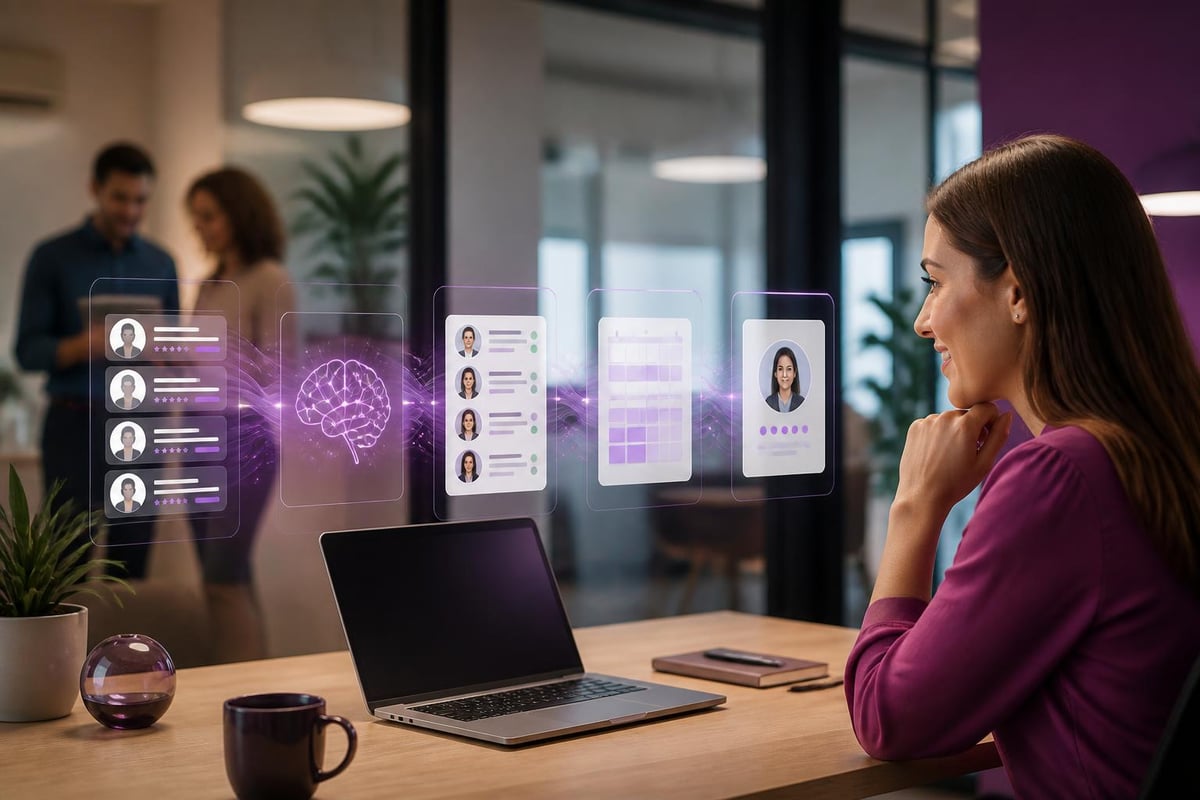
Forget the sci-fi stuff. When we talk about ai in recruitment process, we're talking about tools that handle the repetitive bits so you can focus on the human stuff.
AI handles these tasks brilliantly:
- Scanning hundreds of CVs in minutes to find relevant experience
- Writing job descriptions that actually attract the right candidates
- Scheduling interview slots without the endless email tennis
- Answering common candidate questions through chatbots
- Matching skills and experience to job requirements
The reality is that AI is redefining the recruitment process by automating what used to eat up your entire morning. But it's not replacing recruiters. It's giving them their time back to do what they're brilliant at: building relationships and assessing cultural fit.
Practical Tools You Can Start Using Tomorrow
Right, let's get specific. What does this actually look like for a small recruitment agency or a growing business trying to hire?
CV Screening That Doesn't Miss Good People
Traditional keyword matching misses nuance. Someone might be perfect for your role but use different terminology on their CV. Modern AI tools understand context. They know that "customer success manager" and "client relationship specialist" might be describing similar experience.
| Task | Manual Approach | AI Approach | Time Saved |
|---|---|---|---|
| Screen 100 CVs | 5-8 hours | 15-30 minutes | 85-90% |
| Write job description | 1-2 hours | 10-15 minutes | 90% |
| Schedule 10 interviews | 2-3 hours | 5 minutes | 95% |
You'll find tools like this already built into modern recruiting platforms, and they're getting smarter every month.
Writing Job Descriptions That Actually Work
Here's a secret: most job descriptions are terrible. They're either too vague or so stuffed with requirements that brilliant candidates don't bother applying. AI can help you write descriptions that balance clarity with appeal, using language that resonates with your target candidates.
You feed it the role requirements, and it drafts something readable. You tweak it to match your company voice. Done.
Where AI Really Shines (and Where It Doesn't)
Let's be honest about what works and what's still a bit rubbish.
AI is excellent at:
- Processing large volumes of applications quickly
- Identifying patterns in successful hires
- Removing initial bias based on names, ages, or photos
- Automating recruitment administration tasks
AI struggles with:
- Understanding company culture fit
- Assessing soft skills in early stages
- Reading between the lines in interviews
- Building genuine candidate relationships
This is why the best ai in recruitment process setups combine automation with human judgment. Use AI to handle the volume and admin, but keep humans involved in the decisions that matter.
The Candidate Experience Matters
Here's where things get interesting. Some candidates love the efficiency of AI-powered recruitment. Others find it impersonal or frustrating. Research shows candidates are hitting back at employers using AI interviews, with many prepared to walk out if the process feels too robotic.
The solution? Be transparent. Tell candidates when AI is being used. Keep the process feeling human, even when automation is doing the heavy lifting behind the scenes.
Setting Up AI Recruitment in Your Business
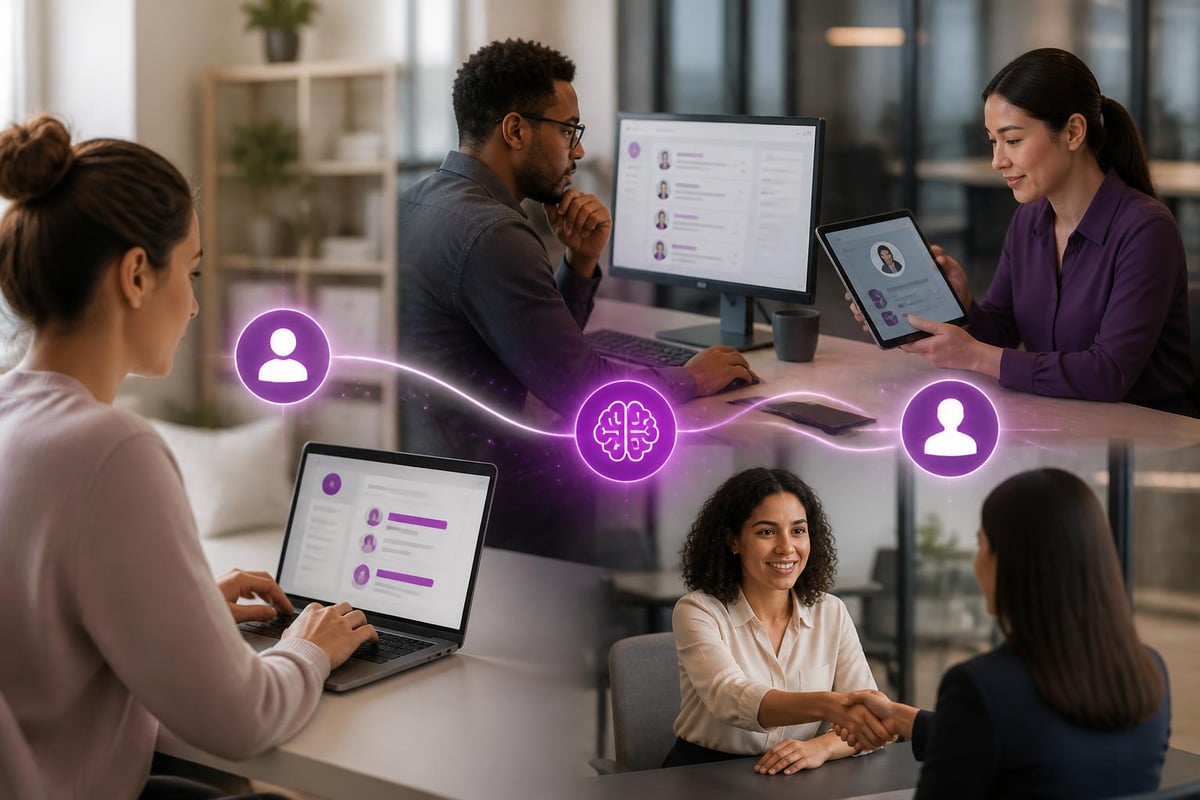
You don't need a massive budget or technical team to start using ai in recruitment process. Here's a realistic approach for small businesses.
Step 1: Identify your biggest time drain
Is it CV screening? Interview scheduling? Writing job ads? Start there.
Step 2: Pick one tool to test
Don't try to automate everything at once. Choose a single tool that addresses your biggest pain point. Many practical AI tools for small businesses offer free trials.
Step 3: Set clear success metrics
What does "better" look like? Time saved? Quality of candidates? Faster time-to-hire? Track it.
Step 4: Train your team
Make sure everyone understands what the AI does and doesn't do. This prevents over-reliance and maintains quality.
Step 5: Review and refine
After a month, look at what's working. Adjust settings, change processes, or try different tools if needed.
Real-World Examples from Small Businesses
A recruitment agency in Manchester reduced their CV screening time by 80% using AI tools. They went from spending three days reviewing applications to half a day, freeing up time to actually speak with promising candidates.
A growing eCommerce business in Bristol automated their interview scheduling and candidate communication. What used to take their HR manager 10 hours a week now takes less than one.
These aren't special cases. They're typical results when you implement AI practically rather than chasing the latest hype.
Understanding how to integrate AI into your hiring process means starting small and building from there.

Avoiding Common Mistakes
Mistake 1: Using AI as the sole decision-maker
AI should shortlist. Humans should decide. Always.
Mistake 2: Not testing for bias
AI learns from historical data. If your past hiring had unconscious bias, the AI might replicate it. Regular audits matter. Research into fairness in AI-driven recruitment highlights why this needs constant attention.
Mistake 3: Forgetting about candidate experience
Just because you can automate doesn't mean candidates want a completely robotic process. Balance efficiency with humanity.
Mistake 4: No human oversight
Set up regular reviews of what the AI is doing. Sometimes tools need recalibrating based on changing business needs.
Making It Work for Your Sector
The beauty of ai in recruitment process is that it adapts to different industries. If you're in retail, you might prioritise screening for customer service skills. Professional services firms might focus on qualification verification. Trade businesses could emphasise certification matching.
The tools are flexible. Your approach should match your specific hiring challenges, not some generic template. This is where AI as a practical tool rather than a magic solution makes all the difference.
The Cost Question
Let's talk money. AI recruitment tools range from free (basic features) to a few hundred pounds monthly for comprehensive platforms. Compare that to the cost of:
- A bad hire (typically 30% of annual salary)
- Weeks of wasted recruiter time
- Lost productivity while positions stay empty
- Advertising costs for multiple rounds of recruitment
Most small businesses find the ROI appears within the first few hires. You're not just saving time; you're making better decisions faster.
The ai in recruitment process isn't about replacing human judgment with algorithms. It's about removing the admin burden so you can focus on finding people who'll actually thrive in your business. Whether you're hiring one person or building an entire team, the right AI tools make the process faster, fairer and frankly less frustrating. If you're ready to explore how AI can transform your recruitment without the complexity or cost of enterprise systems, AI 4 Small Business can help you identify the right tools and build practical automations that deliver results from day one. No jargon, no dependencies, just recruitment that works better.