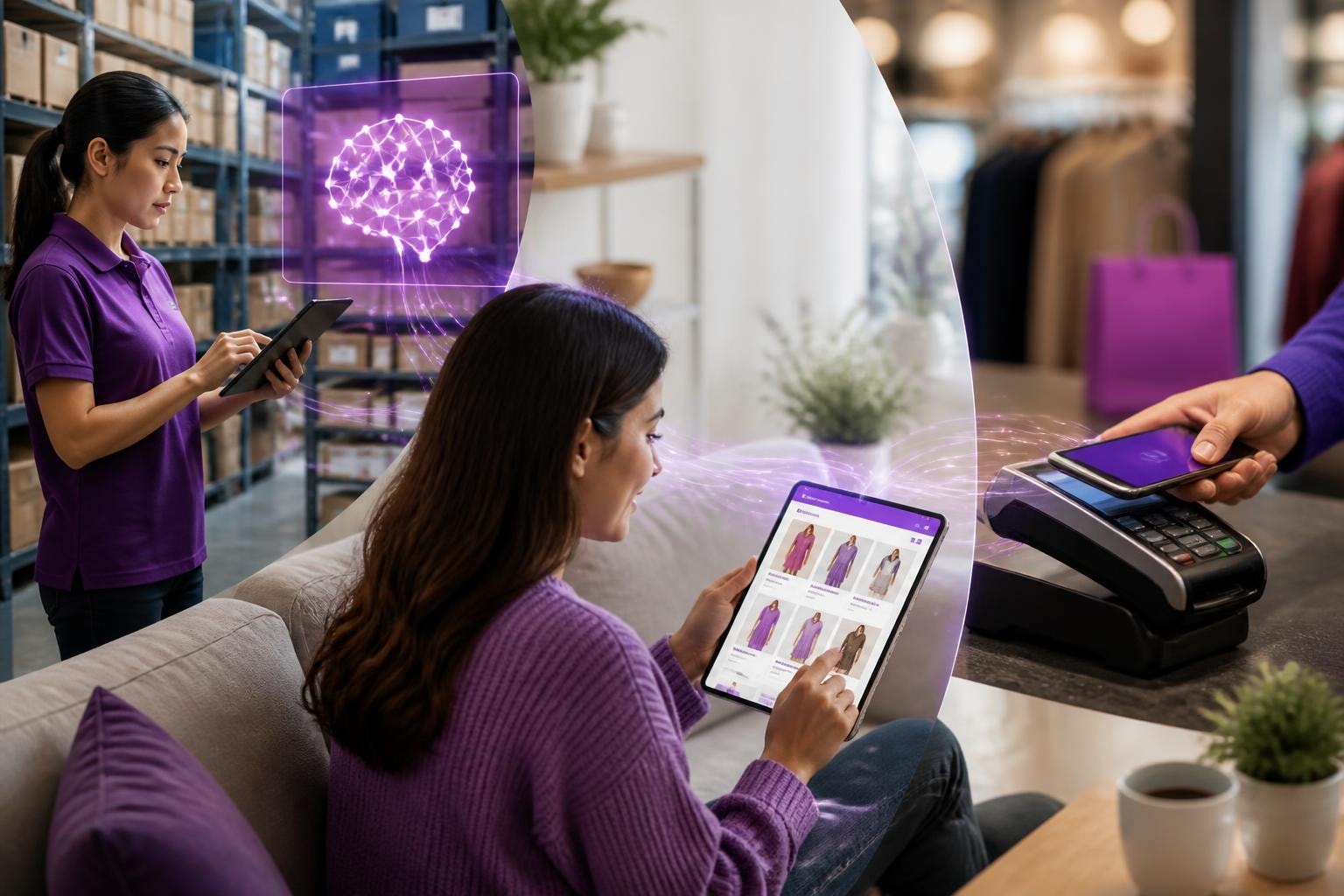
The retail landscape has shifted dramatically over the past few years, and if you're running a small retail shop or e-commerce store in 2026, you'll already know that standing still isn't an option. AI in retail and e-commerce isn't just for the big players anymore. Small businesses are using intelligent automation to compete effectively, reduce time spent on repetitive tasks, and create better shopping experiences without needing massive budgets or technical teams. The question isn't whether AI can help your retail business, it's which implementations will deliver the fastest return on your time and investment.
Where AI Actually Makes a Difference in Retail
Let's cut through the noise. AI technologies are transforming the retail industry across multiple touchpoints, but not all applications are equally valuable for small businesses. You need to focus on the areas where automation delivers immediate, measurable impact.
Inventory and stock management tops the list for most retailers. AI tools can predict demand patterns based on historical sales, seasonal trends, and even external factors like weather or local events. This means you're not guessing what to order or overstocking items that'll sit gathering dust.
Customer service automation is another game-changer. Chatbots have come a long way from those clunky, frustrating experiences we all hated. Modern AI assistants can handle common queries, track orders, and escalate complex issues to your team, freeing you up to focus on problems that actually need human judgment.
Personalisation That Doesn't Creep People Out
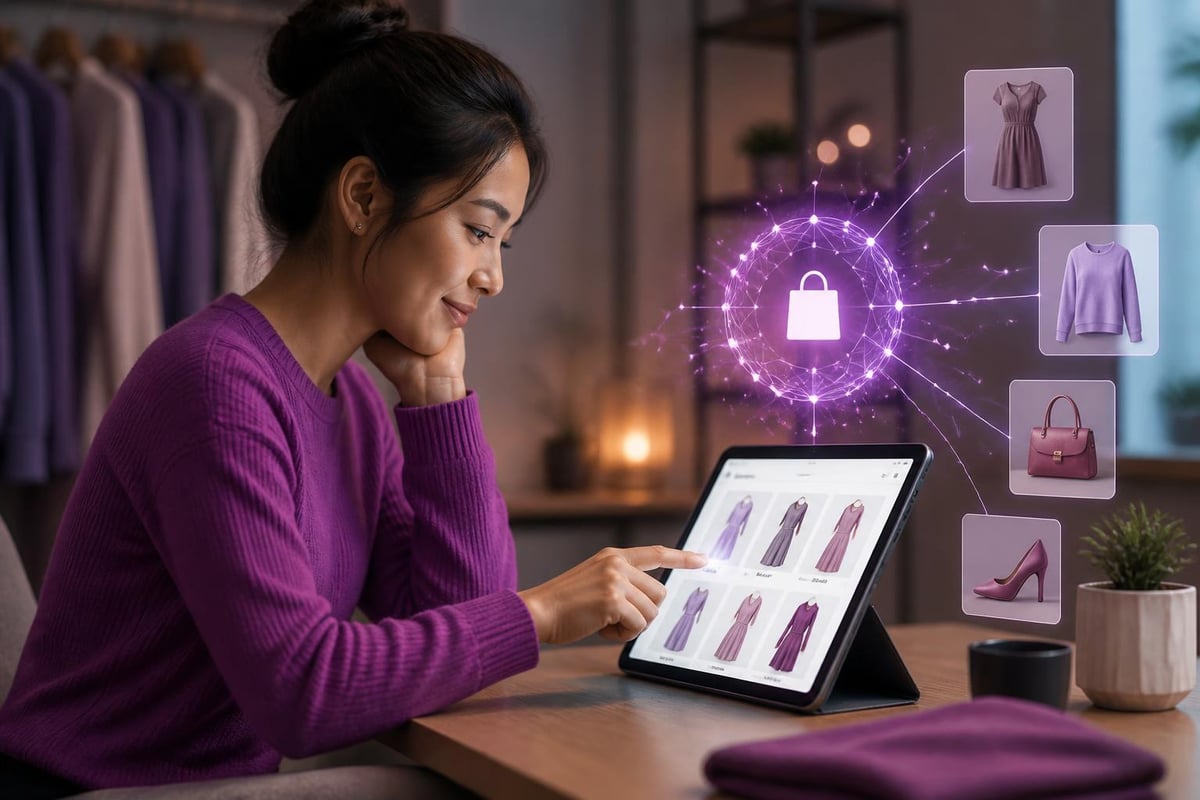
Here's where ai in retail and e commerce gets interesting. Personalisation used to require expensive software and data scientists. Now, accessible tools can analyse browsing behaviour and purchase history to suggest relevant products without making customers feel like they're being watched.
The key is finding the balance. You want to show customers items they'll genuinely find useful, not bombard them with recommendations that feel invasive. AI implementation in retail and e-commerce shows that effective personalisation increases conversion rates whilst building trust.
Practical AI Tools You Can Implement This Month
Let's get specific. Here are tools that small retail and e-commerce businesses are actually using right now:
| Tool Type | What It Does | Time Saved Per Week |
|---|---|---|
| Dynamic pricing software | Adjusts prices based on demand, competition, and inventory levels | 5-8 hours |
| Email marketing AI | Generates subject lines, segments audiences, optimises send times | 3-6 hours |
| Product description generators | Creates unique, SEO-friendly descriptions at scale | 8-12 hours |
| Visual search tools | Lets customers find products using images instead of keywords | N/A (revenue increase) |
The beauty of business process automation AI is that it handles the tedious stuff whilst you focus on strategy and customer relationships. You're not replacing people, you're removing bottlenecks.
Behind the Scenes: Operations and Fulfilment
This is where ai in retail and e commerce delivers serious ROI that customers never see but you'll definitely feel. Order processing, warehouse management, and logistics coordination are ripe for automation.
Automated order routing ensures orders go to the right fulfilment centre or dropshipper based on location, stock availability, and shipping costs. No more manual checking and forwarding.
Returns processing can be partially automated too. AI can categorise return reasons, flag potential fraud, and even predict which products are likely to be returned based on historical patterns. This helps you make smarter buying decisions and improve product descriptions to reduce returns in the first place.
Demand Forecasting That Actually Works
Traditional forecasting relied heavily on gut feeling and basic trend analysis. Modern AI considers dozens of variables simultaneously. Microsoft's research on AI in retail demonstrates how machine learning models can reduce forecasting errors by up to 50%, which translates directly into better cash flow and fewer stockouts.
For small businesses, this doesn't require complex custom systems. Off-the-shelf tools now offer surprisingly sophisticated forecasting that integrates with your existing e-commerce platform or point-of-sale system.
The Customer Experience Upgrade
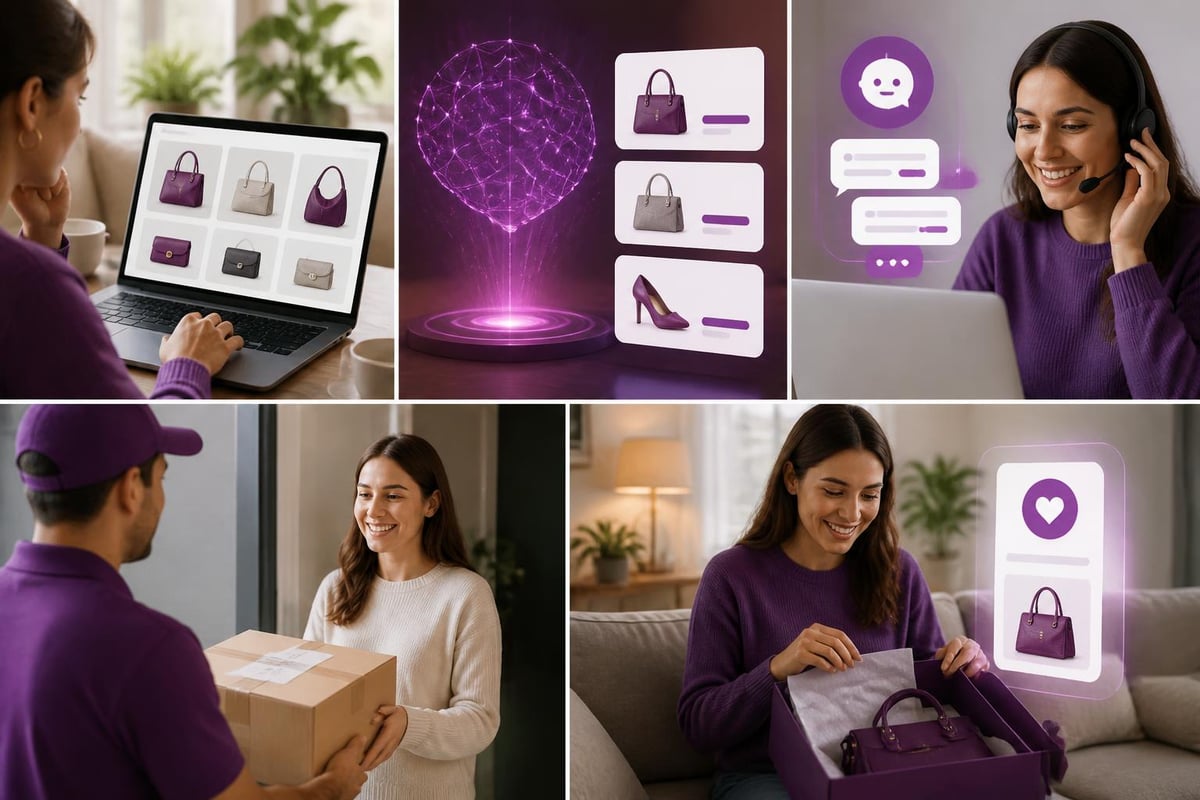
Your customers don't care about your technology stack. They care about getting what they want quickly and painlessly. AI in retail and e-commerce enables experiences that previously required huge teams.
- 24/7 support availability without hiring night shift staff
- Instant size and fit recommendations that reduce returns
- Smart search functionality that understands intent, not just keywords
- Proactive stock notifications when wishlist items come back in
AI predictive analytics for retail helps you understand which customers are likely to churn, who's ready for an upsell, and which marketing channels actually drive profitable sales. This intelligence lets you allocate your limited marketing budget where it'll have the biggest impact.
Implementation Without the Headaches
Here's the reality check. Most small retailers get stuck at the planning stage because AI feels overwhelming. The secret is starting small with high-impact, low-complexity implementations.
Step 1: Identify your biggest time drain. Is it answering the same customer questions repeatedly? Managing inventory? Creating product content? Pick one.
Step 2: Find the tool that solves that specific problem. Don't look for an all-in-one solution. Specialised tools usually work better and integrate easier.
Step 3: Test with a subset of products or customers. You don't need to automate everything on day one. Prove the concept works, then expand.
Step 4: Measure the actual impact. Track time saved, revenue increase, or error reduction. Real numbers, not vanity metrics.
This approach aligns with implementing AI in business the right way. You're building capability gradually whilst delivering immediate value.
Integration Is Easier Than You Think
Modern AI tools are built to play nicely with popular e-commerce platforms like Shopify, WooCommerce, and BigCommerce. Most offer plugins or APIs that connect in minutes, not months. Salesforce's guide to AI in retail shows how major platforms are embedding AI capabilities directly, making adoption even simpler.
The technical barrier that existed three years ago has largely disappeared. If you can set up an email campaign or add a plugin to your website, you can implement most retail AI tools.

What This Means for Different Retail Models
Physical retail stores can use AI for footfall prediction, staff scheduling optimisation, and in-store behaviour analysis through existing CCTV systems (with proper privacy considerations). Smart mirrors and virtual try-on tech are becoming affordable for smaller boutiques.
Pure e-commerce businesses benefit most from AI in areas like dynamic pricing, abandoned cart recovery, and email personalisation. The lack of physical constraints means you can test and iterate faster than brick-and-mortar competitors.
Omnichannel retailers need AI to synchronise inventory across channels, route orders efficiently, and maintain consistent customer experiences. This is where ai in retail and e commerce becomes truly powerful, connecting every touchpoint into a cohesive system.
| Retail Model | Top AI Priority | Expected ROI Timeline |
|---|---|---|
| Physical store | Staff scheduling + demand forecasting | 2-3 months |
| E-commerce | Email automation + product recommendations | 1-2 months |
| Omnichannel | Inventory synchronisation + order routing | 3-4 months |
Getting Past the Common Roadblocks
"My data's a mess." Start cleaning it whilst implementing AI. Many tools work fine with imperfect data and actually help identify data quality issues.
"I can't afford it." Many AI tools have freemium tiers or low monthly costs under £100. The question is whether you can afford not to when competitors are gaining efficiency advantages.
"My team won't use it." Fair concern. Choose tools with excellent interfaces and provide basic training. Working with AI effectively requires some adjustment, but modern tools are designed for non-technical users.
"What about privacy and ethics?" This matters. Use tools that comply with UK GDPR requirements and are transparent about data usage. Customers are increasingly aware of privacy concerns, so treating their data responsibly isn't just legal compliance, it's brand protection.
The Competitive Advantage You're Building
Here's what many retailers miss. When you implement ai in retail and e commerce thoughtfully, you're not just solving today's problems. You're building organisational capability that compounds over time.
Each automation you add frees capacity for strategic work. Each dataset you build makes your AI tools more effective. Each process you optimise creates a template for optimising others. AI isn't just a tool, it's a force multiplier that makes everything else you do more effective.
The retailers winning in 2026 aren't necessarily the ones with the biggest budgets. They're the ones who identified bottlenecks early, implemented targeted solutions, and built momentum. They're treating AI as a practical business tool, not a futuristic concept.
AI in retail and e-commerce delivers real results when you focus on solving specific problems rather than chasing trends. The technology is accessible, affordable, and proven. If you're ready to identify where AI can have the biggest impact in your retail business and want expert guidance on implementation without the jargon or dependency, AI 4 Small Business helps small retailers build practical automations that deliver measurable results fast. We focus on outcomes that matter to your business, not impressive-sounding technology that sits unused.