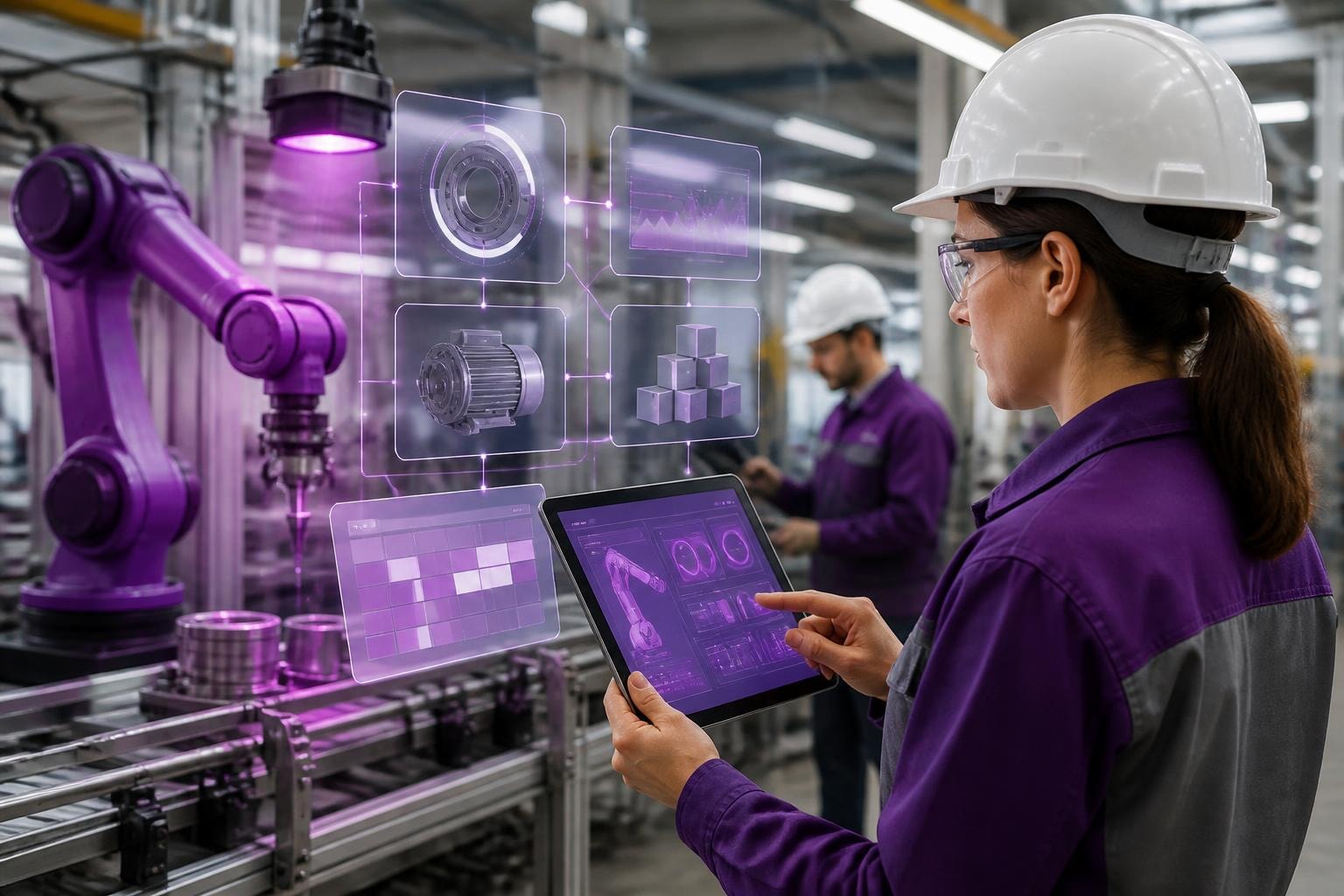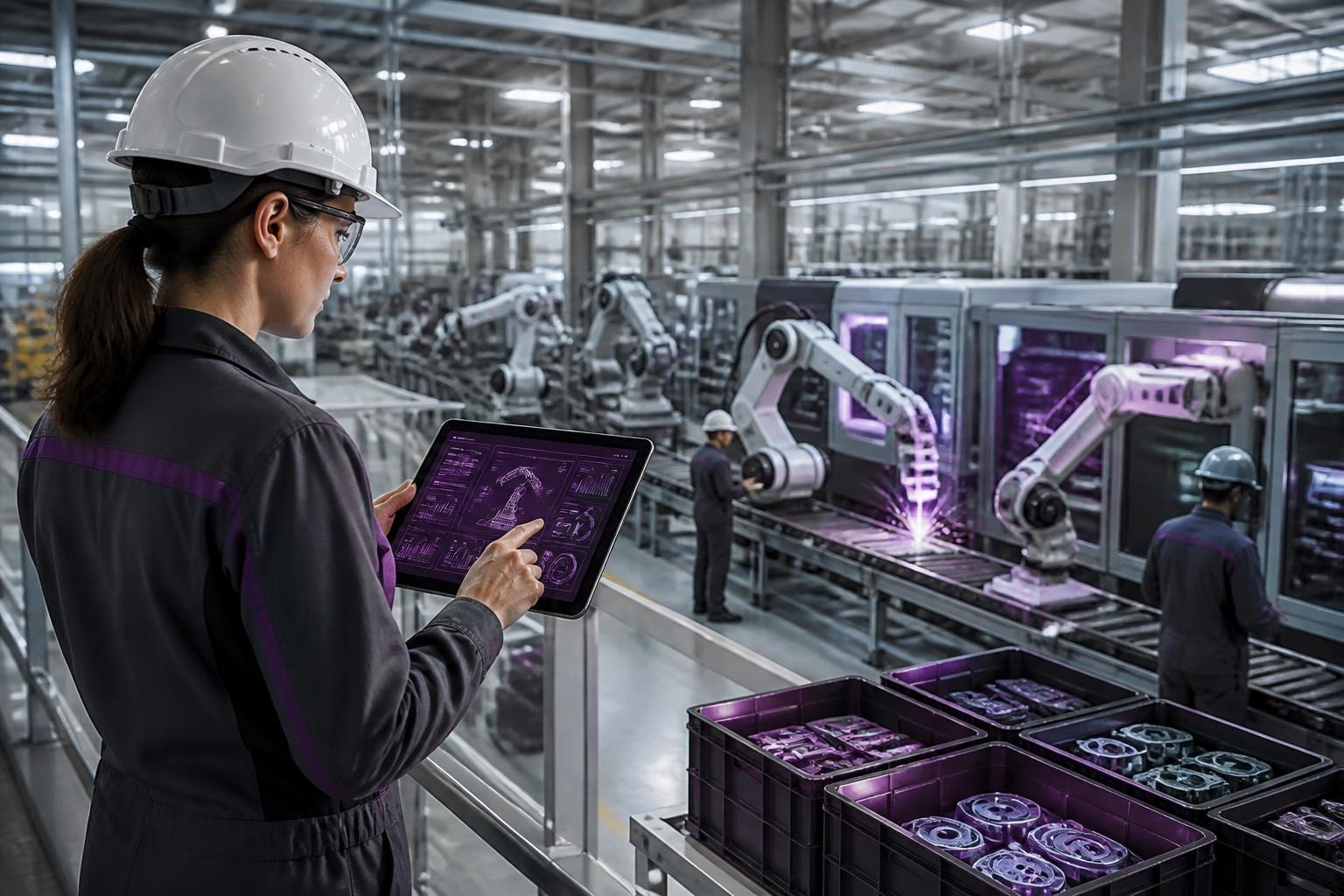
Manufacturing's facing a quiet revolution, and you're probably already seeing hints of it on the factory floor. Machine learning in manufacturing isn't just for massive corporations with unlimited budgets anymore. Small manufacturers are finding clever, affordable ways to use AI that genuinely save time and money. Whether you're running a precision engineering workshop, a food production facility, or a custom fabrication business, there's likely a practical application that'll make your life easier.
Why Small Manufacturers Are Turning to Machine Learning
The manufacturing sector's always been about doing more with less. Tighter margins, rising costs, and increasing quality expectations mean you can't afford inefficiency.
Machine learning in manufacturing tackles these challenges head-on. It's brilliant at spotting patterns humans miss, predicting problems before they happen, and optimising processes that've been done the same way for years.
Here's what's driving adoption amongst smaller operations:
- Cost reduction through better resource allocation and waste minimisation
- Quality improvements by catching defects earlier in production
- Labour efficiency by automating repetitive monitoring tasks
- Competitive advantage against larger rivals with deeper pockets

Predictive Maintenance: Stop Fixing What Isn't Broken
You know that feeling when a critical machine breaks down mid-production? Predictive maintenance changes that entire dynamic.
Instead of reactive repairs or wasteful scheduled maintenance, machine learning models analyse equipment data to predict failures before they happen. Temperature sensors, vibration monitors, and performance metrics feed into algorithms that learn what "normal" looks like.
Getting Started Without Breaking the Bank
You don't need expensive enterprise systems. Many small manufacturers start with:
- Retrofit sensors on critical equipment (often under £500 per machine)
- Cloud-based platforms that charge monthly rather than requiring huge upfront investment
- Pilot programmes focusing on your most problematic or expensive equipment first
One fabrication business we worked with started monitoring just three CNC machines. Within four months, they'd avoided two major breakdowns and reduced unplanned downtime by 60%. The implementation approach focused on their specific pain points rather than trying to revolutionise everything at once.
Quality Control That Actually Catches Defects
Manual quality inspection's tedious, inconsistent, and frankly, expensive. Machine learning in manufacturing transforms this through computer vision systems that inspect products faster and more accurately than human inspectors.
| Traditional Inspection | ML-Powered Inspection |
|---|---|
| Subjective, varies by operator | Consistent criteria every time |
| Slower throughput | Inspects at production speed |
| Catches 80-95% of defects | Detects 98%+ of defects |
| Increases labour costs | Frees staff for skilled work |
These systems learn what defects look like through thousands of examples. Once trained, they spot cracks, misalignments, colour variations, and dimensional issues in milliseconds.
A small electronics assembler implemented visual inspection AI and discovered they'd been missing a specific soldering defect in about 3% of units. The financial impact of catching those before shipping? Massive. Process automation through AI delivered ROI within six months.
Optimising Production Schedules and Supply Chains
Production scheduling's a nightmare when you're juggling multiple orders, varying lead times, and unpredictable demand. Machine learning algorithms excel at this complexity.
They consider dozens of variables simultaneously:
- Current machine availability and capacity
- Historical production times for similar jobs
- Material availability and delivery schedules
- Quality requirements and setup times
- Energy costs during different periods
Research on machine learning in manufacturing environments shows these systems consistently create more efficient schedules than manual planning, often finding 10-20% capacity improvements hiding in plain sight.

Supply Chain Intelligence
Beyond your factory floor, machine learning in manufacturing extends to supply chain optimisation. Demand forecasting becomes more accurate, inventory levels naturally optimise, and you'll spot supplier reliability patterns you'd never notice manually.
One component manufacturer reduced their raw material inventory by 30% whilst simultaneously improving on-time delivery. The AI wasn't magic-it simply processed historical data better than spreadsheets ever could.
Energy Management and Cost Control
Energy costs are climbing, and manufacturing's energy-intensive. Machine learning systems identify wasteful patterns and optimise energy consumption across your facility.
Smart systems can:
- Schedule energy-intensive operations during off-peak tariff periods
- Identify inefficient equipment through abnormal consumption patterns
- Optimise HVAC and lighting based on actual production schedules
- Predict energy needs for accurate budgeting and procurement
Making It Work in Your Business
The biggest mistake small manufacturers make? Thinking machine learning in manufacturing requires a complete digital transformation. It doesn't.
Start with your most annoying problem. Maybe it's frequent breakdowns on one line, quality issues with a specific product, or scheduling chaos every Monday morning. Understanding where AI delivers real business value helps you prioritise effectively.
Implementation steps that actually work:
- Identify one painful, expensive problem worth solving
- Collect or access existing data related to that problem
- Test with pilot programmes before full deployment
- Measure actual results against baseline performance
- Expand gradually to other areas once proven
You'll find academic research on machine learning applications validates this incremental approach, especially for smaller operations.
Data Quality Matters More Than Quantity
Here's something nobody tells you upfront: rubbish data creates rubbish results. Machine learning needs decent information to work with.
You don't need years of perfectly organised data. But you do need:
- Consistent recording of relevant metrics
- Accurate labelling of defects, failures, or outcomes
- Regular cleaning to remove obvious errors or outliers
Many manufacturers already capture this through existing systems-ERP software, quality logs, maintenance records. The trick's connecting those dots. Studies examining reliability in manufacturing ML applications emphasise that maintaining data quality delivers better long-term results than sophisticated algorithms applied to poor data.
Building Capability, Not Dependency
Machine learning in manufacturing shouldn't create a situation where you're entirely reliant on external consultants. The goal's building internal capability whilst getting expert help with implementation.
Look for partners who'll train your team, explain what's happening under the hood, and leave you with systems you can actually manage. Working with AI specialists who focus on knowledge transfer makes all the difference.
Your maintenance manager should understand how the predictive system works. Your quality supervisor needs to grasp what the vision system's looking for. That understanding transforms AI from a mysterious black box into a powerful tool your team genuinely trusts.
Machine learning in manufacturing delivers tangible improvements-reduced downtime, better quality, lower costs-when implemented thoughtfully around real business problems. Whether you're ready to start with predictive maintenance, quality control, or production optimisation, the key's beginning with one focused application that addresses an actual pain point. If you're looking for practical guidance on implementing AI solutions that work within your manufacturing operation's budget and capabilities, AI 4 Small Business can help you identify the right starting point and build systems that deliver measurable results without the hype.