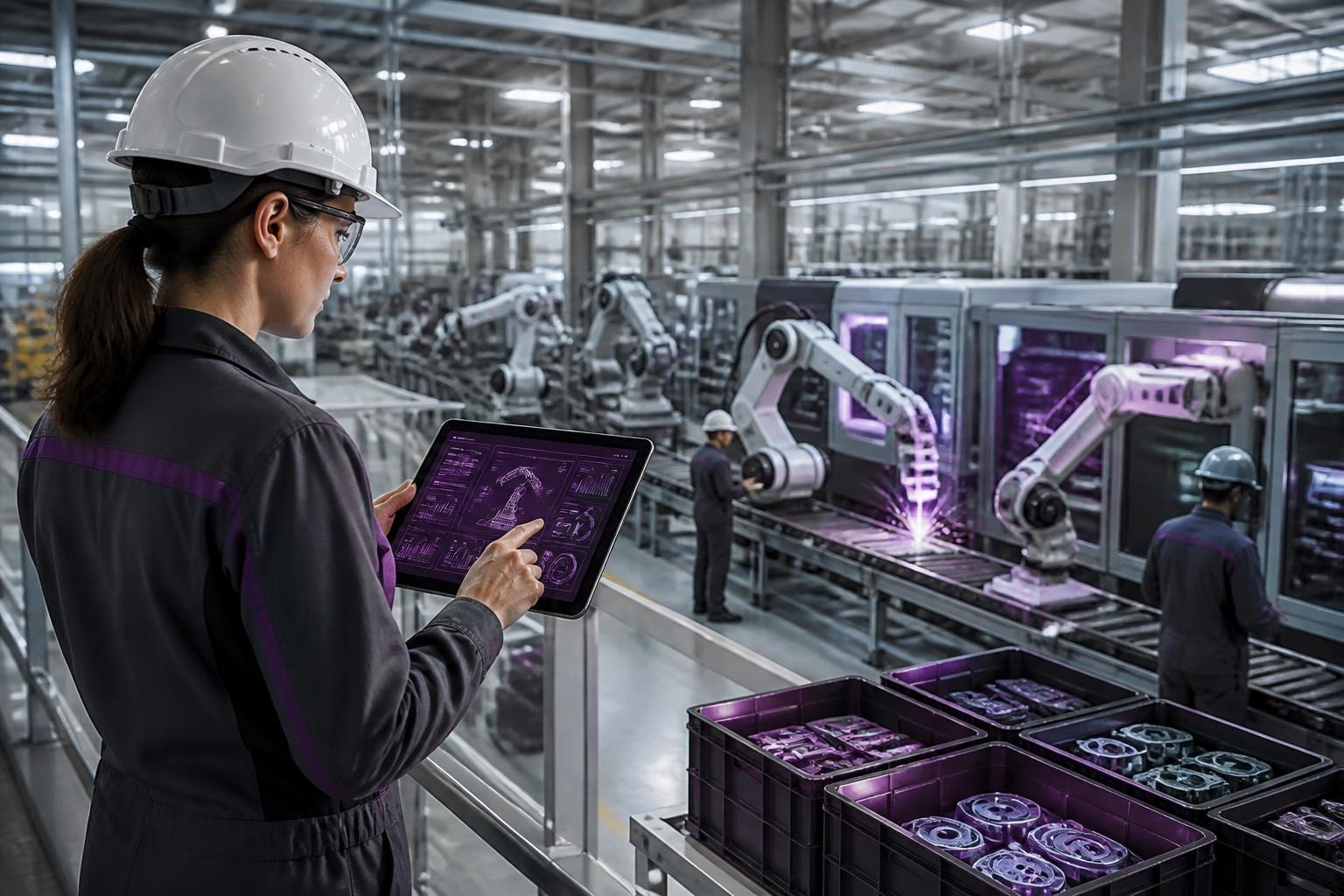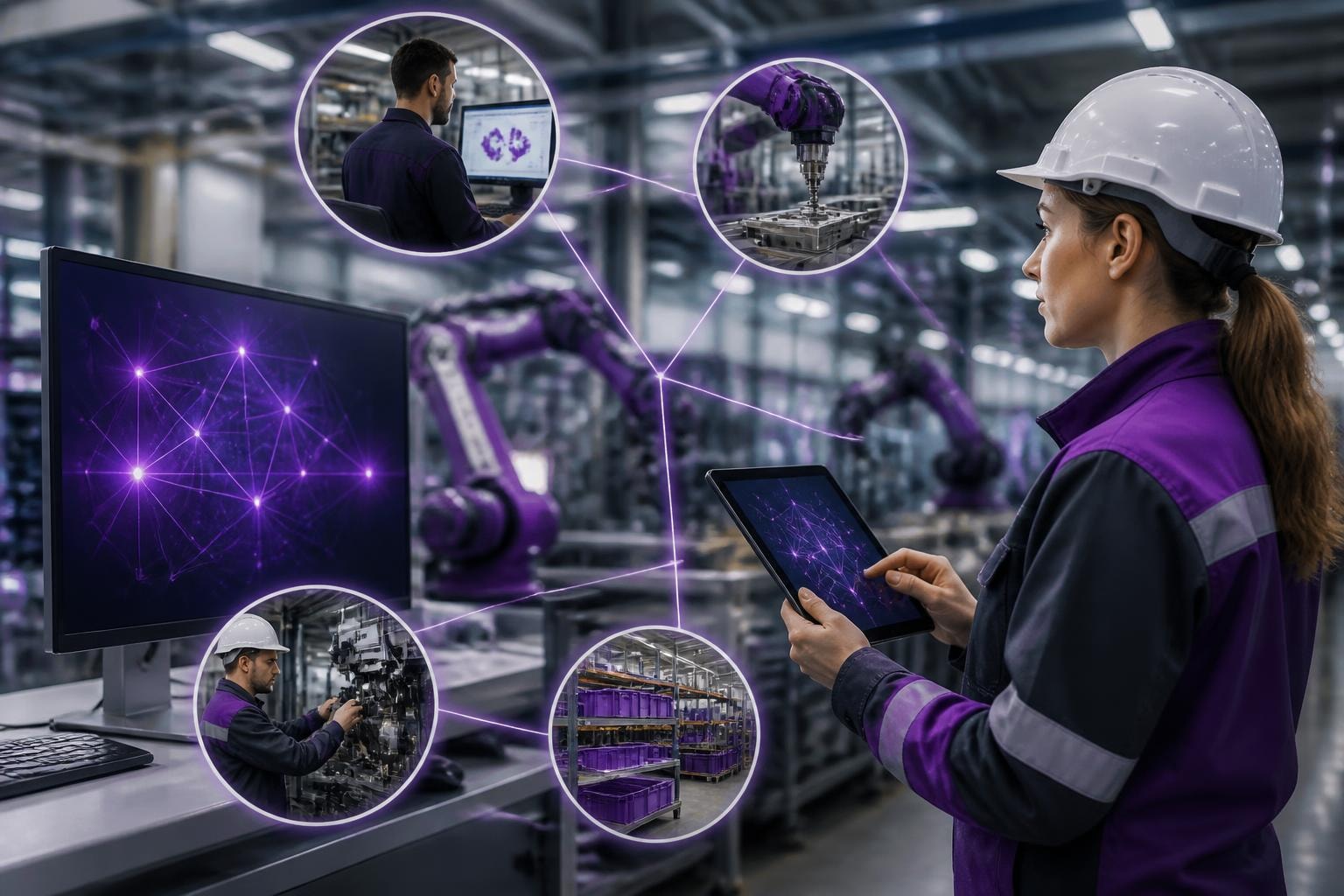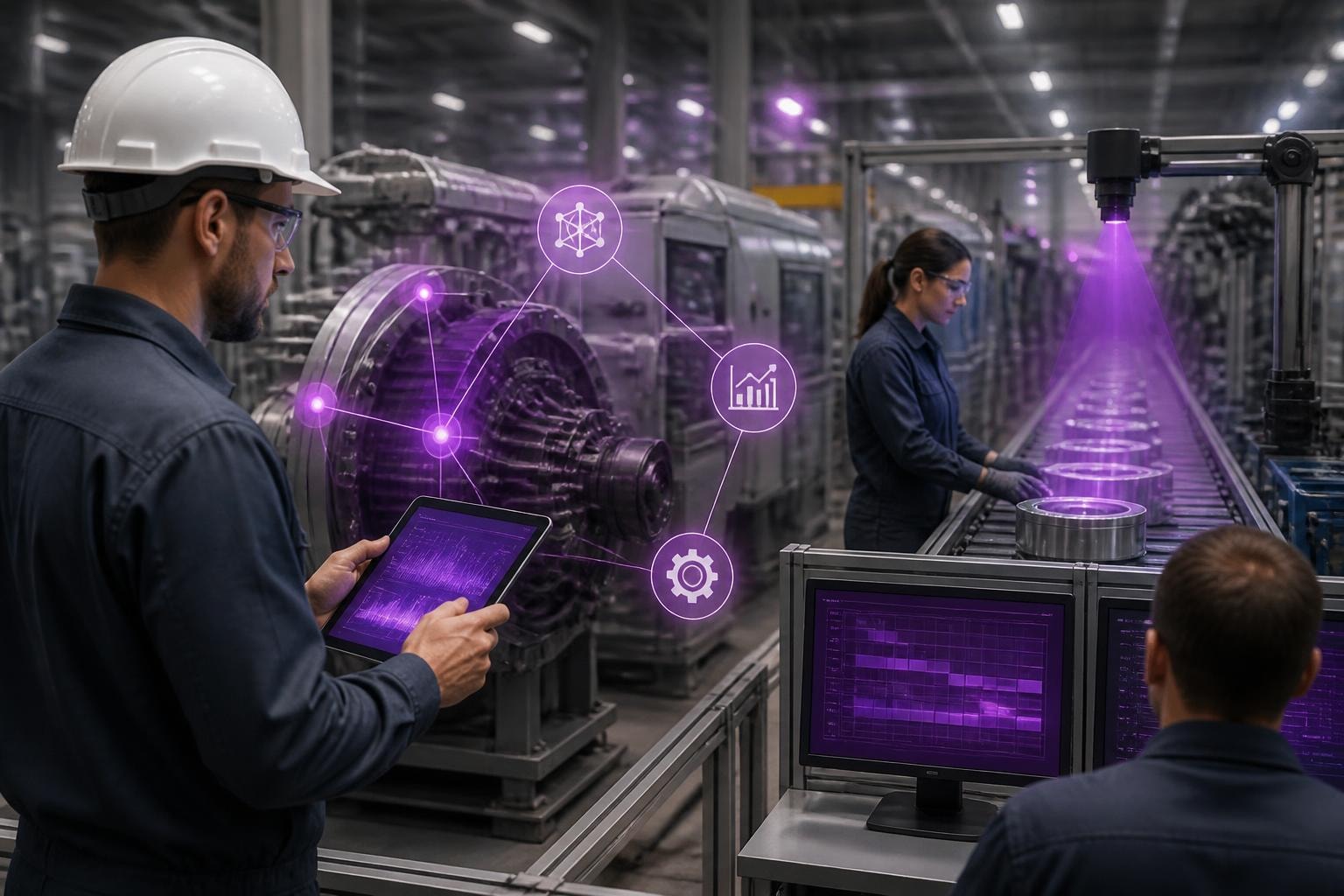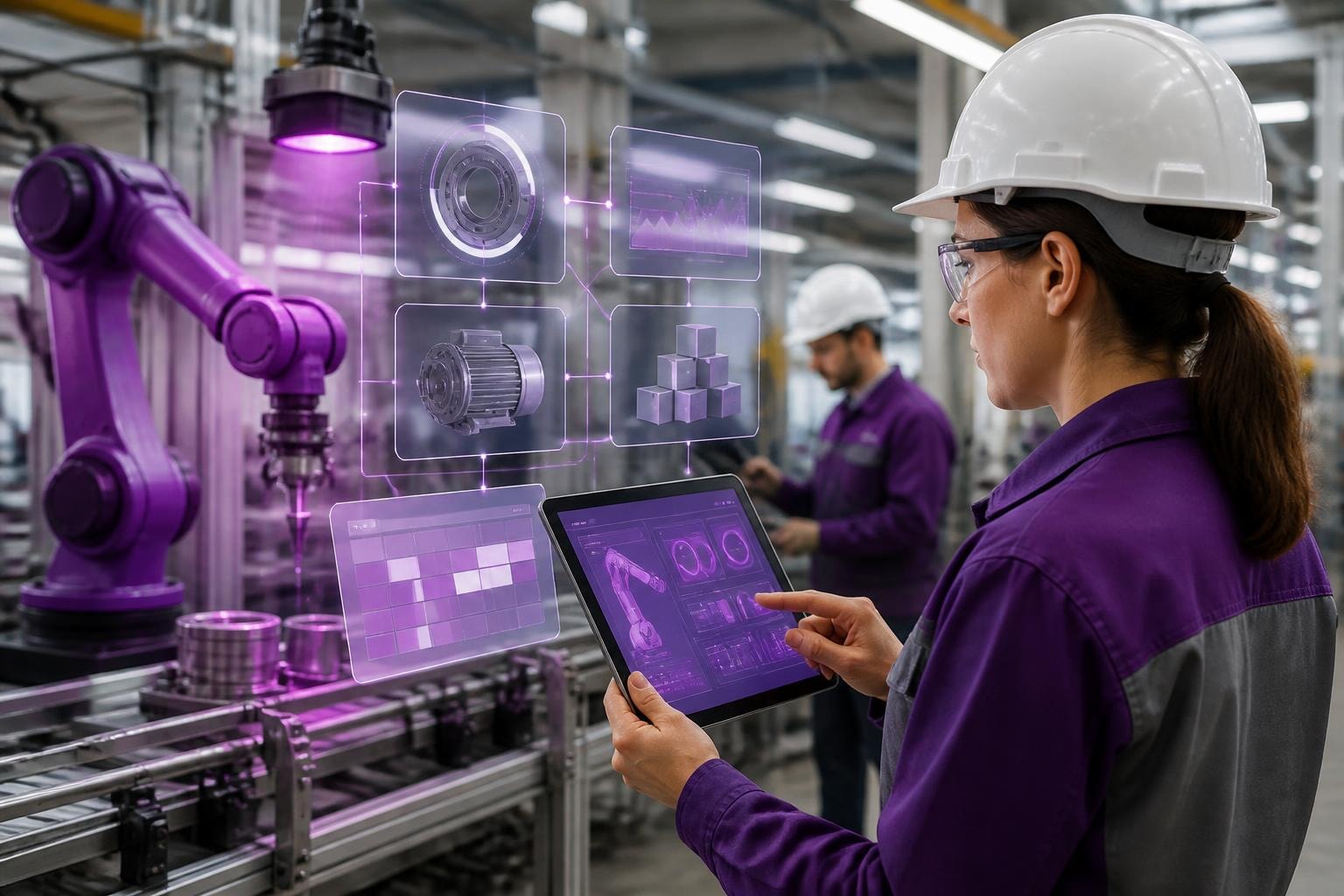
Manufacturing has always been about doing more with less - producing quality products efficiently whilst keeping costs down. But if you're running a small manufacturing operation in 2026, you're probably feeling the squeeze from every direction: labour shortages, supply chain unpredictability, and rising customer expectations. The good news? AI solutions for manufacturing aren't just for massive factories with bottomless budgets anymore. They're accessible, practical, and delivering real results for smaller operations right now.
Where AI Actually Makes a Difference in Small Manufacturing
Let's cut through the hype. You don't need a £500,000 system overhaul to benefit from AI.
Quality control is probably the most immediate win. Computer vision systems can spot defects faster and more consistently than human inspectors - and they don't get tired at 3pm. These systems analyse product images in real-time, catching issues before they become expensive recalls.
Predictive Maintenance That Actually Works
Here's where things get interesting. Traditional maintenance schedules are basically educated guesses - you service equipment every X hours whether it needs it or not. AI-driven solutions for manufacturing monitor equipment in real-time, predicting failures before they happen.
For small manufacturers, this means:
- Fewer unexpected breakdowns that halt production
- Lower maintenance costs by fixing only what needs fixing
- Extended equipment life through smarter servicing
- Better planning around maintenance windows
One joinery workshop we worked with was losing thousands weekly to unexpected CNC machine failures. After implementing sensor-based monitoring with AI analysis, they reduced unplanned downtime by 60% in three months.

Production Planning Without the Headaches
Production scheduling is basically a massive puzzle - matching orders, materials, machine capacity, and workforce availability. Most small manufacturers still do this manually or with basic spreadsheets.
AI changes the game completely. Modern scheduling tools analyse historical data, current orders, material availability, and machine capacity to generate optimised production schedules automatically. When something changes (and it always does), the system adjusts in seconds, not hours.
| Traditional Planning | AI-Powered Planning |
|---|---|
| Manual spreadsheets | Automated optimization |
| Hours to adjust | Real-time updates |
| Gut feel decisions | Data-driven insights |
| Static schedules | Dynamic adaptation |
This isn't theoretical. A small electronics manufacturer reduced production delays by 40% after implementing AI scheduling. They could handle 25% more orders without adding staff.
Inventory Management That Doesn't Tie Up Cash
Inventory is where small manufacturers often get stuck. Too much stock ties up cash you can't afford; too little means missed orders and disappointed customers.
AI inventory systems analyse sales patterns, seasonal trends, supplier lead times, and production schedules to optimise stock levels. Applications of AI in manufacturing extend beyond just tracking what you have - they predict what you'll need and when.
Real-World Implementation Steps
Getting started doesn't require a computer science degree. Here's what actually works:
- Identify your biggest bottleneck - quality issues, downtime, or scheduling chaos
- Start with existing data - you probably have more useful information than you think
- Choose focused tools - solve one problem really well before expanding
- Measure impact - track specific metrics that matter to your business
- Iterate and improve - AI gets better with time and data
The key is understanding AI as a tool, not a magic solution. It solves specific problems when implemented thoughtfully.
Supply Chain Visibility You Can Actually Use
Supply chains have been unpredictable for years now, and small manufacturers feel every disruption acutely. AI solutions for manufacturing help by providing early warnings about potential delays, suggesting alternative suppliers, and optimising order timing.

One textile manufacturer we know uses AI to monitor supplier reliability, shipping routes, and material costs. When their primary fabric supplier faced delays, the system flagged it three weeks early - enough time to source alternatives without stopping production.
The Data Question Everyone Asks
"Our data's a mess - can we still use AI?" This comes up constantly, and it's a valid concern. Most small manufacturers don't have perfectly organised databases.
The reality is that preparing AI-ready data matters, but you don't need perfection to start. Begin with what you have, clean it gradually, and implement AI for specific use cases where data quality is good enough.
Quality Control Without Adding Inspectors
Labour costs keep rising, and finding skilled quality inspectors gets harder every year. Computer vision AI systems inspect products at production speed, catching defects human eyes might miss.
These systems learn what "good" looks like from thousands of examples. They then check every single product - something practically impossible with manual inspection at scale. A small ceramics manufacturer reduced defect rates from 8% to under 2% within six months of implementing visual inspection AI.
Benefits beyond defect detection:
- Consistent standards across all shifts
- Detailed defect categorisation for process improvement
- Real-time alerts when patterns emerge
- Documentation for customer quality requirements
Making It Work in Your Business
Here's the honest truth: implementing AI solutions for manufacturing successfully requires more than just buying software. You need to think differently about your business and challenge how things have "always been done."
The manufacturers getting real results aren't starting with AI - they're starting with problems. What's costing you the most time? Where do errors keep happening? What keeps you up at night?
Practical AI implementation means matching specific tools to specific challenges. Not everything needs AI, and that's fine. Focus on areas where automation, prediction, or optimisation deliver measurable value.
Avoiding Common Pitfalls
Small manufacturers often make three mistakes when adopting AI:
- Trying to do everything at once - start focused, expand later
- Buying enterprise solutions - you don't need (or can't afford) systems built for BMW
- Implementing without measuring - track ROI from day one
The best approach? Pick one high-impact area, implement something practical, measure results, then expand. This is exactly how businesses across sectors successfully adopt AI without massive risk or investment.

Building Capability, Not Dependency
There's a crucial difference between implementing AI and understanding it. The goal isn't outsourcing your thinking to algorithms - it's augmenting your team's capabilities with better tools.
Train your staff on the systems you implement. Help them understand what the AI does, why it works, and when to trust (or question) its recommendations. Machine learning in manufacturing becomes powerful when your team knows how to work with it effectively.
Small manufacturers who succeed with AI treat it as part of their operational toolkit, not a replacement for experience and judgement. The systems handle repetitive analysis and predictions; your team makes strategic decisions based on better information.
AI solutions for manufacturing work when they're implemented with clear objectives and measured against real outcomes. Whether you're tackling quality control, reducing downtime, or optimising production schedules, the technology exists to deliver measurable improvements fast. At AI 4 Small Business, we help manufacturers identify their biggest operational challenges and implement practical AI tools that deliver results without the hype, jargon, or expensive custom development. Let's build AI capability in your business that creates lasting competitive advantage.