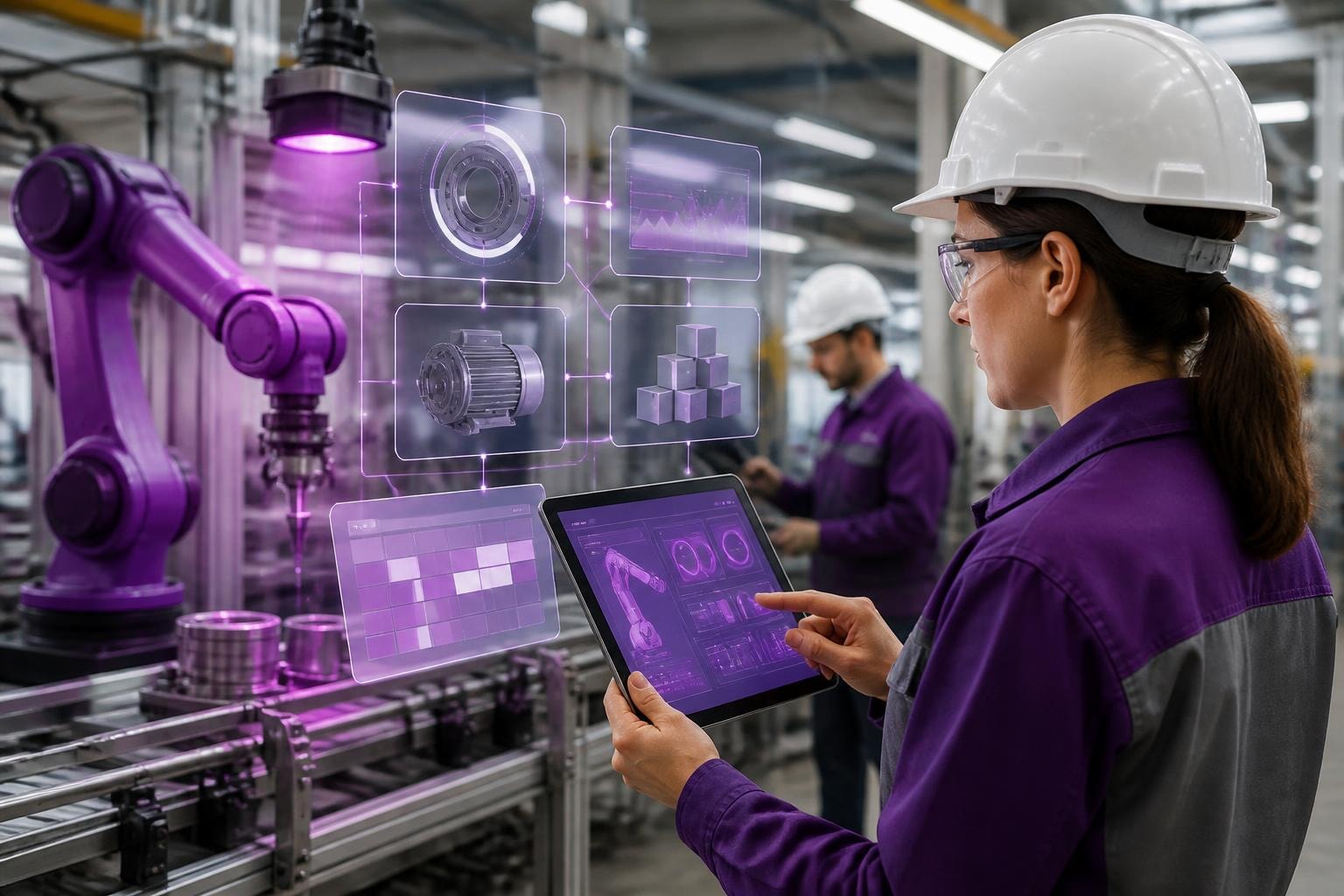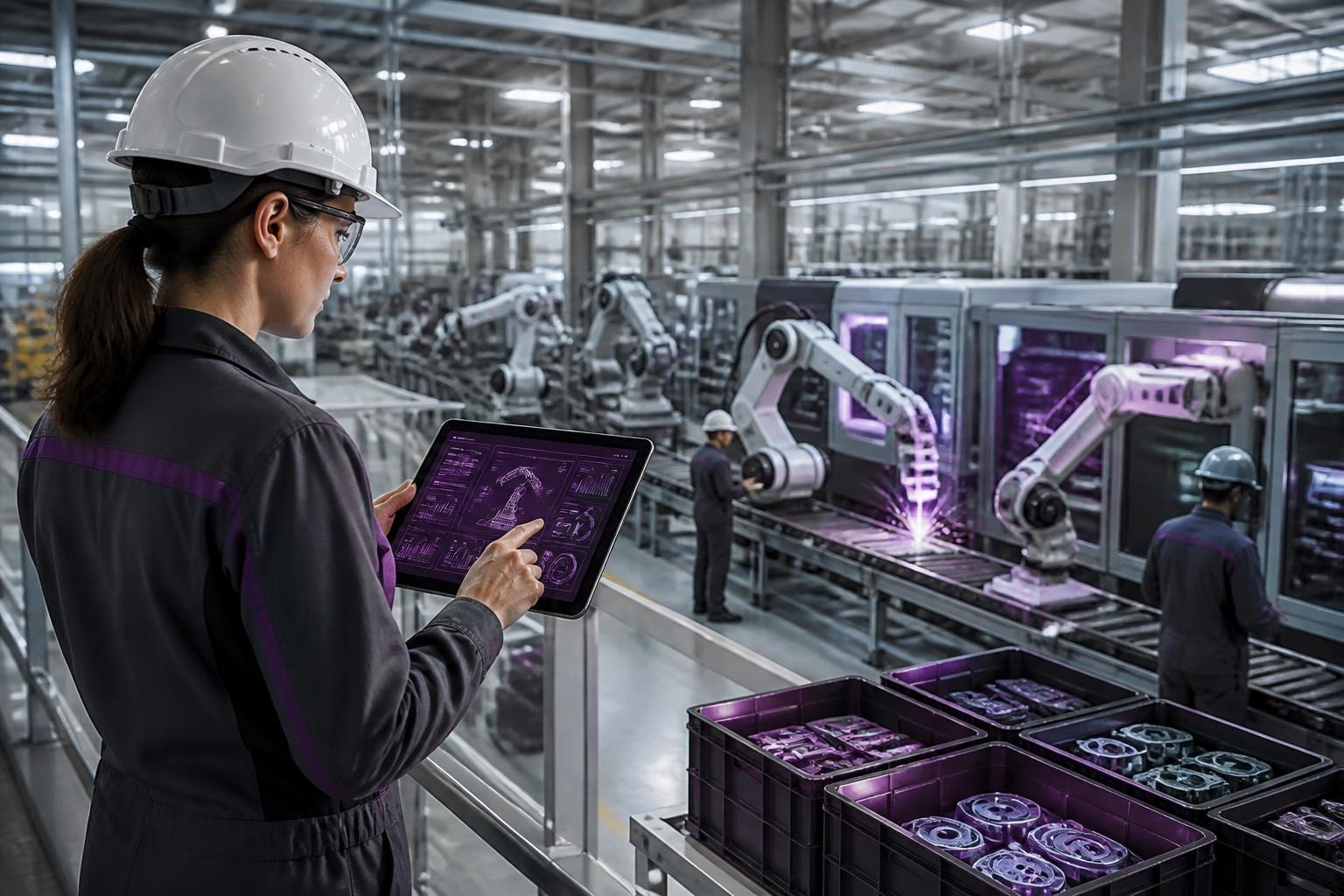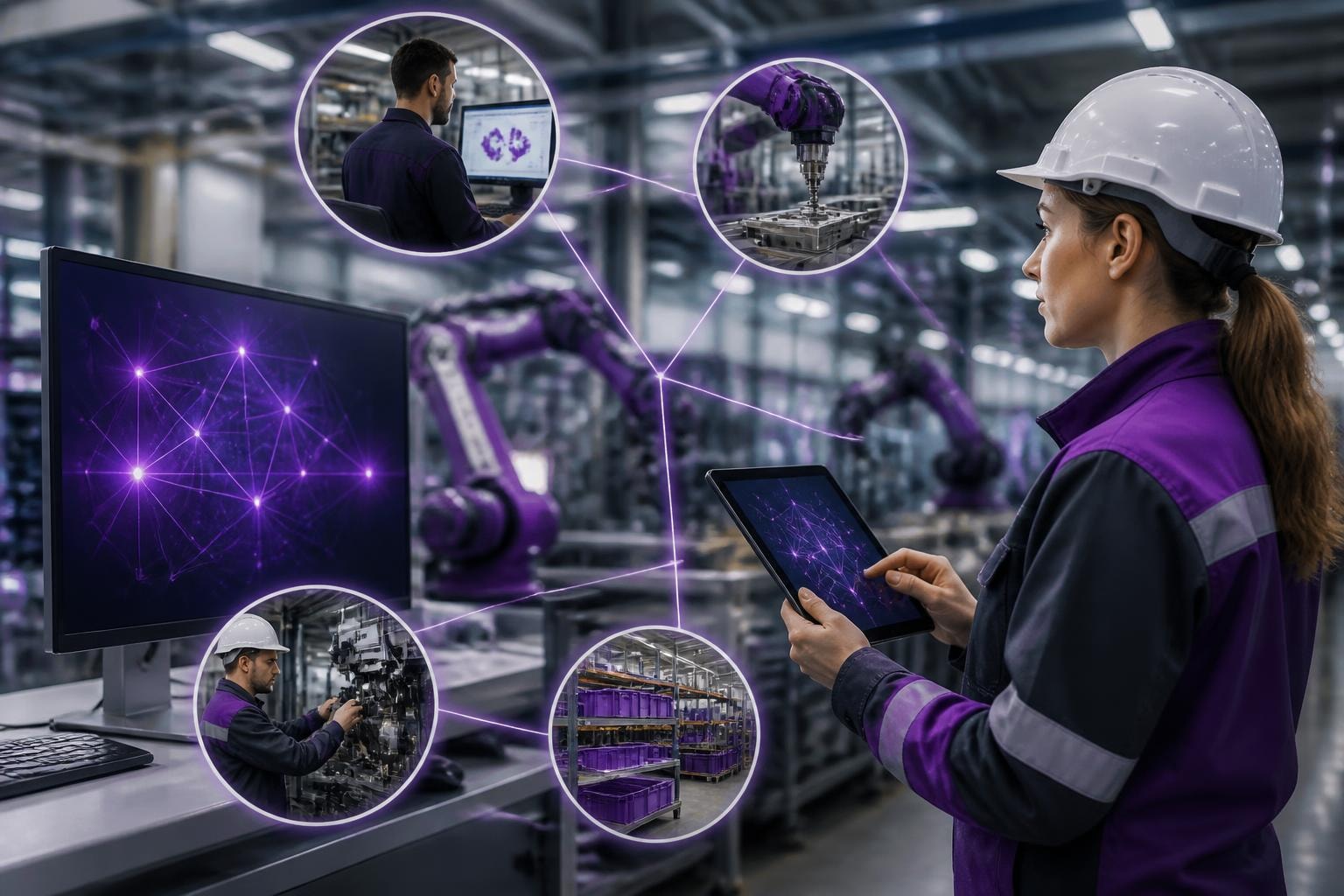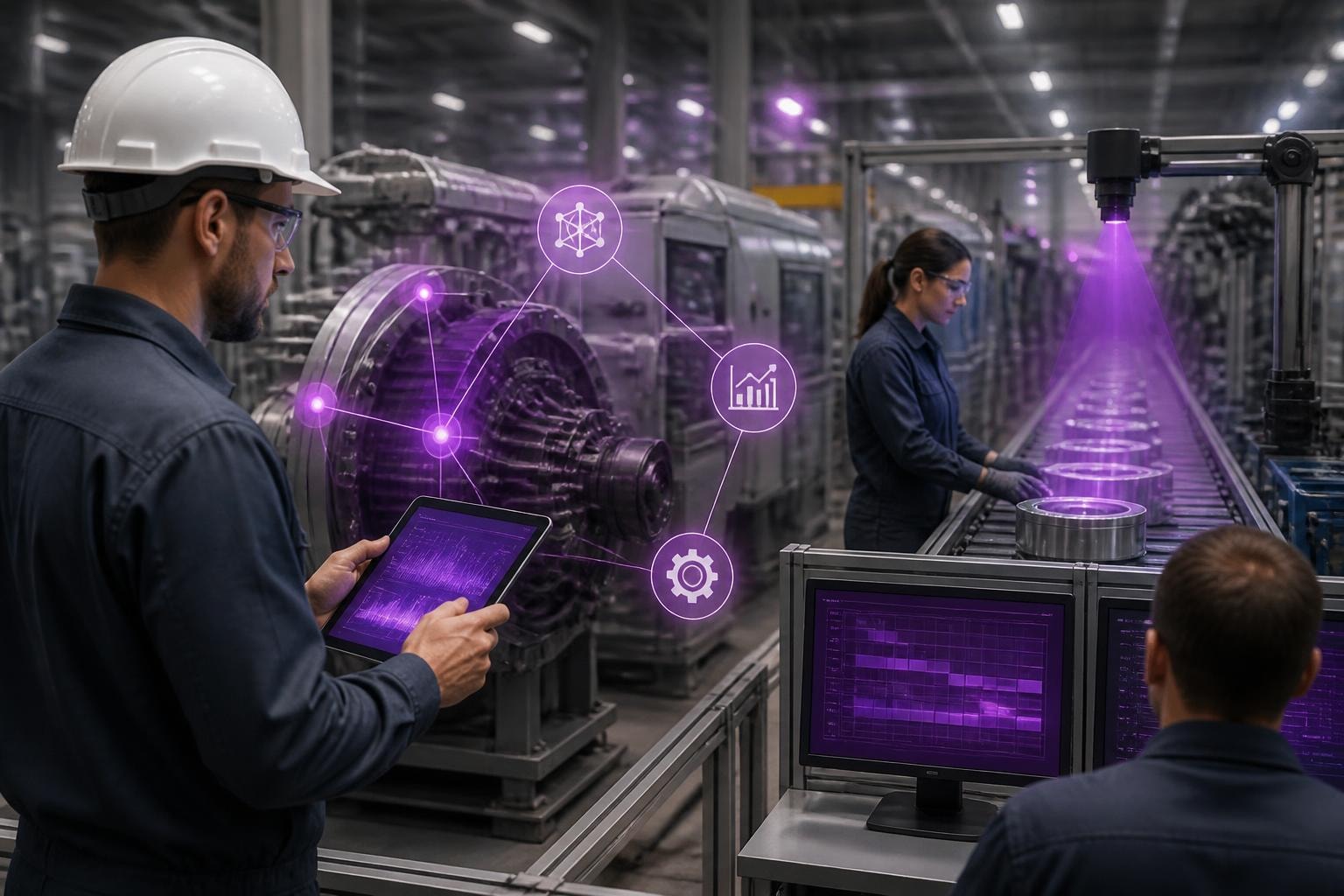
The ai in manufacturing industry conversation often feels like it's aimed at massive factories with bottomless budgets. But here's the truth: small manufacturers, job shops, and niche producers can benefit just as much from practical AI tools. You don't need a team of data scientists or millions in investment. What you need is a clear understanding of where AI solves real problems in your business-and the right approach to implementation that actually delivers results.
What AI Actually Does in Manufacturing
Let's cut through the noise. AI in manufacturing isn't about robots taking over your factory floor. It's about smart software that learns patterns, spots problems before they happen, and makes sense of data you're already collecting.
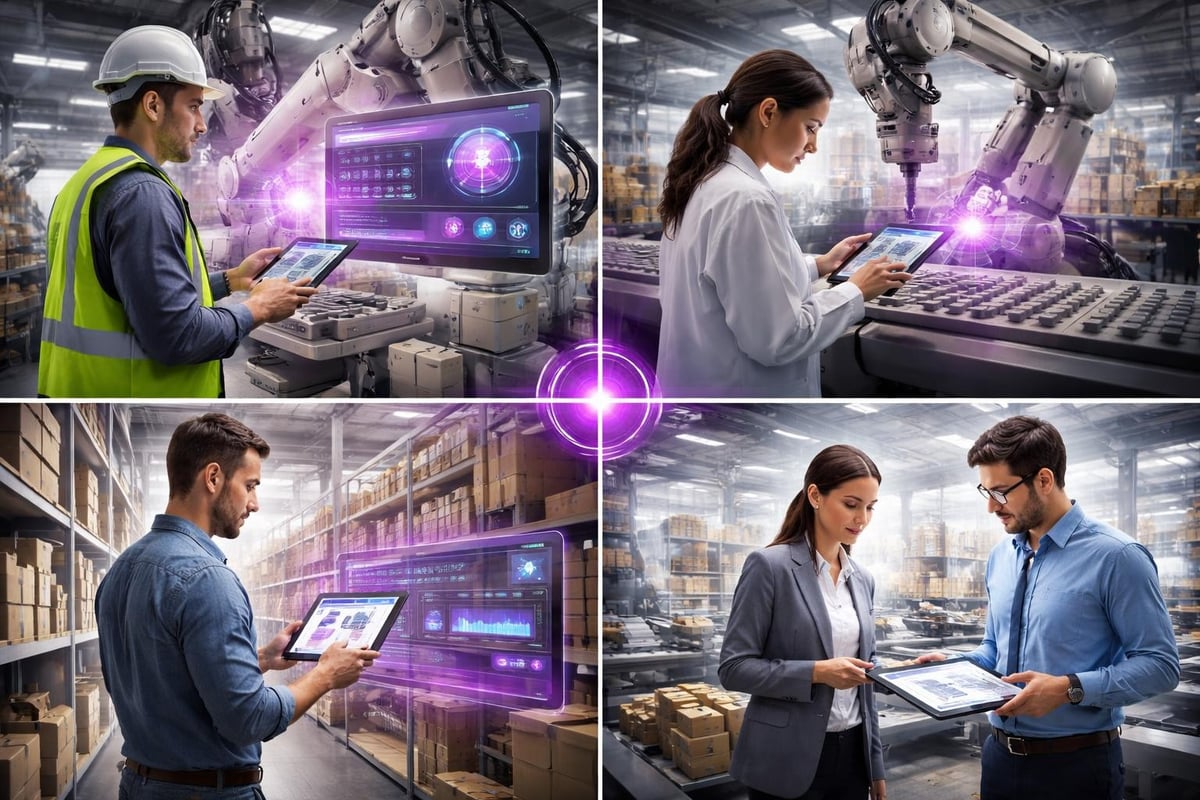
The role of AI in manufacturing centres on three main areas: keeping machines running, maintaining quality, and optimising how work flows through your facility. For small businesses, this translates into fewer unexpected breakdowns, less wasted material, and better use of your team's time.
Predictive Maintenance That Makes Sense
Your equipment already tells you when something's wrong-through vibrations, temperature changes, noise patterns. AI systems can learn what "normal" looks like and flag when something's shifting before it causes a breakdown.
This isn't just theory. Small precision engineering firms are using affordable sensors connected to AI platforms that send alerts when a CNC machine's performance drifts. The result? Planned maintenance instead of emergency repairs, and production schedules that actually stick.
Similar to how AI benefits other business areas, the manufacturing applications focus on reducing disruption and protecting your bottom line.
Quality Control Without the Bottlenecks
Manual quality inspection is time-consuming and inconsistent. AI-powered visual inspection systems can check products faster and more reliably than human inspectors, particularly for repetitive tasks.
Here's what this looks like in practice:
- Vision systems that photograph every part and flag defects in real-time
- Pattern recognition that learns what acceptable variation looks like
- Automated sorting that removes faulty items before they reach customers
- Trend analysis that shows you which production runs have higher defect rates
A small food packaging business might use AI to check seal integrity on every package. A metal fabricator could deploy it to measure tolerances on machined parts. The applications of AI in manufacturing extend across virtually every production environment.
The key difference from traditional automation? These systems improve over time. They learn from examples you provide and adapt to new product lines without complete reprogramming.
Inventory and Supply Chain Intelligence
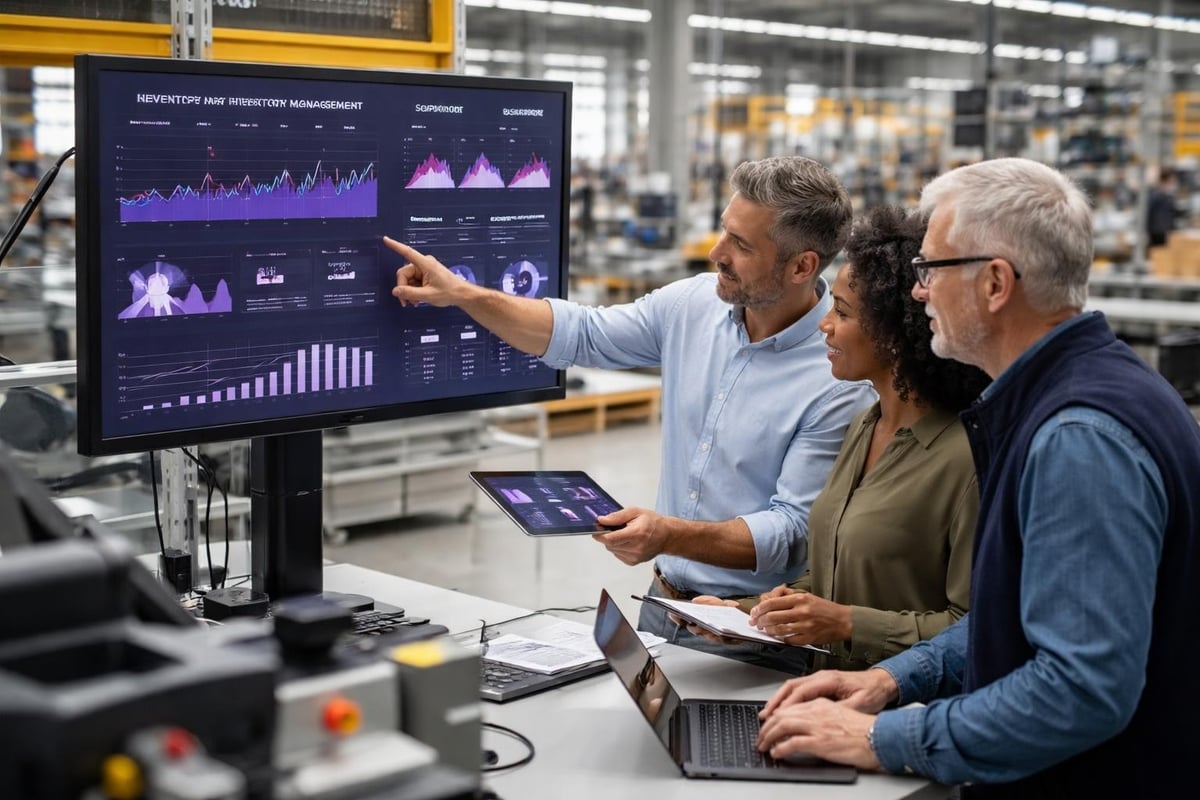
Managing inventory is a constant balancing act. Too much stock ties up cash. Too little causes production delays. AI tools analyse your order patterns, lead times, and seasonal fluctuations to predict what you'll need and when.
| Challenge | AI Solution | Practical Impact |
|---|---|---|
| Stockouts stopping production | Predictive reordering based on usage patterns | Fewer emergency orders, lower expediting costs |
| Dead stock taking up space | Demand forecasting identifying slow movers | Better cash flow, reduced storage needs |
| Supplier reliability issues | Pattern detection flagging late deliveries | Time to find alternative suppliers |
| Material waste | Usage optimization suggesting efficient cuts | Lower material costs, less scrap |
This connects directly to process automation principles-removing manual tracking tasks and letting your team focus on exceptions rather than routine checks.
Production Scheduling That Adapts
Traditional production scheduling often involves spreadsheets, best guesses, and a lot of manual juggling when things change. AI scheduling tools consider multiple variables simultaneously-machine availability, operator skills, material delivery dates, customer priorities-and generate optimised schedules.
When an urgent order comes in or a machine goes down, the system recalculates instantly. You're not starting from scratch every time something changes.
IBM's overview of AI in manufacturing highlights how digital twin technology and smart scheduling systems work together, but smaller manufacturers can start with focused scheduling tools that integrate with existing systems.
Getting Started Without Massive Investment
The barrier to entry for ai in manufacturing industry tools has dropped dramatically. You don't need custom development for most applications. Here's a practical approach:
- Identify your biggest pain point-is it unplanned downtime, quality issues, or inventory problems?
- Look for existing tools designed for that specific problem
- Start with a pilot-one machine, one product line, one process
- Measure the impact in concrete terms (hours saved, defects reduced, costs avoided)
- Expand based on results
This mirrors the approach used in implementing AI across different business contexts, focusing on measurable outcomes rather than technology for its own sake.
Real Tools You Can Use Today
The market for manufacturing AI has matured. Platforms exist that don't require programming knowledge or data science expertise. Some focus on specific tasks like vision inspection or predictive maintenance, whilst others offer broader production management capabilities.
Vision systems from companies specialising in quality control can be set up in days, not months. Predictive maintenance platforms connect to existing sensors or provide affordable retrofit options. Inventory optimization tools integrate with common ERP systems.
The transformation happening across manufacturing includes accessible options for businesses of all sizes, not just industrial giants.
Skills and Training Requirements
Your team doesn't need to become AI experts. Most modern manufacturing AI tools are designed for operators and production managers to use directly. The learning curve resembles adopting any new software system-there's an adjustment period, but it's manageable.
What matters more is understanding your processes well enough to know where AI adds value. That knowledge already exists in your business. The challenge is connecting it with the right tools and practical AI implementation strategies.
Data Collection and Integration
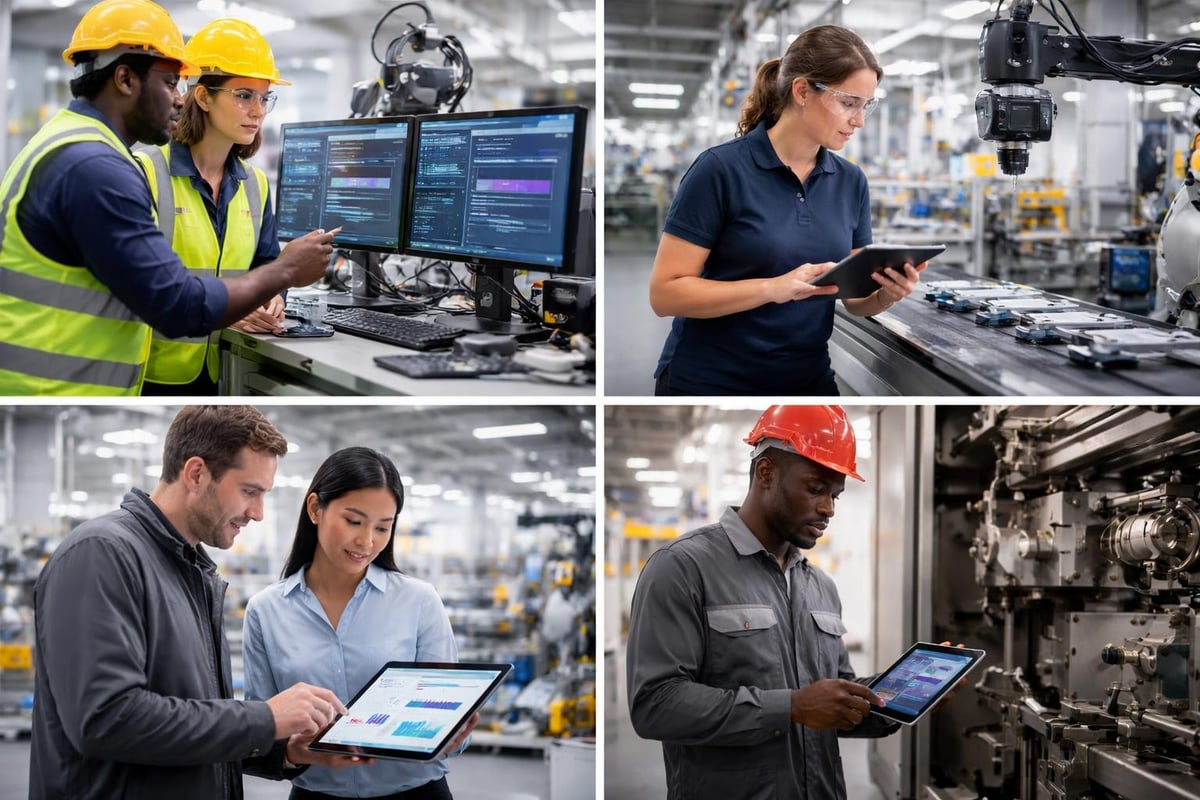
AI needs data to work, but you're probably already collecting more than you realise. Machine logs, production counts, quality records, maintenance schedules-this is the raw material AI systems use.
The integration challenge is real but solvable. Many AI platforms offer connectors for common manufacturing software. For older equipment without digital outputs, affordable IoT sensors can bridge the gap.
Think of it like AI system integration in other business contexts-starting with what you have and building capability incrementally rather than attempting a complete overhaul.
Return on Investment Timeline
Small manufacturers implementing ai in manufacturing industry solutions typically see initial returns within 3-6 months. A predictive maintenance system might prevent one major breakdown that would have cost thousands in lost production. Quality control AI could catch defects that would have resulted in customer returns.
The ongoing benefits compound. As systems learn and improve, they become more accurate and valuable. Your team gets better at using the insights. You identify additional applications based on early wins.
This outcome-focused approach aligns with how practical AI services should work-delivering measurable impact quickly, not requiring years of development before seeing results.
Manufacturing AI isn't future technology-it's working in small facilities right now, solving real problems and delivering measurable returns. The difference between businesses that benefit and those that struggle comes down to implementation approach: starting with clear objectives, choosing appropriate tools, and building capability through practical application. If you're ready to explore how AI can address specific challenges in your manufacturing business, AI 4 Small Business can help you identify high-impact opportunities and implement solutions that deliver results without unnecessary complexity or cost.