Running a small business means juggling countless tasks every single day. You're answering customer emails at breakfast, processing invoices during lunch, and updating spreadsheets well into the evening. What if those repetitive tasks could simply handle themselves whilst you focus on growing your business? That's precisely where process automation ai comes in, transforming how small businesses operate without requiring a computer science degree or a massive budget.
What Process Automation AI Actually Means for Your Business
Process automation ai isn't about robots taking over your shop. It's about smart software that learns your routine tasks and handles them automatically. Think of it as hiring an incredibly efficient assistant who never takes holidays and works around the clock.
Traditional automation followed rigid rules: "If this happens, do that." But intelligent automation takes things further by understanding context and making decisions based on patterns it recognises.
Here's what makes it different:
- Learns from how you currently do things
- Adapts to slight variations in tasks
- Handles exceptions without breaking down
- Improves over time as it processes more work
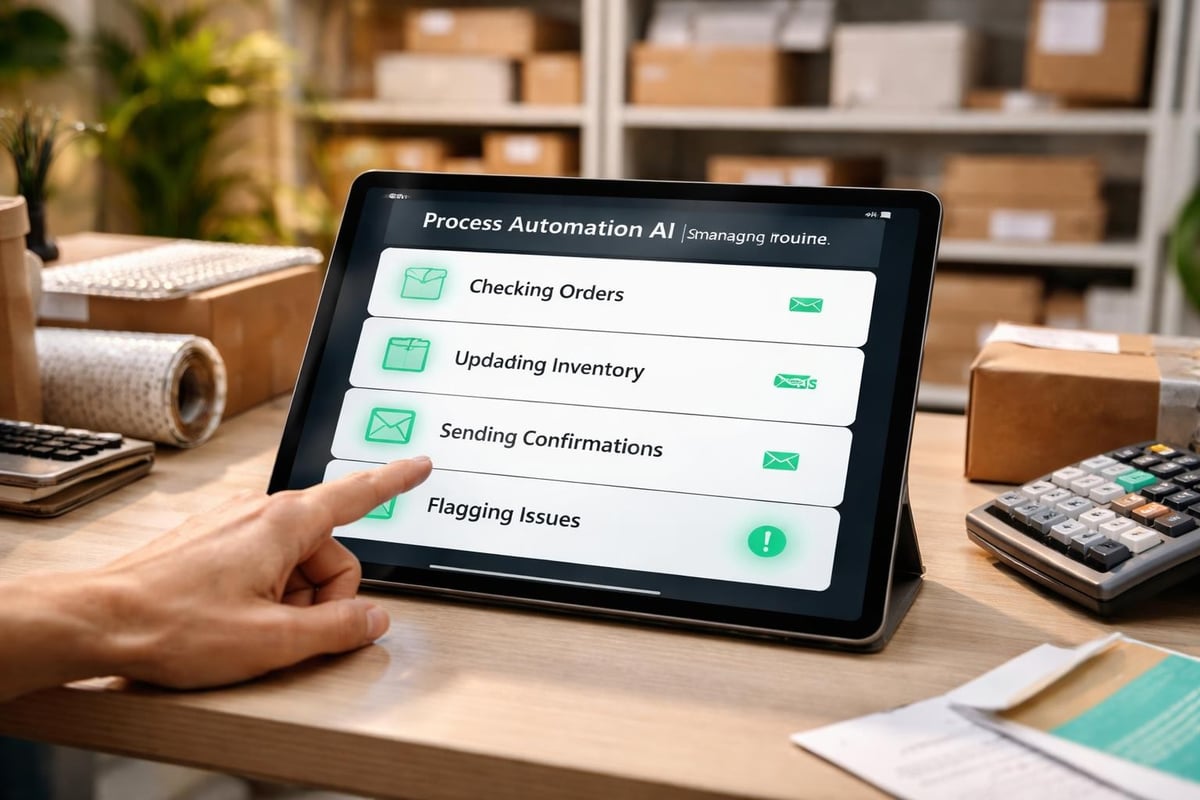
A local bakery owner recently shared how process automation ai transformed her morning routine. Previously, she manually checked online orders, updated inventory, and sent confirmation emails for two hours daily. Now, that entire workflow runs automatically before she even arrives.
Simple Tasks You Can Automate Today
You don't need to automate everything at once. Start with the tasks that consume your time but don't require creative thinking or personal judgement.
Customer Communication
Process automation ai excels at handling routine customer interactions. It can respond to frequently asked questions, send appointment reminders, and follow up with customers who haven't completed purchases.
One plumbing business automated their booking confirmations and reminder texts. They went from spending 45 minutes daily on scheduling calls to virtually zero time, whilst customer no-shows dropped by 60%.
Data Entry and Processing
Manual data entry remains one of the biggest time-wasters for small businesses. Modern AI-powered solutions can extract information from invoices, receipts, and forms, then populate your systems automatically.
| Task | Manual Time | Automated Time | Monthly Savings |
|---|---|---|---|
| Invoice processing | 3 hours/week | 15 minutes/week | 11+ hours |
| Expense categorisation | 2 hours/week | 5 minutes/week | 7+ hours |
| Customer data updates | 4 hours/week | 20 minutes/week | 14+ hours |
Inventory Management
Tracking stock levels, reordering supplies, and managing suppliers can consume entire days each month. Process automation ai monitors your inventory in real-time, predicts when you'll run low based on sales patterns, and can even generate purchase orders automatically.
Choosing the Right Tools Without Breaking the Bank
The good news? You don't need expensive enterprise software to benefit from implementing AI for business automation. Several affordable tools cater specifically to small businesses.
What to look for:
- Easy setup – You should be able to start within hours, not months
- Pay-as-you-grow pricing – Start small and expand as needed
- Templates for common tasks – Pre-built workflows save massive time
- Clear documentation – Written for normal people, not programmers
Many small businesses successfully use combinations of affordable tools that connect together. Your accounting software talks to your invoicing tool, which connects to your customer database. Process automation ai acts as the conductor, orchestrating all these systems to work in harmony.

Getting Started Without Technical Skills
The biggest myth about process automation ai? That you need coding skills or IT expertise. Modern platforms are designed for business owners who know their processes inside-out but have never written a line of code.
Map Your Current Process First
Before automating anything, document exactly how you do things now. Write down each step, no matter how small. "I receive an email, check the attachment, copy three pieces of information into a spreadsheet, then send a confirmation email."
This mapping exercise often reveals inefficiencies you didn't realise existed. You might discover you're doing the same task three different ways depending on which customer it's for.
Start With One Clear Win
Choose a single, repetitive task that happens frequently. Good candidates include:
- Processing customer orders
- Sending appointment confirmations
- Updating customer records
- Generating weekly reports
- Following up on unpaid invoices
A garden centre started by automating their weekly newsletter. Previously, someone spent two hours every Friday compiling it manually. Process automation ai now pulls recent blog posts, special offers, and seasonal tips automatically, reducing the task to 15 minutes of final review.
Test Before Going Live
Always run your automation alongside your manual process initially. Check that the AI is handling things correctly before you rely on it completely. According to research on Robotic Process Automation, testing phases help identify edge cases that need human oversight.
Understanding What Works Best for Small Businesses
Not every process benefits equally from automation. Some tasks genuinely need that human touch, creative thinking, or relationship-building that AI simply can't replicate.
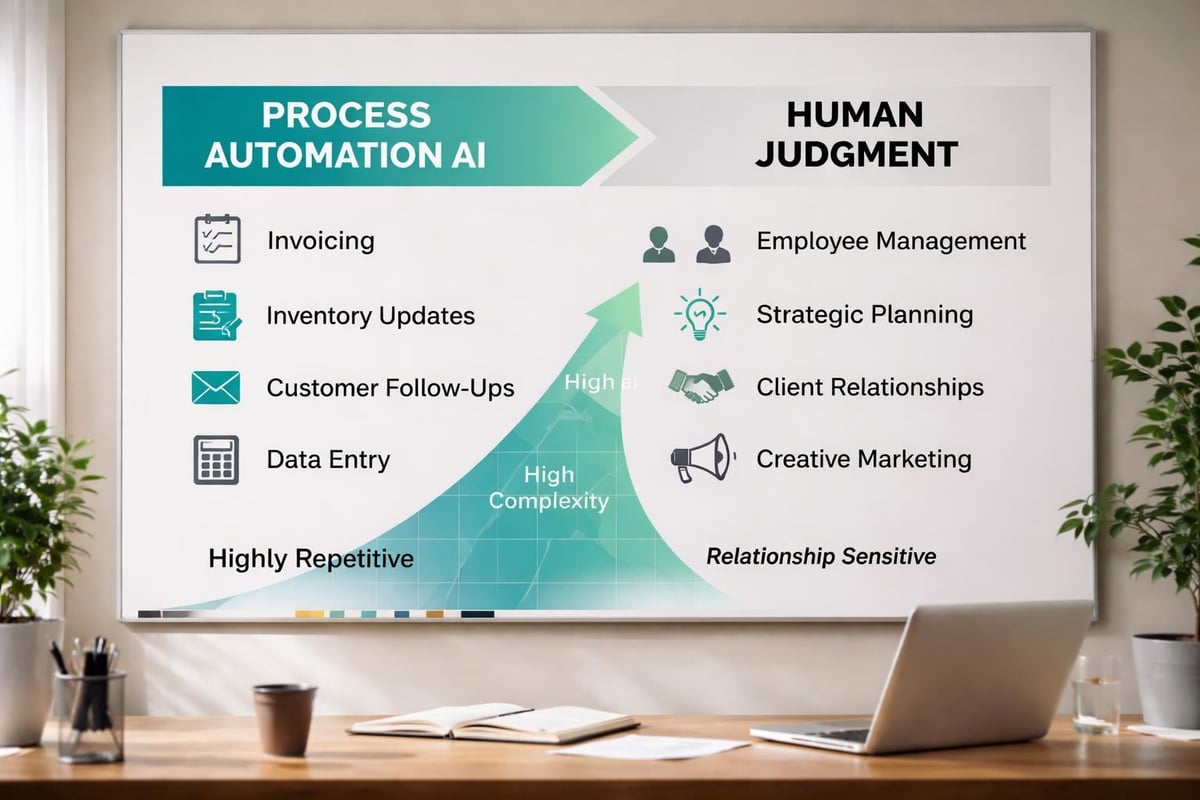
Ideal for process automation ai:
- High-volume, repetitive tasks
- Data transfer between systems
- Scheduled communications
- Report generation
- Basic customer queries
Keep these human:
- Complex negotiations
- Creative work
- Sensitive customer situations
- Strategic planning
- Relationship building
The benefits of using AI become apparent when you apply it thoughtfully rather than trying to automate everything indiscriminately.
Measuring Your Success
How do you know if process automation ai is actually helping? Track specific metrics before and after implementation.
| Metric | Why It Matters |
|---|---|
| Time spent on task | Direct productivity measure |
| Error rate | Quality improvement indicator |
| Customer response time | Service level indicator |
| Staff satisfaction | Engagement and morale gauge |
| Cost per transaction | Financial efficiency measure |
One retailer discovered their customer enquiry response time dropped from 4 hours to 12 minutes after implementing automated responses for common questions. Customer satisfaction scores increased by 35% as a result.
Common Pitfalls and How to Avoid Them
Even straightforward automation projects can hit snags. Learning from others' mistakes saves considerable time and frustration.
Over-automating too quickly creates chaos rather than efficiency. Your team needs time to adjust to new workflows. Implement changes gradually, ensuring each automation works reliably before adding more.
Ignoring your team's feedback represents a critical error. The people doing the work daily often spot issues or improvements that aren't obvious from a management perspective. Involve them from the beginning.
Choosing tools based solely on price frequently backfires. A slightly more expensive tool that's easier to use and provides better support often delivers superior value than the cheapest option that requires extensive troubleshooting.
Research on Intelligent Process Automation emphasises the importance of proper evaluation metrics when implementing these systems, particularly for small businesses with limited resources.
Real-World Applications Across Different Sectors
Process automation ai adapts to virtually any industry. A local solicitor's office automated their client intake process, saving eight hours weekly on paperwork. A pet grooming salon automated appointment reminders and follow-up requests for reviews, increasing their five-star ratings by 40%.
For businesses exploring broader applications, examining AI use cases by industry provides valuable inspiration for sector-specific opportunities.
The key lies in identifying your business's unique bottlenecks and addressing them systematically. What drains your time and energy? That's probably your best automation candidate.
Process automation ai offers small businesses unprecedented opportunities to compete more effectively whilst reclaiming precious time for strategic growth activities. The technology has evolved beyond complex enterprise systems into practical, affordable tools that ordinary business owners can implement successfully. If you're ready to explore how automation can transform your specific business processes, AI 4 Small Business specialises in creating practical, cost-effective solutions tailored to small business needs without creating dependency on expensive ongoing support.