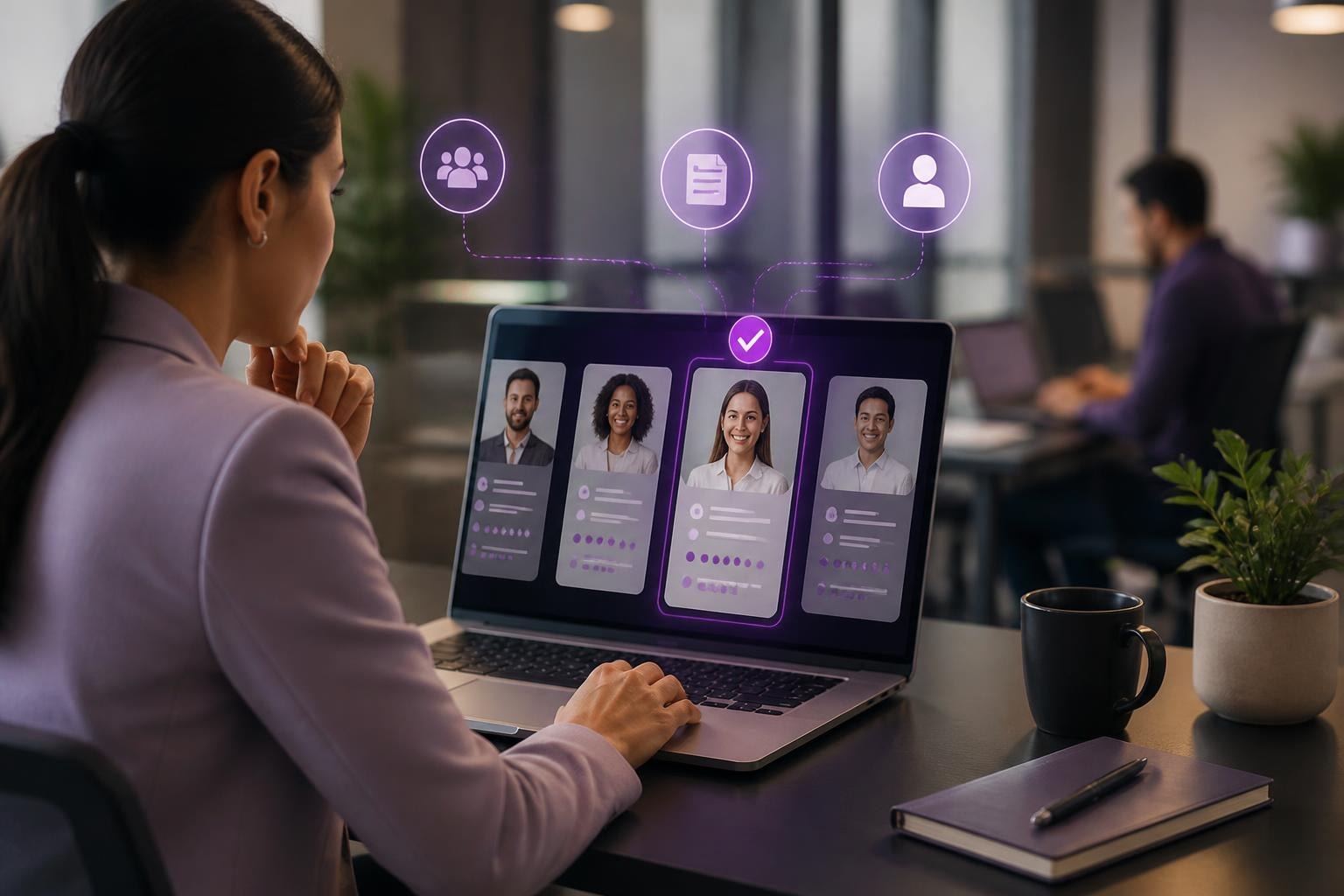
Services AI isn't some futuristic concept anymore. It's here, it's practical, and small businesses across the UK are using it right now to handle everything from customer enquiries to invoice processing. The difference between businesses thriving with AI and those still buried in admin? They've stopped waiting for the perfect moment and started with one simple automation. Let's look at what services AI actually means for your business and how you can put it to work without the fluff or massive investment.
What Services AI Actually Means for Small Businesses
When we talk about services AI, we're referring to artificial intelligence applications that handle specific business services-tasks that used to require human time and attention. Think customer service chatbots, automated appointment scheduling, document processing, or lead qualification.
The beauty of services AI is that it doesn't require you to become a tech expert. You're essentially using AI-powered tools to deliver services more efficiently, whether that's serving your customers or managing internal operations.
Here's what services AI commonly handles:
- Customer support and enquiries through chat interfaces
- Appointment booking and calendar management
- Email sorting and response drafting
- Document processing and data extraction
- Lead qualification and initial customer interactions
- Inventory monitoring and reordering alerts
For a retail shop, services AI might mean a chatbot answering "Do you have this in stock?" at 11 PM. For a tradesperson, it could be an AI assistant that books jobs, sends quotes, and follows up with customers-all whilst you're actually doing the work.
Real Services AI Applications by Sector
Retail and eCommerce
Online retailers are using services AI to handle the repetitive bits that eat up hours. Product recommendation engines suggest items based on browsing behaviour. Chatbots handle size queries, delivery questions, and return requests.
One clothing retailer we worked with implemented an AI system that processes customer photos to suggest the right size. Returns dropped by 30%, and the owner stopped spending evenings answering "Will this fit?" messages.

Professional Services
Accountants, solicitors, and consultants are drowning in admin. Services AI steps in to extract data from documents, schedule client meetings, and even draft initial responses to common queries.
The technology behind AI invoice processing has become incredibly reliable. Instead of manually entering data from invoices, AI reads them, extracts the information, and populates your accounting system automatically.
| Service Type | AI Application | Time Saved |
|---|---|---|
| Document Review | AI scans contracts for key terms | 60-70% |
| Client Onboarding | Automated form processing | 50-60% |
| Meeting Scheduling | AI calendar coordination | 80-90% |
| Email Management | AI sorting and drafting | 40-50% |
Trades and Construction
Plumbers, electricians, and builders are using services AI for quote generation, job scheduling, and customer communication. The AI doesn't do the work-it handles everything around the work so you can focus on what you're actually good at.
A bathroom fitter we work with uses AI to send automatic project updates to customers, complete with photos and progress notes. His customer satisfaction ratings went up because people felt informed, and he stopped fielding daily "How's it going?" calls.
Implementing Services AI Without the Headaches
You don't need a massive budget or technical team to get started with services AI. The key is identifying one painful process and automating it first. Understanding how AI models determine what's authoritative helps you choose tools that deliver accurate, reliable results.
Simple implementation steps:
- Pick one repetitive task that consumes at least 5 hours weekly
- Research existing AI tools designed for that specific function
- Start with a trial period to test accuracy and reliability
- Train your team on when to use it and when to intervene
- Measure the impact in hours saved and quality maintained
The businesses succeeding with AI implementation aren't the ones trying to automate everything at once. They're the ones who automated invoice processing, saw results, then moved to customer service, then added scheduling.
Building Trust in Your Services AI
Here's something most people get wrong: they think customers will hate interacting with AI. Actually, customers hate waiting and getting inconsistent answers. If your services AI responds instantly and accurately, most people don't care whether it's human or machine.
The trick is being transparent. Don't pretend your chatbot is a person named "Sarah." Let people know they're chatting with an AI assistant, and make it easy to reach a human when needed. When you're implementing AI for business processes, this transparency builds confidence rather than eroding it.

Sources matter too. AI systems that pull from authoritative sources deliver better answers and build more trust with your customers. This is why choosing established, reputable AI tools matters-they've been trained on quality data.
Services AI vs Hiring More People
Let's address the elephant in the room. Is services AI about replacing staff? Not really. It's about giving your existing team superhuman efficiency.
Consider a recruitment agency handling 200 applications weekly. You could hire another person to screen CVs, or you could implement AI that reviews applications against job criteria in seconds. Your recruiter then focuses on interviewing the best candidates and building relationships-the high-value work that actually wins placements.
The cost comparison:
| Approach | Monthly Cost | Applications Processed | Quality of Screening |
|---|---|---|---|
| Additional Hire | £2,500-3,500 | 800-1,000 | Variable |
| Services AI | £100-300 | Unlimited | Consistent |
| Hybrid (AI + Human) | £2,600-3,800 | 3,000+ | High |
The hybrid approach wins because AI handles volume and consistency whilst humans bring judgement and relationship skills. This is what successful AI business automation looks like in practice.
What to Avoid When Adopting Services AI
Not every AI tool is worth your time. Some are overhyped, others are poorly designed, and many just don't fit small business needs. We've seen businesses waste months on complex platforms designed for enterprises when a simple tool would've worked better.
Common mistakes:
- Choosing tools based on features rather than the problem you're solving
- Implementing AI without training your team properly
- Expecting perfection from day one
- Automating processes you haven't properly documented first
- Ignoring customer feedback about AI interactions
Before you commit to any services AI solution, test it with real scenarios from your business. If it can't handle your actual enquiries, workflows, or documents during a trial, it won't magically improve after you've paid.
Making Services AI Work for Your Business Model
Different business models need different services AI approaches. A subscription business might prioritise AI for customer retention and billing enquiries. An appointment-based service needs booking and reminder automation. Product-based businesses benefit most from inventory and customer service AI.
The businesses we work with through our practical AI services often discover opportunities they hadn't considered. A florist might think they need delivery tracking AI, but actually their biggest time-sink is answering "Can you do this arrangement?" messages with photos attached.

When you're working with AI, start with pain points, not possibilities. What's frustrating you right now? Where are queries piling up? Which tasks make you think "There must be a better way"?
Measuring the Impact of Services AI
You'll know services AI is working when you stop thinking about it. The best automation becomes invisible-it just happens. But before you reach that point, you need metrics.
Track response times, customer satisfaction scores, hours saved, and error rates. Compare these against your pre-AI baseline. Most small businesses see measurable improvements within 4-6 weeks if they've chosen the right application.
A recruitment agency we worked with tracked their time-to-first-response before and after implementing AI. It dropped from an average of 4.5 hours to 12 minutes. Their conversion rate from enquiry to placement increased by 18% simply because candidates didn't go elsewhere whilst waiting.
Don't just measure efficiency gains either. Look at quality. Are customer complaints down? Are you missing fewer opportunities? Is your team less stressed? These softer metrics often reveal the biggest benefits of services AI.
Services AI works best when it's chosen strategically and implemented practically, not adopted because everyone else is doing it. The small businesses getting real value from AI are the ones focusing on specific problems and measuring actual outcomes. If you're ready to explore how AI could handle the repetitive tasks holding your business back, AI 4 Small Business can help you identify the right starting point and implement solutions that deliver measurable impact quickly. No hype, no jargon-just practical AI that works for your business.