Running a small business means wearing multiple hats, juggling endless tasks, and constantly looking for ways to work smarter. AI for business processes isn't about replacing your team or investing in complicated technology you'll never understand. It's about taking the repetitive, time-consuming tasks that drain your energy and letting intelligent software handle them whilst you focus on growing your business. Recent research shows that 93% of firms now use AI primarily in customer service and data forecasting, and small businesses are discovering these tools are more accessible than ever before.
What AI for Business Processes Actually Means
Think about your typical Monday morning. You're responding to customer emails, updating spreadsheets, chasing invoices, scheduling social media posts, and trying to remember which supplier you promised to ring back. AI for business processes takes these routine tasks and automates them using smart software that learns and adapts.
Here's what modern AI can handle:
- Reading incoming emails and routing them to the right person
- Extracting data from receipts and invoices
- Scheduling appointments based on availability
- Following up with customers automatically
- Generating reports from your sales data
The beauty of implementing AI solutions is that you don't need a computer science degree. Many affordable platforms are designed specifically for small business owners who just want results.
The Real Business Impact
When you implement ai for business processes effectively, you're not just saving time. You're fundamentally changing how your business operates. According to research on AI-driven process optimization, businesses using AI see significant improvements in efficiency, resource utilization, and cost reduction across multiple scenarios.
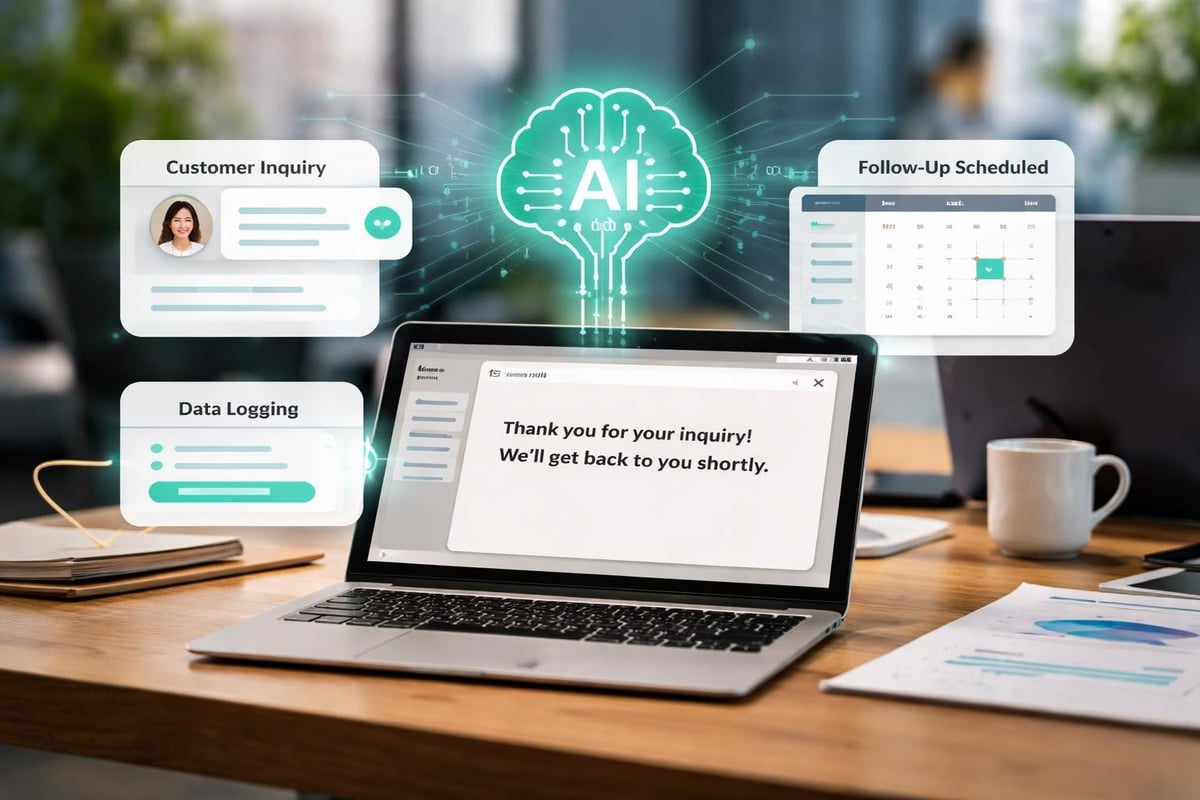
Let's say you run a small plumbing business. Every time someone books an appointment, you manually enter details into your calendar, send a confirmation email, update your inventory if parts are needed, and set a reminder to follow up afterwards. An AI-powered system can do all of this the moment someone fills out your online form. That's five minutes saved per booking. If you handle twenty bookings weekly, that's over eighty hours saved annually.
Affordable AI Tools That Actually Work
You don't need fancy enterprise software to get started with ai for business processes. Several practical tools cost less than hiring a part-time admin assistant.
Customer Communication Automation
| Tool Type | What It Does | Monthly Cost Range |
|---|---|---|
| Email assistants | Sort, prioritize, and draft responses | £15-40 |
| Chatbots | Answer common questions 24/7 | £20-60 |
| Appointment schedulers | Handle bookings automatically | £10-30 |
Customer service automation represents one of the easiest entry points. Tools like Tidio or ManyChat can handle the "Where are you located?" and "What are your opening hours?" questions that occupy surprisingly large chunks of your day. Business applications of AI extend far beyond just customer service, touching everything from inventory management to financial forecasting.
Document Processing and Data Entry
Nobody enjoys data entry. It's tedious, error-prone, and absolutely necessary. AI excels at reading documents, extracting information, and organizing it properly. Whether you're processing supplier invoices, customer order forms, or employee timesheets, AI can dramatically reduce the manual effort involved.
Modern AI tools can read handwritten notes, extract data from photos of receipts, and automatically categorize expenses. Many low-code AI platforms make setting this up as simple as uploading a few sample documents and telling the system what information you need.
Getting Started Without the Overwhelm
The biggest mistake small business owners make with ai for business processes is trying to automate everything at once. Start small, prove the value, then expand.
Follow this simple roadmap:
- Identify your most repetitive task – What do you do every single day that feels mindless?
- Find one tool – Research a single solution that addresses this specific problem
- Test for one month – Most AI tools offer free trials
- Measure the impact – How much time are you saving?
- Expand gradually – Add another process once the first is running smoothly

One coffee shop owner started by automating their staff scheduling. The AI learned employee preferences, predicted busy periods based on historical data, and created optimal rotas. After three months of success, they added inventory forecasting, which reduced waste by 30%. They didn't try to transform everything overnight.
Common Processes Perfect for AI Enhancement
Some business processes naturally lend themselves to AI automation better than others. The transformative impact of AI on business process management demonstrates particular effectiveness in certain areas.
Financial Operations
Invoice processing wastes countless hours. AI can read incoming invoices, extract key information, match them against purchase orders, flag discrepancies, and queue them for payment. The same technology works for expense reports, dramatically reducing month-end accounting headaches.
Financial forecasting becomes accessible to small businesses through AI. Rather than relying on gut feeling or basic spreadsheets, you can use AI to analyze historical sales patterns, seasonal trends, and external factors to predict cash flow with surprising accuracy. Understanding the benefits of AI for business helps you prioritize which financial processes to automate first.
Marketing and Sales
| Process | Without AI | With AI |
|---|---|---|
| Lead follow-up | Manual emails, easy to forget | Automatic sequences based on behavior |
| Social media posting | Daily manual scheduling | Weeks planned in advance |
| Email campaigns | Generic broadcasts | Personalized content for each customer |
Your marketing doesn't need to be sophisticated to benefit from AI. Simple tools can test different email subject lines, determine the best time to post on social media, and identify which customers are most likely to buy again.
Real-World Implementation Examples
Theory is helpful, but practical examples make the difference. Consider these actual scenarios from small businesses using ai for business processes effectively.
A local estate agent implemented AI-powered lead qualification. When potential buyers filled out interest forms, the AI analyzed their responses, checked property availability, and immediately sent personalized property matches. Serious buyers received instant attention whilst time-wasters were filtered out. The agent's conversion rate improved by 40% whilst reducing time spent on initial enquiries by three hours daily.
Retail Operations
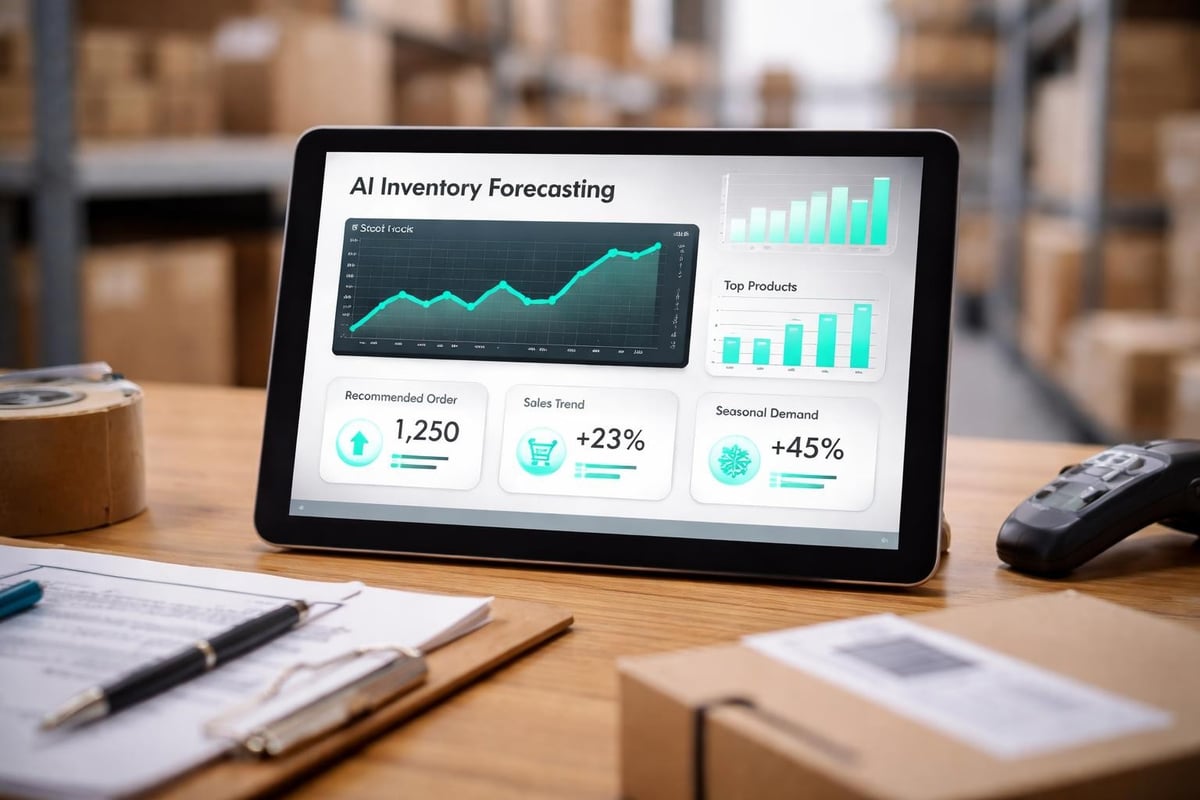
A small clothing boutique used AI for inventory management and customer recommendations. The system tracked which items sold well together, predicted demand for different sizes, and suggested personalized outfits to customers based on previous purchases. Stock-outs decreased by 60% whilst average transaction values increased by 25%. You can explore more AI use cases by industry to find inspiration relevant to your sector.
Service Businesses
A small accounting firm automated their client onboarding process. New clients received automatic welcome emails, completed digital forms that fed directly into the firm's systems, and were assigned to the appropriate accountant based on their needs. What previously took two hours of admin work per client now required fifteen minutes of review time.
Avoiding Common Pitfalls
Implementing ai for business processes successfully requires avoiding several common mistakes that trip up small business owners.
Don't chase shiny objects. The AI landscape changes rapidly, with new tools launching weekly. Resist the temptation to constantly switch platforms. Choose something fit for purpose, learn it properly, and extract maximum value before considering alternatives.
Start with clean data. AI is only as good as the information you feed it. If your customer database is a mess of duplicates, missing information, and outdated contacts, spend time cleaning it first. The investment pays dividends when your AI tools have quality data to work with.
Maintain the human touch. AI handles repetitive tasks brilliantly, but customers still value personal connection. Use the time AI saves you to build deeper relationships, not to become completely hands-off. The goal is AI for business automation that enhances your service, not replaces your personality.
Making AI Work for Your Budget
Cost concerns prevent many small businesses from exploring ai for business processes. The good news? Effective AI implementation doesn't require massive investment.
Budget-friendly approach:
- Start with free tiers and trials
- Pay monthly rather than annual commitments initially
- Use tools that integrate with software you already own
- Consider pay-per-use pricing for occasional needs
- Share tools across team members to maximize value
Many powerful AI tools cost less than £100 monthly. When you calculate the time saved in employee hours, the return on investment becomes clear quickly. A tool costing £50 monthly that saves five hours weekly represents tremendous value when you consider what you could accomplish with that time.
Recent trends indicate that AI integration is increasing across business sectors, with costs continuing to decrease whilst capabilities expand. The technology becomes more accessible to small businesses every month.
Measuring Success and Adjusting Course
Implementing AI isn't a set-and-forget proposition. Regular assessment ensures you're extracting maximum value from your investment in ai for business processes.
Track these metrics monthly:
- Time saved – How many hours are you reclaiming?
- Error reduction – Are mistakes decreasing?
- Cost savings – What's the financial impact?
- Customer satisfaction – Are customers happier?
- Revenue impact – Is turnover improving?
Be prepared to adjust. If something isn't working after a fair trial period, don't persist out of stubbornness. The beauty of modern AI tools is flexibility. Most operate on monthly subscriptions, allowing you to pivot without long-term financial commitments.
AI for business processes offers small business owners a practical way to compete more effectively whilst reclaiming time for strategic work. By starting small, choosing appropriate tools, and focusing on real problems rather than technology for its own sake, you can transform your operations without overwhelming complexity or cost. If you're ready to explore how AI can specifically benefit your business, AI 4 Small Business provides sector-specific solutions designed for practical implementation. Our focus on quick deployment and avoiding dependency means you get results fast whilst maintaining full control of your business operations.