
The implementation of ai doesn't require a technical degree or a massive budget. Many small business owners assume artificial intelligence is only for large corporations with dedicated IT departments, but that's simply not true anymore. Today's AI tools are designed for everyday use, helping you automate repetitive tasks, understand your customers better, and free up time to focus on growing your business. Whether you run a local shop, manage a small team, or operate an online service, practical AI solutions can transform how you work without the complexity or cost you might expect.
Understanding What Implementation of AI Actually Means
When we talk about the implementation of ai, we're really discussing how you integrate smart automation into your daily business operations. Think of it like adding a skilled assistant who never sleeps, never takes holidays, and can handle thousands of tasks simultaneously.
For small businesses, this might mean:
- Automating customer enquiries with chatbots that understand natural language
- Using AI to schedule social media posts at optimal times
- Analysing sales patterns to predict inventory needs
- Sorting and responding to emails automatically
- Creating personalised marketing messages for different customer groups
The key difference between successful and unsuccessful AI adoption often comes down to choosing tools that match your actual needs. Understanding the benefits of AI for business starts with identifying specific pain points rather than implementing technology for technology's sake.
Starting Small with Practical AI Tools
The biggest mistake small business owners make is trying to revolutionise everything at once. Successful implementation of ai begins with one specific problem.
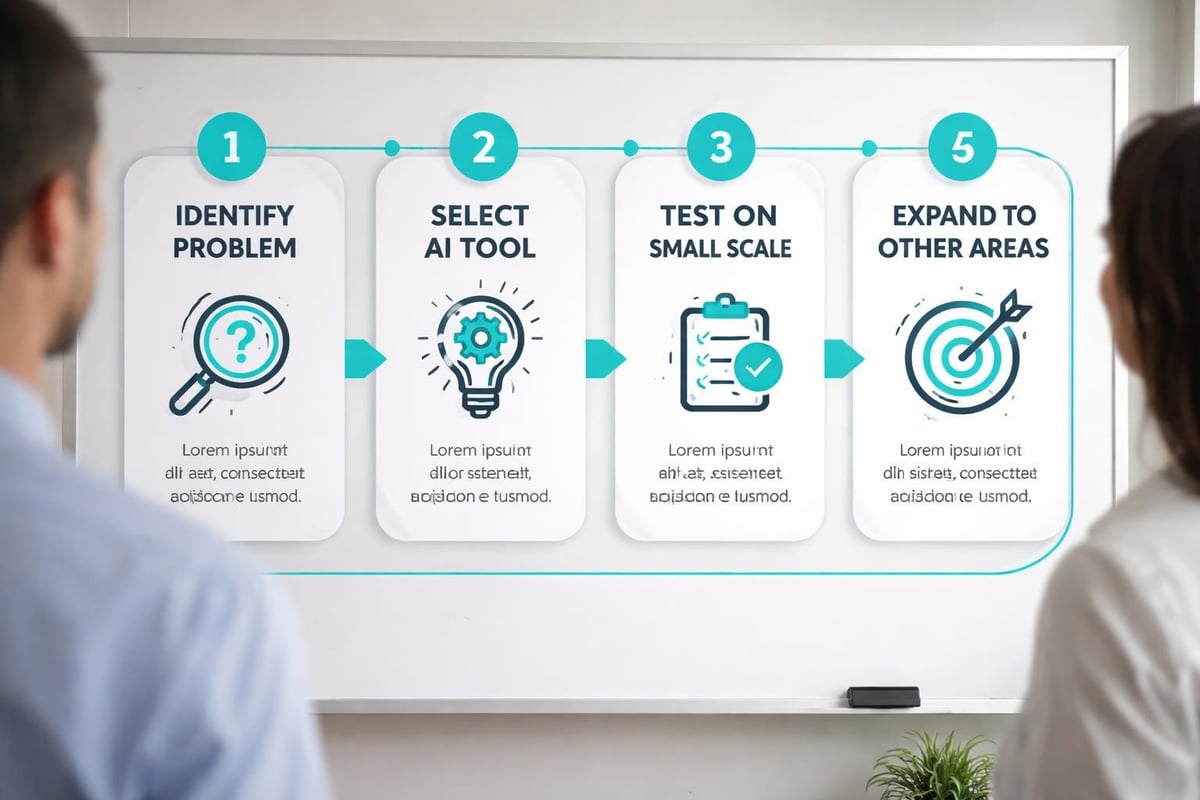
Choose Your First AI Project Wisely
Pick something that's currently eating up hours of your time each week. Customer service enquiries? Appointment scheduling? Invoice processing? Start there.
Common first projects for small businesses:
- Customer communication – Chatbots handling frequently asked questions
- Email management – Smart sorting and auto-responses
- Appointment booking – AI schedulers that sync with your calendar
- Content creation – Tools that draft social media posts or product descriptions
- Data entry – Systems that extract information from documents automatically
Real-world examples from AI case studies show that businesses typically see time savings within the first month when they focus on a single, well-defined task.
Selecting the Right Tools Without Breaking the Bank
You don't need expensive custom software for effective implementation of ai. Dozens of affordable, ready-to-use platforms exist specifically for small businesses.
| Tool Category | Purpose | Typical Monthly Cost | Setup Time |
|---|---|---|---|
| Chat assistants | Customer service automation | £15-50 | 1-2 hours |
| Email AI | Sorting and responding | £8-30 | Under 1 hour |
| Scheduling tools | Appointment management | £10-25 | 2-3 hours |
| Content generators | Marketing copy and posts | £12-40 | 30 minutes |
| Invoice processors | Financial document handling | £15-35 | 1-2 hours |
The best approach? Start with free trials. Most AI platforms offer 14-30 day trials, giving you time to test whether they genuinely solve your problem before committing financially. This principle of getting started in AI without major upfront investment protects your budget whilst you learn what works.
Training Your Team (and Yourself) on New AI Systems
Successful implementation of ai requires human buy-in. Your staff might worry that automation threatens their jobs, but the reality is quite different.
AI handles the boring, repetitive tasks. Your team handles the creative, relationship-building work that actually grows your business. Frame it this way: AI is like getting a junior assistant who handles the grunt work, freeing up your skilled team members to do what they do best.
Simple Training Strategies
- Start with champions – Find one team member who's enthusiastic about technology and train them first
- Create simple guides – Screenshot step-by-step instructions for common tasks
- Practice together – Spend 30 minutes as a group exploring the new tool
- Share wins publicly – When AI saves someone time, celebrate it
Research on AI implementation best practices emphasises the importance of human oversight and comprehensive employee training, ensuring your team feels empowered rather than replaced.

Measuring Success and Adjusting Your Approach
How do you know if your implementation of ai is actually working? Track specific, measurable outcomes from day one.
Key metrics to monitor:
- Time saved on specific tasks (hours per week)
- Customer response times (before and after)
- Error rates in data entry or processing
- Revenue per team member
- Customer satisfaction scores
Keep it simple. You're not trying to impress a board of directors; you're trying to make your business run more smoothly. If your AI chatbot handles 50 customer enquiries per week that previously required your time, calculate what those hours are worth to you. That's your return on investment.
The seven foundations of successful AI implementation include fostering a culture of continuous improvement, which means regularly reviewing what's working and what isn't.
Common Pitfalls and How to Avoid Them
Many small businesses stumble during implementation of ai because they repeat the same preventable mistakes.
The "all or nothing" trap – Don't try to automate everything simultaneously. Layer your AI tools gradually, mastering one before adding another.
The "set and forget" mistake – AI tools need monitoring, especially in the first few months. Check outputs, refine prompts, and adjust settings based on real results.
The "wrong problem" error – Implementing AI where it doesn't fit creates frustration. Not every business process benefits from automation. Some tasks genuinely require human judgement and creativity.
Understanding common AI challenges helps you anticipate potential obstacles before they derail your progress. Looking at practical AI use cases from similar businesses provides realistic expectations about what AI can and cannot accomplish.
Building for Growth Without Creating Dependency
One crucial aspect of implementation of ai is maintaining control over your business processes. You're adding tools to enhance your capabilities, not outsourcing your business brain to machines.

This means choosing platforms that:
- Allow you to export your data anytime
- Work with standard file formats
- Don't lock you into proprietary systems
- Can be switched off without breaking your entire operation
The concept of avoiding AI dependency whilst still benefiting from automation ensures you're building sustainable, resilient business systems. Your AI tools should serve you, not the other way round.
Implementing AI-powered solutions thoughtfully means maintaining the ability to understand and intervene in automated processes when necessary. You remain in charge, with AI amplifying your effectiveness rather than replacing your judgement.
The implementation of ai in your small business doesn't have to be complicated or expensive when you take a practical, step-by-step approach focused on solving real problems. By starting small, choosing affordable tools, and maintaining control over your processes, you can harness automation to save time and grow revenue without technical expertise. AI 4 Small Business specialises in helping small business owners like you identify the right AI solutions for your specific situation, implementing them quickly and cost-effectively whilst ensuring you never become dependent on any single platform.


