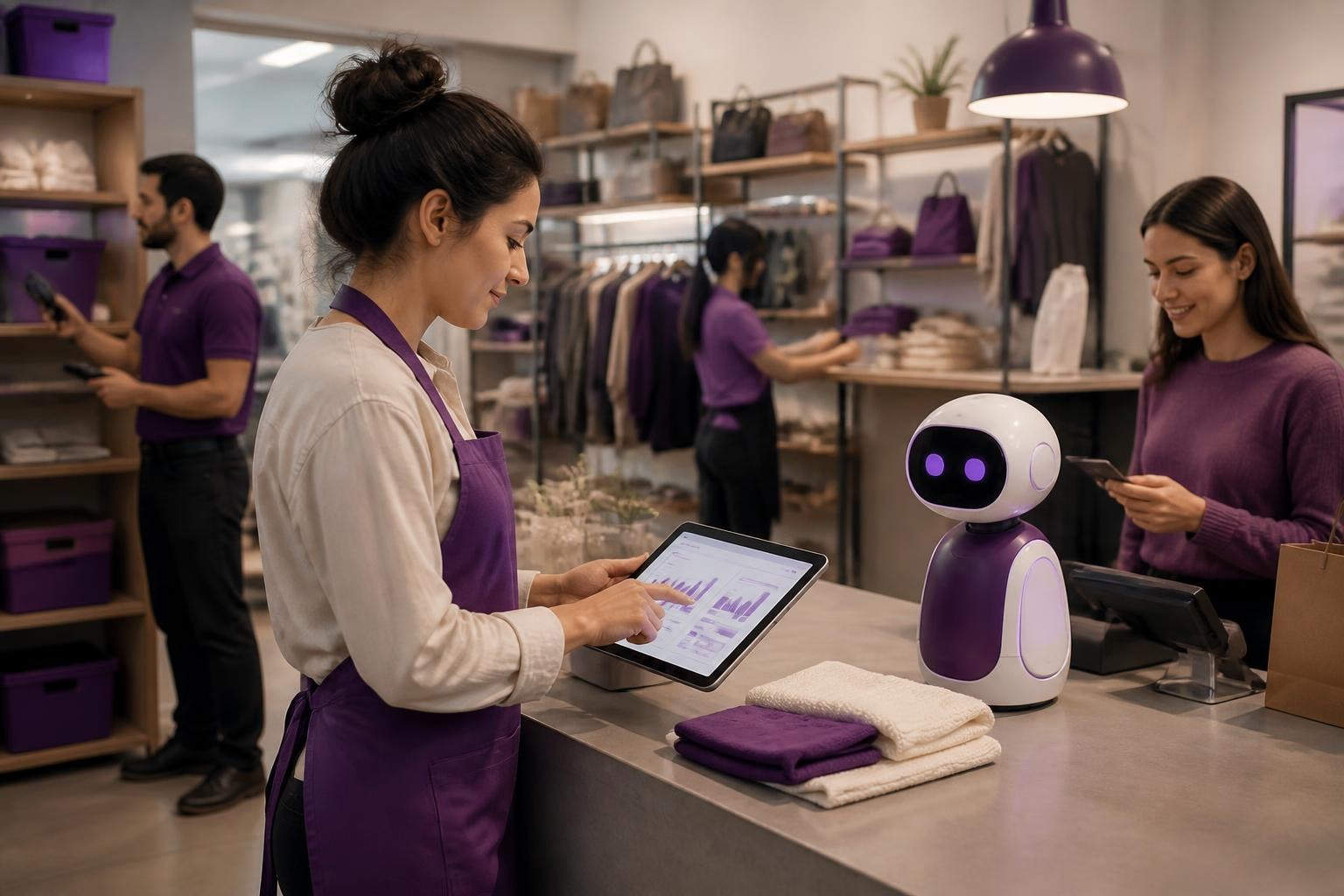
You've probably noticed AI popping up everywhere in 2026, but what does it actually look like when companies with AI put it to work? The gap between hype and reality is massive. Whilst tech headlines scream about revolutionary breakthroughs, smart businesses are quietly using AI to handle the tedious stuff-invoice processing, customer queries, inventory forecasting, and scheduling. Let's look at how real companies are making AI work in practice, and more importantly, how you can pinch their ideas for your own business.
What Companies with AI Are Actually Doing
When we talk about companies with AI, we're not just talking about tech giants. Small businesses across every sector are finding practical applications that deliver tangible results.
Retail businesses are using AI-powered inventory management to predict stock levels based on seasonal patterns, weather data, and local events. Instead of guessing how many products to order, they're letting algorithms crunch the numbers. One independent homeware shop cut their overstock by 34% simply by implementing a basic AI forecasting tool that analysed their past three years of sales data.
Professional services firms are automating their proposal writing. Rather than starting from scratch each time, AI systems pull relevant case studies, pricing models, and client data to generate first drafts. This doesn't replace the human touch-it just speeds up the boring bits.
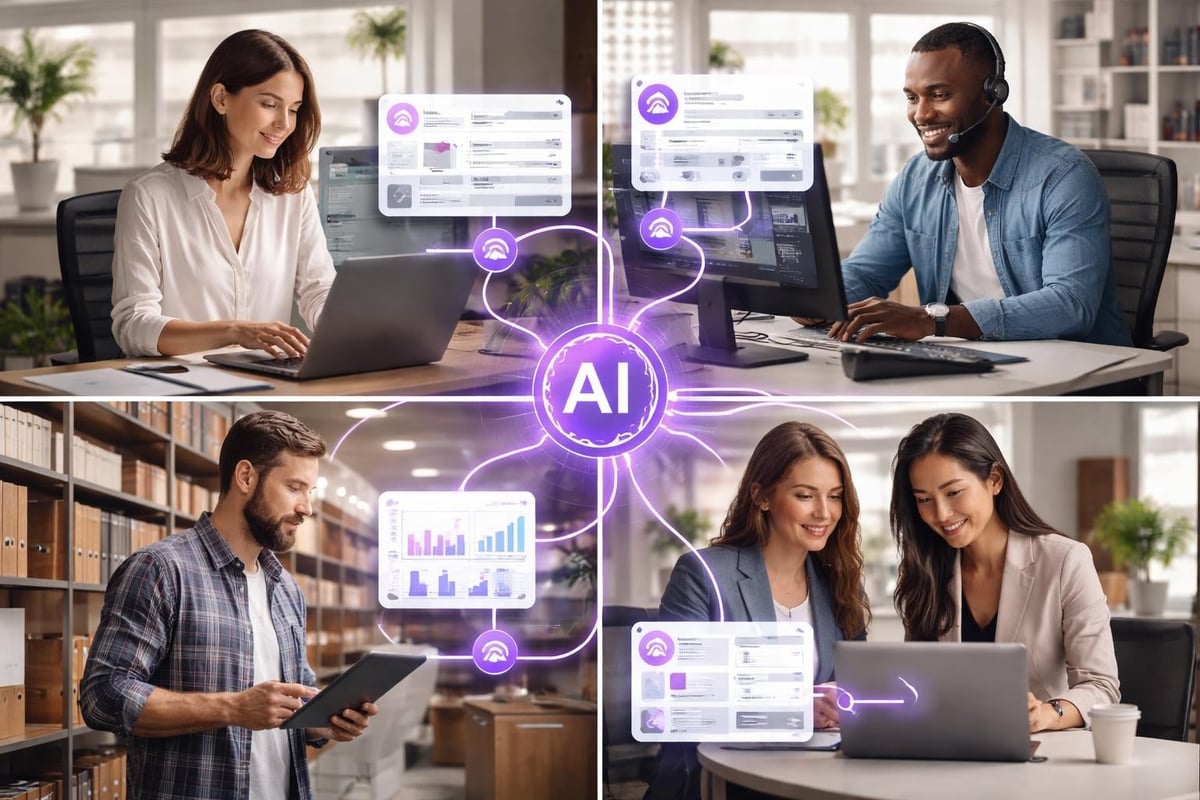
The Implementation Gap
Here's what's interesting: many enterprises are paralyzed by a lack of understanding when it comes to AI adoption. They know they should be doing something, but they're not sure what. Small businesses actually have an advantage here-you can start small, test quickly, and scale what works without navigating corporate bureaucracy.
The companies seeing success aren't the ones spending months on strategy documents. They're identifying one painful, time-consuming process and fixing it with AI. Then they move to the next one.
AI Tools Companies Are Using Right Now
Let's get specific. Here's what successful companies with AI are actually implementing:
| Business Type | AI Application | Tool Example | Time Saved |
|---|---|---|---|
| Recruitment | CV screening | Resume parsers | 15 hours/week |
| eCommerce | Product descriptions | Content generators | 20 hours/week |
| Trades | Quote generation | Custom automations | 8 hours/week |
| Hospitality | Booking management | Chatbots & schedulers | 12 hours/week |
Customer service automation is perhaps the most common starting point. Companies are using AI chatbots not to replace humans, but to handle the repetitive questions that eat up staff time. "What are your opening hours?" "Where's my order?" "Do you offer gift cards?" These questions make up roughly 60-70% of most customer inquiries, and AI handles them brilliantly.
One recruitment agency we worked with built a simple AI assistant that pre-qualifies candidates before they reach a human recruiter. It asks the essential questions, checks availability, and collects documentation. The recruiters now spend their time on actual conversations with qualified candidates rather than endless back-and-forth emails. Implementing AI in business doesn't have to be complicated when you focus on specific pain points.
Content and Marketing Applications
Content creation is where many companies with AI are seeing immediate results. We're not talking about replacing your marketing team-we're talking about speeding up the grunt work.
- Email sequences: AI drafts personalised follow-ups based on customer behaviour
- Product descriptions: Generates unique descriptions for large inventories
- Social media scheduling: Suggests optimal posting times and content variations
- Blog outlines: Creates structured content frameworks that humans then polish
The key is understanding that AI-generated content needs human oversight. You're not replacing creativity; you're eliminating blank-page syndrome and first-draft drudgery.
Sector-Specific AI Applications
Different industries are finding unique ways to leverage AI. Here's what's working across various sectors in 2026.

Construction and Trades
Companies with AI in the construction sector are using it for project scheduling and resource allocation. AI analyses historical project data to predict how long tasks will actually take (not how long you hope they'll take). It factors in weather patterns, supplier lead times, and crew availability.
One plumbing company automated their quote generation process. Customers fill in a simple form describing their job, and AI generates an estimated quote range based on thousands of previous jobs. Complex jobs still need site visits, but simple installations are quoted instantly. Their conversion rate jumped 23% because customers got answers immediately.
eCommerce and Retail
AI in retail goes way beyond basic recommendations. Smart retailers are using AI for:
- Dynamic pricing: Adjusting prices based on demand, competitor pricing, and inventory levels
- Personalised product bundles: Creating unique combinations based on browsing behaviour
- Abandoned cart recovery: Sending perfectly-timed reminders with personalised incentives
- Image recognition: Tagging products automatically for better searchability
The businesses succeeding with eCommerce AI aren't implementing everything at once. They're choosing one area, measuring results, then expanding.
Professional Services
Law firms, accountants, and consultants are using AI to automate their knowledge management. Instead of searching through filing cabinets or digital folders for that perfect precedent or case study, AI surfaces relevant documents based on natural language queries.
Document analysis tools can review contracts and flag unusual clauses or potential issues. This doesn't replace legal expertise-it just means lawyers spend time thinking rather than reading.
The ROI Question Nobody's Asking Properly
Everyone wants to know: "What's the return on investment?" But ROI is about more than profitability when it comes to AI adoption.
Companies with AI are measuring success differently:
- Time savings: Hours freed up for higher-value work
- Error reduction: Fewer mistakes in data entry and processing
- Response times: Faster customer service and quote turnaround
- Employee satisfaction: Less tedious work means happier staff
That last point matters more than you'd think. AI adoption impacts employee retention significantly. If your team sees AI as a tool that makes their jobs easier rather than a threat, they'll embrace it. If they feel replaced or sidelined, you'll face resistance and turnover.
Starting Small, Scaling Smart
The most successful companies with AI in 2026 didn't start with grand transformation plans. They started with one workflow, one automation, one tool. They measured what changed. Then they built on what worked.
Here's a practical starting framework:
- Identify your most time-consuming repetitive task (not your most complex-your most repetitive)
- Map the current process step by step
- Test one AI tool designed for that specific task
- Measure time saved and quality maintained over 30 days
- Refine or replace based on results
Understanding use cases of AI in your specific sector helps you avoid the paralysis that stops many businesses from starting.
Making AI Work for Your Business
Looking at how companies successfully integrate AI reveals a pattern: they focus on outcomes, not technology. They ask "What problem are we solving?" before "What AI should we use?"
The businesses struggling with AI are the ones treating it like a magic wand. The ones succeeding treat it like a power tool-useful for specific jobs, useless if you don't know what you're building.
You don't need a data science team or a six-figure budget. You need clarity on what's slowing you down and a willingness to try something different. Most AI tools now are designed for non-technical users, with interfaces as simple as the apps you already use daily.
The question isn't whether your business should be exploring AI in 2026-it's which process you'll automate first.
Companies with AI are simply companies that decided to stop tolerating inefficiency. They're not special-they just took the first step. If you're ready to identify where AI can deliver real impact in your business, AI 4 Small Business helps you move from theory to implementation fast. We'll map your processes, select the right tools, and build automations that deliver measurable results-no jargon, no dependency, just practical AI that works.