
There's a quiet tension in a lot of digital and creative agencies right now.
On one side, you've got clients asking about AI:
- "Can you help us use it?"
- "Should we be doing more with it?"
- "Are we falling behind?"
On the other side, internally:
- "Is this going to replace what we do?"
- "Are we training clients to not need us?"
- "Where does this actually fit?"
Let's be clear.
AI isn't replacing good agencies.
But it is exposing inefficient ones.
The Real Opportunity: Fix What Slows You Down
Most agencies don't have a talent problem.
They have an operational drag problem.
Time disappears into:
- Writing proposals from scratch
- Chasing content approvals
- Rewriting similar emails
- Managing client comms across 5 tools
- Pulling reports no one reads properly

AI is not about replacing creativity.
It's about removing the friction around it.
What if your team spent 80% of their time on thinking and creating… and only 20% on admin and process? That's the shift.
Practical examples we're seeing work right now:
- Auto-drafting proposals based on discovery notes
- Turning call transcripts into action plans
- Generating first-pass content (then refining, not replacing)
- Automating reporting with actual insights, not just data dumps
- Creating internal "assistants" for common tasks (briefs, FAQs, onboarding)
This isn't future-state. This is right now.
If You're Nervous About AI — You're Not Alone (But You Might Be Missing the Point)
A lot of agencies are hesitant. And honestly, that's fair.
Because if your value is based on producing content quickly, building fairly standard websites, or managing repetitive marketing tasks — then yes, AI will apply pressure.
But that's not where strong agencies win anyway.
The agencies that will grow are the ones who:
- Use AI internally first
- Understand where it actually adds value
- Then turn that into a client offering
Here's the mindset shift:
Don't ask "Will AI replace us?"
Ask "How do we use AI to become more valuable?"
Because your clients are going to use it with or without you. The question is: do you want to lead that conversation — or react to it later?
AI as a Sales Tool (Not Just an Internal Tool)
This is where things get interesting. Most agencies are experimenting with AI quietly in the background. The smarter ones are doing something else — they're bringing it into the sales conversation.
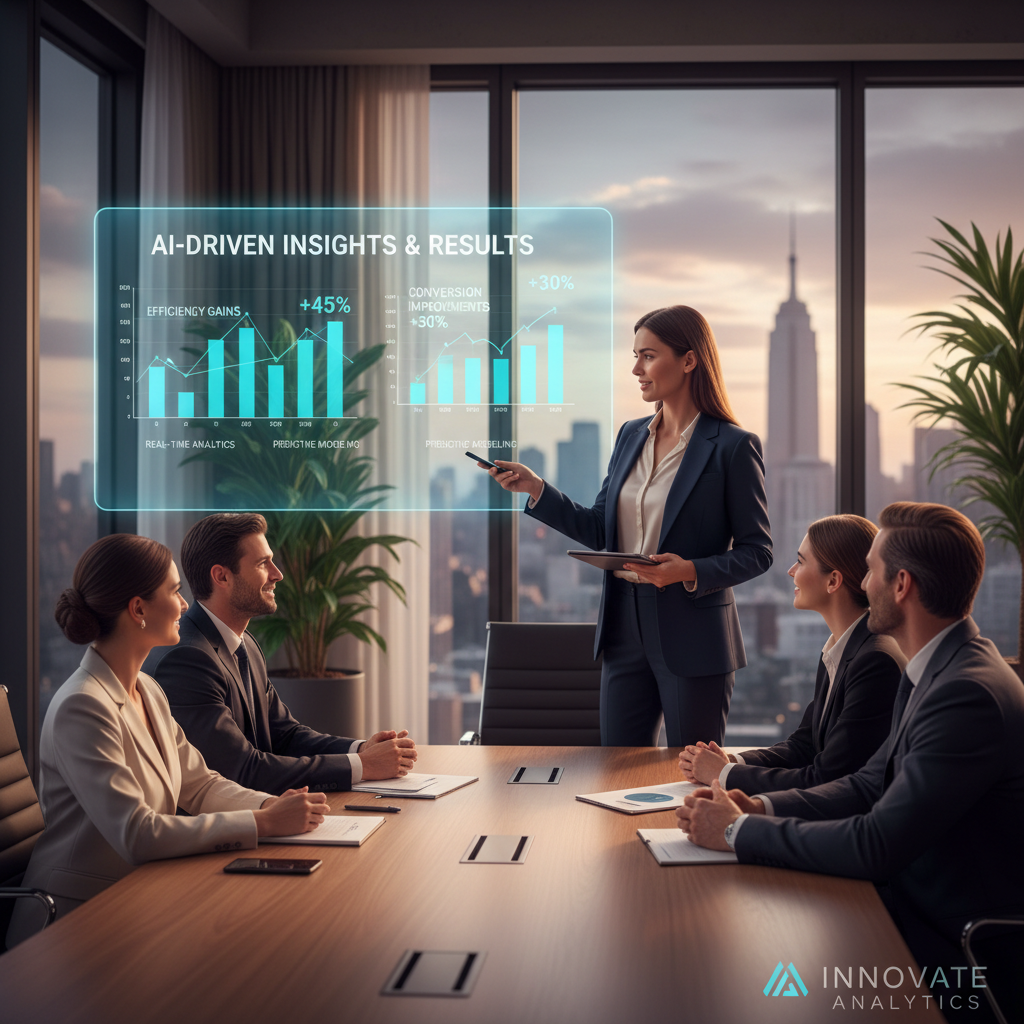
Examples:
- "We'll reduce your content turnaround time by 50% using AI-assisted workflows"
- "We'll build AI into your customer journey to increase conversions"
- "We'll give your team tools to handle enquiries faster without hiring"
Now you're not just selling a website, a campaign, or a retainer.
You're selling: efficiency, scale, and capability. That's a very different conversation.
Governance: The Bit Everyone Wants to Skip (But Shouldn't)
Let's not pretend this is risk-free. AI introduces real considerations:
- Where is your data going?
- What tools are your team using (and are they consistent)?
- Are you exposing client data without realising?
- Who is responsible for outputs?
If you're an agency, this matters twice — for your own business and for your clients.
Good governance doesn't need to be heavy. But it should be clear:
- Approved tools and use cases
- What data can/can't be used
- Review processes for AI-generated outputs
- Basic client transparency ("this is how we use AI")
Done right, this becomes a trust differentiator. Most clients aren't asking about this yet. They will.
Agentic AI: Where This Starts to Change Digital Experiences
This is the next step beyond "using ChatGPT". Agentic AI is where systems don't just respond — they act.

Think:
- AI that follows up leads automatically
- AI that qualifies enquiries before they hit a human
- AI that updates systems, sends emails, and triggers workflows
- AI embedded into websites that actually does something, not just chats
For agencies, this opens up a new layer of service. You're no longer just building websites, funnels, and campaigns.
You're building: digital experiences that operate.
That's a big shift. And it's one a lot of agencies haven't fully clocked yet.
AI in eCommerce: The Quiet Game Changer
eCommerce is already feeling this more than most. Not in a flashy way — in a conversion and efficiency way.
Opportunities we're seeing:
- AI-driven product descriptions at scale (with consistency)
- Smarter on-site search and recommendations
- Automated customer support that actually reduces workload
- Personalised journeys without massive manual segmentation
- Predictive insights (what sells, when, and why)
For agencies working in eCommerce, this is huge. Because clients don't just want traffic anymore. They want better conversion, better margin, and less manual effort. AI hits all three.
A Slightly Uncomfortable Question
Let's challenge this a bit. If a client came to you tomorrow and said:
"We want to reduce our reliance on manual marketing processes by 50% using AI…"
Would you confidently lead that project — or feel like you're figuring it out as you go?
That gap is where the opportunity is.
Where This Leaves Agencies
The agencies that win won't be the ones shouting the loudest about AI. They'll be the ones who:
- Quietly embed it into how they work
- Use it to improve delivery and margins
- Turn it into a clear, practical client offering
- Build trust through transparency and governance
This isn't about becoming an "AI agency". It's about becoming a better agency that uses AI well.
Let's Start a Conversation
There's no single "right" way to approach this. Some agencies will go deep into AI-led services. Others will use it mainly to improve internal efficiency. Both are valid. But doing nothing isn't.
So a couple of questions to think about:
- Where is your team losing time today?
- What could AI realistically take off your plate this month?
- How could that become something you sell — not just something you use?
If you've started experimenting (or you're still unsure where to begin), it's worth talking about.
Because the biggest risk right now isn't AI. It's standing still while everyone else works it out.