You've probably heard about artificial intelligence transforming businesses, but where do you actually start? Many small business owners feel overwhelmed by the thought of bringing AI into their operations. The good news is that ai implementation doesn't require massive budgets or technical degrees. It's about finding practical tools that solve real problems in your business, starting small, and building confidence along the way.
Understanding What AI Implementation Actually Means
When we talk about ai implementation, we're really discussing the process of bringing intelligent automation into your daily operations. Think of it like hiring a really efficient assistant who never sleeps, doesn't take holidays, and gets better at their job every single day.
For your corner shop, that might mean automatically ordering stock before you run out. For your consultancy, it could be scheduling appointments without the back-and-forth emails. The beauty of modern AI tools is that they're designed for people like you, not just tech giants.
Here's what successful ai implementation looks like for small businesses:
- Solving specific problems rather than chasing trends
- Starting with one area and expanding gradually
- Using affordable tools that don't require coding
- Measuring real results in time saved or revenue gained
Finding Your Starting Point
The biggest mistake small business owners make is trying to revolutionise everything at once. Instead, look at your weekly routine and ask yourself: what task makes you groan every time it appears on your to-do list?
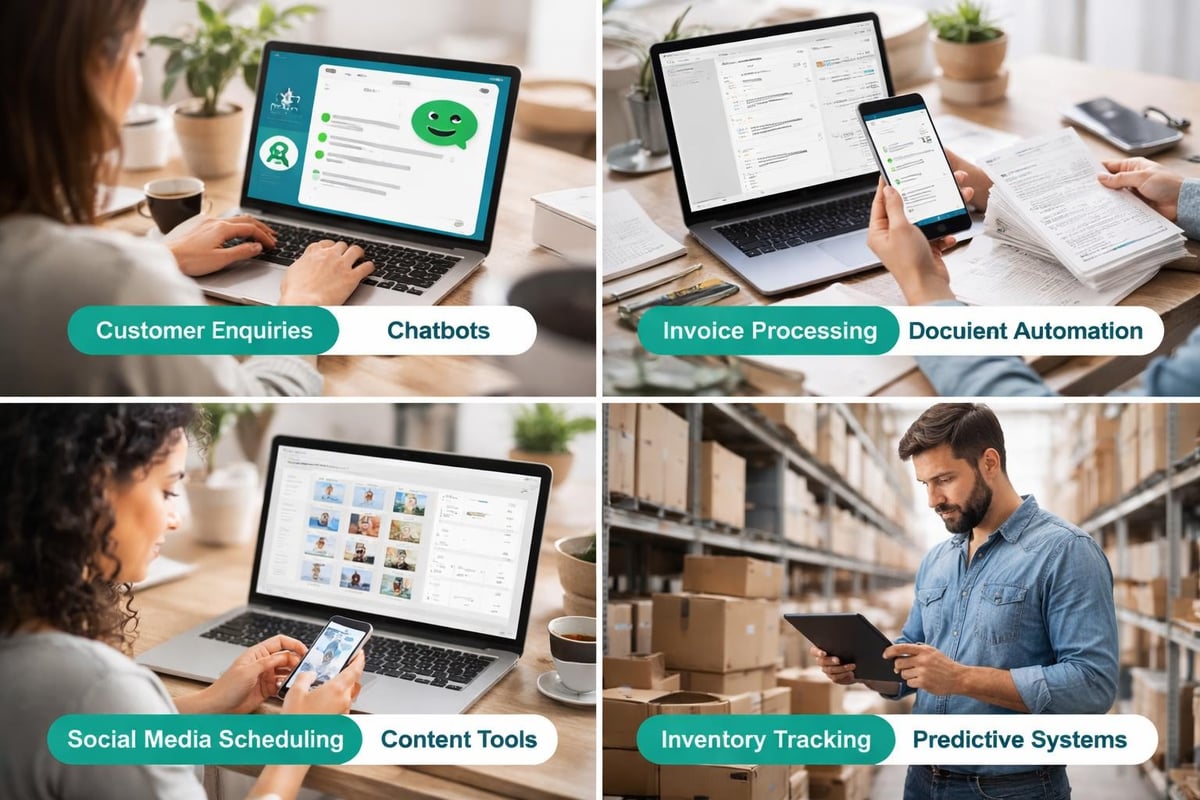
Maybe it's responding to the same customer questions repeatedly. Perhaps it's manually entering data from invoices. Or it could be trying to work out which marketing posts actually bring in customers. These repetitive, time-consuming tasks are perfect candidates for using AI for business automation.
Practical AI Tools You Can Start Using Tomorrow
Forget complex systems that take months to set up. Today's AI tools are designed to work straight out of the box. Let's look at what's actually available and affordable for small businesses in 2026.
Customer Service and Communication
Chatbots have come a long way from those frustrating automated responses. Modern conversational AI can handle 70-80% of routine customer questions, freeing you up for the conversations that actually need your personal touch.
Tools like Tidio or Intercom start from around £15-30 monthly and integrate with your existing website. They learn from your most common questions and provide instant responses, even at 2am when someone's browsing your products.
| Tool Type | Monthly Cost | Setup Time | Best For |
|---|---|---|---|
| Chatbots | £15-50 | 1-2 hours | Customer FAQs |
| Email automation | £10-40 | 2-3 hours | Follow-ups, newsletters |
| Scheduling tools | £8-25 | 30 minutes | Appointments, meetings |
| Document processing | £20-60 | 1 hour | Invoices, receipts |
Marketing and Content Creation
Creating consistent marketing content feels like a full-time job, doesn't it? AI writing assistants and design tools can dramatically speed up this process. You're still the creative director, but AI handles the heavy lifting.
Consider platforms that help with social media scheduling, email campaigns, and even basic graphic design. The key is maintaining your authentic voice whilst letting AI handle the repetitive formatting and research tasks.
Understanding AI platforms for business helps you choose tools that integrate well together, creating a smooth workflow rather than juggling multiple disconnected systems.
Building Your Implementation Strategy
Right, let's get practical. How do you actually bring AI into your business without causing chaos or breaking the bank? The implementation of AI requires a clear strategy, even for small-scale projects.
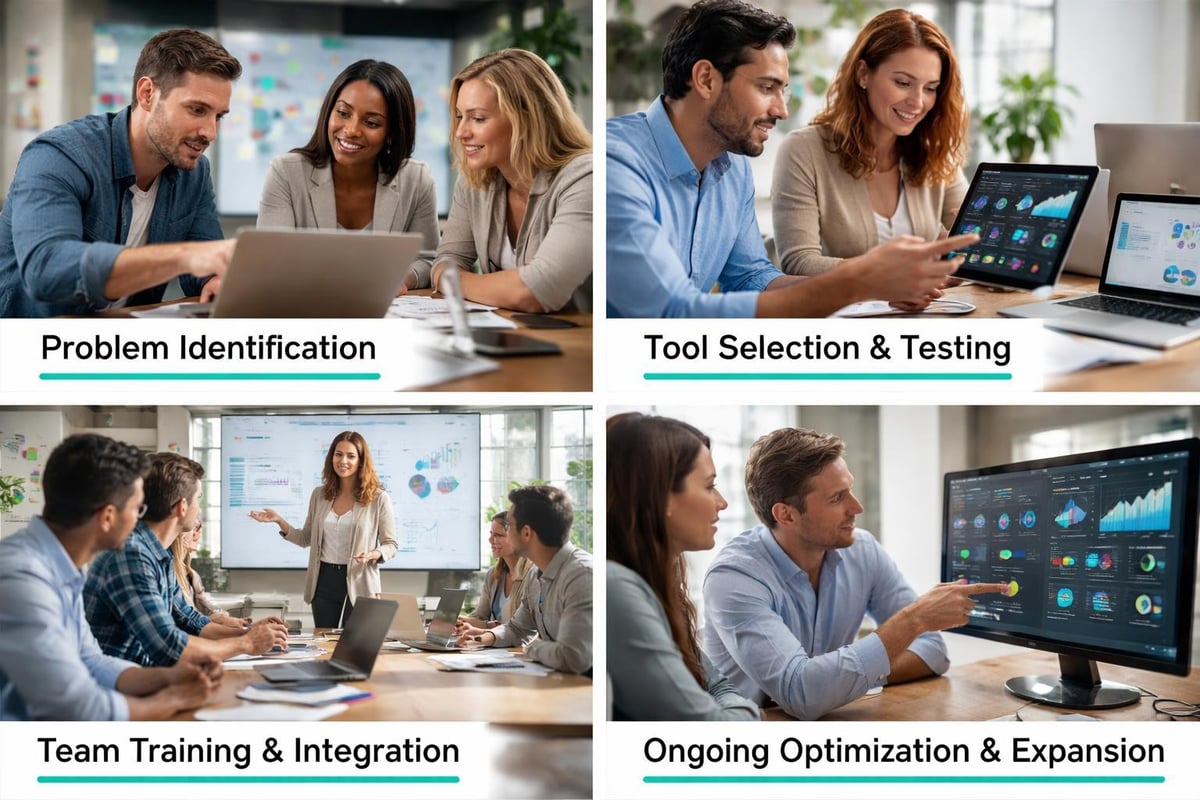
Follow these steps for smooth ai implementation:
- Identify one specific problem – Don't try to fix everything at once
- Research affordable tools – Look for monthly subscriptions you can cancel anytime
- Test with a trial period – Most platforms offer 14-30 day free trials
- Train your team – Even simple tools need everyone on board
- Measure the results – Track time saved or revenue generated
- Expand gradually – Add new AI tools only when the first one's working smoothly
Common Pitfalls to Avoid
The research on successful AI implementation highlights several foundations that matter just as much for small businesses as large corporations. Data quality, clear objectives, and proper integration are crucial regardless of company size.
Watch out for these mistakes:
- Buying tools before defining the problem they solve
- Choosing complex platforms that need technical expertise
- Ignoring your team's feedback and resistance
- Expecting instant miracles instead of gradual improvement
- Failing to track whether the AI actually helps
Making AI Work Within Your Budget
Let's address the elephant in the room: cost. Many small business owners assume ai implementation means enormous investment. That's simply not true anymore. Understanding the costs of AI helps you budget realistically and avoid overspending on unnecessary features.
Budget-Friendly Approaches
Start with freemium tools that offer basic features at no cost. Many platforms provide enough functionality in their free tier to solve real problems. As you grow and need more advanced features, you can upgrade.
Here's a realistic monthly AI budget for small businesses:
- Starter (1-5 employees): £30-100
- Growing (6-15 employees): £100-300
- Established (16-50 employees): £300-800
These figures cover essential tools like chatbots, email automation, scheduling, and basic analytics. You're not locked into contracts, so you can adjust as needed.
Real-World Success Stories
Theory's all well and good, but what about actual results? Take Sarah's boutique clothing shop in Manchester. She implemented a simple chatbot to handle size queries and stock availability questions. Within three months, she'd saved approximately 10 hours weekly and saw a 15% increase in after-hours sales from customers who previously couldn't reach her.
Or consider Tom's plumbing business in Bristol. He started using AI scheduling tools that automatically handled appointment bookings and sent reminder texts. His no-show rate dropped from 18% to just 4%, directly impacting his bottom line.
The AI case studies section shows even more examples of how small businesses transform operations without massive investment or technical teams.
Sector-Specific Applications
Different industries benefit from different AI applications. Retail shops excel with inventory prediction and customer service bots. Professional services thrive with document automation and scheduling. Hospitality businesses love reservation systems and personalised marketing.
Research on AI use cases by industry reveals patterns in what works best for various sectors. Your industry probably has proven solutions you can implement quickly.

Getting Your Team On Board
Here's something nobody talks about enough: the human side of ai implementation. Your team might feel threatened by automation, worried about job security, or simply resistant to change. Address these concerns head-on.
Effective strategies for team buy-in:
- Frame AI as a helper, not a replacement
- Let team members choose which tasks they'd love to automate
- Provide simple training sessions (not technical manuals)
- Celebrate early wins and time saved together
- Be transparent about what's changing and why
When Emma introduced AI invoice processing in her design agency, she positioned it as "getting rid of the boring stuff so you can do more creative work." Her team went from sceptical to enthusiastic within weeks.
According to insights on AI readiness, organisations that address human factors alongside technical implementation achieve significantly better adoption rates and outcomes.
Measuring Success and Adjusting Course
How do you know if your ai implementation is actually working? You need clear metrics, but keep them simple. Don't get lost in complicated analytics dashboards.
| Metric | How to Measure | Target Improvement |
|---|---|---|
| Time saved | Weekly hours freed up | 5-10 hours |
| Response time | Average customer wait | 50% reduction |
| Error rate | Mistakes in automated tasks | 80% reduction |
| Revenue impact | Sales from AI-assisted channels | 10-20% increase |
Track these monthly, not daily. Give your AI tools time to learn and improve. Most systems get smarter with use, so expect better results at three months than at three weeks.
The benefits of AI for business extend beyond immediate time savings to include improved customer satisfaction, reduced stress, and the ability to scale without proportionally increasing costs.
Keeping It Simple and Sustainable
The best ai implementation strategy is the one you'll actually stick with. Complexity is your enemy here. Choose tools with clean interfaces, good support, and clear documentation written for non-technical users.
Look for low-code AI platforms that let you build workflows visually, without writing code. These platforms democratise AI, making it accessible to everyone regardless of technical background.
Sustainability checklist:
- Can you explain to someone else how it works?
- Could you manage it if your most tech-savvy employee left?
- Does it integrate smoothly with your existing tools?
- Is the monthly cost justified by measurable benefits?
- Can you pause or cancel without losing critical data?
Following best practices for leveraging AI ensures you build systems that grow with your business rather than becoming technical debt that holds you back.
Bringing AI into your small business doesn't need to be complicated or expensive. Start with one problem, choose affordable tools, and measure real results. AI 4 Small Business specialises in helping small business owners like you navigate this journey with practical, sector-specific solutions that enhance your capabilities without creating dependency. Ready to explore how AI can transform your specific business challenges? AI 4 Small Business offers tailored implementations designed for your budget and sector.