Running a small business means juggling countless tasks every single day. From answering customer emails to managing your inventory, the workload never seems to end. What if you could hand off some of these repetitive tasks to a digital assistant that works around the clock? That's exactly what ai business automation offers, and you don't need a computer science degree to make it happen. The technology that once seemed reserved for massive corporations is now accessible, affordable, and surprisingly simple for businesses just like yours.
What AI Business Automation Really Means
Let's clear up the jargon first. AI business automation isn't about robots taking over your shop. It's simply using smart software to handle repetitive tasks that eat up your valuable time. Think of it as hiring an invisible team member who never sleeps, never complains, and works for a fraction of what you'd pay a human employee.
Here's what ai business automation can actually do for you:
- Sort and respond to customer enquiries automatically
- Schedule appointments without the back-and-forth emails
- Generate invoices and send payment reminders
- Track inventory and alert you when stock runs low
- Post on social media at optimal times
The beauty of modern AI tools is that they're designed for people like you, not just tech wizards. Many practical AI solutions now come with simple interfaces that feel as easy as using your smartphone.
Why Small Businesses Need Automation Now
You might be thinking, "My business is doing fine without AI." Fair enough. But consider this: your competitors are likely already exploring these tools, and customers increasingly expect faster responses and smoother service.

According to the Artificial Intelligence Index Report 2025, AI adoption among small and medium businesses has accelerated dramatically, with practical applications becoming the norm rather than the exception. This isn't about keeping up with trends. It's about reclaiming your time.
Time is your most valuable asset. Every hour you spend on repetitive admin tasks is an hour you're not spending on growing your business, serving customers better, or simply enjoying your life outside work.
The Real Cost of Manual Processes
| Task | Time per Week | Annual Hours | Potential Savings with AI |
|---|---|---|---|
| Email responses | 5 hours | 260 hours | 70-80% |
| Invoice creation | 3 hours | 156 hours | 85-90% |
| Appointment scheduling | 4 hours | 208 hours | 90-95% |
| Data entry | 6 hours | 312 hours | 80-85% |
That's nearly 936 hours per year spent on tasks that AI could handle. What would you do with an extra 20 weeks?
Simple AI Tools You Can Start Using Today
Forget complex installations and hefty price tags. These affordable tools work for actual small businesses:
Customer Service Automation
Chatbots have come a long way from those annoying pop-ups that couldn't understand basic questions. Modern AI chatbots can handle genuine customer conversations, answer frequently asked questions, and even process simple transactions. Tools like Tidio or Intercom start from just £19 per month and integrate with your existing website.
Email Management
Your inbox doesn't need to control your day. AI email assistants can categorise messages, draft responses based on your previous emails, and flag urgent matters. Research on workflow automation demonstrates how AI can transform text-based communications into structured processes, making your email management almost effortless.
Scheduling and Bookings
Double bookings and endless email tennis about appointment times can vanish overnight. Tools like Calendly and Acuity Scheduling use AI to sync with your calendar, offer available slots to customers, and send automatic reminders. The basic versions are often free.
Implementation Without the Headaches
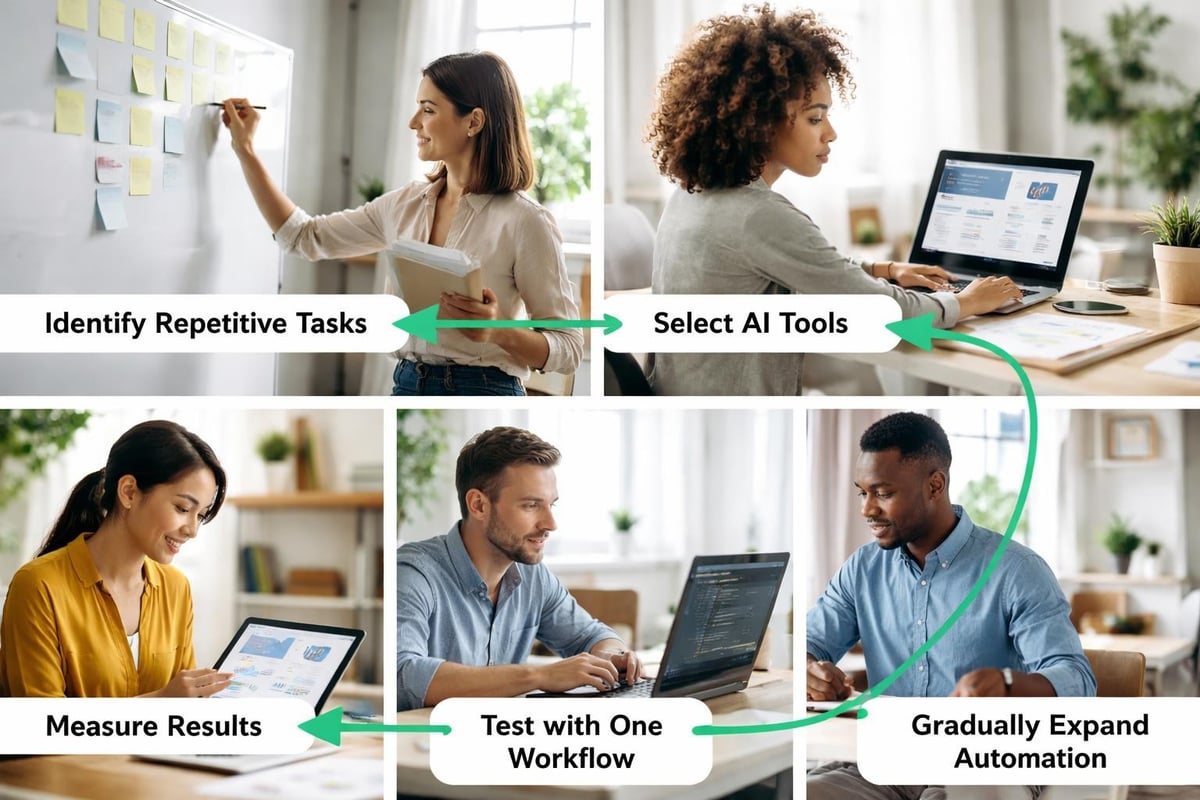
The biggest barrier to ai business automation isn't the technology itself. It's the fear of getting it wrong or wasting money on something complicated. Here's how to avoid those pitfalls:
- Start with one problem – Don't try to automate everything at once
- Choose tools with free trials – Test before you commit
- Look for plug-and-play solutions – Avoid anything requiring coding
- Check for good support – You'll want help when you need it
- Measure the results – Track time saved, not just features used
The concept of hyperautomation might sound intimidating, but it simply means connecting different automation tools to work together. Start small, and you can always expand later.
Common Concerns Addressed
"Will it make my business feel impersonal?"
Not if you do it right. AI handles the routine stuff so you have more time for personal touches where they matter. Your customers get faster responses AND more of your attention when it counts.
"What if the AI makes mistakes?"
You stay in control. Good automation tools let you review and approve important actions. Think of AI as a very capable assistant, not a replacement for your judgment. Understanding AI as a tool rather than a complete solution helps set realistic expectations.
"Is it really affordable for my size business?"
Many AI business automation tools cost less than hiring part-time help. Some start from £10-30 monthly, and the time you save often pays for the investment within weeks. Exploring AI costs can help you budget appropriately.
Sector-Specific Automation Ideas
Different businesses benefit from different types of automation. Here's what works particularly well across various sectors:
Retail businesses can automate inventory alerts, customer loyalty programmes, and personalised product recommendations. AI in retail has become particularly sophisticated yet accessible.
Service providers benefit most from scheduling automation, client communication, and invoice generation. A hairdresser, for instance, can automate booking confirmations, reminder texts, and even post-visit feedback requests.
E-commerce shops can use AI for customer service, abandoned cart recovery, and dynamic pricing. Real-world e-commerce AI applications demonstrate measurable improvements in conversion rates.
Building Your Automation Roadmap
Creating a practical plan doesn't require a consultant. Grab a notebook and answer these questions:
- Which tasks do you do every single day that feel repetitive?
- What customer requests could be handled by a smart system?
- Where do bottlenecks occur in your workflow?
- Which processes cause the most frustration?
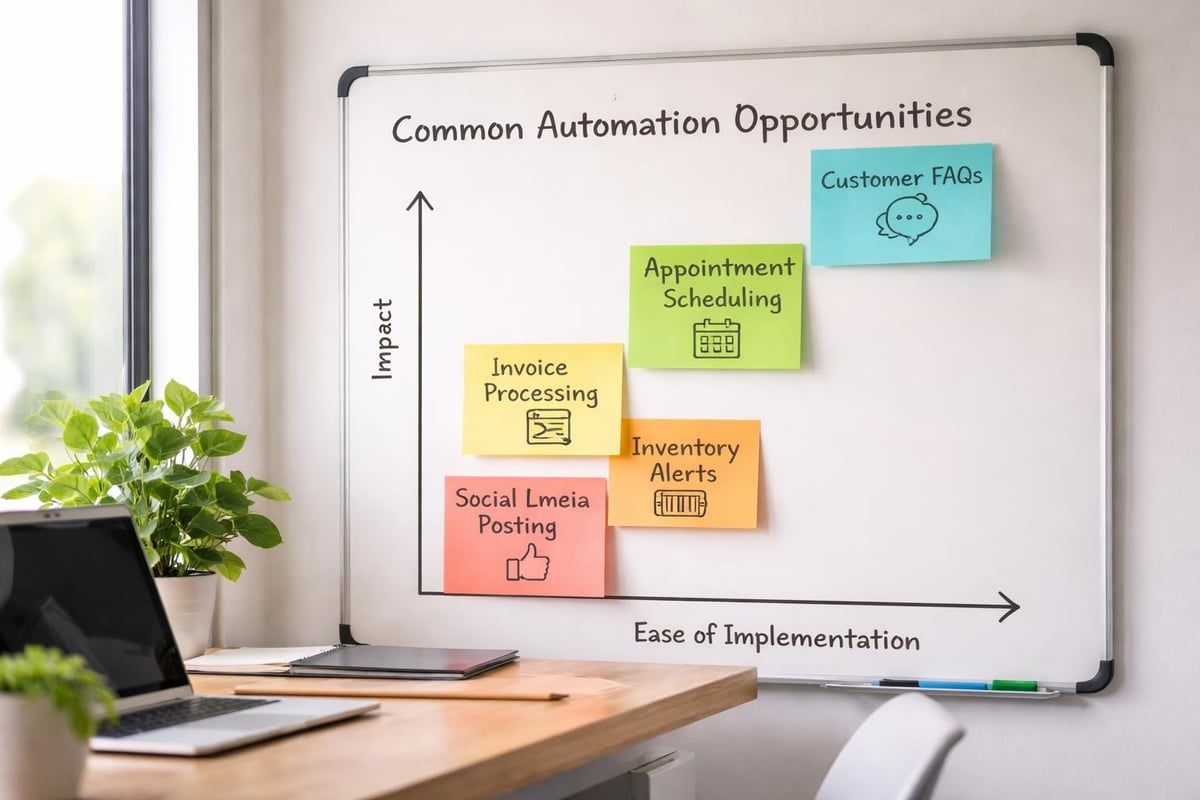
Your answers reveal your automation priorities. Most small businesses find that customer communication, scheduling, and basic data management offer the quickest wins.
The integration of robotic process automation with AI capabilities has made even complex workflows accessible to non-technical users. The key is matching the right tool to the right task.
Making AI Work for Your Business Culture
Technology should fit your business, not the other way around. If you pride yourself on personal service, use ai business automation to enhance that strength rather than replace it. Let AI handle the mundane tasks so you can spend more time actually talking to customers about their needs.
Consider how AI recommendations work when thinking about customer-facing automation. The best systems learn from your business and adapt to your unique style.
Your team (if you have one) might feel anxious about automation. Frame it honestly: these tools make their jobs easier, not obsolete. When your staff aren't drowning in admin work, they can focus on the interesting, creative parts of their roles.
AI business automation isn't about transforming your entire operation overnight. It's about reclaiming hours each week by letting smart tools handle the repetitive tasks that drain your energy. Whether you're ready to automate one process or several, the key is starting with what makes sense for your specific situation. AI 4 Small Business specialises in helping businesses like yours identify the right automation opportunities and implement practical solutions without the technical headaches or long-term dependency.