You've heard the buzz about artificial intelligence transforming businesses, and you're wondering if it's time to jump in. The problem? When you search for "ai where to start," you're bombarded with technical jargon, expensive enterprise solutions, and advice that seems designed for Silicon Valley startups rather than your local shop or service business. Let's cut through the noise and explore how small business owners can actually begin their AI journey without breaking the bank or needing a computer science degree.
Understanding What AI Actually Means for Your Business
Before diving into tools and platforms, it's worth understanding what AI really is in practical terms. Think of artificial intelligence as software that learns from patterns and makes decisions or predictions based on that learning. For your business, this might mean a chatbot that learns to answer customer questions, a tool that predicts which products will sell best next month, or software that automatically sorts your invoices.
The good news is that you don't need to understand the technical wizardry behind AI to use it effectively. Just like you don't need to know how an engine works to drive a car, you can benefit from AI without becoming a data scientist. When considering ai where to start, focus on identifying specific problems in your business that AI might solve.
Common Small Business Problems AI Can Solve
Let's get practical. Here are real challenges small business owners face daily that AI can address:
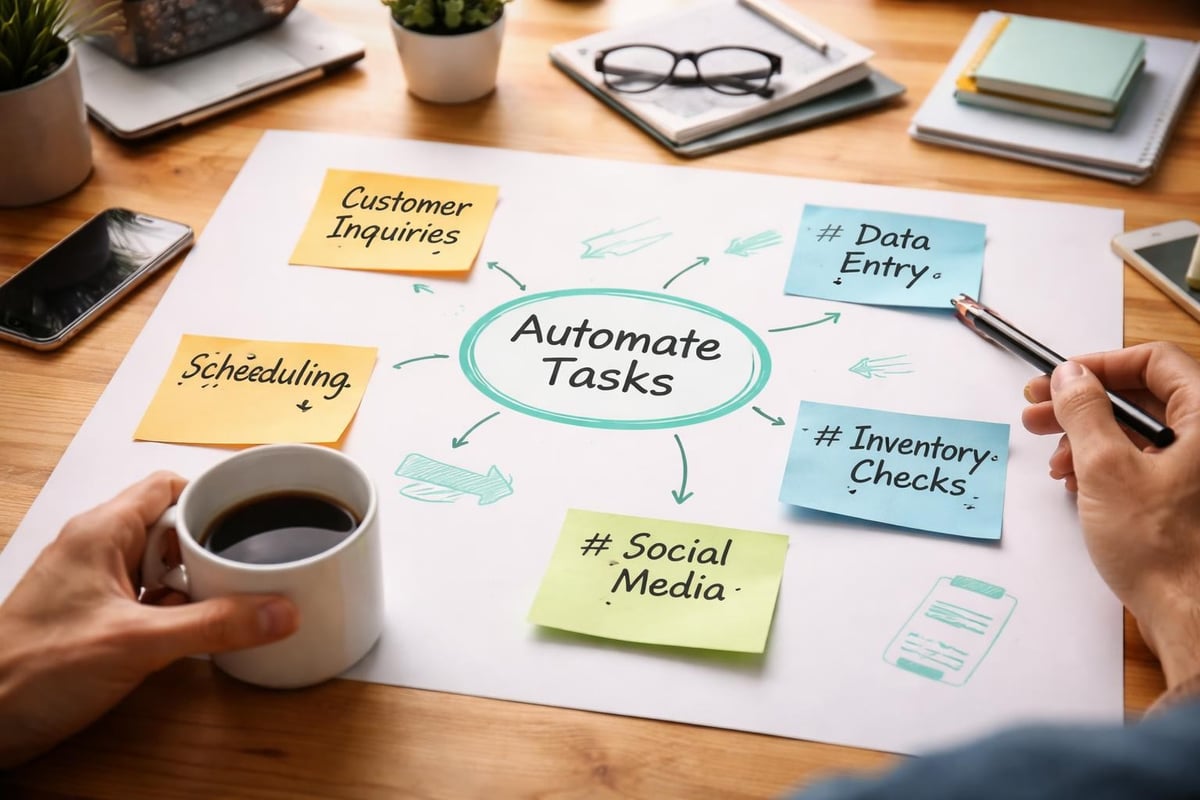
- Customer service overload: Answering the same questions repeatedly on email, phone, and social media
- Manual data entry: Spending hours transferring information between systems or typing up invoices
- Inventory guesswork: Not knowing which products to stock or when to reorder
- Marketing mysteries: Struggling to know what content to create or when to post
- Scheduling nightmares: Coordinating appointments, deliveries, or staff rotas manually
Each of these problems has accessible AI solutions that don't require technical expertise or enterprise budgets.
Your First Steps: Where to Actually Begin
So, ai where to start when you're ready to take action? Begin with observation, not implementation. Spend a week tracking how you spend your time. Which tasks feel repetitive? Where do bottlenecks occur? What questions do customers ask most often?
The Three-Question Framework
Before investing time or money in any AI solution, ask yourself these three questions:
- Is this task genuinely repetitive? AI excels at handling similar tasks repeatedly, not one-off creative projects.
- Do I have examples of the desired outcome? AI learns from patterns, so you need examples to teach it.
- Would saving time here create meaningful business value? Focus on high-impact areas first.
If you answer yes to all three, you've found a good starting point. Understanding common AI applications helps you recognise patterns across different business types.
Choosing Your First AI Tool
When deciding ai where to start with actual tools, think small and specific rather than comprehensive and complex. Here's a sensible progression:
| Stage | Focus | Example Tools | Investment Level |
|---|---|---|---|
| Beginner | Single task automation | Chatbot for FAQs, email responder | £0-50/month |
| Intermediate | Process improvement | Inventory prediction, scheduling assistant | £50-200/month |
| Advanced | Multiple workflows | Integrated automation across departments | £200+/month |
Starting with free or low-cost tools lets you experiment without risk. Many AI platforms offer free tiers specifically designed for small businesses to test the waters.
Accessible AI Tools for Different Business Functions
For customer service, consider chatbots that integrate with your existing website. These tools learn from your FAQ pages and past customer conversations. You don't need to code anything – most use simple interfaces where you type in questions and answers.
For marketing, AI writing assistants can help draft social media posts, email newsletters, or product descriptions. You provide the information and tone, and the AI helps structure and polish the content. This isn't about replacing your voice; it's about saving time on first drafts.
For administration, AI-powered bookkeeping tools can categorise expenses automatically and even extract information from receipts. Some connect to your bank account and learn your spending patterns, making monthly reconciliation far quicker.
The benefits of using AI become clear when you start with tools that address your specific pain points rather than trying to revolutionise everything at once.
Building Your AI Knowledge Without Getting Overwhelmed
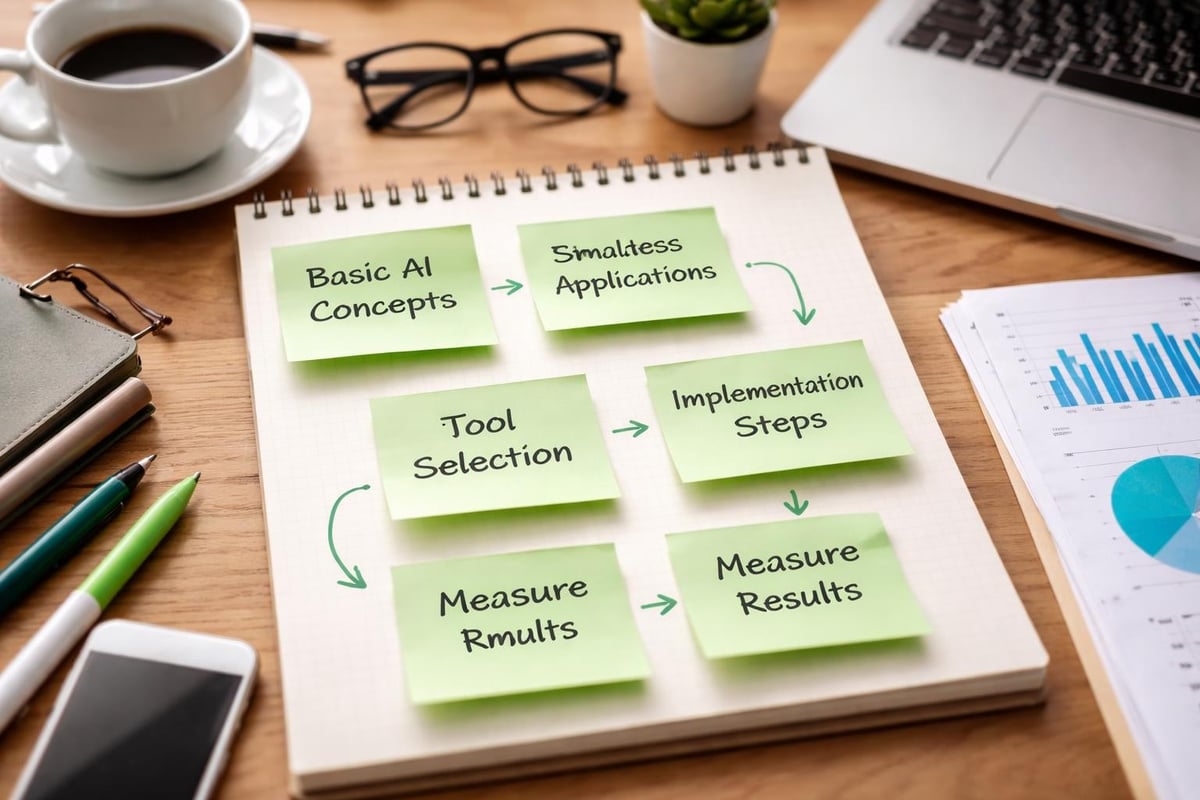
You don't need to become an AI expert, but understanding the basics helps you make smarter decisions. When exploring ai where to start with learning, choose resources designed for business owners, not developers.
Practical Learning Approaches
- Watch tutorial videos specific to tools you're considering – YouTube has thousands of walkthroughs
- Join small business communities where owners share their AI experiences and recommendations
- Start with one 20-minute learning session weekly rather than trying to absorb everything at once
- Focus on use cases, not theory – learn what AI can do, not how it works mathematically
Resources like the Field Guide to AI provide structured learning paths that start from absolute basics and progress logically. Similarly, IBM SkillsBuild offers free training specifically designed for non-technical users.
Implementation: Making It Happen Without Technical Staff
Here's where many small business owners get stuck when considering ai where to start with actual implementation. You don't have an IT department. You're already stretched thin. How do you actually make this work?
The Pilot Project Approach
Choose one small, contained project as your pilot. Perhaps it's automating appointment reminders or setting up a chatbot for your five most common customer questions. Keep it genuinely simple for your first attempt.
Week 1: Research and select your tool. Most offer free trials – take advantage.
Week 2: Set up the basics. Follow the platform's getting-started guide step by step.
Week 3: Test with a small group. Use it yourself first, then perhaps with a few trusted customers.
Week 4: Review and adjust. What worked? What confused people? Make tweaks based on real feedback.
This measured approach prevents the overwhelm that comes from trying to transform everything overnight. AI implementation strategies designed for small businesses emphasise this gradual, test-and-learn methodology.
Avoiding Common Pitfalls
When exploring ai where to start, knowing what to avoid is as valuable as knowing what to do. Here are mistakes that trip up many small business owners:
- Starting with the most complex problem: Begin with something straightforward, not your biggest headache
- Choosing tools because they're trendy: Select based on your actual needs, not what's fashionable
- Expecting perfection immediately: AI tools improve with use and feedback – give them time to learn
- Forgetting the human element: AI should support your customer relationships, not replace personal touches
- Neglecting data privacy: Ensure any tool you use complies with UK GDPR requirements
Real-world examples from AI case studies show both successful implementations and lessons learned from initial stumbles.
Measuring Success on Your Terms
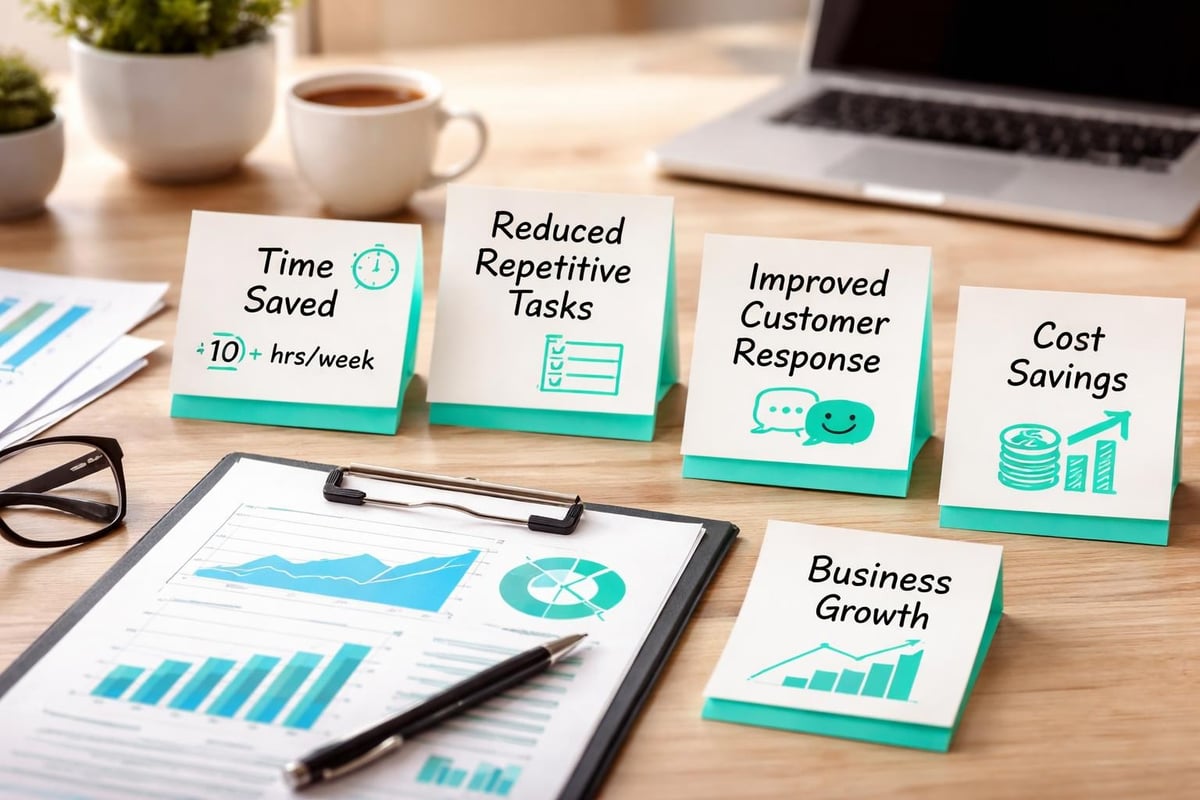
How do you know if your AI experiment is working? Forget complex analytics dashboards. Track simple, meaningful metrics:
- Time saved: How many hours per week did this free up?
- Customer feedback: Are customers happier with faster responses or better service?
- Error reduction: Are you making fewer mistakes in repetitive tasks?
- Revenue impact: Has this allowed you to serve more customers or create new offerings?
Set a three-month review point. If you're seeing positive results in at least two of these areas, you're on the right track. If not, either adjust your approach or try a different application. Understanding the costs and benefits of AI helps you evaluate whether your investment is worthwhile.
Expanding Beyond Your First Success
Once you've successfully implemented one AI tool, the question of ai where to start becomes "where to go next?" The key is building on what you've learned rather than starting from scratch each time.
Look for connections between systems. If your chatbot is working well, could it connect to your booking system? If your email automation is saving time, could it also update your customer database? These integrations often provide the biggest efficiency gains.
However, remember that avoiding AI dependency is crucial. You should always maintain the ability to run your business if a particular AI tool becomes unavailable or unsuitable.
Creating Your Six-Month AI Roadmap
Plan your AI adoption in manageable phases:
- Months 1-2: First pilot project, learn the basics
- Months 3-4: Refine initial tool, add one complementary tool
- Months 5-6: Connect tools, explore one new business area
This roadmap keeps you moving forward without overwhelming your capacity to absorb change.
Understanding ai where to start doesn't require technical expertise – it requires clarity about your business challenges and a willingness to experiment with practical solutions. Begin with one small, repetitive task, choose an accessible tool designed for non-technical users, and give yourself permission to learn as you go. If you're looking for guidance tailored to your specific business sector and challenges, AI 4 Small Business specialises in helping small business owners implement practical AI solutions without creating technical dependency. Our approach focuses on quick wins using affordable, accessible tools that enhance your capabilities rather than complicate your operations.