Hiring's always been a headache, hasn't it? Sifting through CVs, scheduling interviews, chasing candidates who ghost you at the last minute. For small businesses, it's even trickier because you're usually doing it whilst juggling everything else. But here's the thing: ai powered recruiting has become genuinely accessible in 2026, and it's not just for big corporations anymore. The right tools can slash your admin time, help you spot brilliant candidates you might've missed, and make the whole process feel less like pulling teeth. Let's look at how you can actually put this to work.
What AI Powered Recruiting Actually Does
Right, let's cut through the noise. AI powered recruiting isn't some magic wand that finds perfect employees overnight. What it does is automate the boring, time-consuming bits whilst helping you make smarter decisions.
Key functions you'll actually use:
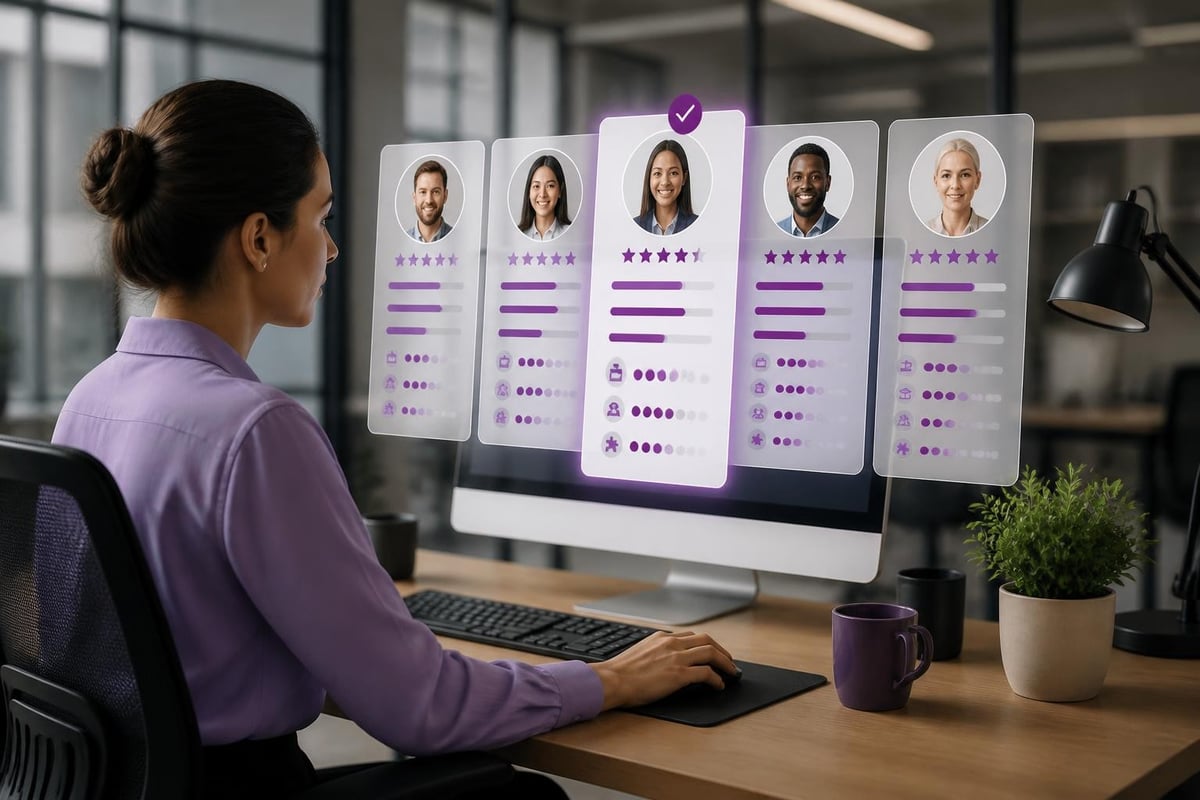
- CV screening that ranks candidates based on criteria you set
- Interview scheduling that handles the back-and-forth automatically
- Candidate communication through chatbots that answer common questions
- Skills assessment using automated tests and analysis
- Predictive matching that suggests candidates who fit your culture
The beauty of modern recruitment platforms is they've become modular. You don't need to implement everything at once. Start with the bit that hurts most-probably CV screening if you're drowning in applications, or scheduling if you're tired of email ping-pong.
Real-World Time Savings
Let's talk numbers that matter. A recruitment agency using basic ai powered recruiting typically cuts their CV review time by 70-80%. For a small business hiring two or three people a year, that might save you 15-20 hours per role.
Here's what that looks like in practice:
| Task | Manual Time | With AI | Savings |
|---|---|---|---|
| Initial CV screening (100 applicants) | 10 hours | 2 hours | 8 hours |
| Interview scheduling (10 candidates) | 3 hours | 30 mins | 2.5 hours |
| Candidate questions/comms | 5 hours | 1 hour | 4 hours |
| Total per role | 18 hours | 3.5 hours | 14.5 hours |
That's nearly two full working days back in your pocket. And you're probably doing a better job because you're not burnt out from admin.
Getting Started Without the Faff
You don't need a massive budget or technical expertise. The AI is already disrupting hiring in IT, but small businesses across all sectors can benefit from the same principles.
Step 1: Identify your bottleneck
Where does hiring hurt most? Be specific. Is it finding candidates, screening them, or managing the pipeline?
Step 2: Pick one tool to start
Choose something that solves your biggest pain point. Many platforms offer free trials, so you can test before committing. Look for tools that integrate with your existing systems rather than requiring a complete overhaul.
Step 3: Set clear criteria
AI is only as good as what you tell it. Define what makes a good candidate for your business-skills, experience, values, whatever matters to you. The more specific you are, the better your results.
Building effective process workflows is crucial here. Map out your current hiring process first, then identify which steps AI can handle.
The Human Bit Still Matters
Here's what people get wrong: they think ai powered recruiting means removing humans from the process. It doesn't. It means removing humans from the tedious bits so you can focus on what actually matters-having proper conversations with candidates and making thoughtful decisions.
Workday's acquisition of Paradox demonstrates how conversational AI can enhance candidate experience whilst saving time. But the final interview? The cultural fit assessment? That's still you.
Think of it like having a brilliant assistant who does all the prep work. They shortlist candidates, schedule meetings, answer basic questions. You focus on the strategy and the personal touch.
Practical Applications by Business Type
Different businesses need different approaches. Here's how ai powered recruiting plays out across sectors:
Retail and hospitality:
- Quick screening for seasonal hiring spikes
- Chatbots that handle high volumes of basic enquiries
- Automated skills testing for customer service roles
Trades and construction:
- Skills verification through certification scanning
- Availability matching for project-based hiring
- Safety qualification checks automated
Professional services:
- Portfolio and work sample analysis
- Cultural fit assessments through AI-powered questionnaires
- Reference checking automation
eCommerce:
- Remote interview capabilities with AI-assisted evaluation
- Multi-location hiring coordination
- Skills-based matching for technical roles
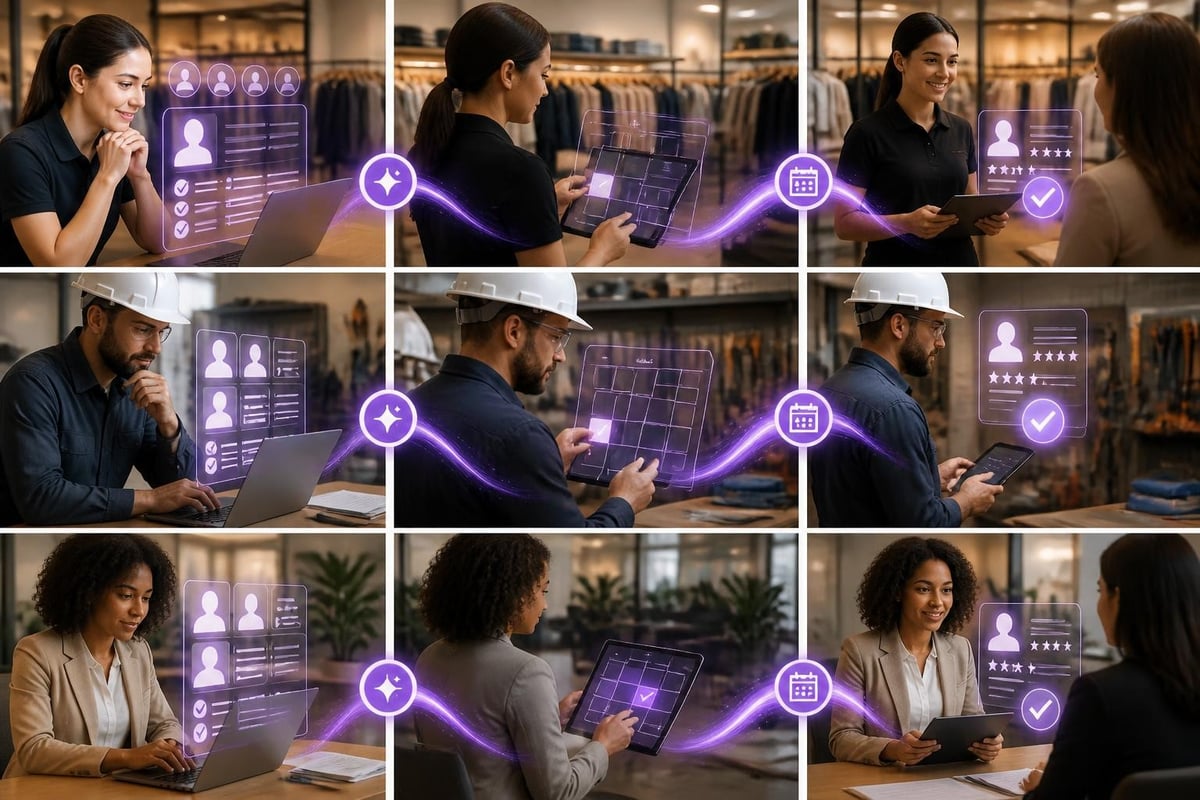
Creating a tailored workflow application for your specific sector ensures you're not forcing a generic solution onto your unique needs.
Common Pitfalls (And How to Dodge Them)
You'll make mistakes. Everyone does. Here's how to avoid the worst ones:
Over-automation: Don't let AI make final hiring decisions. It should recommend, not decide. Humans catch nuances that algorithms miss.
Ignoring candidate experience: Just because AI is conducting job interviews doesn't mean it should feel robotic. Personality and warmth still matter.
Poor setup: Rubbish in, rubbish out. If you feed AI vague criteria or biased data, you'll get poor recommendations. Take time to set it up properly.
No ongoing refinement: Your first attempt won't be perfect. Review results, adjust criteria, and improve continuously.
The most successful implementations of sales automation AI principles apply here too-start simple, measure results, and iterate based on real outcomes.
Measuring What Matters
How do you know if ai powered recruiting is actually working? Track metrics that connect to business outcomes, not vanity numbers.
| Metric | Why It Matters | Target Improvement |
|---|---|---|
| Time to hire | Faster filling = less disruption | 30-40% reduction |
| Quality of hire | Better candidates = better results | Measured at 90-day review |
| Cost per hire | Lower costs = more budget flexibility | 20-30% reduction |
| Candidate satisfaction | Happy candidates = better reputation | 4.5+ star rating |
| Hiring manager satisfaction | Easier process = more likely to use | 80%+ would recommend |
Don't just celebrate time savings. Make sure you're actually hiring better people who stay longer and perform well.
Key performance indicators for ai powered recruiting showing time to hire, quality of hire, cost savings, and candidate satisfaction trends
Building Long-Term Capability
The goal isn't to become dependent on AI tools-it's to build capability within your business. Understanding AI entrepreneurship means thinking strategically about how technology supports your growth without creating new dependencies.
Train your team to work alongside AI tools effectively. They should understand what the AI does, where it's reliable, and when human judgement is essential. This knowledge becomes a competitive advantage.
As your business grows, your ai powered recruiting system should scale with you. Start with basics now, add sophistication later. The infrastructure you build today supports tomorrow's hiring needs.
AI powered recruiting isn't about replacing your judgement-it's about getting back the time you're currently wasting on admin and making better decisions with less effort. Whether you're hiring your second employee or your twentieth, the right approach can transform how you build your team. AI 4 Small Business helps you identify which AI tools will actually work for your specific hiring challenges, implement them without the technical headaches, and measure the real impact on your business. Let's build a hiring process that works for you, not against you.