
The property sector's moving fast, and artificial intelligence and real estate are becoming proper mates. Whether you're running a small letting agency, managing a portfolio of commercial units, or working as an independent estate agent, AI's no longer some futuristic concept. It's here, it's practical, and it's already changing how property professionals operate day-to-day. The question isn't whether to use AI anymore-it's which problems to solve first and how to get started without the faff.
Where AI Actually Makes Sense in Property
Let's cut through the hype. Artificial intelligence and real estate work brilliantly together in specific, measurable ways that save time and improve accuracy. You don't need a massive tech budget or a development team.
Automating Property Valuations
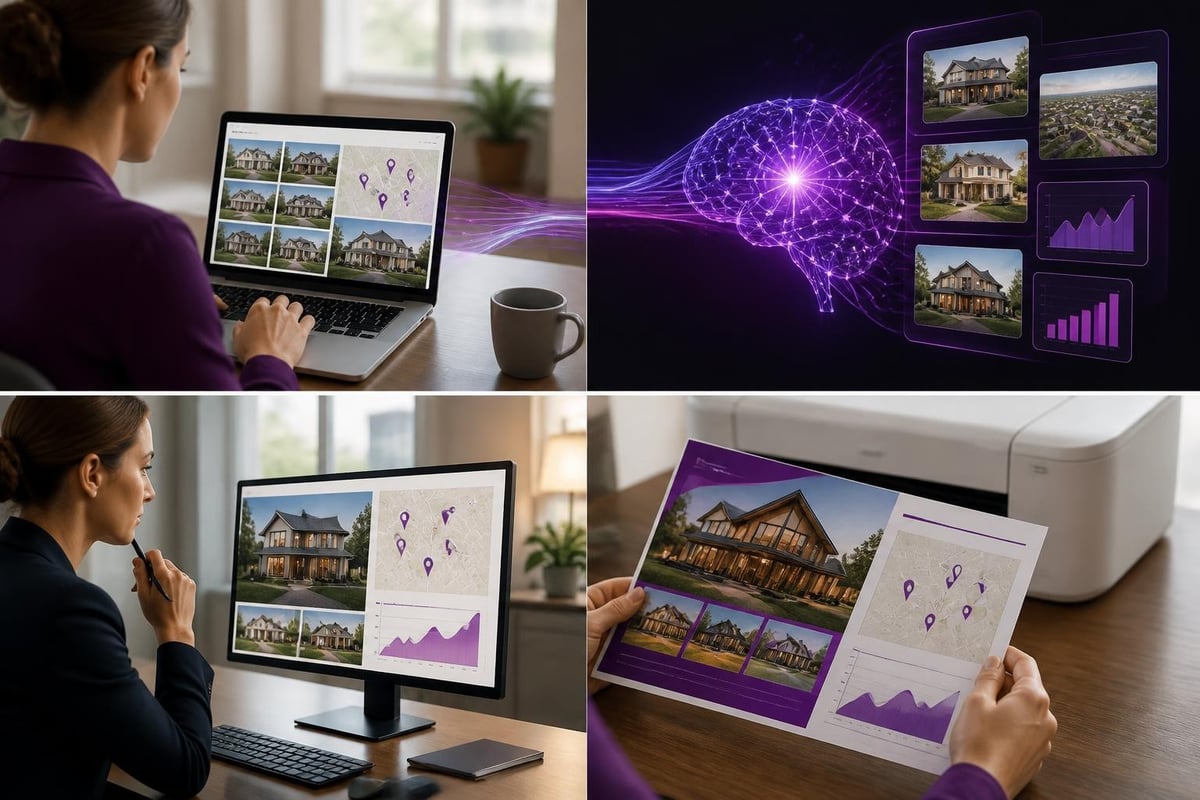
Traditional valuations eat up hours. You're comparing properties, adjusting for location factors, considering market trends, and compiling reports. Research into large language models for residential property appraisal shows AI can now process comparable sales data, analyse neighbourhood trends, and produce initial valuations in minutes rather than days.
Practical implementation looks like this:
- Feed your property data into an AI valuation tool
- The system analyses recent sales, property features, and local market conditions
- You receive a baseline valuation to refine with local knowledge
- Final reports get generated automatically
The key? AI handles the grunt work whilst you focus on the nuanced judgement calls that actually require human expertise.
Tenant Screening That Actually Works
If you're managing rentals, you know tenant screening's time-consuming and risky. Miss something, and you're dealing with late payments or property damage. Get too cautious, and you're accused of bias.
AI changes the game by:
- Analysing rental history patterns objectively
- Flagging financial red flags automatically
- Processing applications consistently
- Documenting decisions for compliance
The U.S. Department of Housing and Urban Development provides guidance on using AI for tenant screening whilst maintaining fair housing standards-essential reading if you're implementing these systems. The trick is building custom AI agents for small business that follow your specific criteria without introducing bias.
Real-World Applications for Small Property Businesses
Let's get specific about what artificial intelligence and real estate look like on the ground for smaller operators.
Lead Qualification and Follow-Up
Estate agents waste hours chasing dead-end enquiries. An AI system can:
| Task | Manual Approach | AI-Powered Approach |
|---|---|---|
| Initial enquiry response | 2-24 hours | Instant |
| Qualifying questions | 10-15 mins per lead | Automated |
| Appointment scheduling | Email back-and-forth | Self-serve booking |
| Follow-up reminders | Forgotten or manual | Automatic sequences |
Setting up AI for scheduling and customer follow-up doesn't require technical skills-just clarity about your process and the right tools.
Property Descriptions and Marketing Content
Writing compelling property descriptions is an art, but it's also repetitive. AI tools can generate initial drafts from property specifications, photos, and selling points. You then refine them with local flavour and personality.
A letting agent in Bournemouth recently told us they'd cut listing preparation time by 60% using this approach. The AI writes the bones, they add the soul.
Predictive Maintenance for Landlords
Commercial landlords and property managers are using AI to predict when building systems will fail. Instead of reactive repairs (expensive, disruptive), you're scheduling maintenance based on actual equipment data.
Benefits include:
- Lower repair costs through early intervention
- Reduced tenant complaints and vacancy periods
- Better budget forecasting
- Extended equipment lifespan

What the Industry Data Actually Shows
According to a National Association of Realtors survey on AI adoption, property professionals are increasingly using AI tools to enhance client service rather than replace human interaction. That's the sweet spot-using artificial intelligence and real estate together to do more with your existing resources.
EY's analysis of generative AI in commercial real estate highlights portfolio planning and acquisition research as major use cases. Even if you're operating at a smaller scale, these principles apply: AI processes data faster, spots patterns you'd miss, and frees you up for relationship-building.
Learning from Others' Mistakes
Not every AI implementation succeeds. The analysis of Zillow's automated valuation failures provides crucial lessons: don't over-rely on models, maintain human oversight, and understand your market's quirks.
For small property businesses, this means:
- Start with one process, not everything at once
- Keep human review in critical decisions
- Test thoroughly before going live
- Build expertise gradually rather than diving in blind
Understanding different types of agents in AI helps you choose the right approach for your specific needs.
Making AI Work Without the Headaches
Here's what actually matters when you're implementing artificial intelligence and real estate solutions in a small business:
Choose tools that integrate with what you've got. Switching your entire tech stack is expensive and risky. Look for AI that plugs into your existing CRM, property management system, or website.
Focus on time-savers first. Where are you or your team spending hours on repetitive work? That's your starting point. Could be writing descriptions, could be answering the same enquiries, could be chasing invoice payments.
Measure the impact. Track hours saved, conversion rates improved, or errors reduced. Understanding AI automation ROI keeps you focused on what actually delivers value.

Getting Started Without Getting Overwhelmed
The Knight Frank report on technology in real estate forecasts continued growth in analytics and automation. But forecasts don't pay your bills-practical implementation does.
If you're wondering whether to DIY or get help, this honest checklist walks through what you actually need. Sometimes the fastest route is working with someone who's done it before and knows the pitfalls.
The relationship between artificial intelligence and real estate isn't replacing agents, landlords, or property managers. It's removing the admin burden so you can focus on what you do best-understanding your market, building relationships, and closing deals.
For property professionals in 2026, the competitive advantage isn't having AI. It's knowing exactly which processes to automate, which tools to use, and how to implement them without disrupting your business. That's where the real opportunity lies.
The property sector's transformation through AI is happening now, and smaller operators who move first gain the advantage. Whether you're managing rentals, selling properties, or running a commercial portfolio, the right AI implementations deliver measurable time savings and better outcomes. AI 4 Small Business helps property professionals identify high-impact automation opportunities and implement practical AI solutions without the jargon or complexity-just real tools that work within your existing business.