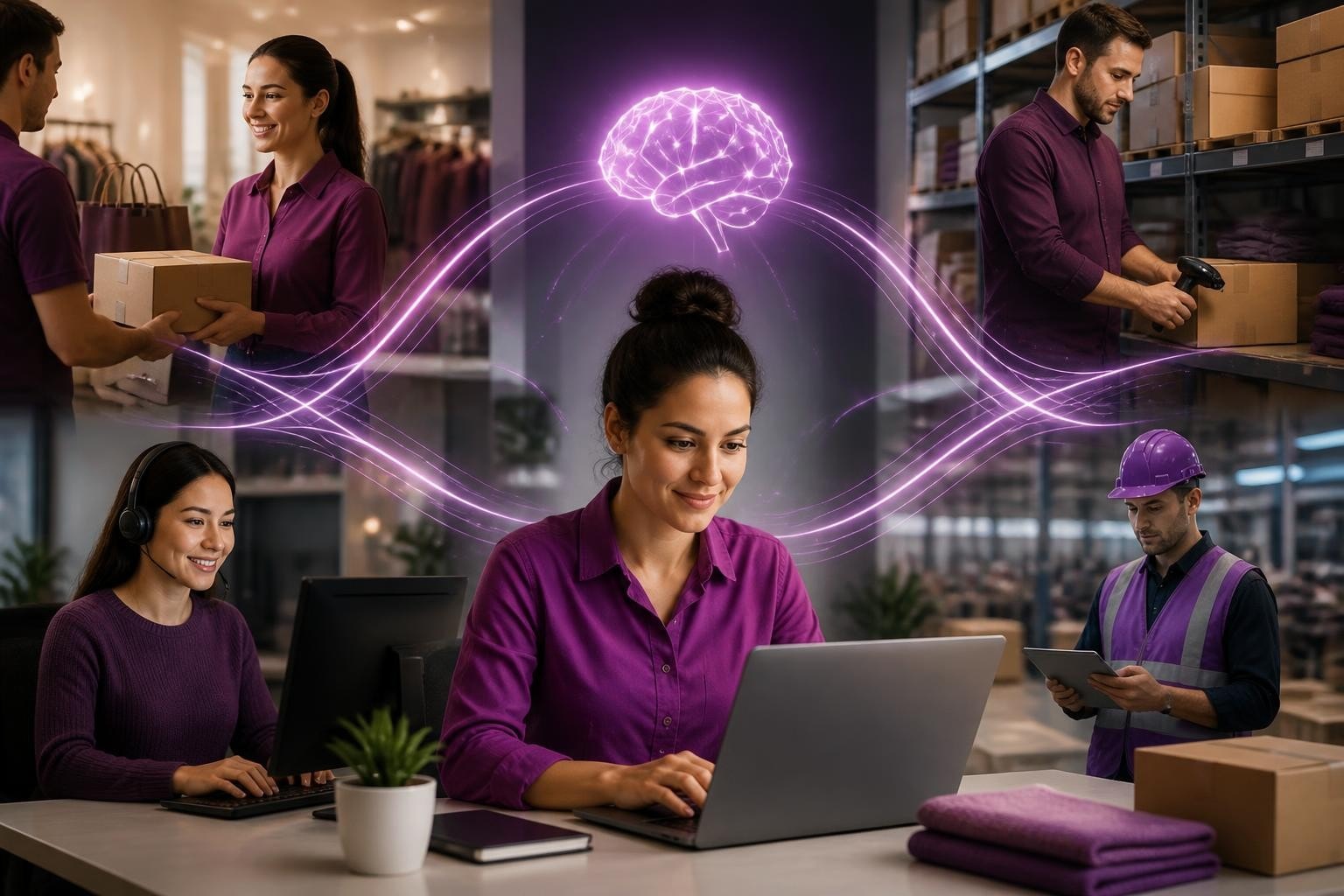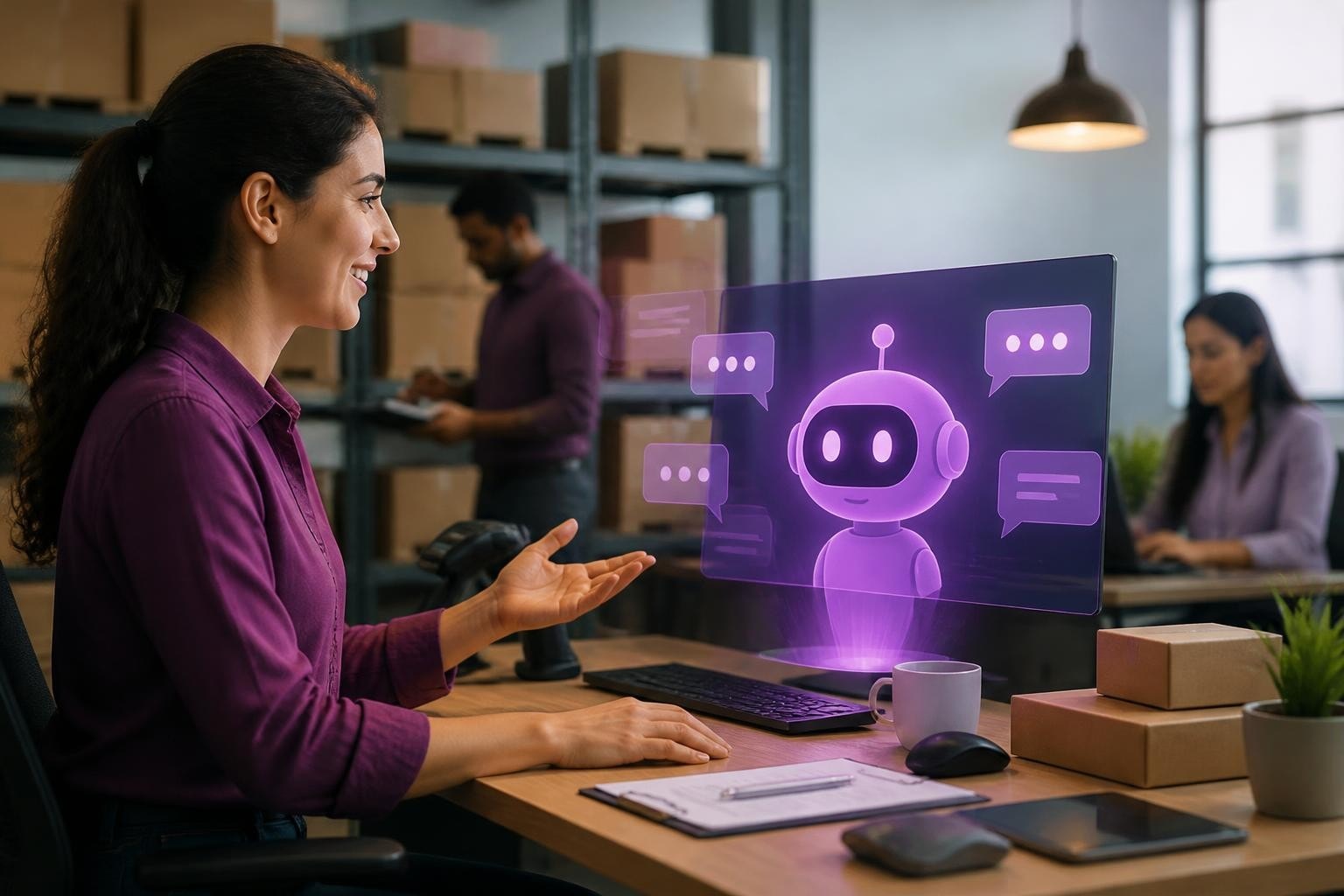
If you're running a small business in 2026, you've probably heard that ERP systems are getting smarter. Enterprise Resource Planning software has been around for decades, helping businesses manage everything from inventory to invoicing. But here's what's changed: artificial intelligence erp systems are now bringing automation and insights that were once reserved for massive corporations down to a level that actually makes sense for smaller operations. Instead of just storing data, these systems can now predict what you'll need, automate repetitive tasks, and flag problems before they become expensive headaches.
What Makes Artificial Intelligence ERP Different
Traditional ERP software is essentially a fancy database that connects your different business functions. You enter data, it gets stored, and you can pull reports when you need them. Pretty useful, but still quite manual.
Artificial intelligence erp takes this several steps further by actively learning from your data patterns. It doesn't just sit there waiting for you to ask questions. Instead, it spots trends, makes recommendations, and can even execute routine tasks without human intervention.
Key capabilities that set AI-powered ERP apart:
- Predictive analytics that forecast demand, cash flow, or maintenance needs
- Automated data entry and reconciliation across systems
- Smart routing of tasks and approvals based on learned workflows
- Natural language queries (ask questions in plain English)
- Anomaly detection for fraud, errors, or operational issues
Research from Deloitte on AI in ERP highlights how these capabilities are reshaping the concept of an "autonomous enterprise" where routine decisions happen automatically.
Real Benefits for Small Business Operations
For a small retailer, this might mean the system automatically reorders stock when it predicts you're about to run low based on seasonal trends and current sales velocity. For a trades business, it could flag when a regular supplier's pricing suddenly jumps, or when a project is trending over budget before you've already blown through your margin.

Practical Applications Across Different Sectors
The beauty of artificial intelligence erp is how it adapts to different business models. A custom AI agent approach means the system learns your specific workflows rather than forcing you into rigid processes.
Retail and eCommerce
| Function | Traditional ERP | AI-Enhanced ERP |
|---|---|---|
| Stock Management | Manual reorder points | Predictive restocking based on trends |
| Pricing | Static or manual adjustments | Dynamic pricing based on demand/competition |
| Customer Service | Ticket logging | Automated routing and suggested responses |
For online shops, the system can integrate with your website, automatically adjusting product recommendations based on what's actually converting, not just what you think should sell.
Professional Services and Recruitment
Professional services firms waste hours on timesheets, project tracking, and resource allocation. An artificial intelligence erp system can automatically categorise time entries, suggest which consultant to assign to incoming work based on skills and availability, and predict project profitability in real-time.
Recruitment agencies particularly benefit from AI-driven candidate matching and automated follow-ups. The system learns which placements tend to stick and which candidates ghost, helping you focus energy where it'll actually pay off.
Trades and Construction
For trades businesses, job costing is everything. AI-enhanced ERP can track actual versus estimated costs as jobs progress, flagging overruns early. It can also optimize scheduling by learning how long specific jobs actually take (versus how long you think they take) and factor in travel time, parts availability, and team skills.
According to Harvard Business Review's research on AI-driven process redesign, businesses that embed AI into core processes see significantly better outcomes than those treating AI as a bolt-on feature.
Getting Started Without the Overwhelm
Here's where most small businesses get stuck: they think implementing artificial intelligence erp means ripping out everything and starting from scratch. That's rarely the case in 2026.
A practical implementation roadmap:
- Audit your current pain points - where are you manually doing things that feel repetitive?
- Identify your data sources - what systems do you currently use and where does information live?
- Start with one process - pick something specific like purchase orders or invoice processing
- Connect rather than replace - many AI tools can layer on top of existing systems
- Measure the impact - track time saved and errors reduced, not just "we have AI now"
The World Economic Forum's guidance on enterprise AI integration emphasizes avoiding silos. Your AI capabilities should connect across functions, not create new isolated tools that don't talk to each other.
What to Look For in an AI ERP Solution
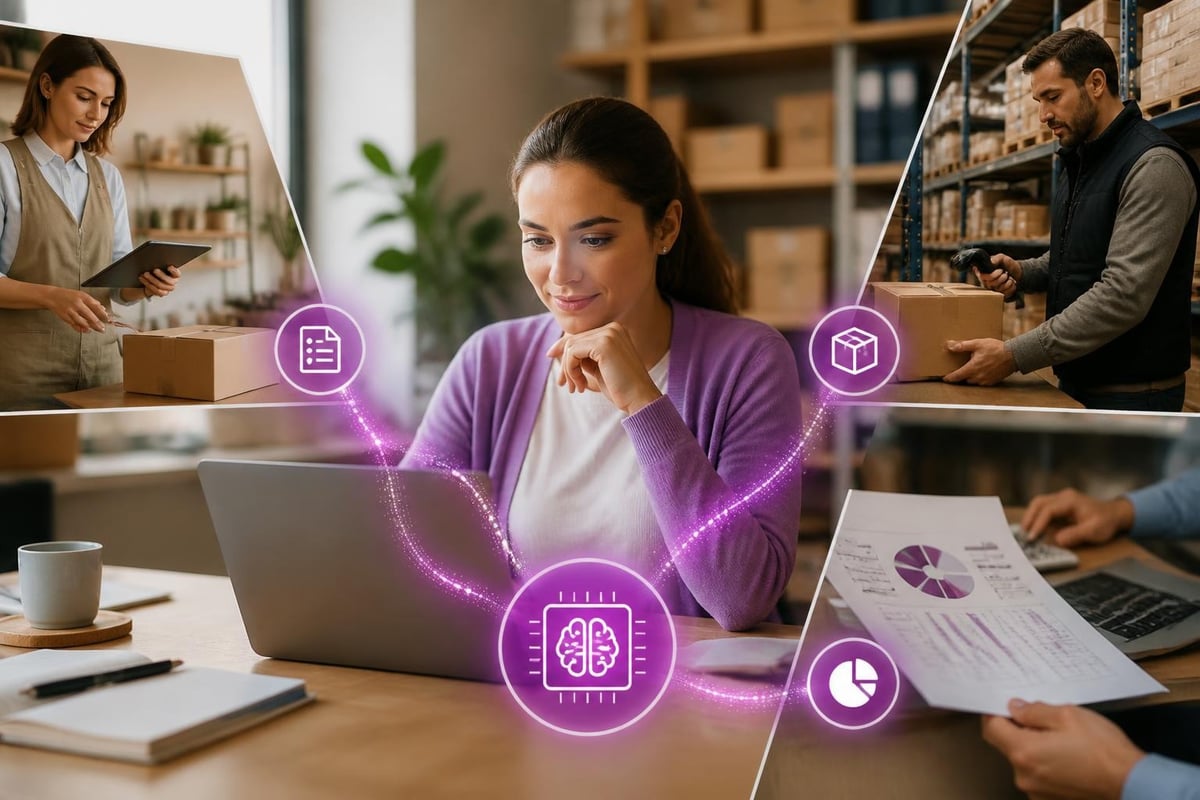
Not all artificial intelligence erp systems are created equal, and plenty of vendors are slapping "AI-powered" labels on fairly basic automation. Here's what actually matters for small businesses:
- Pre-built connectors to tools you already use (accounting software, CRM, eCommerce platforms)
- Transparent AI decisions - you should be able to see why the system made a recommendation
- Incremental costs that scale with usage, not massive upfront licenses
- Training and support that doesn't assume you have an IT department
- Data privacy that keeps your business information secure and compliant
A systematic review published in Springer identified predictive analytics, process automation, and generative AI as the three dominant use cases in modern ERP systems. Make sure any solution you're considering actually delivers on these capabilities with evidence, not just marketing speak.
Avoiding Common Pitfalls
The biggest mistake? Buying more capability than you need. You don't need to automate everything on day one. Start with the processes that are genuinely costing you time or money, prove the value, then expand.
Another trap is assuming the AI will just work without any input from your team. These systems learn from your business, which means you need to feed them quality data and occasionally correct their assumptions. Think of it more like training a new employee than installing a photocopier.
Building Capability, Not Dependency
This is crucial: working with AI consultants who focus on small business outcomes means you're building internal capability, not just outsourcing to a black box.
Your team should understand what the AI is doing and why. When someone leaves or a system changes, you shouldn't be completely stuck. The best artificial intelligence erp implementations make your team smarter and more efficient, not redundant.

Questions to ask potential providers:
- How will our team learn to use and trust the system?
- What happens if we need to change providers or bring functions in-house?
- Can we export our data and AI models if needed?
- Who owns the insights and patterns the AI discovers about our business?
The technical architecture matters too. Research published in IEEE Access on generative AI in ERP provides useful frameworks for understanding implementation challenges and solution architectures, particularly if you're working with developers or technical partners.
Measuring Real Impact
Forget vanity metrics. The point of artificial intelligence erp isn't to say you've got AI, it's to improve your business outcomes. Track things like:
- Hours saved per week on manual data entry and reconciliation
- Reduction in stock-outs or overstock situations
- Improvement in on-time project delivery or invoice accuracy
- Decrease in late payments or compliance issues
- Increase in capacity without adding headcount
For an eCommerce business, maybe it's that you can handle 30% more orders without hiring another warehouse person. For a recruitment firm, perhaps it's placing candidates 20% faster because the AI surfaces the best matches immediately.
The work published in Management Science Advances on AI-ERP integration emphasizes decision-support capabilities and governance. Your AI should help you make better decisions faster, with clear accountability when things go wrong.
Artificial intelligence erp systems offer small businesses genuine opportunities to work smarter, reduce admin burden, and compete more effectively in 2026. The key is approaching implementation practically, focusing on specific outcomes rather than technology for its own sake. If you're ready to explore how AI can transform your business operations without the complexity or cost of enterprise solutions, AI 4 Small Business specializes in practical, results-driven AI implementation that delivers measurable impact fast. We'll help you identify the right opportunities, build the right tools, and create long-term capability within your business.