You've probably got security cameras around your business. Maybe they're recording 24/7, storing footage you'll never watch unless something goes wrong. But what if those cameras could actually work for you, spotting trends, counting customers, alerting you to problems before they escalate? That's exactly what ai powered video analytics delivers. It's not just about watching-it's about understanding what's happening in your business, extracting valuable insights, and making smarter decisions based on real data.
What Actually Is AI Powered Video Analytics?
Let's strip away the technical jargon. AI powered video analytics uses machine learning algorithms to analyse video feeds automatically. Instead of a person watching hours of footage, the AI does the heavy lifting-detecting objects, tracking movement, recognising patterns, and flagging anything unusual.
Think of it like having an incredibly patient assistant who never gets tired, never looks away, and can spot things you'd miss. The technology's been around in various forms for years, but recent advances in computer vision and edge computing have made it genuinely accessible and practical for smaller operations.
How It Works in Practice
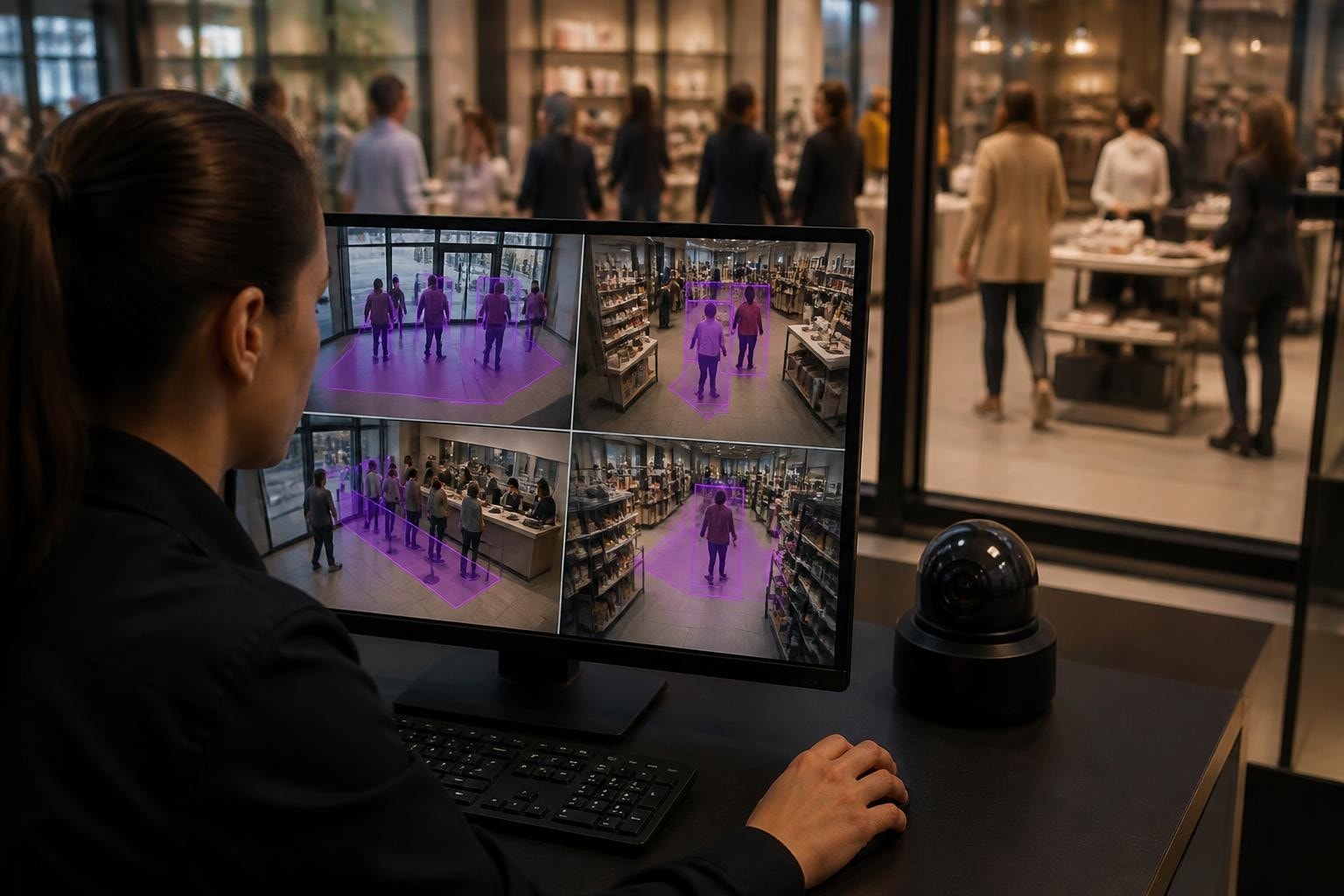
The system processes video frames in real-time or retrospectively, identifying specific elements you care about:
- People counting: How many customers walked through your door between 2pm and 4pm?
- Queue detection: Are customers waiting too long at checkout?
- Security monitoring: Has someone entered a restricted area after hours?
- Behaviour analysis: Which shop displays get the most attention?
These insights come from models trained on millions of images. Recent research into edge-AI video analytics shows that modern systems can run directly on cameras or local servers, meaning you're not dependent on cloud connectivity or paying ongoing processing fees.
Real-World Applications for Small Businesses
Right, enough theory. Where does this actually help your business?
Retail and Customer Experience
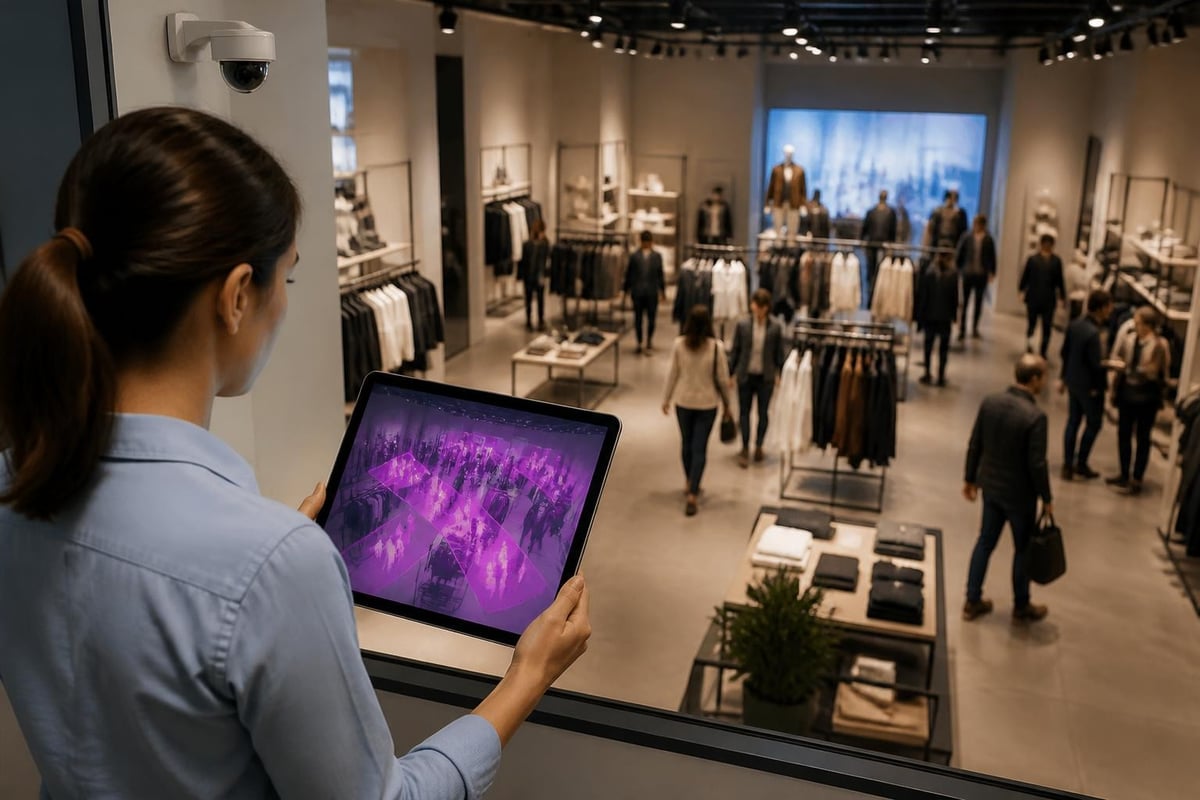
For shops and showrooms, understanding customer behaviour is gold. AI powered video analytics can tell you which areas of your store attract attention and which get ignored. You'll know peak times down to the hour, helping you schedule staff properly.
One café owner we worked with discovered their queue times spiked between 8:15 and 8:45am, but they'd been scheduling extra staff from 9am. A simple shift change based on computer vision retail analytics data improved service and reduced complaints immediately.
Security That Actually Prevents Issues
Traditional CCTV is reactive-you check it after something's happened. Smart video analytics can alert you the moment someone's in your yard after closing time, or when a delivery entrance is left open. It's proactive security.
| Traditional CCTV | AI Powered Video Analytics |
|---|---|
| Records everything | Analyses and alerts on specific events |
| Review after incidents | Real-time notifications |
| Storage-heavy | Focuses on relevant moments |
| Manual monitoring required | Automated 24/7 surveillance |
The NIST video analytics programme provides standardised benchmarks for evaluating these systems, which matters when you're choosing a solution that actually works rather than just marketing hype.
Operational Efficiency
Here's where it gets interesting for trades and service businesses. Construction sites can use video analytics to monitor whether workers are wearing proper safety equipment, track vehicle movements, or verify that deliveries happened when contractors said they did.
A logistics firm reduced disputed delivery claims by 60% simply by implementing automated proof-of-delivery timestamps from their warehouse cameras. The system captured and logged every collection and drop-off without any manual input.
The Privacy and Ethics Question
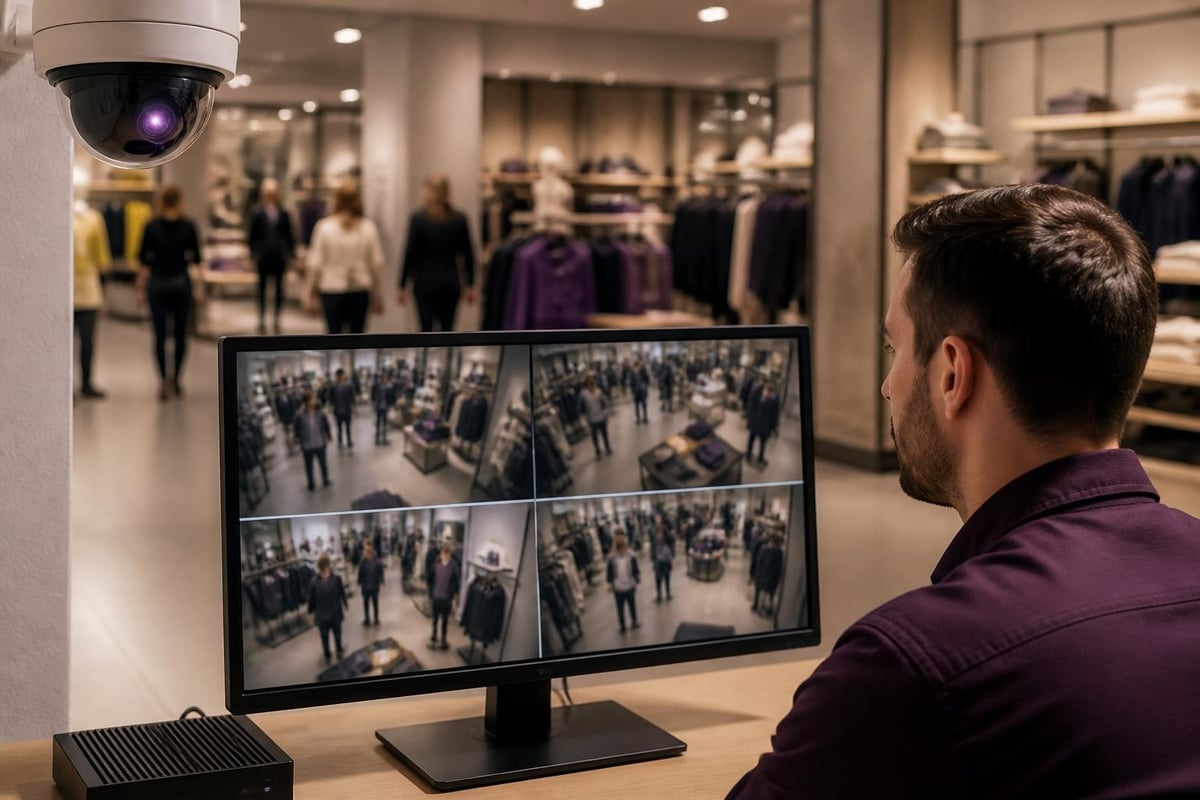
Let's address the elephant in the room. Monitoring people-whether customers or staff-raises legitimate concerns. You've got to get this right, both legally and ethically.
The OECD's workplace AI guidance emphasises transparency and proportionality. If you're monitoring staff, they need to know what's being tracked and why. It's not just good practice-it's increasingly a legal requirement under UK data protection laws.
Key principles to follow:
- Be transparent about what you're monitoring and why
- Collect only the data you actually need
- Store footage securely and delete it when no longer required
- Don't use the technology to micromanage individual performance
- Consider anonymisation where possible (counting people without identifying them)
Many modern systems can detect and track people without storing identifiable images. You get the insights without the privacy headaches. Much like how custom AI agents can be designed with privacy safeguards from day one, video analytics can be implemented responsibly.
Choosing the Right Solution
Not all systems are created equal. Some require hefty upfront investment in specialised hardware. Others work with your existing cameras and run the AI processing in the cloud or on a local server.
Questions to Ask Vendors
- Does it work with my current camera setup or do I need new hardware?
- Where does the processing happen-cloud, edge, or local server?
- What metrics and insights will I actually receive?
- How are alerts delivered and can I customise them?
- What are the ongoing costs beyond initial setup?
The NIST evaluation infrastructure for video analytics provides detailed guidance on performance metrics, which helps separate genuinely capable systems from those that sound impressive but underdeliver.
Implementation: Practical First Steps
You don't need to transform your entire operation overnight. Start with one clear use case where video analytics solves a specific problem you're currently handling manually or not addressing at all.
Step one: Identify your biggest pain point. Is it security, customer service, operational inefficiency, or compliance?
Step two: Define what success looks like. "Reduce checkout queue times by 20%" is measurable. "Improve customer experience" isn't.
Step three: Test with existing infrastructure if possible. Many platforms offer trial periods.
Step four: Measure actual impact against your baseline. If it's not delivering the results you need, adjust or move on.
This mirrors the approach we take with all AI implementation projects-start focused, measure results, scale what works.
Getting the Most From Your Investment
Once your system's running, the real value comes from acting on the insights. It's like having a consultant who never sleeps, constantly feeding you data. But data without action is just expensive storage.
Set up regular reviews-weekly or monthly depending on your business-to look at the patterns emerging. You'll spot things you'd never notice otherwise. Seasonal variations in customer behaviour. Staff allocation mismatches. Security vulnerabilities during shift changes.
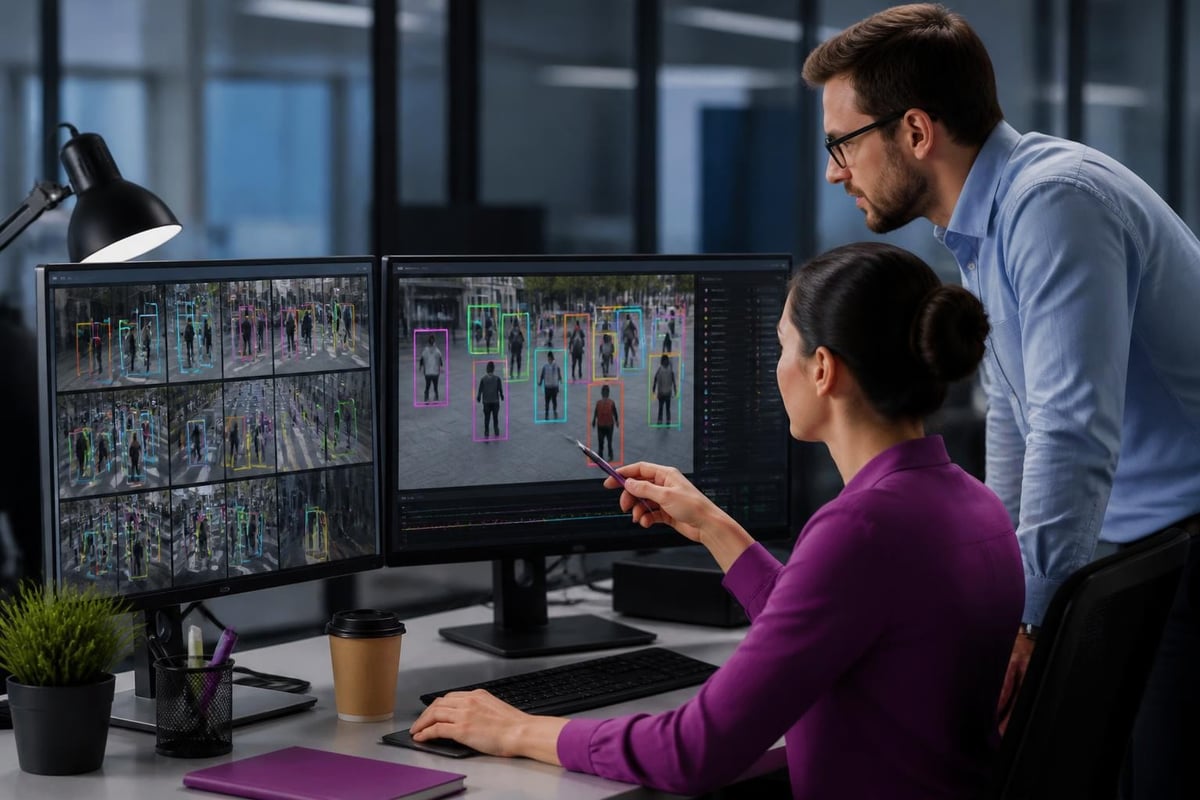
The benchmark datasets for multi-object tracking that researchers use to improve these systems show just how sophisticated the technology's become at following complex scenarios with multiple people and objects simultaneously.
AI powered video analytics turns passive cameras into active business intelligence tools. When implemented thoughtfully, it delivers measurable improvements in security, efficiency, and customer experience without requiring massive investment or technical expertise. If you're ready to explore how video analytics or other AI solutions could work specifically for your business, AI 4 Small Business helps you identify the right opportunities and implement systems that deliver real results, not just fancy dashboards. We'll work with you to find practical applications that genuinely save time and improve outcomes.