
Hiring's a nightmare when you're running a small business. You're already juggling ten different things, and then you need to sift through 200 CVs for a single position. Most of them aren't even close to what you need. The good news? AI recruitment technologies are no longer just for massive corporations with dedicated HR teams. They're accessible, affordable, and frankly, they're changing how small recruitment agencies and businesses with regular hiring needs actually work. Let's talk about what's genuinely useful and how you can put it to work without the usual tech headaches.
What AI Recruitment Technologies Actually Do
Right, so what are we talking about here? AI recruitment technologies are tools that automate the boring, time-consuming bits of hiring whilst helping you make better decisions. They're not replacing human judgment, they're just clearing the decks so you can focus on the stuff that matters.
The Core Functions That Save Time
Here's what these tools handle brilliantly:
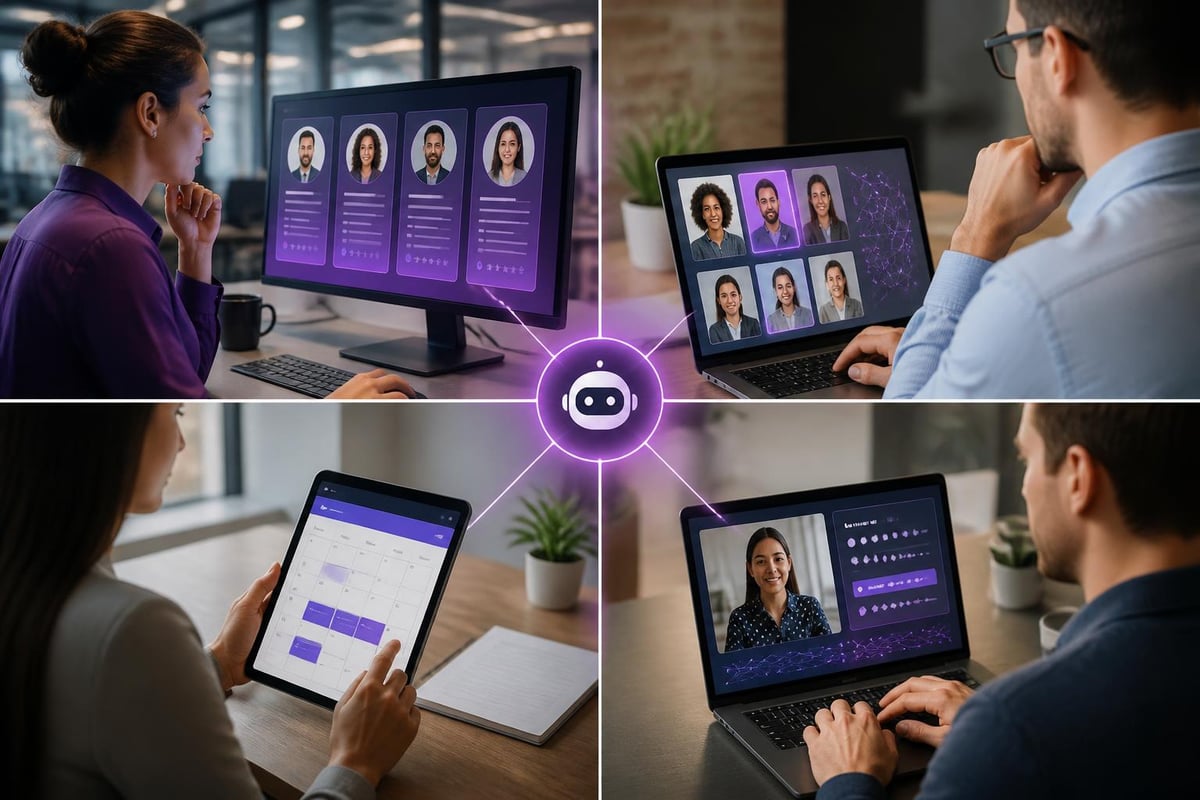
- CV screening and parsing that pulls out relevant experience, skills, and qualifications in seconds
- Automated candidate matching against your job requirements, ranking applicants by fit
- Interview scheduling that removes the endless back-and-forth emails
- Assessment automation using standardised tests and structured evaluation criteria
- Candidate communication through chatbots and automated updates
The Talent Acquisition and Recruiting AI (TARAI) Index tracks over 100 HR technologies now using AI, which shows just how mainstream this has become. But you don't need all 100. You need the two or three that solve your specific problems.
Practical Applications for Small Businesses
Let's get specific. If you're a small recruitment agency placing candidates for trades or professional services, here's what actually works in 2026.
CV Screening That Doesn't Miss Good People
Traditional keyword matching is rubbish. Someone might be perfect for your electrician role but uses slightly different terminology. Modern AI recruitment technologies understand context and transferable skills. They spot that "electrical installation experience in commercial settings" matches your "qualified electrician for office fit-outs" requirement.
You can set this up in an afternoon. Most platforms let you feed in examples of great past hires, and the AI learns what "good" looks like for your specific needs. AI candidate sourcing has evolved massively, focusing on outcomes rather than just ticking boxes.
Interview Scheduling Without the Headache
Anyone who's tried coordinating interviews between three busy people knows it's like herding cats. AI scheduling tools connect to calendars, suggest times that work for everyone, send reminders, and handle rescheduling requests. That's easily 3-4 hours saved per role you're filling.
Choosing the Right Tools Without Overspending
Here's where small businesses often go wrong: they either avoid AI completely or buy something way too complicated. Neither's helpful.
| Tool Type | Best For | Typical Monthly Cost | Setup Time |
|---|---|---|---|
| CV Parsing | Agencies handling 10+ roles monthly | £50-150 | 1-2 hours |
| Matching Platforms | Regular hiring across similar roles | £100-300 | 2-4 hours |
| Interview Schedulers | Any business hiring regularly | £20-80 | 30 minutes |
| Assessment Tools | Technical or skills-based roles | £80-200 | 2-3 hours |
The key's working out where you're losing the most time. If you spend six hours a week reading CVs that aren't relevant, start there. If coordination's your problem, fix that first. IBM's research on AI in recruitment shows the biggest efficiency gains come from targeting specific bottlenecks, not implementing everything at once.
Integration Matters More Than Features
Fancy features are pointless if the tool doesn't talk to your existing systems. Check whether it integrates with your applicant tracking system (ATS), email platform, and calendar before you commit. Most modern ai recruitment technologies offer API connections or native integrations with popular platforms.
The Data Protection Bit You Can't Ignore
Right, this isn't the fun part, but it's crucial. The UK's Information Commissioner's Office has audited AI recruitment tools and found some serious data protection issues. You need to know:
- Where candidate data's stored and who can access it
- How long data's retained and your deletion processes
- Whether the AI's making automated decisions without human oversight
- If candidates can request explanations for rejection decisions

This isn't about paperwork for the sake of it. Get it wrong and you're looking at ICO fines that could genuinely hurt a small business. Most reputable platforms are GDPR-compliant, but verify it during demos.
Implementation That Actually Works
You're not building something from scratch here. The implementation process for ai recruitment technologies should be measured in days, not months.
Week One: Setup and Testing
- Connect your data sources (existing CVs, job descriptions, calendar)
- Configure basic parameters (deal-breaker requirements, nice-to-haves)
- Run test batches with historical candidates you already placed successfully
- Adjust settings based on how well it matches your known good hires
- Train your team on the basics (usually 1-2 hours max)
Week Two: Live Running with Oversight
Start using it on real roles but don't trust it blindly yet. Review its recommendations, see where it's spot-on and where it's missing nuance. This learning phase typically takes 2-3 weeks before you're comfortable letting it handle first-pass screening independently.
Forbes highlights how tech advances are powering recruiting processes, but the implementation approach matters as much as the technology itself. Understanding AI as a tool rather than a magic solution keeps expectations realistic.
Measuring What Matters
You need to know if this is actually working. Track these metrics before and after implementing AI recruitment technologies:
Time Metrics:
- Hours spent on CV review per role
- Days from posting to shortlist
- Interview scheduling time
Quality Metrics:
- Percentage of interviewed candidates who were genuinely suitable
- Offer acceptance rates
- First-year retention of AI-assisted hires
Most small agencies see 40-60% time savings on admin tasks within the first month. If you're not seeing meaningful improvement by week six, something's configured wrong or you've picked the wrong tool for your needs.
Common Pitfalls and How to Avoid Them
Let's talk about where this goes wrong, because it absolutely can if you're not careful.
Over-Automation Too Soon
The temptation's to automate everything immediately. Don't. Keep human review in the loop, especially for final decisions. AI recruitment technologies should enhance your judgment, not replace it. TechTarget outlines six ways AI improves talent acquisition whilst maintaining human oversight throughout the process.
Ignoring Bias in Historical Data
If your past hiring had unconscious biases (and honestly, most does), training AI on that data perpetuates those biases. Regularly audit your outcomes and adjust. Check whether certain demographic groups are being filtered out disproportionately. The IEEE Computer Society explores smart recruitment technologies and the importance of fairness in AI-driven processes.

Treating It as "Set and Forget"
Markets change, role requirements evolve, and what worked brilliantly six months ago might need tweaking now. Schedule monthly reviews of your AI settings and performance. It's 30 minutes that ensures you're still getting value.
The Integration Approach for Professional Services
If you're running a recruitment agency serving professional services, retail, or trades, the implementation looks slightly different. You're often placing similar roles repeatedly, which means ai recruitment technologies can learn your preferences incredibly quickly.
Create template profiles for your common roles: "Mid-level accountant for SMEs," "Retail store manager with multi-site experience," "Qualified electrician for commercial work." Feed in examples of successful placements, and the AI builds a model of what works. Each subsequent placement refines that model.
| Sector | Key AI Application | Typical Time Saving |
|---|---|---|
| Professional Services | Skills matching and reference checking | 8-12 hours per role |
| Retail | Volume screening and shift compatibility | 5-8 hours per role |
| Trades | Qualification verification and location matching | 6-10 hours per role |
| eCommerce | Technical skills assessment and remote work matching | 7-11 hours per role |
The use of AI in business extends well beyond recruitment, but hiring's often where small businesses see the most immediate impact because the pain points are so obvious.
Building Long-Term Capability
This isn't about implementing a tool and walking away. It's about building genuine capability within your business. Your team should understand how the AI makes decisions, when to trust it, and when to override it.
That means documentation (yes, boring but necessary), regular training updates as tools evolve, and fostering a culture where people question AI recommendations rather than accepting them blindly. Business process automation with AI works best when humans and systems work together, not when one replaces the other.
The small businesses winning with ai recruitment technologies in 2026 aren't necessarily the ones with the fanciest tools. They're the ones who've thought carefully about their specific needs, chosen appropriate solutions, implemented them properly, and continuously refined their approach based on real outcomes.
AI recruitment technologies have matured to the point where they're genuinely accessible and useful for small businesses, not just enterprise HR departments. The key's focusing on solving specific problems rather than chasing features. If you're spending too much time on hiring admin and not enough on actually growing your business, it's worth having a proper conversation about what's possible. AI 4 Small Business specialises in practical implementations that deliver measurable results fast, helping recruitment agencies and businesses across sectors save time, reduce admin, and hire better candidates without the enterprise complexity or cost.