Running a small business means wearing countless hats, and now AI has landed on your desk as another responsibility. Perhaps you've heard about AI safety issues in the news, or maybe you're already using AI tools and wondering if you're doing it right. The truth is, ai safety solutions aren't just for tech giants with massive budgets. They're essential for every business using AI, from the local bakery automating customer enquiries to the accountancy practice streamlining invoice processing. Understanding how to implement AI safely doesn't require a computer science degree, just a practical approach that fits your business reality.
Why Small Businesses Need AI Safety Solutions
Your business might not be developing cutting-edge AI systems, but you're almost certainly using them. That chatbot on your website? AI. The email marketing tool that predicts the best sending times? AI. Even basic scheduling software increasingly relies on AI to optimise appointments.
The Center for AI Safety highlights risks that affect businesses of all sizes, from data breaches to biased decision-making. When your AI tool accidentally sends sensitive customer information to the wrong person or makes discriminatory pricing decisions, the consequences hit small businesses harder than large corporations.

Here's what makes ai safety solutions crucial for small businesses:
- Your reputation depends on trustworthy customer interactions
- Regulatory compliance requirements apply regardless of company size
- Data breaches can be financially devastating without large legal teams
- Customer trust, once lost, rarely returns
Understanding Practical AI Safety Measures
Think of ai safety solutions as similar to health and safety in your physical workspace. You wouldn't operate dangerous machinery without guards, and you shouldn't deploy AI without safeguards. The good news? Most protective measures are straightforward once you understand the basics.
Start with data protection. Before feeding customer information into any AI tool, ask yourself: where does this data go? Who can access it? What happens if the service shuts down tomorrow? These aren't theoretical questions. In 2026, we've seen numerous AI services close unexpectedly, leaving businesses scrambling.
Safety Concern Practical Solution Monthly Time Investment Data privacy Review tool permissions quarterly 2 hours Accuracy monitoring Test AI outputs weekly 1 hour Vendor reliability Maintain backup processes 3 hours initially Bias detection Audit AI decisions monthly 2 hours When implementing AI in your business, documentation becomes your safety net. Keep simple records of which tools you use, what they do, and what data they access. This isn't bureaucracy-it's protection.
Choosing Safe AI Tools for Your Business
Not all AI tools treat safety equally. Before adopting any AI solution, investigate its track record. Does the company provide clear information about how their AI works? Can you easily export your data? What happens if their system makes a mistake?
Recent California legislation on AI safety signals growing regulatory attention. Whilst you're not California-based, these standards influence global AI development. Tools designed with safety regulations in mind tend to serve small businesses better.
Red flags when evaluating AI tools:
- Vague privacy policies written in impenetrable legal language
- No clear way to correct errors or provide feedback
- Pricing that seems too good to be true
- No customer support or community
- Requests for unnecessary data access
Conversely, AI tools for small business that prioritise safety offer transparent pricing, clear data handling policies, and responsive support. They understand that when you're running a café or consultancy, you need tools that work reliably without constant supervision.
Building Internal Safety Protocols
Creating ai safety solutions within your business doesn't require a dedicated IT department. It requires consistent habits, much like financial record-keeping or inventory management.
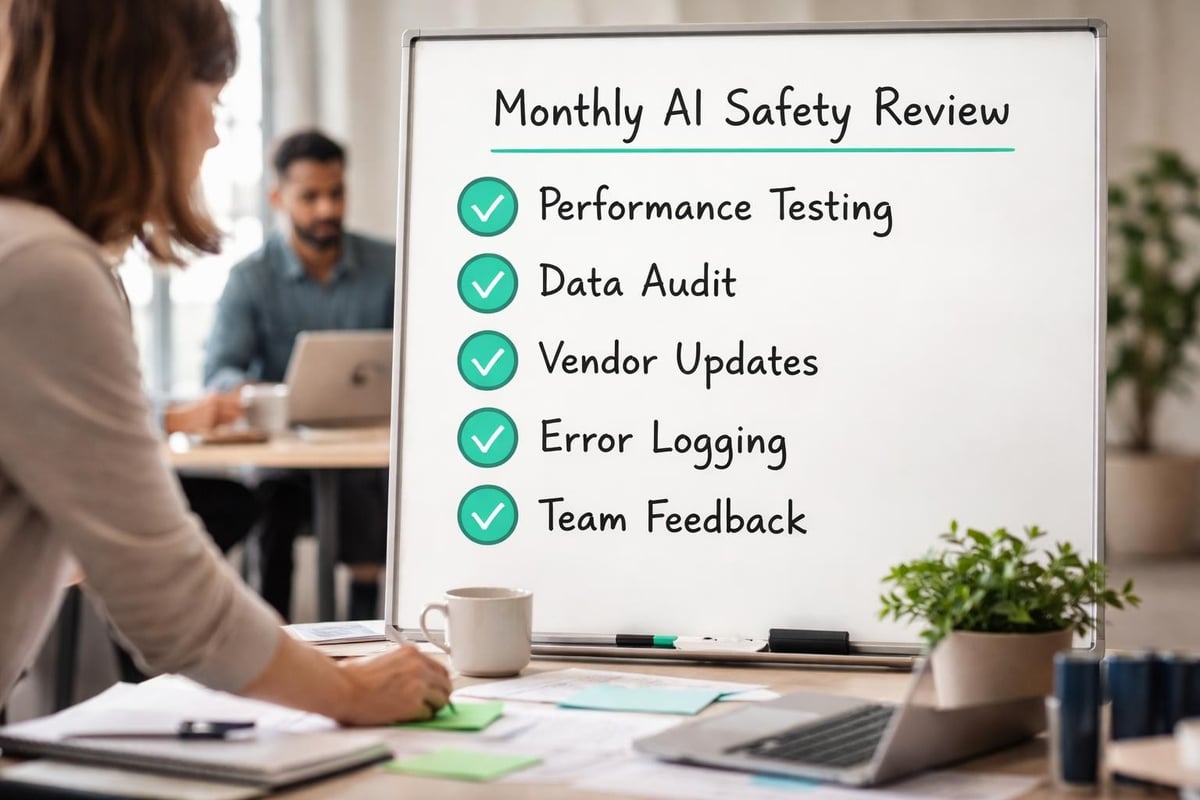
Establish a monthly AI review routine. Spend an hour checking your AI tools: Are they performing as expected? Have any made concerning errors? Has the vendor changed their terms? This simple practice catches problems before they escalate.
Train your team on AI limitations. Your staff should know that AI suggestions aren't always correct and that human judgement remains essential. When your marketing assistant uses AI to draft social media posts, they should review and edit before publishing. This human-in-the-loop approach represents fundamental AI safety best practice.
Consider these practical staff guidelines:
- Never share customer passwords or payment details with AI tools
- Always review AI-generated content before sending to customers
- Question unusual AI recommendations rather than following blindly
- Report AI errors immediately, no matter how minor they seem
- Maintain manual backup processes for critical tasks
Balancing Innovation with Caution
The benefits of using AI in your business are genuine. Automated customer service saves time. Inventory prediction reduces waste. Marketing optimisation improves results. The goal isn't avoiding AI-it's using it responsibly.
Think incrementally about ai safety solutions. Start with low-risk applications where mistakes have minimal consequences. Use AI to draft internal documents before customer-facing content. Test automated scheduling on non-critical appointments before rolling it out company-wide.
The UK’s AI Safety Institute works to evaluate AI risks, but small businesses can't wait for perfect regulations. You need practical frameworks now. Create simple decision trees: if the AI handles personal data, what protections are needed? If it communicates with customers, what oversight ensures quality?
Managing AI Vendor Relationships
Your relationship with AI tool providers matters enormously for safety. Unlike traditional software, AI systems can change behaviour without warning as they update algorithms. Ensure your contracts include notification requirements for significant changes.
Questions to ask AI vendors:
- How do you test for accuracy and bias?
- What security certifications do you hold?
- Can I access my complete data at any time?
- What's your incident response process if something goes wrong?
- How do you handle service interruptions?
Understanding AI dependency risks helps you avoid putting all your operational eggs in one AI basket. Maintain traditional processes for critical functions, even if they're slower. When your AI appointment system crashes, can you still book clients manually?
Making AI Safety Affordable
Budget constraints shouldn't compromise safety, and fortunately, ai safety solutions scale to small business resources. Many protective measures cost nothing but time and attention.
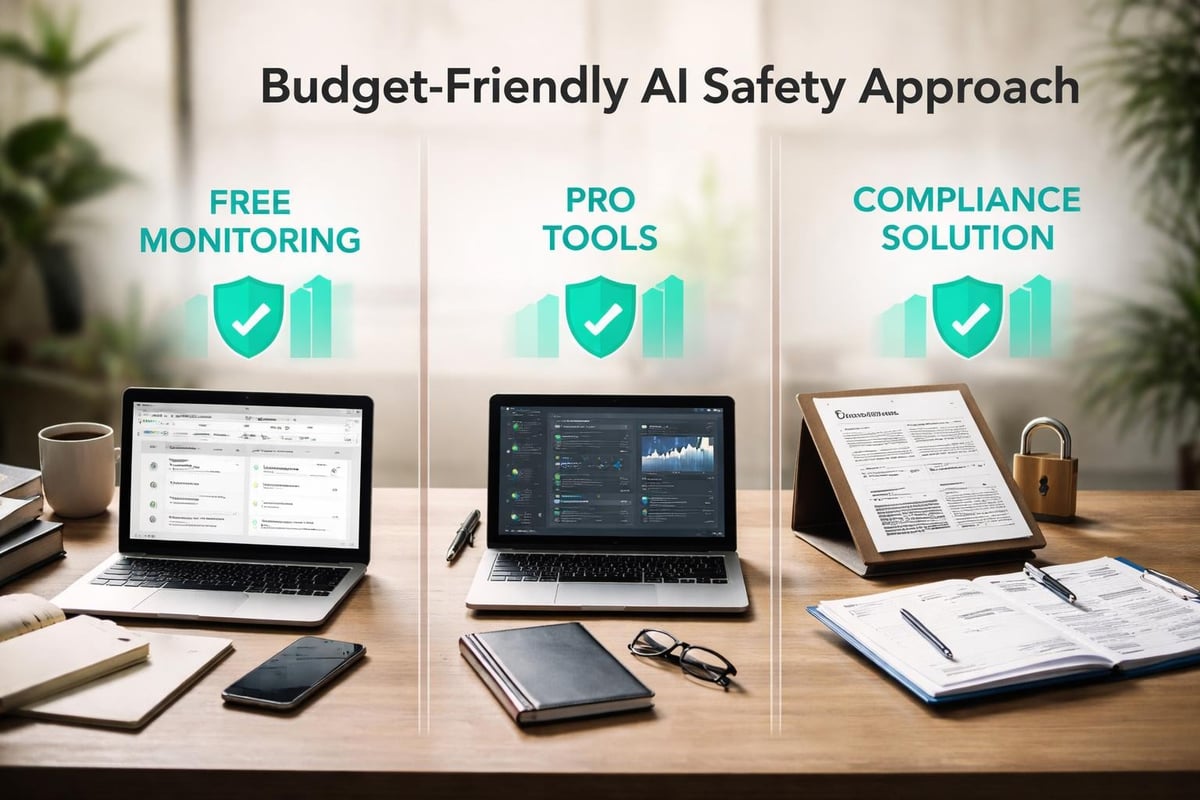
Free tools exist for monitoring AI performance. Spreadsheets track error rates. Calendar reminders ensure regular reviews. Team meetings discuss AI experiences and concerns. These simple practices build robust safety frameworks.
Cost Level Safety Measures Available Suitable For Free Manual monitoring, staff training, documentation Startups, sole traders Under £50/month Automated monitoring tools, backup services Growing businesses £50-200/month Professional auditing, compliance tools Established businesses When considering costs of AI, factor safety into your calculations. The cheapest tool often creates the most expensive problems. Spending slightly more for reputable providers with strong safety records prevents costly incidents.
The International Network of AI Safety Institutes demonstrates growing global commitment to AI safety standards. As these frameworks develop, businesses adopting good practices now position themselves advantageously for future compliance requirements.
Moving Forward Safely
Implementing ai safety solutions in your small business isn't about achieving perfection-it's about continuous improvement. Start where you are. Audit your current AI usage. Identify your highest-risk applications. Implement basic protections. Review regularly. Adjust as needed.
Remember that using AI in business safely enhances rather than replaces human judgement. Your experience running your business matters more than any algorithm. AI tools should augment your expertise, not override it.
The landscape of ai safety solutions continues evolving rapidly. Stay informed through reputable sources, join small business communities discussing AI experiences, and don't hesitate to ask questions. Your competitors face identical challenges. Sharing knowledge strengthens everyone's approach to safe AI adoption.
Protecting your business whilst embracing AI innovation doesn't require technical expertise, just thoughtful implementation and consistent monitoring. The ai safety solutions outlined here provide practical frameworks any small business owner can apply immediately. If you're ready to implement AI safely with expert guidance tailored to your specific business needs, AI 4 Small Business delivers practical, sector-specific solutions that enhance your capabilities without creating dependency, ensuring you harness AI's benefits whilst maintaining control and safety.