Running a small business in 2026 means competing with companies that have ten times your budget and staff. But here's the thing: using AI in business levels that playing field in ways we couldn't have imagined just a few years ago. You don't need a computer science degree or a massive budget to harness these tools. What you need is a practical understanding of how artificial intelligence can solve your actual business problems, not theoretical ones.
What Using AI in Business Actually Means for Small Enterprises
Let's clear something up straight away: using AI in business isn't about building robots or creating the next sci-fi breakthrough. For small businesses, it's simply about automating repetitive tasks, making smarter decisions with your data, and serving customers better.
Think about the last time you spent an hour responding to the same customer questions via email. Or when you manually updated your inventory spreadsheet for the third time this week. These aren't just annoying tasks-they're opportunities. Research shows that small and medium-sized enterprises can leverage AI as a strategic growth catalyst, transforming everyday challenges into competitive advantages.
The Real-World Applications You Can Start Tomorrow
Customer service is where most small businesses first experience the benefits of using AI in business. Chatbots have evolved beyond those frustrating "I don't understand" responses. Today's AI assistants can handle genuine conversations, book appointments, and answer detailed product questions whilst you sleep.
Email management saves hours each week. AI tools can draft responses to common enquiries, categorise incoming messages, and flag urgent items that need your personal attention.
Social media scheduling and content creation no longer require a marketing team. AI platforms analyse when your audience is most active and suggest content topics based on what's trending in your industry.

Here's a comparison of traditional versus AI-enhanced approaches:
| Task | Traditional Method | With AI | Time Saved |
|---|---|---|---|
| Customer enquiries | Manual email responses | AI chatbot + escalation | 15-20 hours/week |
| Invoice processing | Manual data entry | Automated extraction | 8-10 hours/week |
| Social media posts | Manual creation and scheduling | AI-generated content + smart scheduling | 5-7 hours/week |
| Inventory tracking | Spreadsheet updates | Automated alerts and reordering | 3-5 hours/week |
Choosing the Right AI Tools Without Breaking the Bank
The biggest myth about using AI in business? That it's expensive. The reality is quite different in 2026. Many powerful AI tools operate on freemium models or charge less than hiring a part-time employee.
For writing and content creation, tools like ChatGPT, Claude, and Gemini offer free tiers that handle most small business needs. They'll draft emails, create product descriptions, and even help with blog posts.
Accounting and bookkeeping platforms now include AI features that categorise transactions, flag unusual expenses, and predict cash flow. You're probably already paying for accounting software-check if yours has added AI capabilities.
Customer relationship management (CRM) systems with built-in AI can predict which leads are most likely to convert, suggest the best time to follow up, and automate routine communications. Understanding the costs of AI implementation helps you budget realistically without overspending.
Starting Small: The Three-Step Implementation Strategy
- Identify your biggest time drain-the task you dread most or that consumes disproportionate hours
- Research AI tools specific to that problem-look for solutions designed for small businesses, not corporations
- Start with a free trial-test before committing, and involve your team in the decision
The beauty of using AI in business today is that low-code AI platforms mean you don't need programmers. You can set up workflows, create automations, and connect different tools using simple drag-and-drop interfaces.
Making AI Work With Your Existing Systems
You've invested time and money into your current tools. The last thing you need is to replace everything. Smart AI implementation means connecting new capabilities to what you already use.
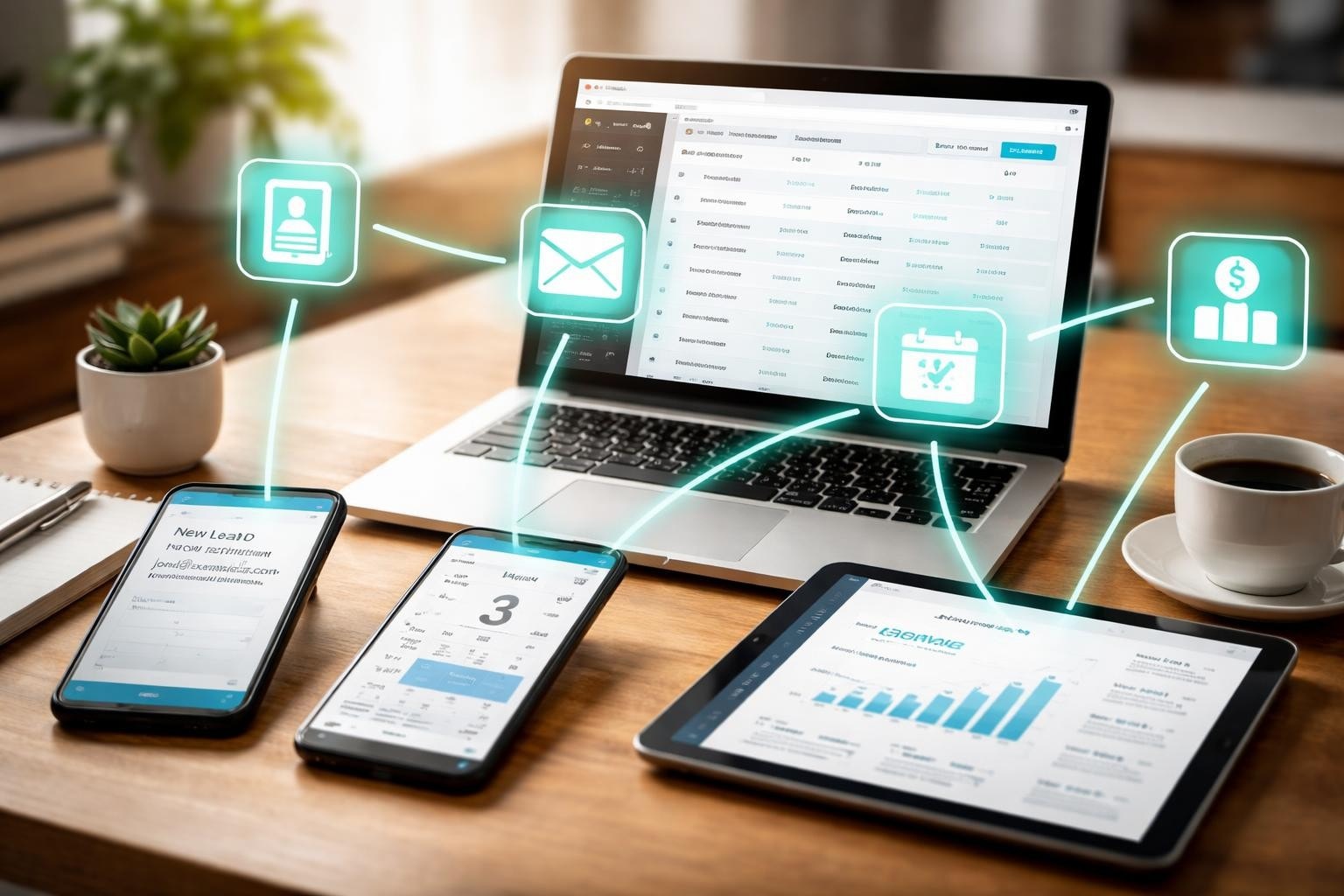
Integration platforms act as bridges between your existing software and AI tools. They can automatically send new customer details from your website to your CRM, trigger AI-generated thank-you emails, and update your inventory when sales occur.
Data preparation sounds technical, but it's straightforward. Most AI tools work best when they can access your business information. This might mean:
- Exporting your customer list to a CSV file
- Connecting your email account to an AI assistant
- Linking your e-commerce platform to an AI chatbot
The key is starting simple. Connect one system to one AI tool, watch it work for a week, then expand. Responsible AI implementation emphasises transparency and control, especially important when you're handling customer data.
Training Your Team (And Yourself) to Work Alongside AI
Here's what nobody tells you about using AI in business: the technology is often easier than changing habits. Your team might resist at first, and that's normal.
Start by demonstrating quick wins. Show them how AI can eliminate their least favourite task. When your sales person sees that AI can draft follow-up emails based on meeting notes, they'll become believers.
Create simple guidelines for when to use AI and when to use human judgment:
- Use AI for: First drafts, data entry, scheduling, routine customer questions, research summaries
- Use humans for: Final decisions, complex problems, relationship building, creative strategy, sensitive situations
Regular check-ins matter more than formal training. Spend fifteen minutes each week sharing discoveries. Someone will find a clever use case that helps everyone else.
Understanding how to get started in AI provides additional guidance for building team confidence and competence.
Measuring Results: How to Know It's Working
Using AI in business requires accountability. You need to know whether these tools deliver value or just create busywork.
Track these metrics:
- Time saved on specific tasks (be honest and measure properly)
- Customer response times and satisfaction scores
- Revenue per employee (AI should increase this)
- Error rates in data entry, invoicing, or inventory management
Set up a simple spreadsheet with monthly comparisons. Before implementing AI, record your baseline numbers. Then track changes month by month.
But here's what matters most: how you feel at the end of the workday. If AI removes the tasks that drain your energy, that's valuable even if the time saved seems modest. Running a small business is as much about sustainability as profitability.
Avoiding Common Pitfalls When Implementing AI
The responsible use of AI requires critical evaluation of outputs to ensure accuracy and fairness. Don't assume AI is always right.
Over-automation kills the personal touch that makes small businesses special. Your regular customers don't want to talk to a chatbot-they want you. Use AI to handle routine tasks, freeing you for those important relationships.
Ignoring data privacy can destroy trust overnight. Know where your customer information goes, who can access it, and whether it's used to train AI models. Read terms of service, even the boring bits.
Chasing shiny objects wastes money. Every week brings new AI tools promising to revolutionise your business. Resist the urge to try everything. Master one tool before adding another.
Looking Ahead: AI Trends for Small Businesses in 2026
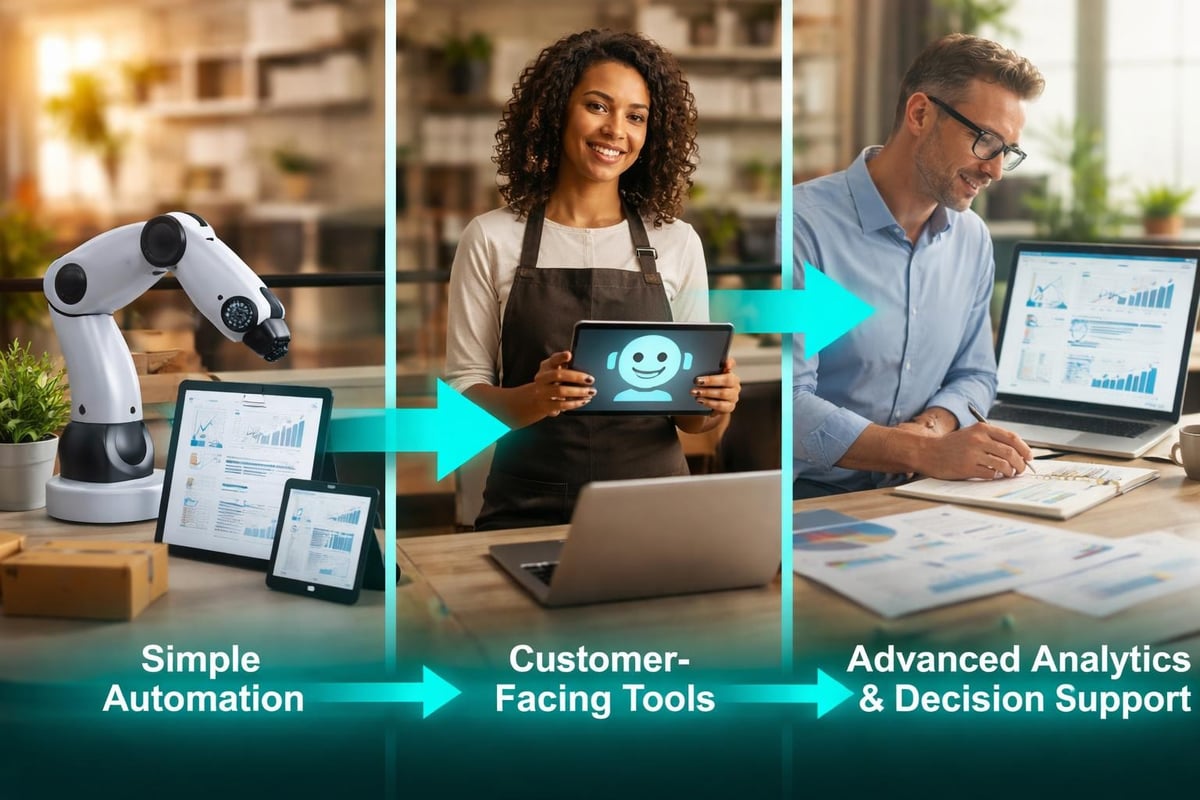
The direction of using AI in business favours smaller operations. Voice-based AI assistants are becoming genuinely useful, letting you manage tasks while driving or between meetings. AI-powered search optimization changes how customers find businesses, making quality content more important than ever.
Personalisation tools now work for businesses with hundreds of customers, not just thousands. AI analyses purchase history, browsing behaviour, and preferences to suggest products or content that specific customers will love.
Industry-specific AI solutions emerge constantly. Whether you run a café, consultancy, or craft shop, AI use cases by industry show targeted applications that understand your unique challenges.
The businesses that thrive aren't necessarily the ones with the most advanced AI. They're the ones that thoughtfully integrate these tools to amplify their strengths whilst maintaining what makes them special. That's the real opportunity in using AI in business-not replacement, but enhancement.
Using AI in business doesn't require technical expertise or enormous budgets-it requires a practical approach focused on solving real problems. From automating customer service to streamlining operations, the right AI tools can transform how your small business competes and grows. If you're ready to explore tailored, affordable AI solutions designed specifically for small businesses without creating dependency, AI 4 Small Business delivers practical implementations that enhance your capabilities quickly and cost-effectively.