The logistics sector is experiencing a massive transformation, and it's not just the big players benefiting anymore. The application of artificial intelligence in logistics has become accessible to businesses of all sizes, offering practical solutions to everyday challenges like route planning, inventory management, and customer delivery expectations. If you're running a small business that handles stock, makes deliveries, or manages any kind of supply chain, AI can help you work smarter without needing a massive tech budget or dedicated IT team.
Why AI Matters for Small Business Logistics
Let's be honest-logistics can be a nightmare. You're juggling delivery schedules, trying to predict what stock you'll need next month, and constantly firefighting problems like traffic delays or warehouse mix-ups.
Traditional approaches rely heavily on manual planning, spreadsheets, and gut feeling. That works to a point, but it doesn't scale well, and it's incredibly time-consuming. The application of AI in logistics changes this by automating the boring bits and giving you data-driven insights you can actually use.
Here's what makes AI particularly valuable:
- Speed: AI processes data in seconds that would take humans hours or days
- Accuracy: Machine learning models spot patterns and make predictions with impressive precision
- Scalability: Solutions grow with your business without proportional cost increases
- 24/7 operation: AI tools work around the clock without breaks
Practical Applications You Can Implement Now
Route Optimisation and Delivery Planning
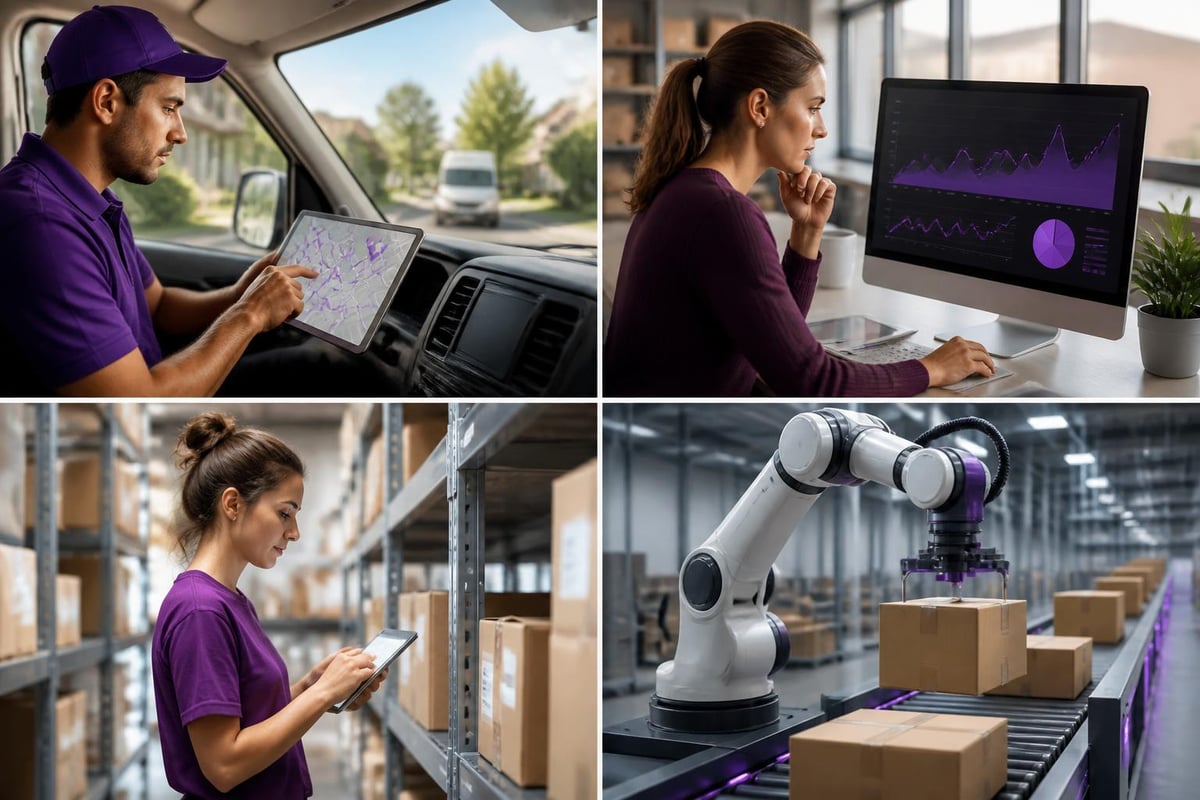
If you're making deliveries-whether you're a tradesperson, retailer, or eCommerce business-route planning probably eats up more time than you'd like to admit. AI-powered route optimisation considers traffic patterns, delivery windows, vehicle capacity, and fuel efficiency simultaneously.
Tools like Route4Me or Circuit use AI algorithms to create the most efficient delivery routes. They adapt in real-time to changing conditions, which means your drivers spend less time stuck in traffic and more time completing jobs.
Real-world impact: A small plumbing business we know cut their daily drive time by 35% using AI route optimisation. That's an extra two jobs per day without hiring additional staff.
Demand Forecasting That Actually Works
Predicting what you'll need and when is crucial for managing cash flow and avoiding stockouts. Traditional forecasting relies on historical averages, but AI-powered demand forecasting considers dozens of variables including seasonality, market trends, weather patterns, and local events.
This is particularly useful for retail and eCommerce businesses. Instead of ordering stock based on last year's figures, AI analyses multiple data sources to give you more accurate predictions.
| Traditional Forecasting | AI-Powered Forecasting |
|---|---|
| Based on historical averages | Considers multiple dynamic variables |
| Manual spreadsheet analysis | Automated continuous learning |
| Monthly or quarterly updates | Real-time adjustments |
| Single-scenario planning | Multiple scenario modelling |
You can explore how AI transforms distribution to better understand these benefits across different business types.
Inventory Management and Warehouse Automation
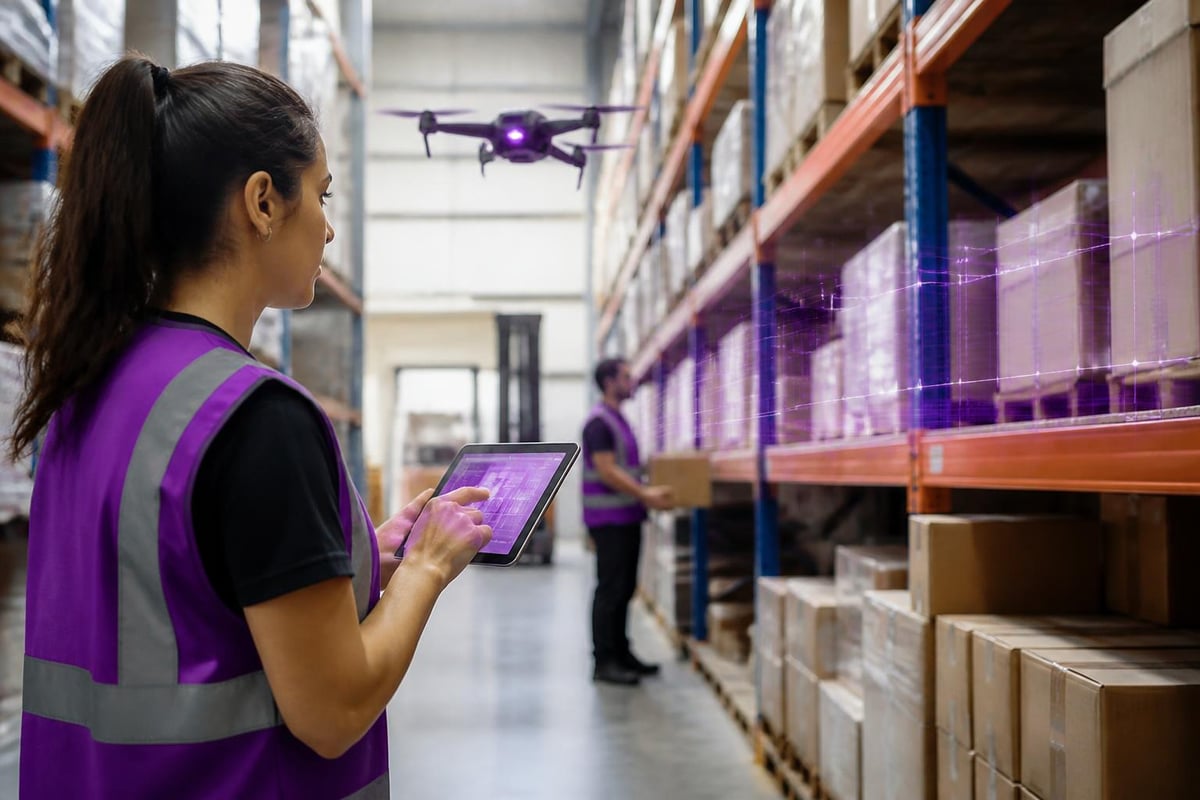
Even if you're not running a massive warehouse, inventory management matters. The application of artificial intelligence in logistics includes smart inventory systems that track stock levels, predict reorder points, and even automate purchasing.
For small businesses, this might mean:
- Automated stock alerts when items reach minimum levels
- Smart reordering based on demand patterns and supplier lead times
- Shelf-life tracking for perishable goods
- Stock location optimisation for faster picking and packing
Tools like Cin7 or Unleashed incorporate AI features specifically designed for growing businesses. They're not enterprise-level expensive, but they deliver serious efficiency gains.
Solving Last-Mile Delivery Challenges
The last mile-getting products from your depot to customers' doors-is often the most expensive and complicated part of logistics. The benefits of AI in logistics become particularly clear here, where timing, customer expectations, and costs converge.
AI helps by:
- Dynamic delivery windows: Offering customers realistic timeframes based on current conditions
- Failed delivery prediction: Identifying high-risk deliveries before they fail
- Driver performance insights: Understanding which routes or drivers need support
- Customer communication automation: Sending proactive updates without manual intervention
Many small eCommerce businesses struggle with delivery costs eating into margins. AI can reduce failed deliveries (which often cost you twice) and optimise driver efficiency, directly improving your bottom line.
Predictive Maintenance for Vehicles and Equipment
If you operate delivery vehicles or warehouse equipment, unexpected breakdowns are costly and disruptive. AI-powered predictive maintenance analyses usage patterns, performance data, and environmental factors to predict when something's likely to fail.
This application of artificial intelligence in logistics is increasingly accessible through telematics systems and equipment monitoring services. Instead of scheduled maintenance based on arbitrary intervals, you maintain equipment based on actual need.
Cost savings: Studies show predictive maintenance can reduce maintenance costs by 25-30% whilst cutting unplanned downtime by up to 50%.
Document Processing and Administrative Efficiency
Logistics generates mountains of paperwork-invoices, customs documents, delivery notes, proof of delivery, and more. AI document processing transforms this admin burden into an automated workflow.
Modern AI tools can:
- Extract data from shipping documents automatically
- Match invoices to purchase orders and deliveries
- Process customs documentation with minimal human intervention
- Route documents to the right people based on content
This is particularly valuable if you're handling international shipments or working with multiple suppliers and customers. What used to take hours can happen in minutes.
Making AI Work for Your Business
The key to successful implementation isn't choosing the fanciest technology-it's identifying your biggest time-drains and pain points, then finding focused AI solutions that address them.
Start by asking yourself:
- Where do we spend the most time on manual, repetitive tasks?
- Which logistics processes cause the most customer complaints?
- What areas have the highest error rates?
- Where could better predictions save us money?
Understanding how to get started with AI means focusing on practical outcomes, not technology for technology's sake.
Integration and Implementation Reality
You don't need to rip out existing systems or hire data scientists. Most modern AI logistics tools integrate with common platforms like Shopify, WooCommerce, Xero, or whatever you're already using.
The implementation process typically looks like this:
- Audit current processes: Document how things work now
- Identify quick wins: Find high-impact, low-complexity opportunities
- Choose appropriate tools: Match solutions to specific problems
- Pilot and measure: Start small, track results, adjust approach
- Scale what works: Expand successful implementations gradually
This practical approach to business process automation with AI ensures you see results quickly without massive upfront investment.
Real-World Sector Examples
Trades businesses: Electricians, plumbers, and builders use AI route optimisation to fit more jobs into each day and predictive inventory to ensure vans are stocked with the right parts.
Retail shops: Independent retailers use demand forecasting to reduce overstock whilst avoiding stockouts, and automated reordering to free up time for customer service.
eCommerce operations: Online sellers leverage AI for everything from warehouse picking optimisation to dynamic delivery promises that actually reflect reality.
Professional services: Even service businesses benefit-think recruitment agencies optimising candidate placement logistics or consultancies managing equipment and resource allocation.
The application of artificial intelligence in logistics isn't about replacing human judgment; it's about augmenting it with better data and freeing your team from repetitive tasks so they can focus on work that actually requires human expertise.
Understanding that AI is a tool, not a magic solution, helps maintain realistic expectations whilst pursuing genuine operational improvements.
The application of artificial intelligence in logistics offers small businesses genuine opportunities to compete more effectively, reduce costs, and improve customer satisfaction without enterprise-level budgets. If you're ready to explore how AI can transform your logistics operations with practical, focused solutions that deliver measurable results, AI 4 Small Business can help you identify the right opportunities and implement tools that actually work for your specific situation.