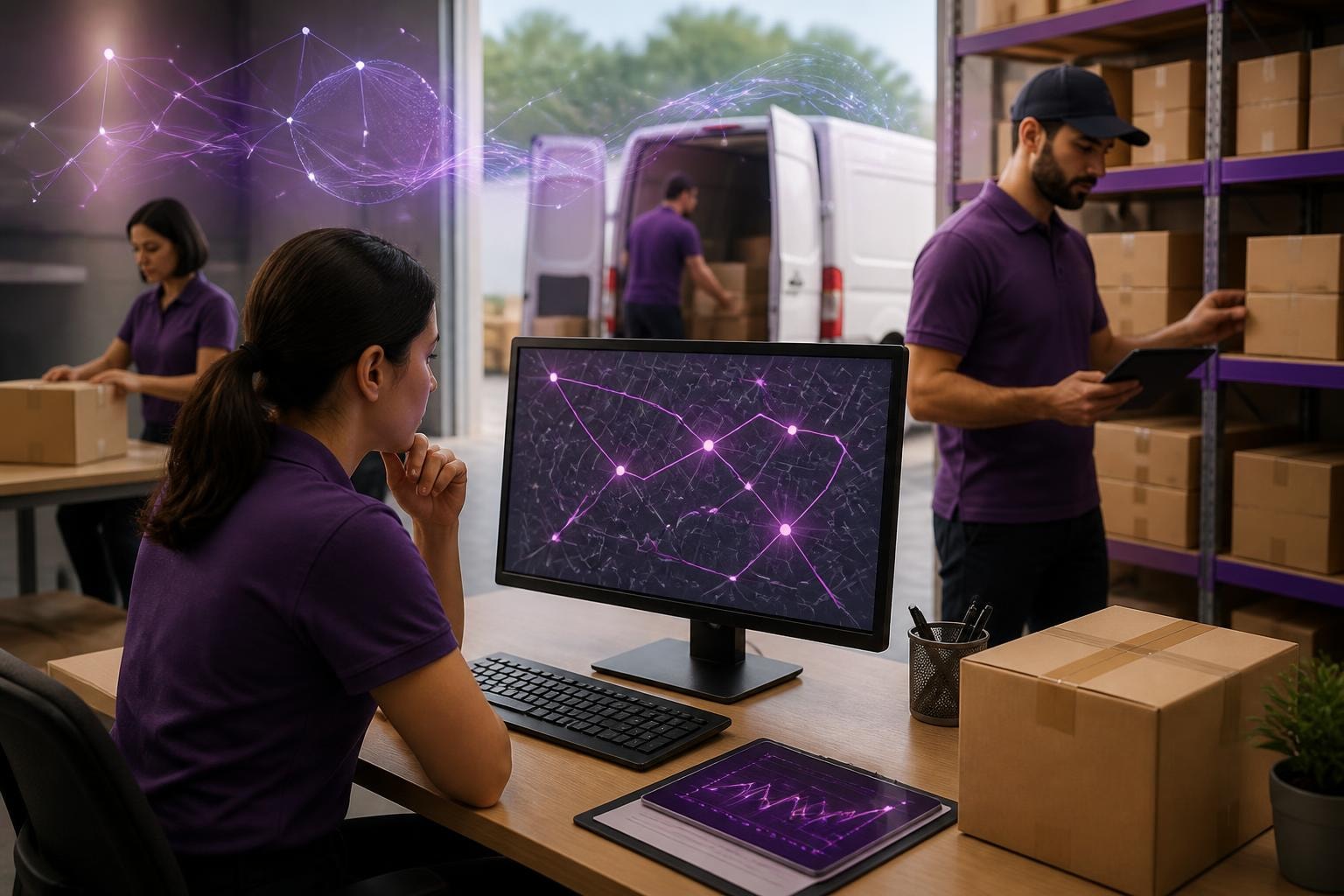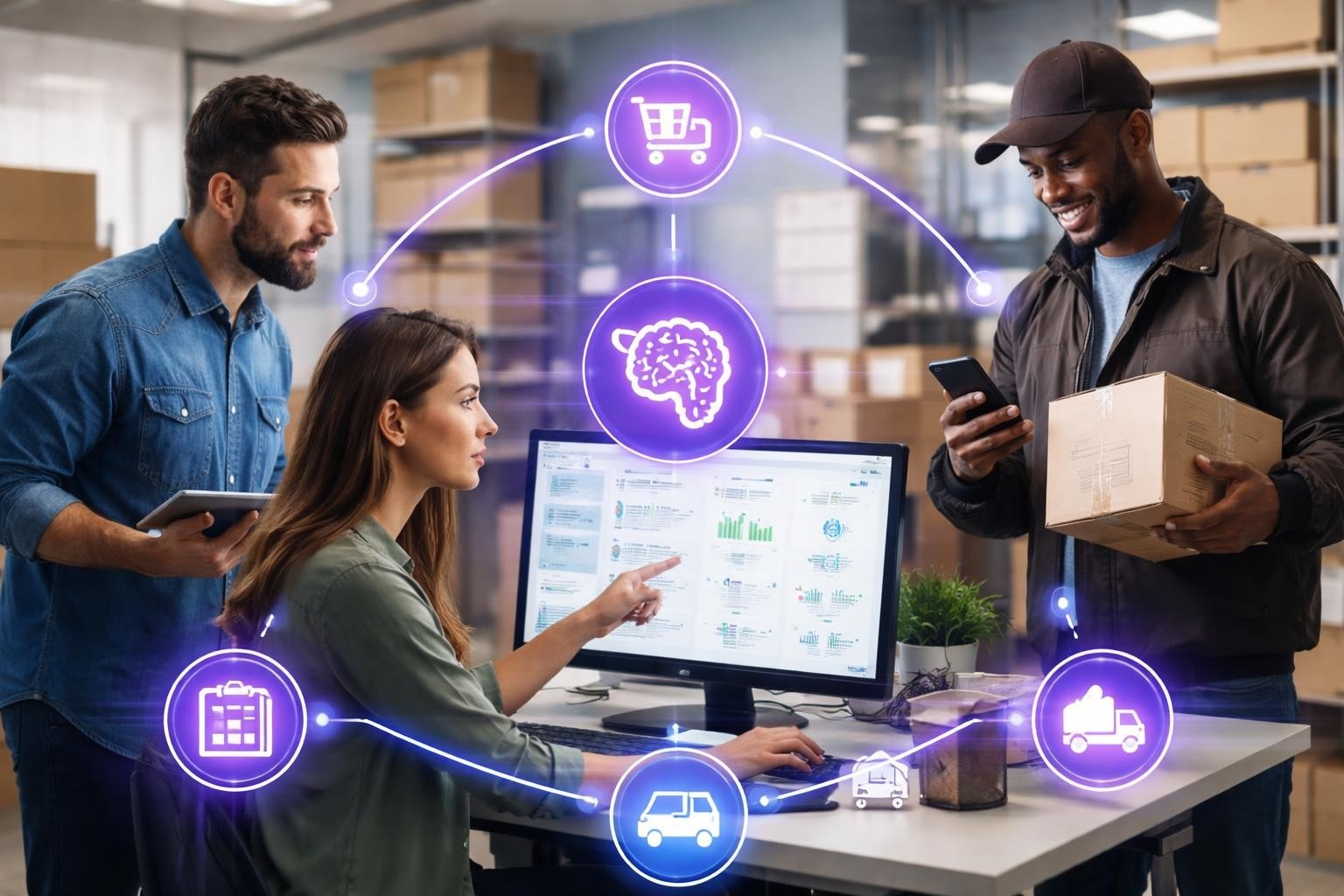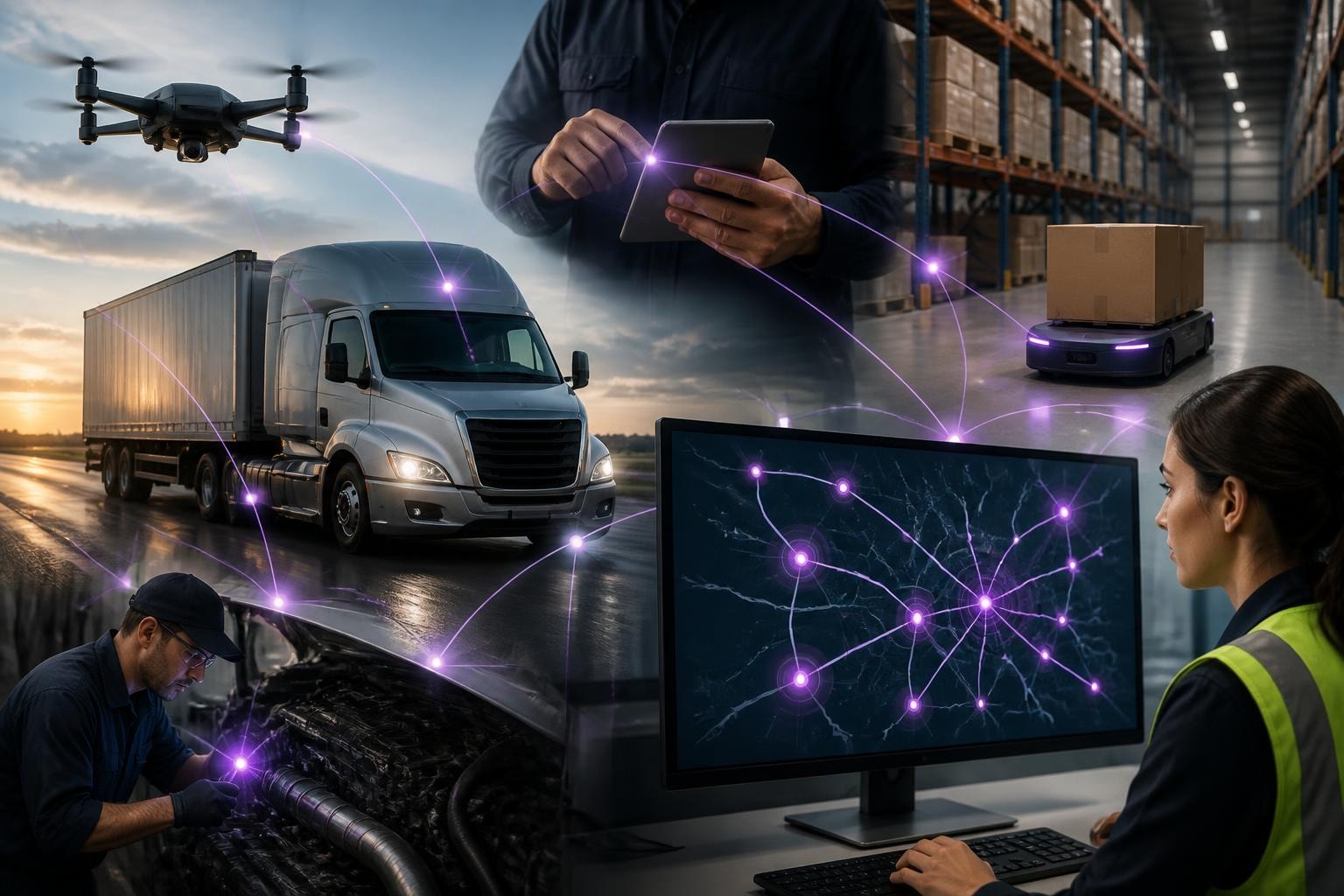
If you run a small business that moves goods, manages deliveries, or coordinates any kind of transportation, you're probably juggling a dozen moving parts every single day. Routes change. Drivers call in. Customers want updates. Inventory doesn't always match what's on paper. It's exhausting. The good news? AI in transportation and logistics isn't just for massive corporations with million-pound budgets anymore. Small businesses can now tap into practical AI tools that solve real problems without the complexity or cost you'd expect.
Why Small Businesses Should Care About AI in Transportation
You might think AI sounds a bit too technical or futuristic for your operation. But here's the thing: AI is fundamentally a tool designed to make repetitive, time-consuming tasks faster and more accurate. And transportation is absolutely packed with those kinds of tasks.
Consider what happens every time you plan a delivery run. You're thinking about:
- Which routes are fastest
- How much fuel you'll use
- Traffic patterns at different times
- Driver availability and working hours
- Customer delivery windows
- Vehicle maintenance schedules
That's a lot of variables. Doing it manually means you're making educated guesses based on experience. That works, but it's not optimal. AI can crunch those variables in seconds and give you better answers.
Real Tools Making Real Differences
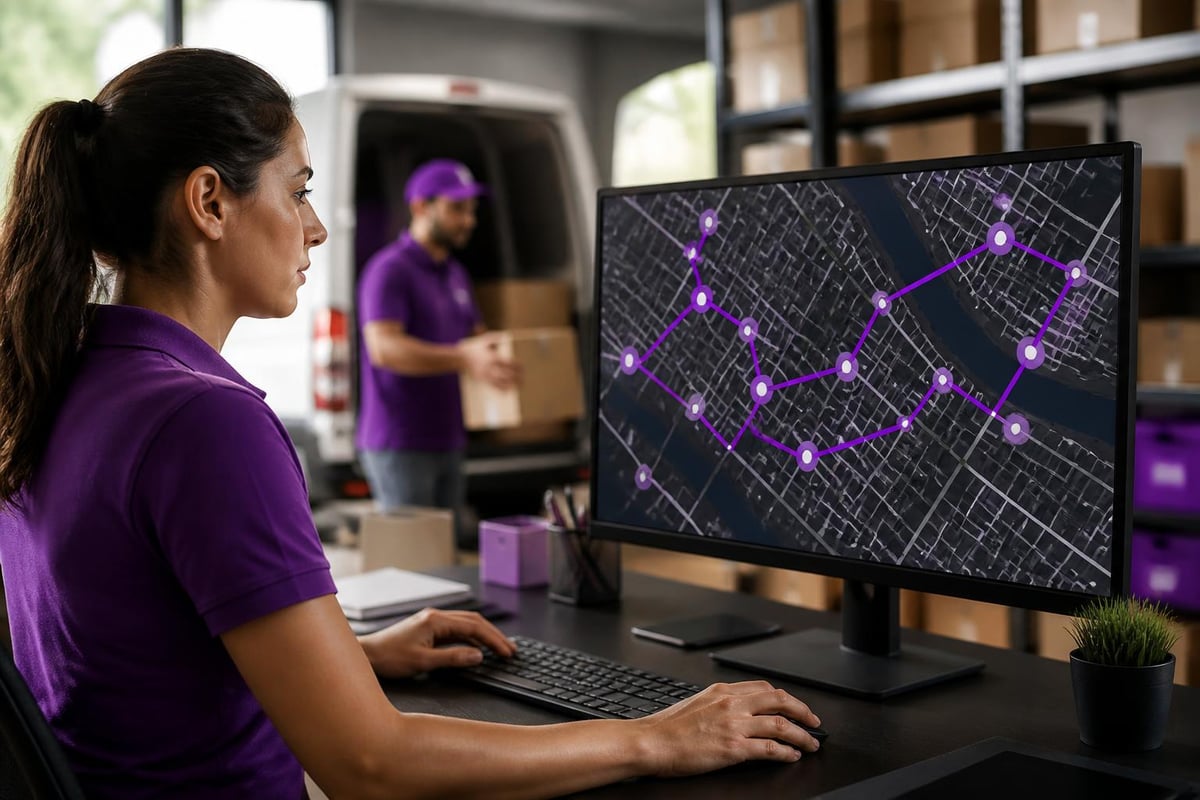
Let's get specific. Microsoft highlights several practical applications of AI in transportation that small businesses can actually use today. Route optimization software like Route4Me or OptimoRoute uses AI algorithms to automatically plan the most efficient delivery routes. You plug in your addresses, and the system accounts for traffic, delivery windows, and vehicle capacity.
One courier business we know cut their daily mileage by 18% just by switching from manual route planning to AI-powered optimization. That's real money saved on fuel, plus drivers finishing earlier and taking more jobs.
Predictive maintenance is another game-changer. Instead of servicing vehicles on a fixed schedule (whether they need it or not), AI tools can monitor vehicle data and predict when something's likely to fail. Oracle's analysis of AI in logistics shows how this approach reduces unexpected breakdowns and extends vehicle life.
Warehouse and Inventory Management
If you're storing goods before they go out, AI can transform how you manage that space. Traditional inventory management means someone physically checking stock levels, updating spreadsheets, and hoping the numbers match reality.
AI-powered inventory systems connect to your existing processes and learn patterns over time. They predict when you'll run low on specific items based on historical data, seasonal trends, and current orders. Some small warehouses use simple AI tools integrated with their existing software to automate reorder points and reduce stockouts by 40%.
| AI Application | What It Does | Small Business Benefit |
|---|---|---|
| Demand forecasting | Predicts future inventory needs | Less dead stock, fewer stockouts |
| Automated reordering | Triggers purchase orders automatically | Saves admin time, maintains stock levels |
| Smart warehouse layout | Suggests optimal product placement | Faster picking, reduced walking time |
| Quality control vision | Identifies damaged goods automatically | Reduces returns, improves customer satisfaction |
The beauty of these systems is they get smarter the longer you use them. Research from MIT Sloan demonstrates how AI addresses complex logistics challenges by learning from each decision and outcome.
Delivery Tracking and Customer Communication
Your customers want to know where their stuff is. Full stop. Manually updating them throughout the day isn't realistic when you're handling dozens of deliveries. AI-powered tracking systems automatically send updates at key points: when items are dispatched, out for delivery, and delivered.
But it goes further than that. Some systems use AI to predict delivery times more accurately than the old "between 9am and 5pm" approach. They factor in real-time traffic, the driver's current location, and historical delivery times for that area. Customers get a two-hour window that's actually accurate.

Practical Implementation Steps
Here's how small businesses are actually implementing ai in transportation and logistics without massive budgets:
- Start with one problem - Don't try to automate everything. Pick your biggest time-drain. Is it route planning? Inventory? Customer queries?
- Test affordable tools - Many AI logistics platforms offer small business plans starting around £30-50 monthly
- Integrate with existing systems - Look for tools that connect to what you already use (your booking system, accounting software, etc.)
- Measure the impact - Track specific metrics like fuel costs, delivery times, or admin hours before and after
- Train your team - Make sure everyone understands how to use the new tools properly
Business process automation through AI doesn't mean replacing people. It means freeing them from tedious tasks so they can focus on problem-solving and customer service.
Fleet Management and Driver Support
If you've got vehicles on the road, AI can help you manage them more effectively. Telematics systems combined with AI analyze driving patterns, fuel consumption, and route efficiency. They can alert you to harsh braking, excessive idling, or unsafe driving habits-not to punish drivers, but to identify training opportunities and reduce accidents.
Some small delivery companies use AI dashcams that only flag genuinely concerning incidents rather than recording everything. This protects drivers from false claims while improving overall safety.
Driver scheduling is another area where AI shines. Instead of manually creating rotas while juggling availability, working time regulations, and skill requirements, AI scheduling tools can generate optimized schedules in minutes. They even learn driver preferences and performance patterns over time.
Data-Driven Decision Making
The real power of ai in transportation and logistics comes from the data insights you gain. Every delivery, every route, every customer interaction generates data. AI tools spot patterns you'd never see manually.
Maybe Tuesday afternoon deliveries to a specific postcode always run late. Or perhaps certain products generate more customer queries than others. Coursera's exploration of AI applications shows how these insights drive better operational decisions across the entire logistics chain.
Sustainability and Cost Reduction
Here's something that benefits both your bottom line and the planet: AI helps reduce waste across your logistics operation. Optimized routes mean less fuel burned. Better inventory management means less spoilage and dead stock. Predictive maintenance means vehicles last longer.
One small food distributor we worked with reduced their carbon footprint by 22% while cutting fuel costs by nearly £800 monthly, simply by implementing AI route optimization and load planning. That's not a huge tech investment-it's a smart subscription to the right tool.
Making It Work for Your Business
The mistake most small businesses make is thinking they need to understand the technical details of how AI works before implementing it. You don't need to know the algorithms. You just need to know what problem you're solving and whether the tool delivers results.
Getting started with AI in your logistics operation means being specific about your pain points. Are you spending three hours daily planning routes? Is your inventory accuracy below 85%? Do customers constantly call asking where their delivery is?
Match those specific problems to specific tools. Test them. Measure the impact. Keep what works, ditch what doesn't. That's how practical AI adoption works for small businesses-not grand transformations, but focused improvements that compound over time.
The transportation and logistics sector is experiencing massive change, but the use of AI in business isn't about chasing every new trend. It's about identifying where your business loses time or money and applying proven tools to fix those specific issues.
AI in transportation and logistics delivers measurable improvements when you focus on real problems rather than following hype. Whether you're managing a small fleet, coordinating deliveries, or running a warehouse, the right AI tools can cut costs, save time, and improve customer satisfaction-starting this month, not someday in the future. If you're ready to identify which AI solutions would actually move the needle for your logistics operation, AI 4 Small Business helps you cut through the noise and implement tools that deliver genuine ROI without the complexity or inflated costs.