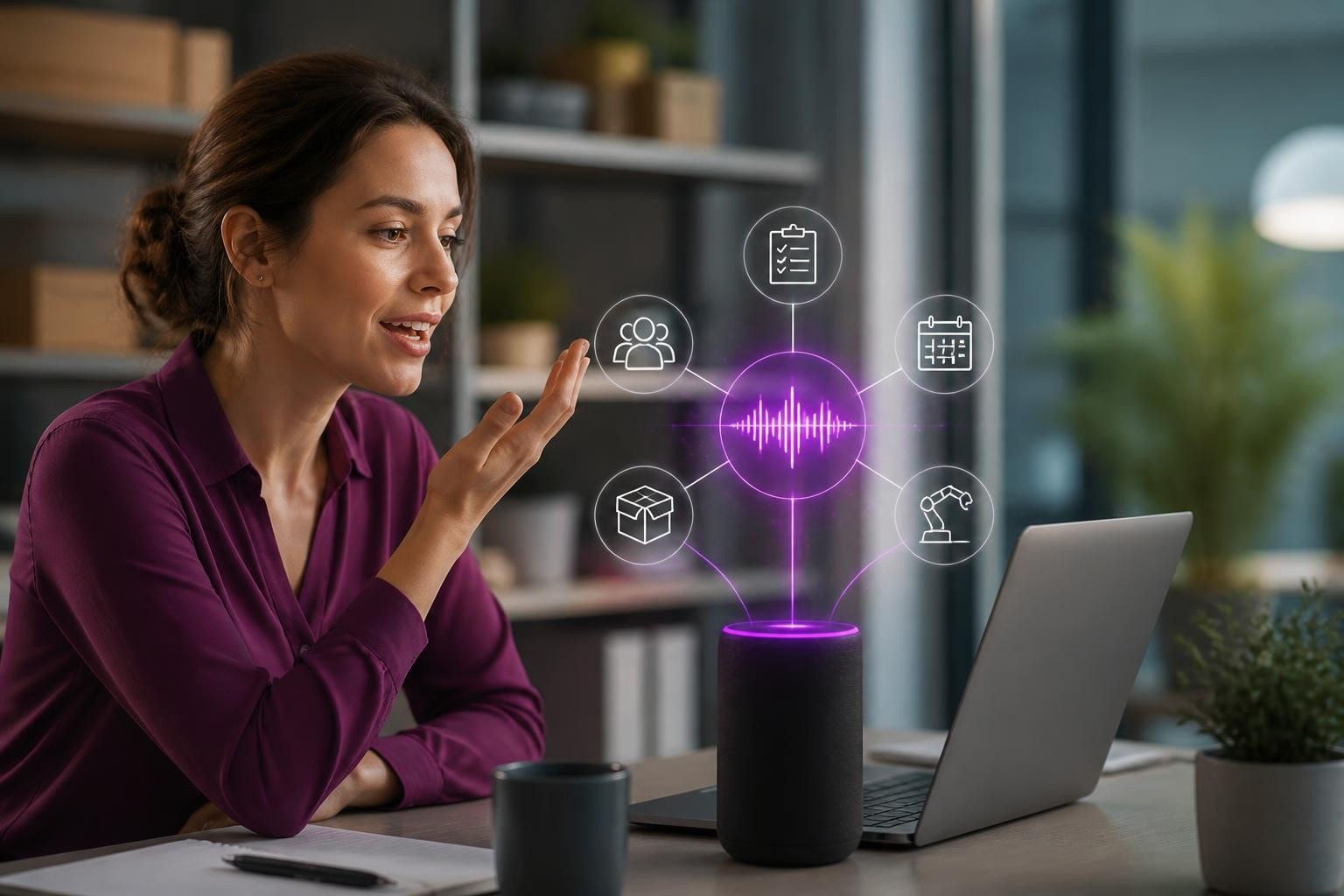
Google's voice technology has come a long way from simple search queries. The latest google ai voice assistant, powered by Gemini, is shifting how small businesses interact with customers and manage daily operations. Rather than just answering "What's the weather?", today's voice assistants can handle appointment bookings, answer product questions, and even guide customers through complex processes-all without tying up your staff. For small businesses juggling tight budgets and limited resources, understanding what this technology can actually do (and what it can't) matters more than ever.
What Makes Google's Voice Assistant Different Now
The jump from the original Google Assistant to Gemini for Home represents a fundamental shift in how voice tech works. Instead of matching keywords to pre-programmed responses, the new google ai voice assistant uses large language models to genuinely understand context and intent.
Here's what's changed in practical terms:
- Conversational memory: It remembers what you discussed earlier in the conversation, so you're not constantly repeating yourself
- Multi-step reasoning: It can handle complex requests like "Find suppliers near Manchester who deliver next-day and compare their prices"
- Natural interruptions: You can interrupt mid-response or change direction without starting over
- Business context awareness: When integrated properly, it understands your products, services, and customer history
The technology relies on what researchers call speech-language model pipelines-essentially combining speech recognition, language understanding, and text-to-speech synthesis into one smooth experience. That matters because older systems had clunky handoffs between these components, creating those awkward pauses and robotic responses we all recognise.

Real Business Applications Beyond Smart Speakers
Most people think of Google's voice assistant as something for playing music or setting kitchen timers. That's missing the bigger picture for small businesses. When you look at custom AI agents for small business, voice becomes an interface for genuine operational efficiency.
Customer Service Automation
A plumbing company in Leeds implemented voice-based booking through Google Assistant integration. Customers ring, describe their issue, and the system books an appointment, sends confirmation details, and adds the job to the scheduling system. No receptionist needed for routine bookings, and the team can focus on actual emergencies.
Hands-Free Operations
In retail and hospitality, voice assistants let staff check stock levels, update order statuses, or look up customer information without touching a screen. A café owner we know uses it to manage supplier orders while she's actually making coffee-"Add 10kg coffee beans to Thursday's order" becomes a spoken command rather than stopping to type.
After-Hours Support
The google ai voice assistant can handle common questions outside business hours. A recruitment agency set theirs up to answer "Do you place temporary workers?", "What sectors do you cover?", and "How do I submit my CV?"-questions that previously went to voicemail and created delays.
| Use Case | Time Saved | Setup Complexity | Best For |
|---|---|---|---|
| Appointment booking | 15-20 hrs/week | Medium | Services, trades, healthcare |
| Stock checks | 5-8 hrs/week | Low | Retail, warehousing |
| FAQ responses | 10-15 hrs/week | Low | Any customer-facing business |
| Order updates | 8-12 hrs/week | Medium | eCommerce, delivery |
The Technical Reality (Without the Jargon)
You don't need to be a developer to use voice assistants, but understanding what's happening under the hood helps you make smarter decisions. Google's newer voice tech uses WaveNet neural speech synthesis, which is just a fancy way of saying it sounds genuinely human rather than robotic.
The speech generation capabilities available through Gemini's API let you control tone, pacing, and even emotional quality. For a professional services firm, that means your voice assistant can sound appropriately formal. For a children's activity centre, it can be upbeat and friendly.
What this means practically:
- Lower customer friction: People actually complete voice interactions instead of hanging up in frustration
- Brand consistency: Your assistant can match your company's communication style
- Accessibility: Customers who struggle with apps or websites have another option
Recent research into controllable speech synthesis shows how these systems can adapt speaking style based on context-slower and clearer for technical explanations, quicker for simple confirmations. That's not science fiction; it's available now if you know how to configure it.

Privacy Considerations You Can't Ignore
Here's the uncomfortable truth: voice assistants are always listening for their wake word, and once activated, they're recording and processing everything you say. For small businesses, that creates legitimate data protection concerns.
An investigation into Google's privacy practices revealed how complex opt-out procedures can be and how much data is retained by default. If you're handling customer information through voice interactions, you need to:
- Clearly inform customers they're speaking to an AI and that the interaction may be recorded
- Review data retention settings (many businesses don't realise recordings are kept indefinitely by default)
- Consider on-device processing where possible to keep sensitive data local
- Implement proper access controls so voice-activated systems can't expose confidential information
These aren't optional extras-they're legal requirements under UK data protection law. The good news is that proper implementation actually builds customer trust rather than eroding it.
Implementation: What Actually Works
Rolling out a google ai voice assistant isn't like installing an app. It requires thinking through your processes and identifying where voice makes sense versus where it's just gimmicky.
Start with one specific use case:
Choose something repetitive and time-consuming but not mission-critical. Appointment confirmations work brilliantly because they're low-risk and high-volume. If it goes wrong, you've lost a reminder, not a sale.
Test extensively before going live:
Run every scenario you can think of. What happens when someone has a strong accent? When they mumble? When there's background noise? Voice tech has improved dramatically, but it's not perfect. Understanding the failure modes matters.
Have a human backup:
Always provide an easy escape route to a real person. "I can also connect you to our team" should be available at any point in the conversation.
The businesses getting real value from voice assistants are those treating them as AI-powered assistants that complement their team rather than replace them. A voice system that handles the first 70% of common queries, then smoothly hands off complex issues to staff, delivers more value than one trying to do everything.
Integration With Existing Business Tools
The google ai voice assistant becomes genuinely useful when it connects to your actual business systems. Standing alone, it's a clever party trick. Connected to your CRM, scheduling software, and inventory management, it's a legitimate efficiency tool.
Modern voice assistants can integrate with:
- Booking systems: Acuity, Calendly, Booksy
- CRM platforms: HubSpot, Pipedrive, Zoho
- eCommerce: Shopify, WooCommerce
- Communication tools: Slack, Microsoft Teams
- Payment processors: Stripe, Square
The technical term is API integration, but practically it means your voice assistant can check real data and take real actions. When someone asks "Do you have the blue widget in stock?", it checks your actual inventory rather than guessing.
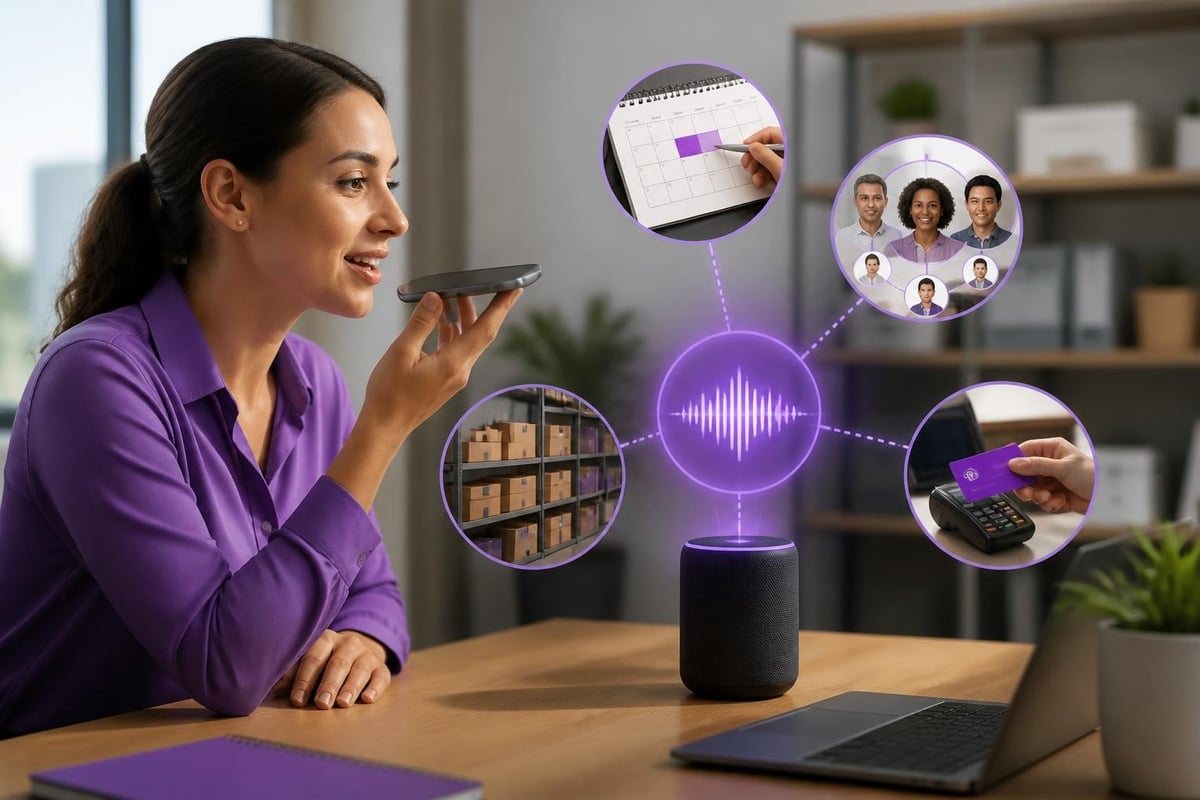
Setting this up used to require serious development work. Now, with platforms offering tailored AI solutions, small businesses can get custom voice interfaces without building everything from scratch. The investment isn't trivial, but it's accessible rather than enterprise-only.
What's Coming Next
Voice technology is advancing faster than most businesses can implement it. Recent audio generation research points towards even more natural interactions, including emotional understanding and multi-speaker conversations.
For small businesses, the practical implications include:
- Voice assistants that detect customer frustration and adjust their approach
- Multi-language support that genuinely understands context, not just translates words
- Proactive assistance ("I noticed you usually order supplies on Fridays-would you like me to check stock levels?")
The challenge isn't the technology itself-it's figuring out which capabilities actually drive business value versus which are just impressive demos. That's where expert guidance makes the difference between a useful tool and an expensive distraction.
Voice assistants powered by Google's AI represent a genuine opportunity for small businesses to improve efficiency and customer experience-but only when implemented thoughtfully and connected to real business processes. If you're wondering whether voice technology could reduce admin burden or improve customer service in your business, AI 4 Small Business can help you assess the opportunity, select the right tools, and build practical voice-enabled workflows that deliver measurable results without the complexity or cost of traditional custom development.