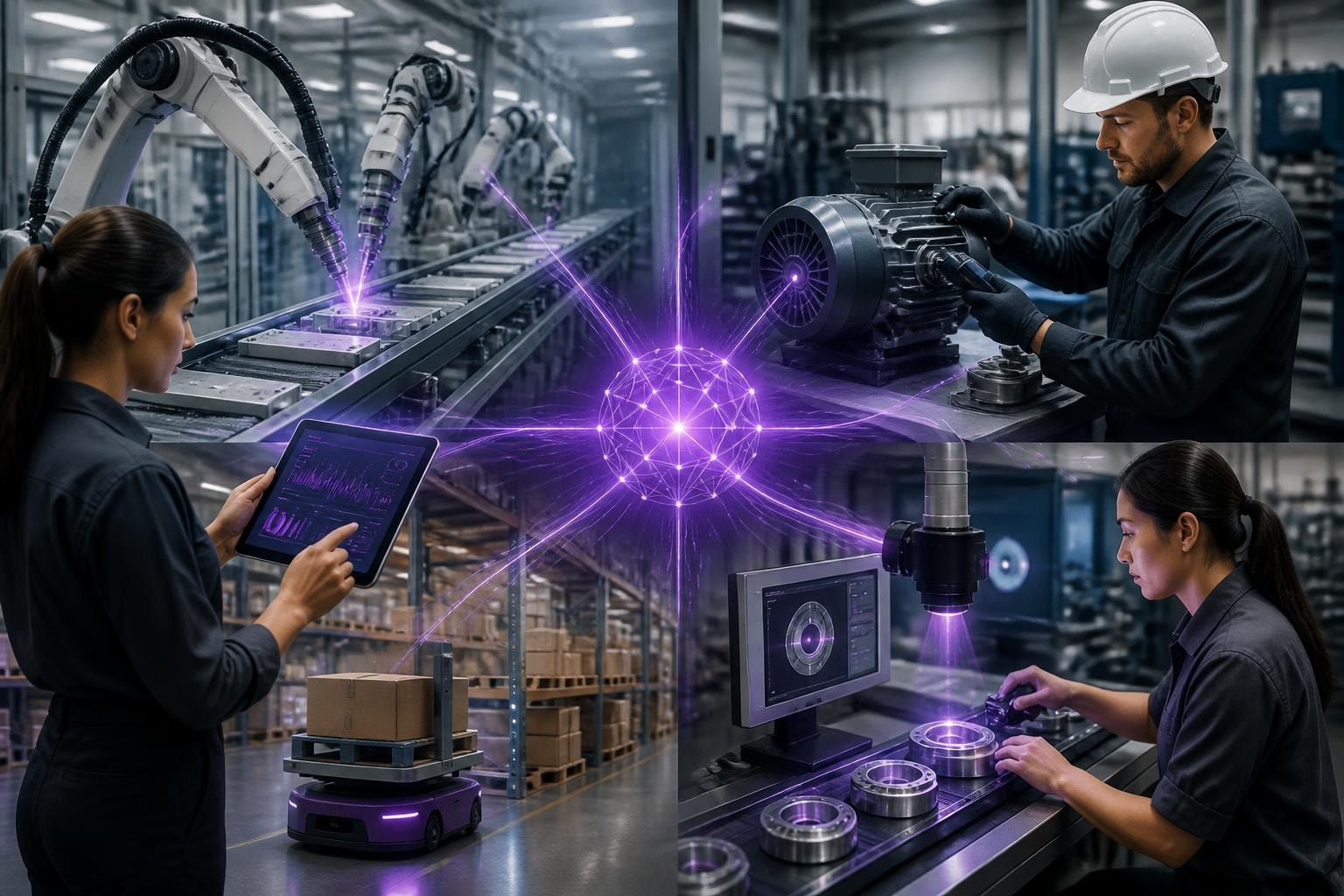
Manufacturing's always been about doing more with less, hasn't it? Tighter margins, skilled worker shortages, rising costs-the challenges keep stacking up. But here's the thing: AI for manufacturing industry isn't some futuristic concept anymore. It's happening right now in workshops, factories, and production facilities across the UK, and you don't need a massive budget to get started. Whether you're running a small precision engineering firm or a mid-sized fabrication business, the practical applications of AI in manufacturing can transform how you operate.
Where AI Actually Makes Sense in Manufacturing
Let's cut through the hype and talk about what actually works. The best applications of ai for manufacturing industry aren't complicated-they're solving specific, costly problems that manufacturers face every single day.
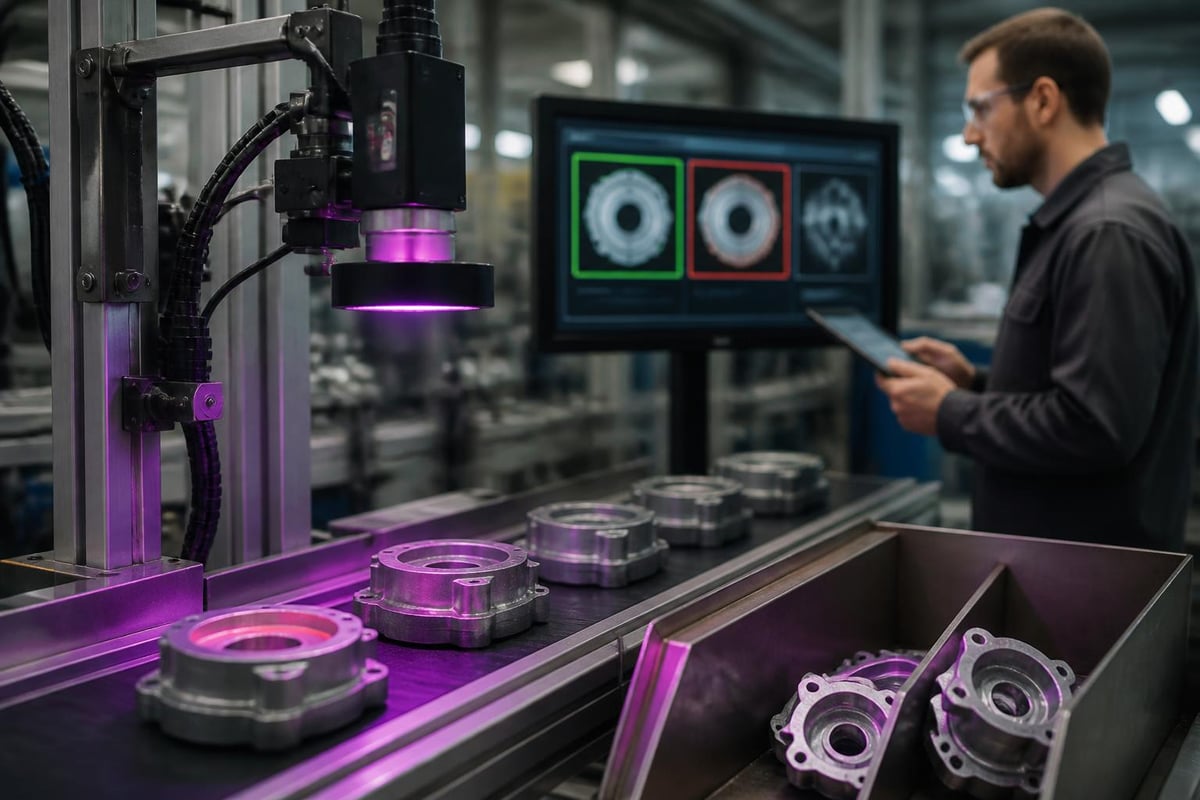
Quality Control That Never Blinks
Traditional quality inspection is exhausting work. Your team's checking parts manually, and even the most diligent inspector will miss things when they're looking at hundreds of components. Computer vision systems can spot defects smaller than the human eye can see, and they do it consistently, every single time.
- Detect surface imperfections, cracks, and dimensional variations instantly
- Reduce scrap rates by catching issues before they become expensive problems
- Free up skilled workers for tasks that actually need human judgement
- Create automatic documentation for compliance and traceability
A small metal parts manufacturer we know implemented a simple vision system for weld inspection. They caught defects 40% faster and reduced customer returns by two-thirds. That's the kind of practical AI implementation that pays for itself quickly.
Predictive Maintenance That Actually Predicts
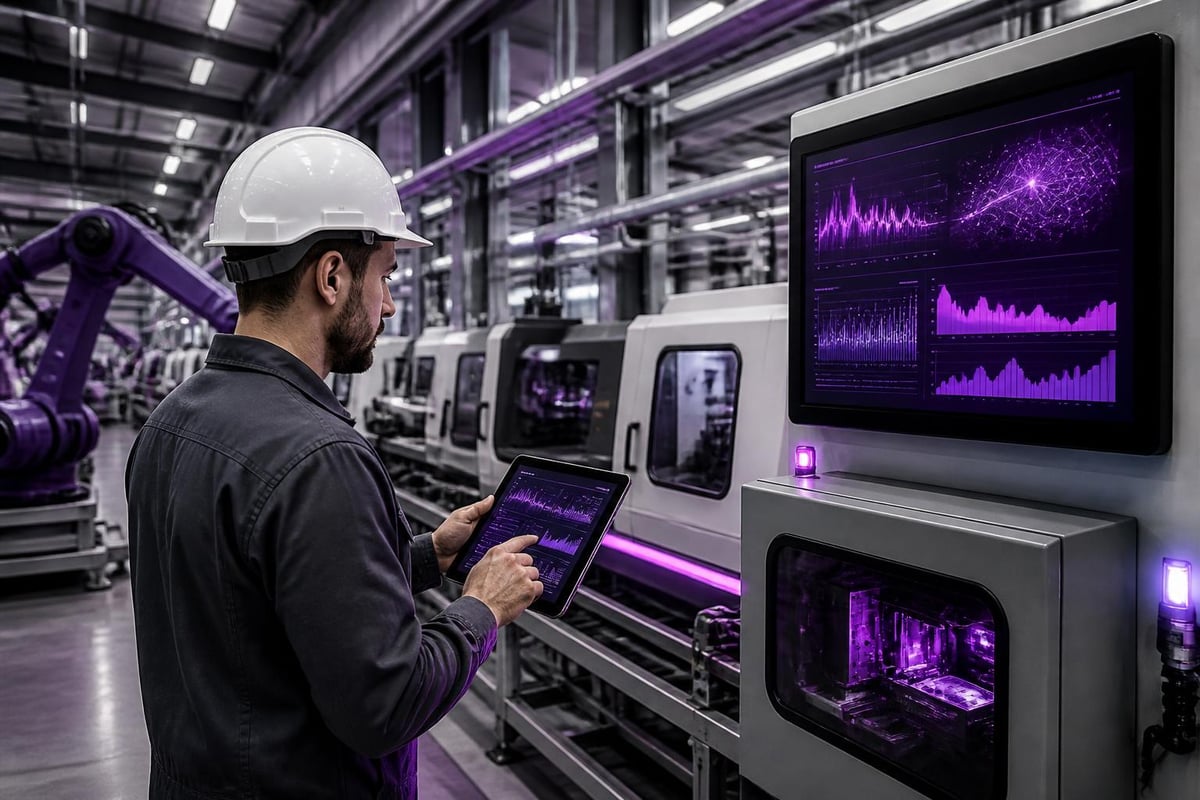
Nothing kills productivity like unexpected equipment failures. You're running at capacity, then a critical machine goes down, and suddenly you're scrambling to meet deadlines. Predictive maintenance using AI changes this entirely.
Instead of following fixed maintenance schedules (and potentially servicing equipment that doesn't need it), sensors monitor vibration, temperature, and performance patterns. The AI spots anomalies that signal impending failures, sometimes weeks in advance.
| Traditional Maintenance | AI-Driven Maintenance |
|---|---|
| Fixed schedules regardless of condition | Condition-based intervention |
| Unexpected breakdowns | Planned maintenance windows |
| Higher spare parts inventory | Optimised parts ordering |
| Production disruptions | Minimal downtime |
Production Planning Without the Guesswork
Production scheduling's always been part art, part science. You're juggling machine availability, material deliveries, workforce capacity, and customer deadlines. Miss one variable and the whole plan falls apart.
AI for manufacturing industry excels at optimisation problems with multiple constraints. It can create production schedules that maximise throughput whilst minimising changeover time, factor in real-time machine availability, and automatically adjust when rush orders come in.
One fabrication shop reduced their scheduling time from three hours daily to fifteen minutes. More importantly, they increased on-time delivery from 78% to 94%. That's the difference between losing customers and winning repeat business.
Inventory Management That Thinks Ahead
Holding too much stock ties up cash. Too little and you're halting production whilst waiting for materials. Getting it right means analysing historical usage patterns, lead times, seasonal variations, and production forecasts.
Machine learning algorithms can process all this data and suggest optimal reorder points. They learn from past patterns and adjust for changing conditions-like that supplier who's always a week late or the component you use more of in Q4.
Energy Optimisation You Can Measure
Energy costs are brutal right now, and they're not coming down anytime soon. Smart manufacturers are using AI to monitor energy consumption across their facilities and identify waste.
- Track power usage by machine, shift, and production run
- Identify equipment running inefficiently
- Optimise heating, cooling, and compressed air systems
- Schedule energy-intensive operations during off-peak hours
The practical applications of AI in energy management often deliver 10-20% reductions in energy costs. For most manufacturers, that's thousands of pounds monthly.
Supply Chain Visibility and Demand Forecasting
Your supply chain's more fragile than ever. Component shortages, shipping delays, price volatility-it's a daily challenge. AI tools can aggregate data from suppliers, logistics providers, and your own systems to give you early warning of disruptions.
Demand forecasting gets smarter too. Instead of relying solely on historical sales, AI considers market trends, economic indicators, weather patterns, and dozens of other variables. This helps you plan production more accurately and avoid the feast-or-famine cycle.
Getting Started Without Overwhelming Your Team
Here's what we've learned helping manufacturers adopt AI: start small, prove value, then expand. Don't try to transform everything at once.
Pick one painful process. Where are you losing the most time or money? That's your starting point. Maybe it's quality inspection taking too long, or you're constantly firefighting equipment breakdowns.
Look for existing tools first. You don't need custom development for most applications. There are affordable AI solutions designed specifically for manufacturing that can be deployed in weeks, not months.
Measure actual impact. Track specific metrics before and after implementation. Reduced defect rates, less downtime, faster changeovers-whatever matters for your chosen application. Real numbers justify expansion better than theoretical benefits.
Train your team properly. The technology's only as good as the people using it. Invest time in training so your team understands what the AI's doing and how to interpret its recommendations. According to recent research on AI in manufacturing, successful implementations always involve proper staff training.
The Skills Gap and Workforce Considerations
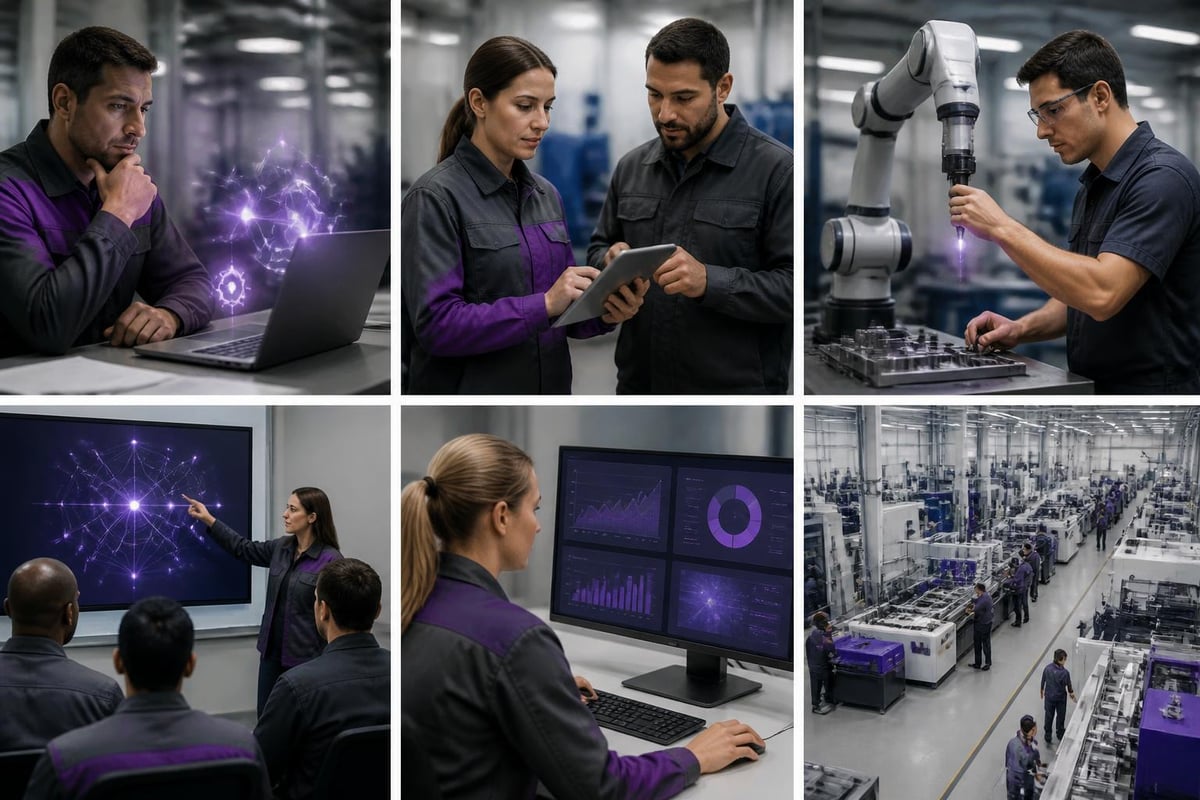
Let's be honest-finding skilled workers is tough right now. AI for manufacturing industry won't replace your experienced machinists and technicians, but it can help newer workers perform at higher levels faster.
AI-assisted work instructions can guide operators through complex setups. Computer vision can verify they've completed steps correctly. Predictive systems can alert them to potential issues before they become problems.
This isn't about replacing people-it's about making your existing team more effective and helping newer employees get up to speed quicker. The manufacturers who'll thrive are those who see AI as a tool to amplify human capability.
Common Barriers (And How to Overcome Them)
"Our data's a mess." You don't need perfect data to start. Begin with applications that work with readily available information, then improve data quality as you go.
"We can't afford downtime for integration." Many modern AI tools integrate without disrupting production. Start with standalone applications that don't require connecting to existing systems.
"Our team will resist change." Involve them early. When operators see AI making their jobs easier rather than harder, resistance drops dramatically. Show them the real-world benefits quickly.
"What if it doesn't work?" Start with low-risk pilots. Test with one production line, one machine, or one shift. Prove value before committing to wider deployment.
What Success Actually Looks Like
Successful AI adoption in manufacturing isn't about flashy technology-it's about measurable business outcomes. According to the AI for Manufacturing organisation's case studies, manufacturers implementing AI effectively see tangible results within months.
You'll know you're succeeding when your team stops talking about "the AI system" and just uses it as another tool. When quality improves, downtime decreases, and efficiency climbs without heroic daily efforts. When you're making decisions based on data rather than gut feel.
The manufacturers winning right now aren't necessarily the biggest or best-funded. They're the ones willing to experiment, learn quickly, and implement AI practically rather than perfectly.
AI for manufacturing industry isn't about replacing what works-it's about solving the problems that drain your time and margin every single day. Whether it's quality control, maintenance, scheduling, or energy management, the right AI tools deliver measurable improvements fast. If you're ready to explore how AI can work in your manufacturing operation without the complexity or massive investment, AI 4 Small Business helps you identify the highest-impact opportunities and implement solutions that actually deliver results. We'll help you cut through the noise and focus on what genuinely moves the needle for your business.