If you've ever made a business decision without having all the facts, you've experienced the same challenge that wumpus world ai was designed to solve. This classic AI problem isn't just an academic exercise-it's a brilliant testbed for understanding how machines learn to navigate uncertainty, make logical inferences, and take smart actions when information is incomplete. For small businesses wrestling with real-world decisions (should we stock more inventory? which marketing channel deserves our budget?), there's surprising value in understanding how AI tackles these problems.
What Actually Is Wumpus World AI?
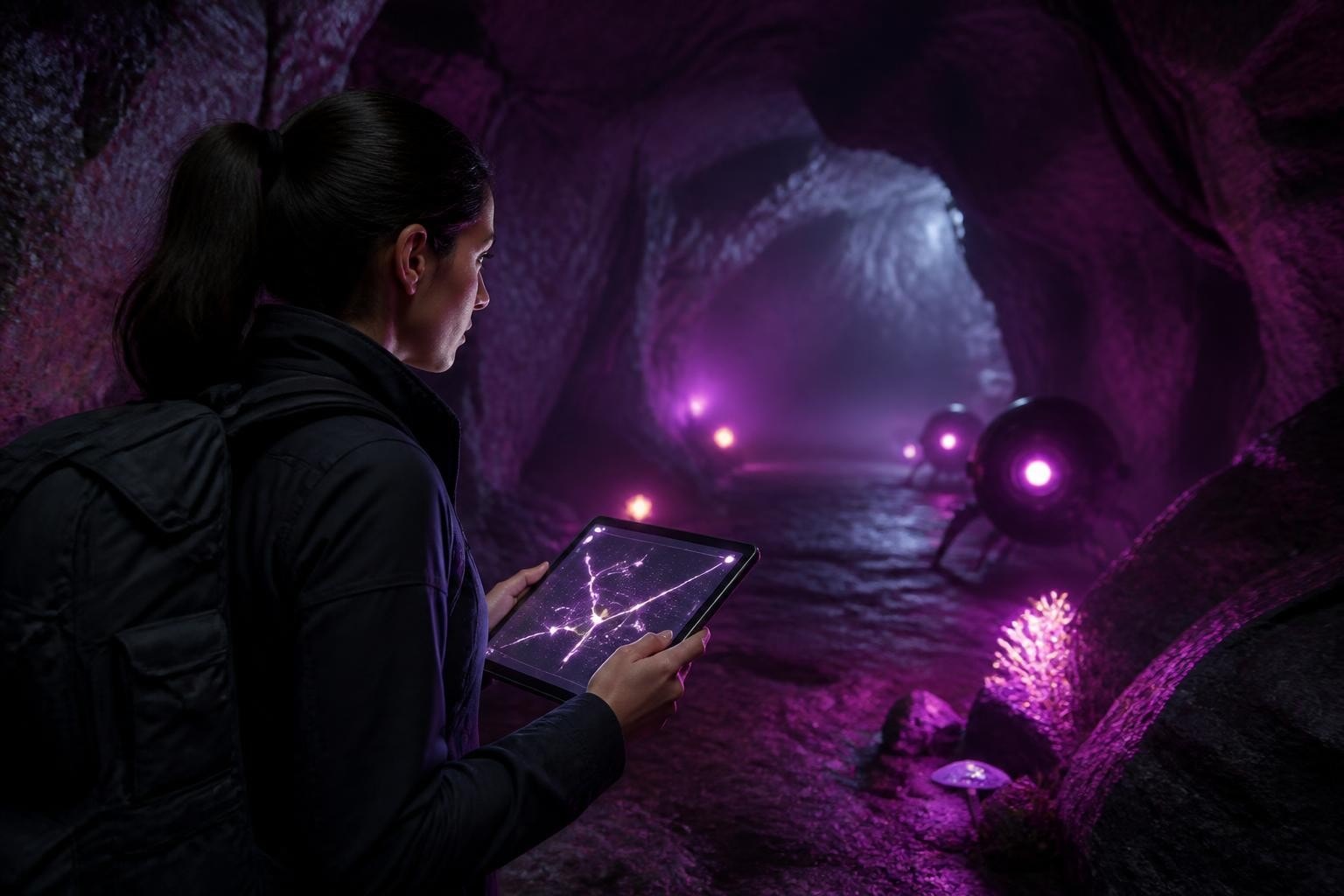
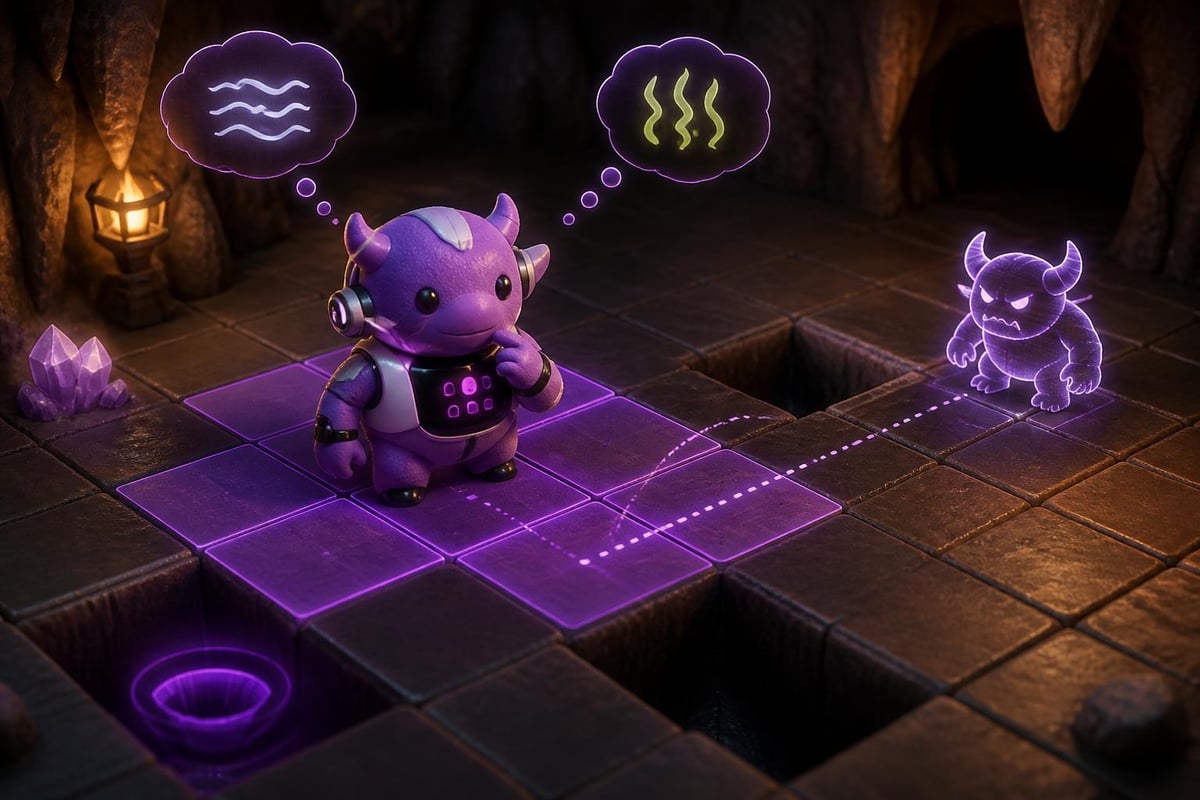
The wumpus world ai problem originated in the 1970s as a way to test intelligent agents. Picture a cave system where an AI agent must find gold whilst avoiding deadly pits and a monster (the wumpus). The catch? The agent can't see everything at once.
Instead, it gathers clues:
- A breeze means a pit is nearby
- A stench indicates the wumpus is close
- A glitter shows gold in the current square
- A bump means you've hit a wall
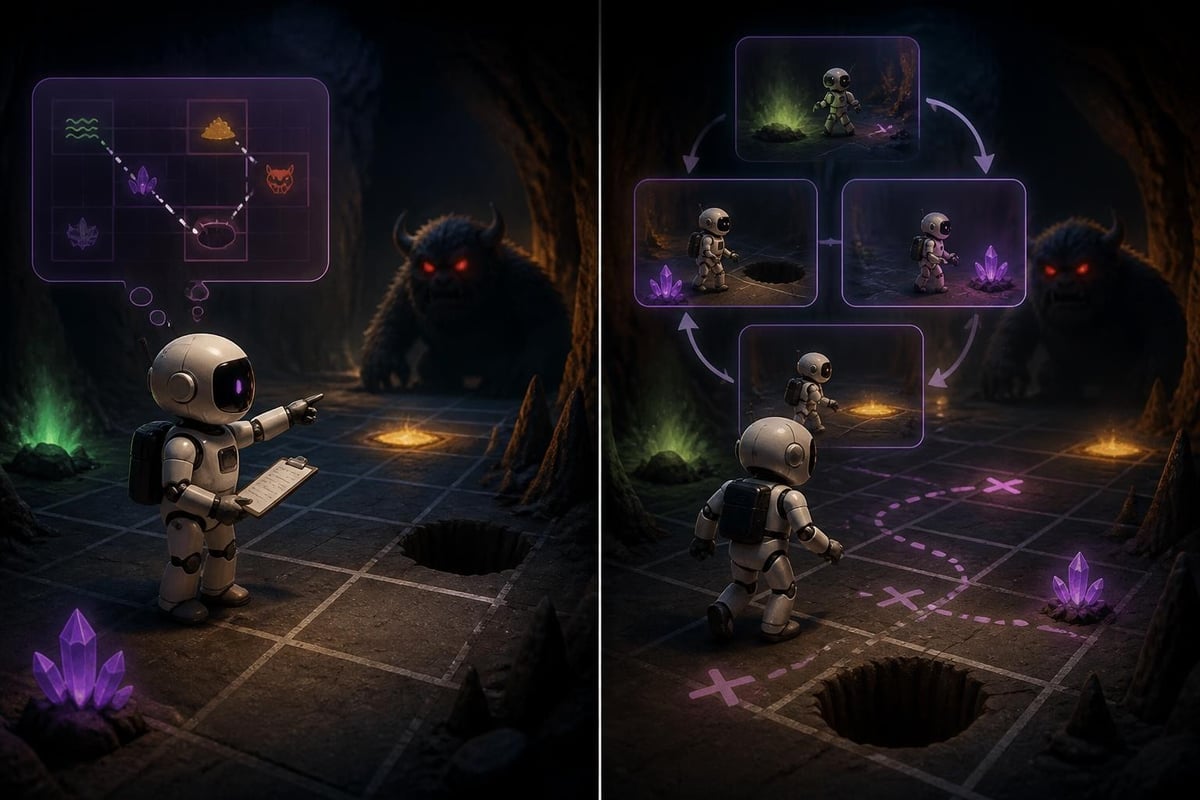
The agent must reason logically from these partial observations, build a mental model of the cave, and decide where to move next. This is exactly how knowledge-based agents work-they maintain beliefs about the world and update them as new evidence arrives.
Why It Matters Beyond Games
You might wonder what cave-dwelling monsters have to do with running a plumbing business or retail shop. Here's the thing: wumpus world ai perfectly captures the structure of dozens of real business problems.
Your business faces similar challenges daily:
- Incomplete information - You never have perfect data about customer behaviour or market conditions
- Hidden risks - Potential problems (cash flow issues, supplier failures) aren't always visible until you get close
- Sequential decisions - Each action you take reveals new information and creates new options
- Resource constraints - You can't explore every possibility, so you must reason efficiently
The AI techniques developed for wumpus world-particularly around partially observable Markov decision processes (POMDPs)-now power practical tools that help businesses navigate uncertainty, from inventory optimisation to custom AI agents that handle complex workflows.
How Wumpus World AI Actually Works
Modern approaches to wumpus world ai split into two fascinating camps: symbolic reasoning and learning-based methods. Understanding both helps you recognise which type of AI is right for your business challenges.
The Logic-Based Approach
Traditional wumpus world ai uses propositional or first-order logic to represent knowledge. When the agent feels a breeze in square (2,1), it concludes "there's definitely a pit in an adjacent square." By tracking all its observations and applying logical rules, it builds certainty about some facts whilst maintaining uncertainty about others.
| Approach | Strengths | Limitations |
|---|---|---|
| Logical reasoning | Explainable, guaranteed correct inferences | Struggles with scale, can't learn from experience |
| Deep learning | Handles complexity, improves over time | Black box, requires lots of training data |
| Hybrid methods | Combines interpretability with adaptability | More complex to implement |
A recent comparison of DQN and logic-based agents found that whilst neural networks eventually outperform hand-coded logic, the logical approach requires far less training and produces decisions you can actually explain-crucial when you need to understand why your AI recommended a particular business action.
Learning Through Experience
Modern wumpus world ai increasingly uses reinforcement learning. The agent doesn't start with pre-programmed rules. Instead, it explores the cave repeatedly, learning from mistakes (falling into pits teaches you to avoid breezes!) and gradually building a policy that maximises reward.
This mirrors how AI-powered assistants learn to handle customer enquiries-they improve through experience, pattern recognition, and feedback rather than exhaustive rule-writing.
Practical Lessons for Small Business AI
So what can a small business owner actually take away from wumpus world ai research? Quite a bit, actually.
Information gathering is strategic. In wumpus world, moving to a new square reveals information even if you don't find gold. Your business AI should do the same-test small, learn fast, then scale what works. That A/B test on your pricing page? It's information gathering. That trial with a new supplier? You're reducing uncertainty about future decisions.
Partial observability is the norm. You'll never have complete data about your market, competitors, or customer intentions. Wumpus world ai doesn't wait for perfect information-it acts on probability and updates beliefs as evidence arrives. Modern POMDP solvers now handle this mathematically, balancing the value of gathering more information against the cost of delaying action.
Different problems need different AI. If you're automating a well-understood process with clear rules (invoice matching, appointment scheduling), logic-based AI works brilliantly and stays explainable. When tackling novel problems where patterns aren't obvious (customer churn prediction, demand forecasting), learning-based approaches excel. The hybrid approaches emerging from wumpus world research suggest combining both often delivers the best results.
Building Your Own "Wumpus World"
You don't need a PhD to apply these principles. Here's how to think about your business challenges through this lens:
- Map your environment - What are the "squares" in your decision space? (Market segments, product variations, channels)
- Identify your sensors - What signals tell you about hidden risks or opportunities? (Customer feedback, sales trends, competitor moves)
- Define success - What's your "gold"? (Revenue, customer satisfaction, time saved)
- Start exploring - Take small, reversible actions that reveal information
- Update your beliefs - Don't stick to outdated assumptions; let data change your mind
Tools like the Washington State University simulator let you experiment with wumpus world ai yourself, whilst frameworks like pomdp_py provide practical implementations for tackling your own partially observable problems.
Where Research Is Heading
The academic community hasn't abandoned wumpus world-far from it. Recent work at Georgia Tech explores interpretable policies and human-AI collaboration using wumpus variants, whilst comprehensive POMDP surveys show how these techniques now power real robotics applications, autonomous vehicles, and business decision support systems.
The shift towards explainable AI particularly matters for small businesses. When your AI agent recommends reducing stock of your best-seller, you need to understand why. Wumpus world ai's logical foundations ensure transparency-you can trace exactly which observations led to which conclusions.
What's emerging is AI that combines the best of both worlds: the learning power of neural networks with the interpretability of symbolic reasoning. For small businesses, this means AI solutions that both perform well and help you understand your business better.
Wumpus world ai teaches us that smart decision-making under uncertainty isn't about having all the answers-it's about gathering the right information, reasoning clearly, and acting decisively even when some risks remain hidden. These same principles drive practical AI implementations that help small businesses navigate complex markets, optimise operations, and compete effectively. If you're ready to explore how AI can tackle your specific business challenges with the same rigour that solves classic problems like the wumpus world, AI 4 Small Business helps you identify high-impact opportunities, select proven tools, and build automations that deliver measurable results without the complexity or cost of custom development.