Manufacturing's always been about finding better ways to make things faster, cheaper, and with fewer mistakes. The latest shift? AI in factories is becoming accessible to businesses of all sizes, not just massive corporations with million-pound budgets. If you're running a small manufacturing operation, you've probably heard the buzz about artificial intelligence but wondered whether it's actually practical for your setup. The good news is that AI in manufacturing has evolved beyond the theoretical stage, offering real tools that solve everyday problems without requiring a computer science degree to implement.
What AI in Factories Actually Looks Like
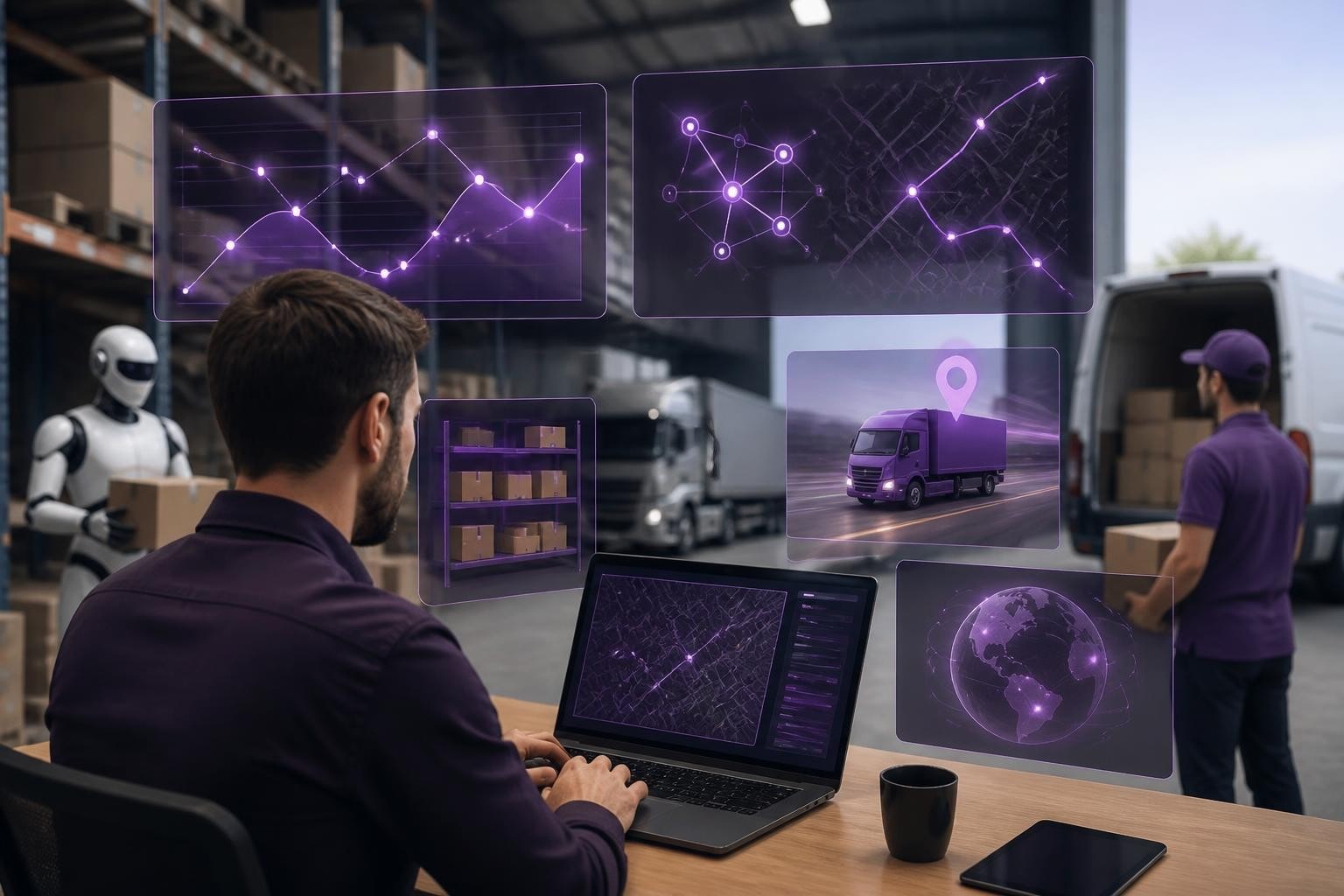
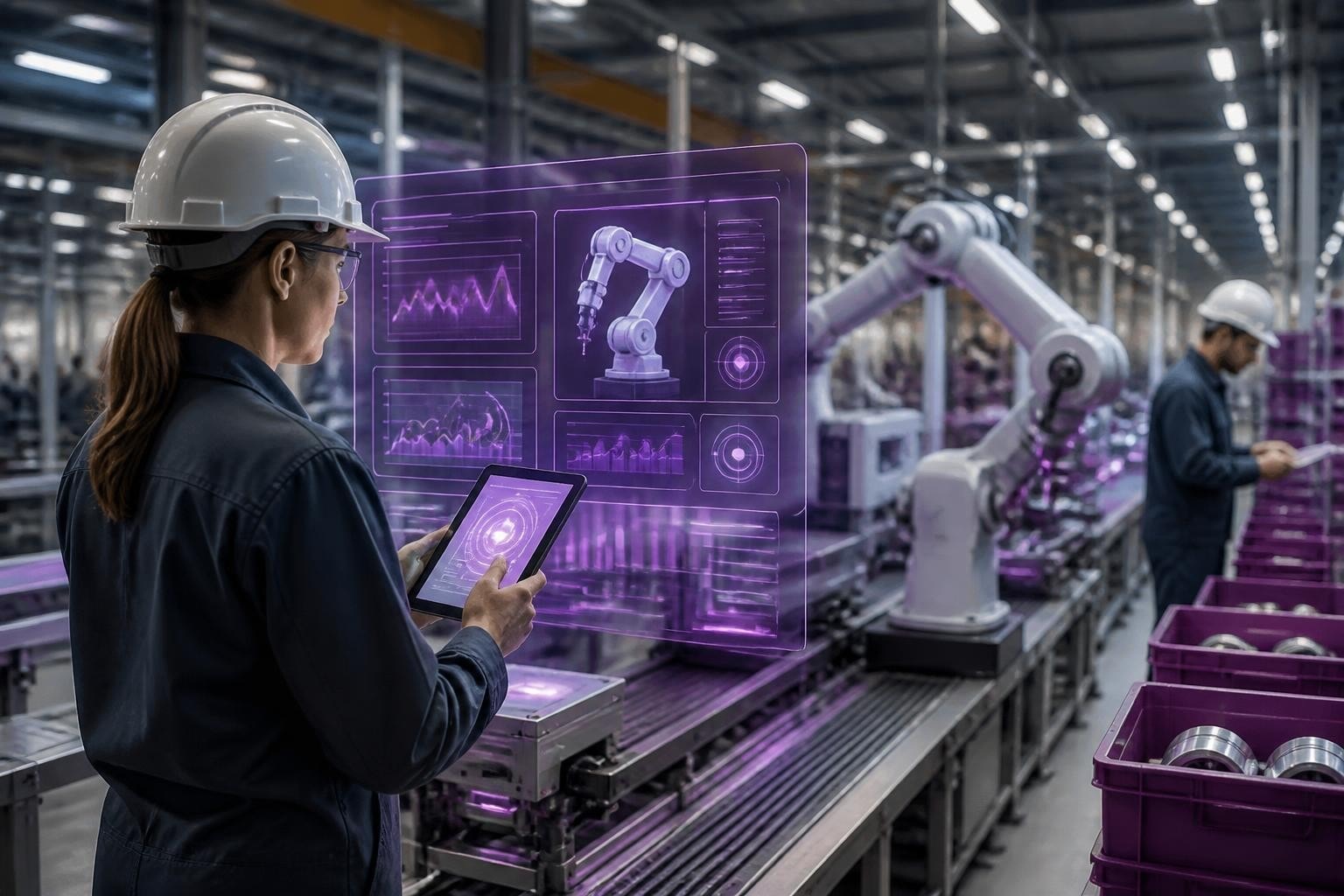
Let's cut through the hype and talk about what ai in factories means in practical terms. We're not talking about robots taking over your entire production line or creating some sci-fi scenario. Instead, think about smart systems that can spot defects faster than the human eye, predict when a machine's about to break down, or optimize your inventory so you're not constantly running out of crucial materials.
Common applications include:
- Quality control cameras that identify product defects in real-time
- Predictive maintenance systems that monitor equipment health
- Inventory management tools that forecast material needs
- Process optimization software that reduces waste
- Scheduling assistants that balance workload efficiently
The real magic happens when these tools handle the repetitive, time-consuming tasks that currently eat up your team's hours. Your staff can focus on problem-solving and improvement rather than standing at inspection stations or manually logging equipment readings.
Starting Small: Where Most Manufacturers Begin
You don't need to transform your entire operation overnight. The businesses seeing the best AI results typically start with one specific pain point. Maybe it's quality control taking too long, or perhaps you're experiencing unexpected equipment failures that halt production.
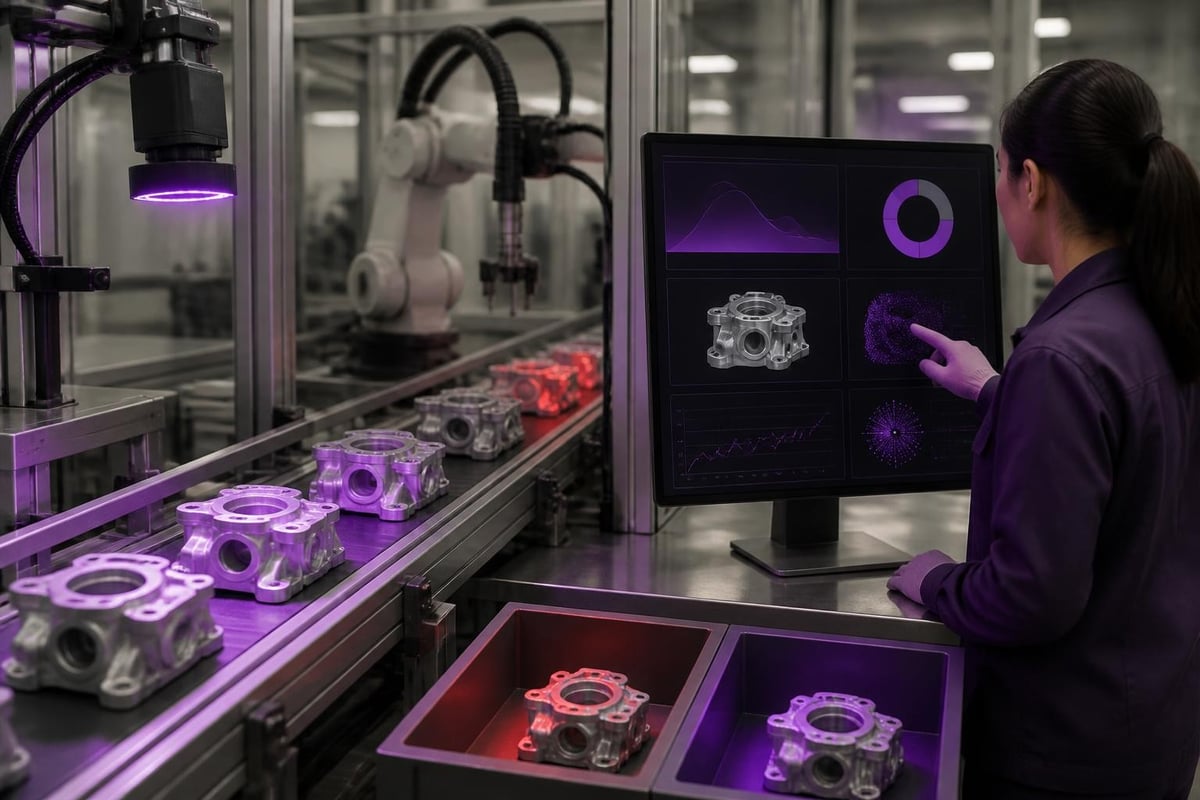
Pick one area where problems cost you the most money or time. That's your starting point. A small eCommerce seller might use AI for inventory forecasting, whilst a metal fabrication shop could implement vision systems for weld inspection. The key is choosing something measurable so you can actually track the improvement.
The Data Question Everyone Asks
Here's what stops most manufacturers: "Our data's a mess, so AI won't work for us, right?" Wrong. Whilst data readiness is crucial for AI systems, you don't need perfect historical records to start. Many modern AI tools can begin learning from current operations, building their knowledge base as they go.
That said, you'll get better results faster if you can provide:
- Basic production records (even spreadsheets work)
- Equipment maintenance logs
- Quality control data
- Inventory movements
- Downtime tracking
Don't have all this? Start collecting it now for the areas you want to improve. Even three months of consistent data gives AI something to work with.
Real-World Implementation: No Fluff
Let's walk through how a small manufacturer might implement ai in factories for predictive maintenance. This is one of the highest-impact applications because unexpected breakdowns are expensive.
Step-by-Step Approach
Initial setup:
- Install vibration and temperature sensors on critical equipment
- Connect sensors to a monitoring platform (many are cloud-based now)
- Set baseline readings during normal operation
Training phase:
- The AI learns what "normal" looks like for each machine
- Historical maintenance records help identify patterns before failures
- System begins flagging anomalies
Operational phase:
- Receive alerts when equipment shows early warning signs
- Schedule maintenance during planned downtime
- Track cost savings from preventing emergency repairs
| Traditional Maintenance | AI-Powered Maintenance |
|---|---|
| Fixed schedule regardless of need | Maintenance when actually needed |
| Reactive to breakdowns | Predictive before failure |
| Higher spare parts inventory | Optimized parts ordering |
| Unplanned production stops | Scheduled maintenance windows |
The beauty of this approach is it works whether you've got five machines or fifty. You're not building custom AI solutions from scratch; you're using proven platforms designed for manufacturing environments.

Why Some Factories Struggle with AI Adoption
Let's be honest: AI adoption in European factories faces challenges. Many businesses try to do too much too quickly, or they choose overly complex systems that require extensive integration work.
Common mistakes include:
- Targeting multiple processes simultaneously
- Choosing enterprise-grade software that's overkill for the operation
- Underestimating the training time needed for staff
- Expecting immediate results without allowing learning time
- Ignoring the importance of clean, consistent data
The manufacturers succeeding with ai in factories take a different approach. They focus on quick wins that build confidence and demonstrate value. A vision system catching defects that previously reached customers creates immediate ROI and gets the team excited about what else AI might do.
Making It Work for Your Business
Whether you're in contract manufacturing, food production, or making components for other industries, the principles remain the same. Identify bottlenecks, choose appropriate tools, and implement gradually. Understanding AI and how it works helps, but you don't need to become a data scientist.
Think about where your competitors might gain an edge. If everyone in your sector is still doing manual quality checks whilst you're using AI vision systems, you've just cut inspection time by 70% and improved accuracy. That's not a future scenario; it's happening now in small factories across the UK.
Integration with Existing Systems
One concern we hear frequently: "Will this work with our current setup?" Most modern AI tools are designed to integrate with existing systems rather than replace them. If you're using AI and ERP systems together, the AI layer can pull data from your enterprise resource planning software and feed insights back in.
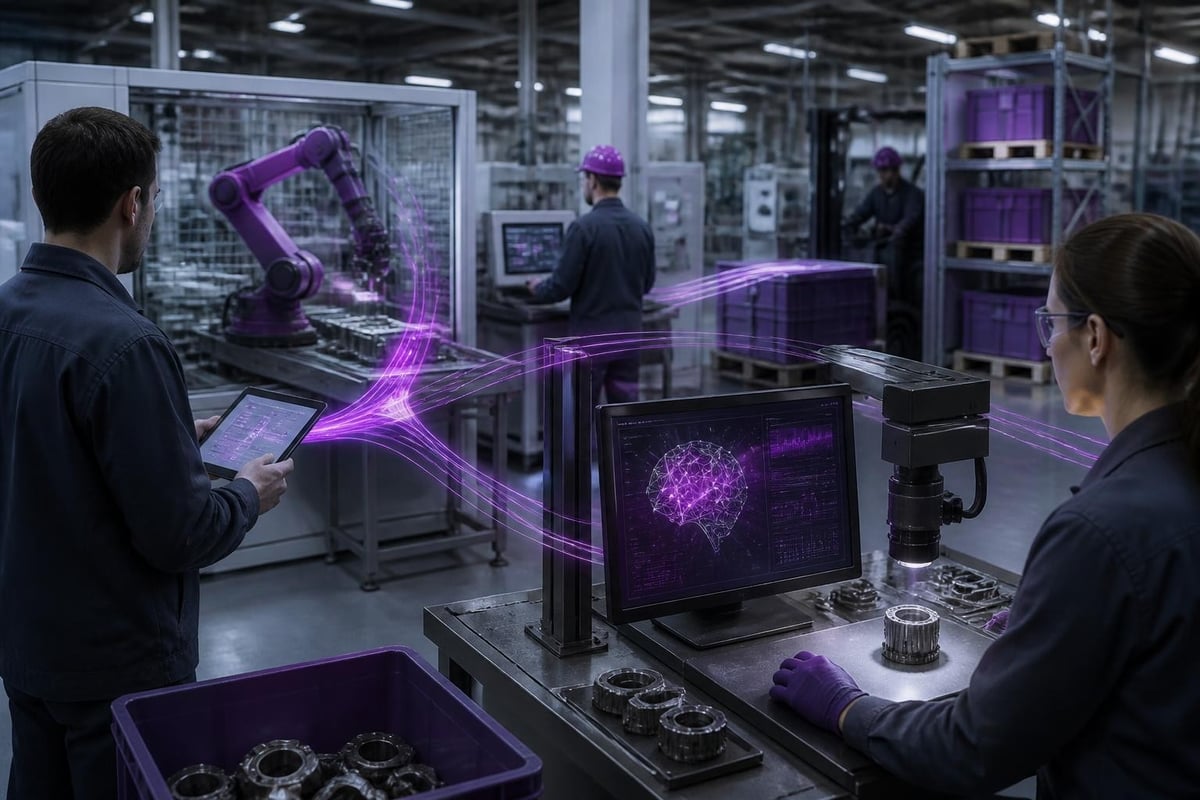
For smaller operations without formal ERP systems, standalone AI applications work perfectly well. A quality control AI doesn't need to know your entire business; it just needs access to production specifications and defect criteria.
Measuring What Matters
Here's where rubber meets road: how do you know if ai in factories is actually delivering value? Track metrics that matter to your bottom line.
Key performance indicators to monitor:
| Metric | Before AI | After AI | Typical Improvement |
|---|---|---|---|
| Defect rate | 3-5% | 0.5-1% | 60-80% reduction |
| Unplanned downtime | 15 hours/month | 3-5 hours/month | 70% reduction |
| Inspection time per unit | 3 minutes | 30 seconds | 80% faster |
| Inventory carrying costs | £50k | £35k | 30% reduction |
These aren't hypothetical numbers. They're based on real implementations across various manufacturing sectors. Your results will vary based on your specific application and starting point, but AI applications in manufacturing consistently deliver measurable improvements when properly implemented.
The factories seeing the biggest impact aren't necessarily the most high-tech to begin with. They're the ones that identify clear problems, choose appropriate solutions, and commit to proper implementation. That's the difference between AI as buzzword and AI as business tool.
AI in factories isn't about following trends; it's about practical tools that solve real manufacturing challenges. Whether you're dealing with quality control issues, unexpected downtime, or inefficient processes, there's likely an AI solution that fits your scale and budget. If you're ready to explore how AI could work in your manufacturing operation, AI 4 Small Business can help you identify the right starting point and implement solutions that deliver measurable results without the complexity or cost of enterprise systems.