
Running a small business means wearing multiple hats, juggling endless tasks, and constantly looking for ways to work smarter, not harder. You've probably heard the buzz about artificial intelligence, but if you're thinking it's only for tech giants with massive budgets, think again. AI for small business is now more accessible and affordable than ever, offering practical solutions that can transform how you operate without breaking the bank or requiring a computer science degree.
What AI Actually Means for Your Business
Let's cut through the jargon. When we talk about AI for small business, we're not discussing robots taking over your shop. We're talking about smart tools that handle repetitive tasks, spot patterns in your data, and help you make better decisions faster.
Think of AI as your tireless assistant who never needs a coffee break. It can answer customer questions at 2 AM, predict which products you'll need to restock, or draft social media posts whilst you focus on what you do best. The U.S. Small Business Administration highlights how these technologies offer significant benefits when implemented thoughtfully.
Real-World Applications That Make Sense
Customer Service Automation
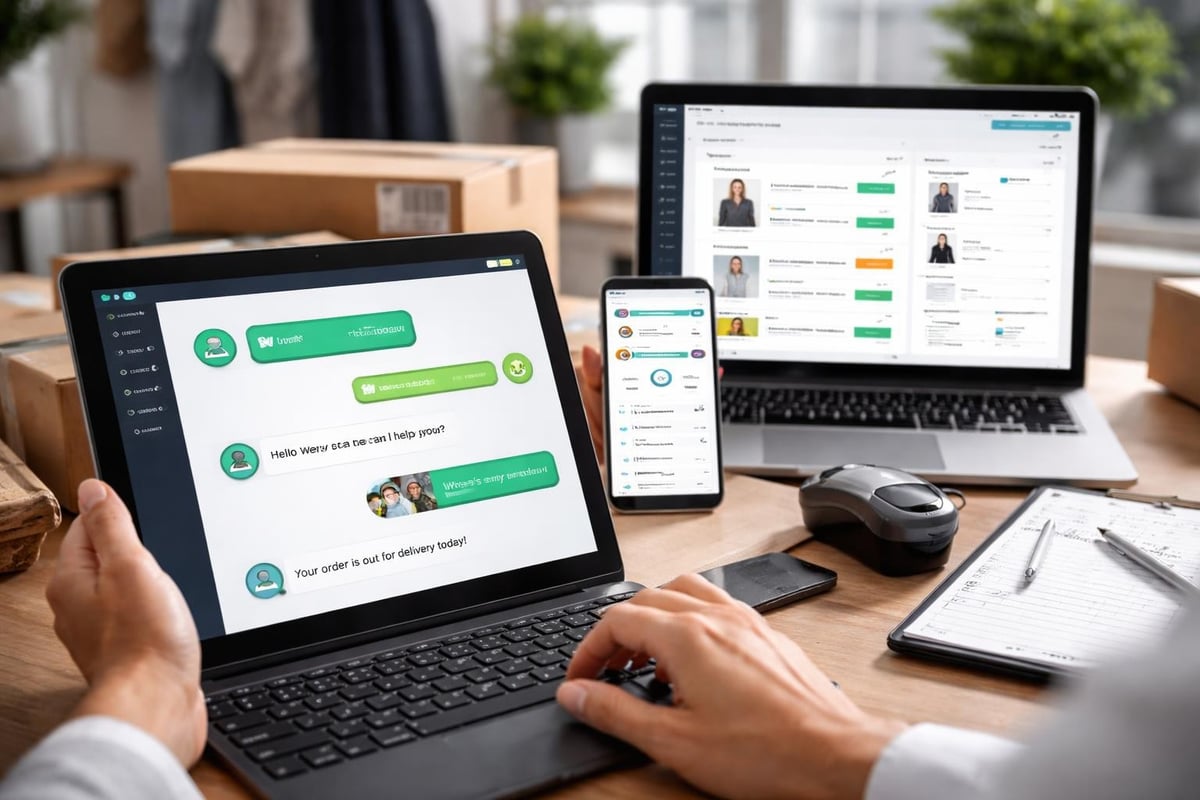
- Chatbots that handle common questions instantly
- Email responses that sound personal but save you hours
- Appointment scheduling that never double-books
Marketing Made Easier
- Social media content generated in minutes
- Email campaigns personalized for each customer
- Ad targeting that finds your ideal buyers
Administrative Tasks
- Invoice processing without manual data entry
- Inventory tracking that predicts demand
- Expense categorization for simpler bookkeeping
Starting Small Without Technical Overwhelm
You don't need to overhaul your entire business overnight. The beauty of modern AI tools is that you can start with one simple problem and build from there. Understanding how to get started in AI doesn't require technical expertise when you choose the right approach.
Your First Steps Into AI
-
Identify Your Biggest Time Drain
Where do you spend hours on repetitive work? Customer emails? Social media posting? Data entry? -
Choose One Simple Tool
Start with a free or low-cost solution that addresses that specific problem. Don't try to automate everything at once. -
Test and Learn
Give it a month. Track how much time you save. Adjust as needed. -
Expand Gradually
Once you're comfortable, add another tool to tackle the next challenge.
The key is avoiding AI dependency whilst building genuine capability. You want tools that enhance your business, not create systems you can't understand or control.
Affordable Tools That Actually Work
Forget the expensive enterprise software. Today's landscape offers practical solutions designed specifically for businesses like yours. Forbes highlights how small businesses can leverage accessible AI tools for significant competitive advantages.
| Business Need | AI Solution Type | Typical Monthly Cost |
|---|---|---|
| Customer Chat | Simple chatbot platforms | £15-50 |
| Email Marketing | AI-powered email tools | £20-80 |
| Social Media | Content generation apps | £10-40 |
| Bookkeeping | Smart accounting software | £25-60 |
| Inventory | Predictive stock tools | £30-100 |
These aren't theoretical numbers. Real small businesses are using these tools right now, and the return on investment typically shows up within weeks, not months.
Making AI Work for Your Specific Industry
Whether you run a café, a plumbing business, a boutique, or a consulting practice, AI for small business adapts to your unique needs. The secret is finding sector-specific solutions rather than generic tools.
Retail and E-commerce
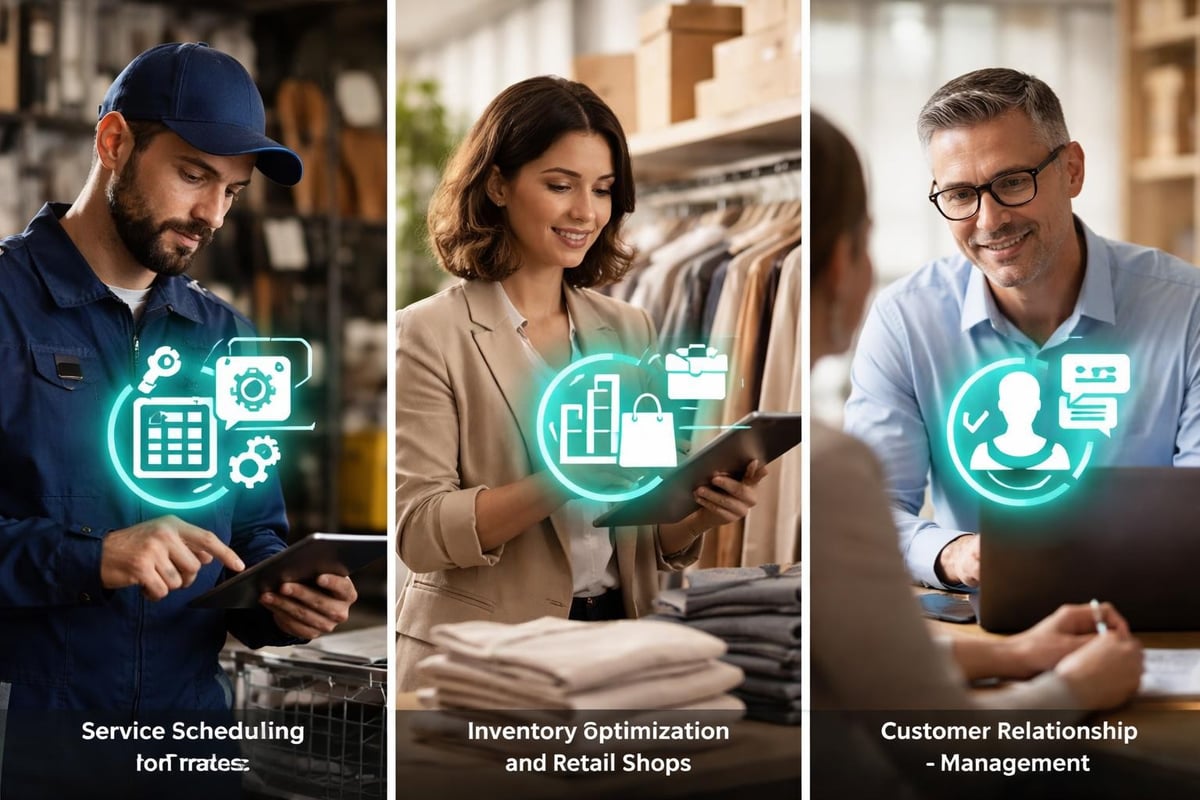
Smart inventory systems learn your sales patterns and warn you before popular items run out. Customer browsing data helps you understand what products to stock and when to run promotions. GoDaddy outlines eight practical ways retailers can implement AI without technical headaches.
Service-Based Businesses
Appointment scheduling tools that understand your availability, send reminders, and even handle rescheduling. Chatbots that qualify leads whilst you're with clients. Proposal generators that customize quotes based on client information.
Professional Services
Document analysis that extracts key information from contracts or applications. Meeting transcription and summary tools that capture action items. Client communication systems that maintain relationships without constant manual follow-up.
The Cost Reality Check
Let's talk money because that's what matters. The truth about costs of AI might surprise you. You're probably already spending more on outdated solutions or, more importantly, on your own time doing tasks AI could handle.
Consider this: if you spend 10 hours weekly on tasks a £40/month AI tool could automate, you're essentially paying yourself £4 per hour for work that could be eliminated. Salesforce research demonstrates how small businesses achieve rapid returns through strategic AI adoption.
Hidden Savings:
- Reduced mistakes in data entry and processing
- Faster response times that prevent lost customers
- Better inventory management that cuts waste
- Marketing that reaches the right people first time
Building Confidence Without Tech Skills
The biggest barrier to AI for small business isn't cost or complexity. It's confidence. You're worried about choosing the wrong tool, wasting money, or creating problems you can't fix.
Here's the reassuring truth: modern AI tools are designed for people exactly like you. They come with templates, tutorials, and support teams who speak plain English, not computer code. Understanding common AI applications helps demystify the technology and shows what's genuinely useful versus what's just hype.
Questions to Ask Before Investing
Can I try it free first? Most legitimate AI tools offer trial periods. Never pay upfront without testing.
Is there phone or chat support? You'll want help from real humans when you're learning.
Can I export my data? You should always own your information and be able to leave if needed.
What happens if I cancel? Understand the exit process before you commit.
Your Competition Is Already Moving
Whilst you're reading this, another small business in your area is implementing AI tools that help them respond faster, market smarter, and operate more efficiently. The competitive advantage of AI-powered solutions isn't about being a tech company. It's about being the business that serves customers better because you're not drowning in administrative tasks.

This doesn't mean rushing into decisions. It means staying informed, experimenting thoughtfully, and recognizing that AI for small business in 2026 is fundamentally different from even two years ago. The tools are better, cheaper, and designed for business owners who need results, not complexity.
Coursera’s analysis shows how small businesses transform operations through AI, achieving cost savings and improved customer experiences that were previously impossible at their scale. The question isn't whether to explore these tools, but which problems to solve first and how to implement solutions that grow with your business.
AI for small business isn't about replacing the personal touch that makes your company special. It's about eliminating the tedious tasks that prevent you from delivering that personal touch to more customers. AI 4 Small Business specializes in helping businesses like yours implement practical, affordable AI solutions without creating dependency or complexity. Whether you're ready to automate your first process or scale existing tools, sector-specific guidance ensures you invest wisely and see results quickly.


