Running a small business in 2026 means wearing multiple hats at once. You're the manager, the marketing team, and often the customer service department rolled into one. The good news? AI use in business isn't just for tech giants anymore. Everyday tools powered by artificial intelligence can help you work smarter, serve customers better, and finally get some of those hours back in your day. Let's explore how small business owners like you are already benefiting from practical AI solutions.
Understanding AI Use in Business for Small Enterprises
AI might sound complicated, but it's simply technology that can learn from patterns and make smart decisions. Think of it as having an incredibly efficient assistant who never gets tired and learns from every task.

The adoption of AI tools among small businesses has skyrocketed recently. Many business owners report using AI-enabled tools to handle routine tasks that previously consumed hours of their week.
Key areas where AI makes an immediate impact:
- Customer enquiries and support
- Social media content creation
- Appointment scheduling
- Email management
- Inventory tracking
- Basic bookkeeping tasks
What makes AI use in business particularly valuable for smaller enterprises is the accessibility. You don't need a computer science degree or a massive budget to get started.
Practical AI Tools You Can Start Using Tomorrow
Let's talk about real tools that won't break the bank. Many small businesses are already using AI-powered chatbots to answer common customer questions outside business hours. Imagine a customer visiting your website at 10 PM with a question about your opening hours or return policy. An AI chatbot handles this instantly.
Email and Communication Management
Your inbox probably feels like a full-time job. AI email assistants can draft responses, categorize messages, and even flag urgent communications. Some tools can learn your writing style and suggest replies that sound like you.
The benefits AI brings to customer experiences include faster response times and more personalised interactions, which builds trust with your customers.
Marketing on Autopilot
Creating consistent social media content is exhausting. AI writing assistants can help you:
- Generate post ideas based on trending topics in your industry
- Write engaging captions that match your brand voice
- Schedule posts for optimal engagement times
- Analyse which content performs best
Consider exploring low-code AI platforms that let you build custom solutions without programming knowledge.
Real-World AI Use in Business Scenarios
Let's look at actual examples. Sarah runs a small bakery in Manchester. She uses an AI scheduling tool that manages customer cake orders, sends automatic reminders, and even predicts busy periods based on historical data. This freed up roughly 10 hours weekly that she previously spent on admin.
| Business Type | AI Application | Time Saved Weekly |
|---|---|---|
| Retail Shop | Inventory forecasting | 6-8 hours |
| Professional Services | Appointment scheduling | 4-5 hours |
| Restaurant | Order management | 8-10 hours |
| Online Store | Customer support chatbot | 12-15 hours |
Mark owns a small plumbing business. He implemented an AI tool that automatically follows up with customers after jobs, requests reviews, and sends maintenance reminders. His review count tripled in six months.
The practical applications of AI across different sectors demonstrate how versatile these tools can be, regardless of your industry.
Cost-Effective Implementation Strategies
Starting with AI use in business doesn't require thousands of pounds upfront. Many tools offer free tiers or affordable monthly subscriptions under £50.
Budget-friendly approach:
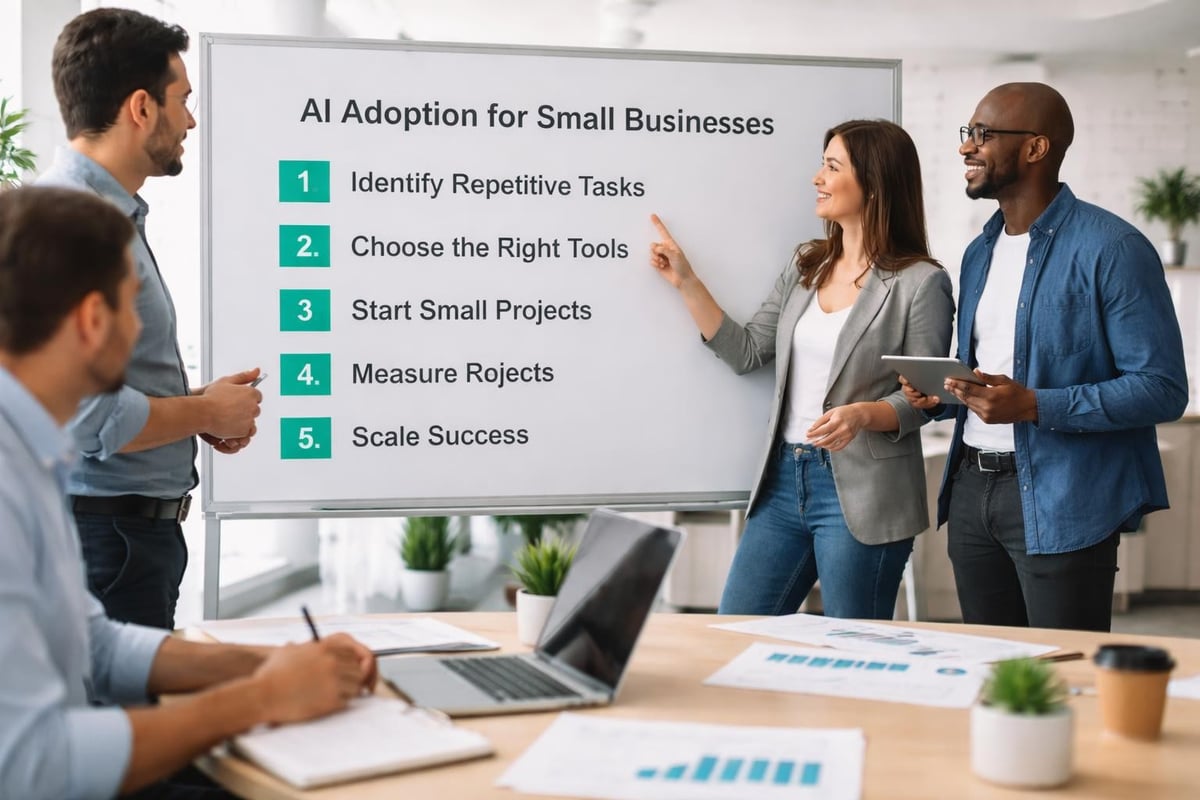
- Begin with one problem area (like customer enquiries)
- Use free trials to test different solutions
- Choose tools that integrate with what you already use
- Start small and expand gradually
Check out these AI case studies showing how real small businesses implemented affordable solutions.
Avoiding Common Pitfalls
Not every AI solution suits every business. Some owners rush into complex systems they don't actually need. The key is matching the tool to your specific challenge.
Questions to ask before investing:
- Does this solve a real problem I'm experiencing?
- Will my team actually use this?
- Can I measure the improvement?
- Is there proper support if something goes wrong?
Understanding the true costs of AI implementation helps you budget appropriately and avoid nasty surprises.
Maintaining the Human Touch
AI use in business works best when it handles repetitive tasks, freeing you to focus on relationships. Your customers still want to talk to a real person for complex issues or important decisions.
Think of AI as your behind-the-scenes team member. It handles the routine work whilst you focus on strategy, creativity, and personal customer interactions that truly matter.
Recent guidance from the Small Business Administration emphasises balancing automation with human oversight, ensuring quality control remains in your hands.
Getting Started with Confidence
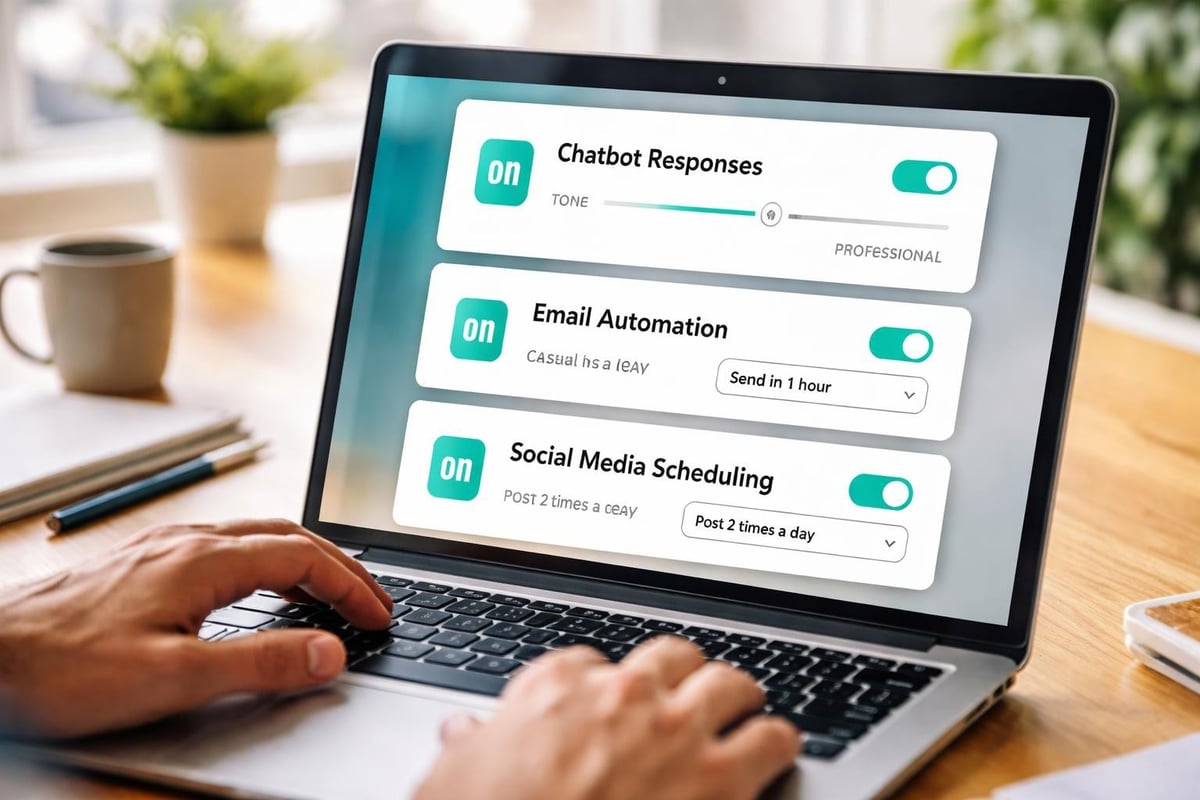
The beauty of modern AI tools is their simplicity. Most are designed with non-technical users in mind. You point, click, and tell the system what you need in plain English.
Your First Steps
- Identify your biggest time drain – What task steals hours from your week?
- Research specific solutions – Look for tools designed for that exact problem
- Test thoroughly – Use free trials before committing financially
- Train your team – Make sure everyone understands the new tool
- Monitor results – Track time saved and quality improvements
Many business owners find that exploring AI business automation options opens their eyes to possibilities they hadn't considered.
Measuring Your AI Success
How do you know if AI use in business is actually working for you? Set clear benchmarks before you start. If you're implementing a customer service chatbot, track current response times and customer satisfaction scores.
| Metric | Before AI | After 3 Months |
|---|---|---|
| Average response time | 4 hours | 15 minutes |
| Customer satisfaction | 3.8/5 | 4.5/5 |
| Admin hours weekly | 20 hours | 8 hours |
| Monthly operating costs | £2,500 | £2,200 |
These numbers tell the real story. You're not just saving time – you're improving customer experience whilst reducing costs.
The benefits of using AI strategically extend beyond immediate time savings to long-term business growth and competitive advantage.
Scaling Your AI Efforts
Once you've successfully implemented one AI solution, you'll spot opportunities everywhere. The customer service chatbot works brilliantly? Perhaps an AI inventory system could prevent stockouts next.
Growing your AI use in business should feel organic, not forced. Each new tool should solve a specific problem and integrate smoothly with your existing workflow.
AI use in business has evolved from a luxury for large corporations to an accessible advantage for small business owners who want to compete effectively in 2026. By starting with affordable, practical tools focused on your specific challenges, you can reclaim valuable time whilst improving customer service. AI 4 Small Business specialises in helping small business owners identify the right AI solutions for their unique needs, implementing them quickly without creating technical dependency, so you can focus on growing your business rather than wrestling with complicated technology.