Stepping into the world of AI implementation in business can feel overwhelming, especially when you're running a small business with limited resources and no IT department. You've likely heard the buzz about artificial intelligence transforming industries, but where do you actually start? The good news is that AI tools have become more accessible and affordable than ever before in 2026. With the right approach, even the smallest shop or service provider can harness AI to work smarter, save time, and serve customers better-all without needing a computer science degree.
Understanding What AI Implementation Really Means
Let's strip away the jargon. AI implementation in business isn't about building robots or creating futuristic technology. It's simply about using smart software to handle repetitive tasks, spot patterns in your data, and make better decisions faster. Think of it as hiring a super-efficient assistant who never sleeps, never forgets, and gets better at their job over time.
For small business owners, this might mean:
- Automatically sorting customer enquiries and sending them to the right person
- Predicting which products will run out of stock before it happens
- Creating social media content based on what your customers engage with most
- Scheduling appointments without the endless back-and-forth emails
The beauty of modern AI implementation in business is that you don't need massive budgets or technical teams. Many tools now work through simple interfaces that feel as easy as using your favourite apps.
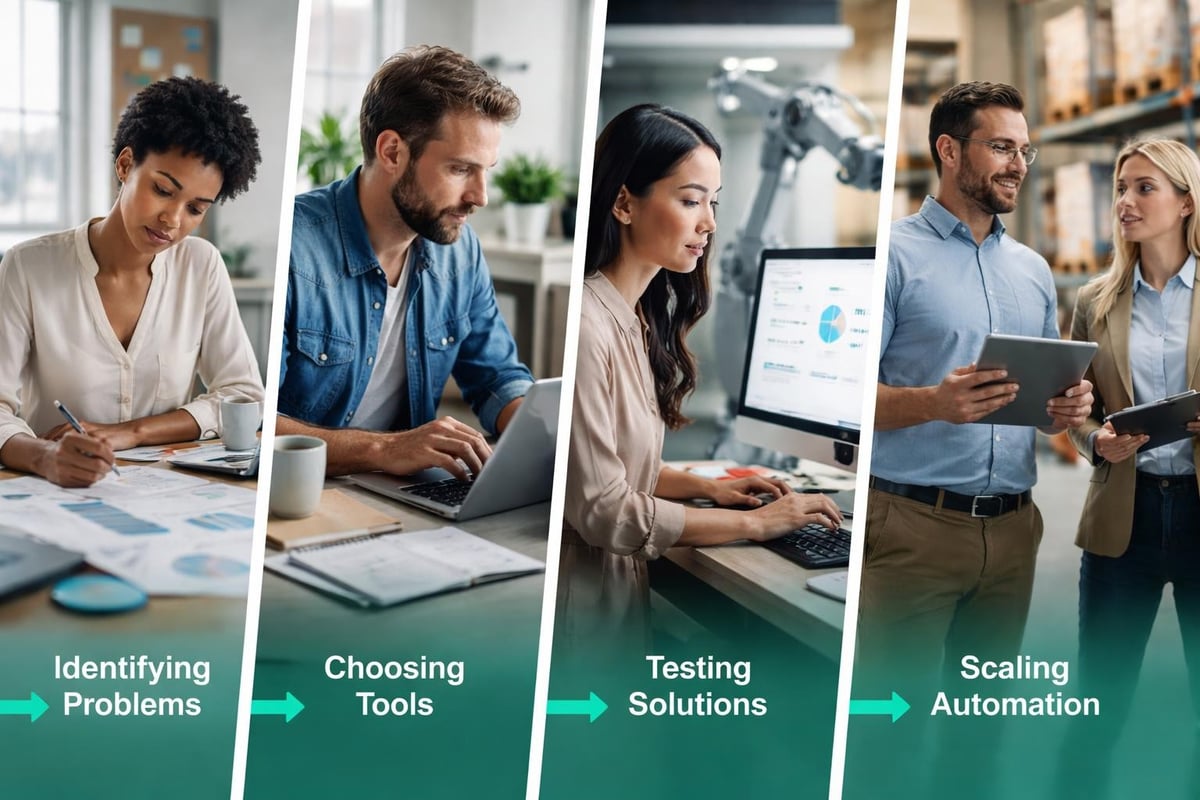
Starting Small: Your First Steps
The biggest mistake small business owners make? Trying to do too much at once. Instead, focus on one problem that's eating up your time or costing you money.
Identify Your Biggest Time-Waster
Walk through your typical week and ask yourself:
- Which tasks do I repeat constantly?
- Where do customers have to wait for responses?
- What administrative work keeps me from actually running my business?
- Which processes cause the most mistakes or delays?
One café owner realised she spent three hours weekly manually updating her inventory spreadsheet. A simple AI tool now does this automatically by tracking sales and alerting her when supplies run low. That's three hours back for developing new menu items or actually talking to customers.
Match Problems to Practical Solutions
Once you've identified your pain point, look for tools specifically designed for that purpose. Many low-code AI platforms let you set up solutions without writing a single line of code.
| Business Challenge | AI Solution Type | Example Application |
|---|---|---|
| Customer enquiries | Chatbots | Answer common questions 24/7 |
| Email overload | Smart sorting | Automatically categorise and prioritise messages |
| Social media posting | Content schedulers | Generate and post content at optimal times |
| Appointment booking | Smart calendars | Handle bookings without manual coordination |
Choosing Tools That Won't Break the Bank
The misconception that AI requires massive investment holds many small businesses back. In reality, businesses are potentially missing out on millions by not embracing AI, yet affordable solutions exist across every business function.
Start with free trials. Most AI tools offer free versions or trial periods. Test several options before committing any money. Pay attention to:
- How easy is it to set up?
- Does it actually solve your specific problem?
- Can you understand how to use it without a manual?
- Does it integrate with tools you already use?
A plumber recently shared that he tried four different scheduling tools before finding one that worked perfectly with his existing booking system. The winner? It cost £25 monthly but saved him six hours weekly in phone tag with customers.

Avoiding Common Implementation Pitfalls
Research shows that AI adoption is soaring but many businesses don’t have the infrastructure or governance to support it. For small businesses, this translates to simpler challenges that are easier to overcome.
Don't Ignore Your Team
Your staff need to understand and trust the new tools. When introducing AI implementation in business operations, explain clearly:
- What problem you're trying to solve
- How this makes their jobs easier, not redundant
- What they'll need to do differently
- Who they can ask when confused
A retail shop owner found that her team resisted a new inventory system until she showed them it would eliminate the tedious stocktake they dreaded monthly. Suddenly, everyone wanted to learn it.
Start With Clean Data
AI tools are only as good as the information you feed them. Before implementing any solution, tidy up your data. Delete duplicate customer records, standardise how you enter information, and organise your files logically.
One accountant spent two days cleaning up client records before implementing an AI invoicing system. That preparation meant the tool worked perfectly from day one, whereas a colleague who skipped this step spent weeks fixing errors.
Measuring Success Without Fancy Metrics
Forget complicated dashboards and analytics. For small businesses, success metrics should be dead simple:
- Time saved: How many hours weekly do you get back?
- Mistakes reduced: Are you catching errors before they reach customers?
- Customer satisfaction: Are people happier with faster responses?
- Revenue protected: Are you losing fewer sales due to delays or stock-outs?
Keep a simple before-and-after log. One bakery owner tracks how many custom cake orders she can handle weekly. Before AI scheduling: 12 orders. After: 23 orders with the same staff. That's tangible success you can measure in actual income.
Growing Your AI Capabilities
Once your first implementation succeeds, you'll feel more confident tackling the next challenge. Many small businesses find that understanding common AI applications helps them spot new opportunities they'd previously missed.
Build on what works. If your chatbot handles customer questions brilliantly, maybe it could also qualify leads. If your scheduling tool saves hours, perhaps it could also send automated reminders reducing no-shows.
The key challenges of AI adoption often stem from trying to leap too far too fast. Small, incremental improvements create sustainable change without overwhelming you or your team.
Creating an AI-Friendly Culture
Make experimentation safe. Encourage your team to suggest processes that could be automated. Set aside an hour monthly to review what's working and what isn't with your AI tools.
A gardening business holds "tool time" every month where staff demonstrate AI solutions they've discovered. One employee found an app that identifies plant diseases from photos, saving hours of research. Another discovered a route optimiser that cut fuel costs by 15%.
Real-World Implementation Stories
Looking at AI case studies from similar businesses helps you visualise what's possible. A computer distributor used AI to automate their entire ordering workflow, freeing the owner to focus on supplier relationships rather than paperwork.
An ecommerce business implemented AI for inventory prediction, reducing overstock by 30% whilst nearly eliminating stock-outs. They didn't hire data scientists or buy expensive software-they used affordable tools designed specifically for small retailers.
Building Independence, Not Dependency
One crucial consideration: ensure your AI implementation in business doesn't create dependency on external providers who might increase prices or disappear. Choose tools with export options, maintain access to your original data, and understand the basic logic behind your automations.
Think of AI as enhancing your capabilities, not replacing your judgement. A financial advisor uses AI to scan market news and flag relevant articles, but she still makes the actual investment decisions. The tool saves her two hours daily on research without removing her expertise from the equation.
AI implementation in business doesn't require technical expertise or enormous budgets-it requires identifying real problems and choosing practical solutions that fit your needs. Whether you're handling five customers or five hundred, the right AI tools can give you back precious time whilst improving service quality. AI 4 Small Business specialises in helping small business owners like you implement affordable, practical AI solutions tailored to your specific challenges, ensuring you gain capabilities without creating dependency. Ready to explore what AI can do for your business?